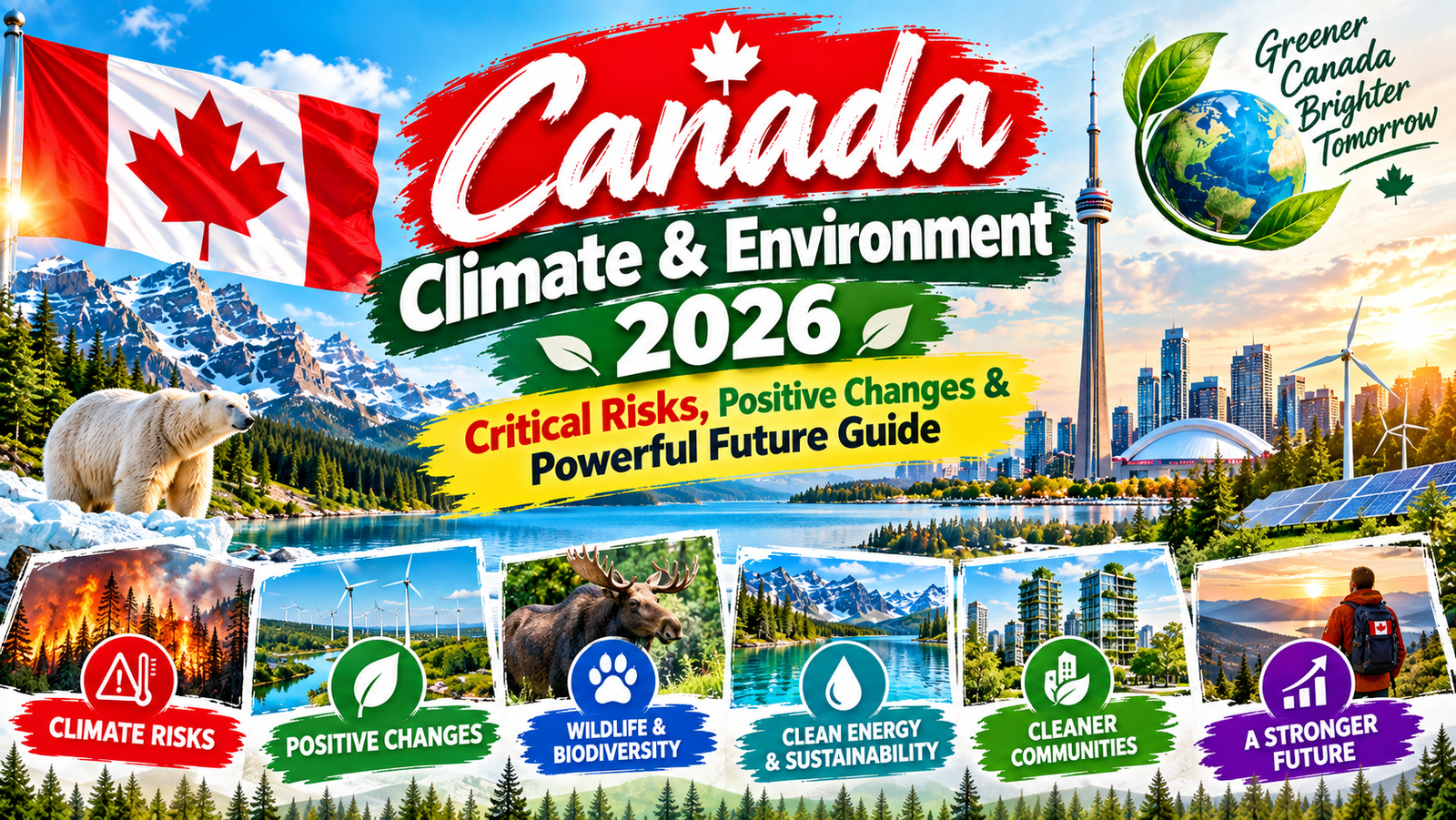
Canada October 2026
Introduction
Canada’s environmental landscape in 2026 is being shaped by major developments in climate policy, extreme weather, Arctic conditions, clean energy, wildlife conservation, pollution, and water security. From the shift away from the federal consumer carbon price toward industrial emissions policies to the growing risks from wildfires, floods, and extreme precipitation, environmental issues are becoming increasingly connected to Canada’s economy, communities, infrastructure, and everyday life.
At the same time, Canada is expanding its clean-energy strategy through hydroelectricity, wind and solar power, nuclear energy, hydrogen, and modernization of the electricity system. In the Arctic and northern regions, declining sea ice, permafrost thaw, and changing ecosystems are creating new challenges for communities, wildlife, transportation, and infrastructure. Conservation efforts are also expanding through protected areas, species-at-risk programs, and Indigenous-led stewardship.
This guide examines the most important Canada climate and environment issues in 2026, explaining what is changing, how federal and provincial policies are responding, and what these developments mean for Canadians. It also explores wildfire risks, water security, pollution, biodiversity, and Canada’s progress toward its 2030 emissions-reduction target and 2050 net-zero goal.
Carbon Tax & Climate Policy
What is the current status of Canada’s carbon-pricing policy in October 2026?
Canada’s federal consumer carbon price was removed effective April 1, 2025. As a result, there is no longer a federal consumer fuel charge on gasoline and other covered fuels. However, industrial carbon pricing remains in place through provincial, territorial, or federal systems.
Since May 2026, the federal industrial pricing trajectory has been set at $95 per tonne for 2026, increasing to $115 per tonne in 2030 and $130 per tonne in 2035.
What direction is Canada’s climate policy taking after replacing consumer carbon pricing?
Canada’s climate policy is increasingly focused on industrial emissions, clean electricity, clean fuels, methane reductions, clean-technology investment, and sector-specific regulations.
The federal government is also using investment tax credits and other financing programs to encourage clean-energy and low-carbon projects. The 2030 Emissions Reduction Plan remains an important framework for reducing economy-wide greenhouse-gas emissions.
How does industrial carbon pricing affect Canada’s emissions?
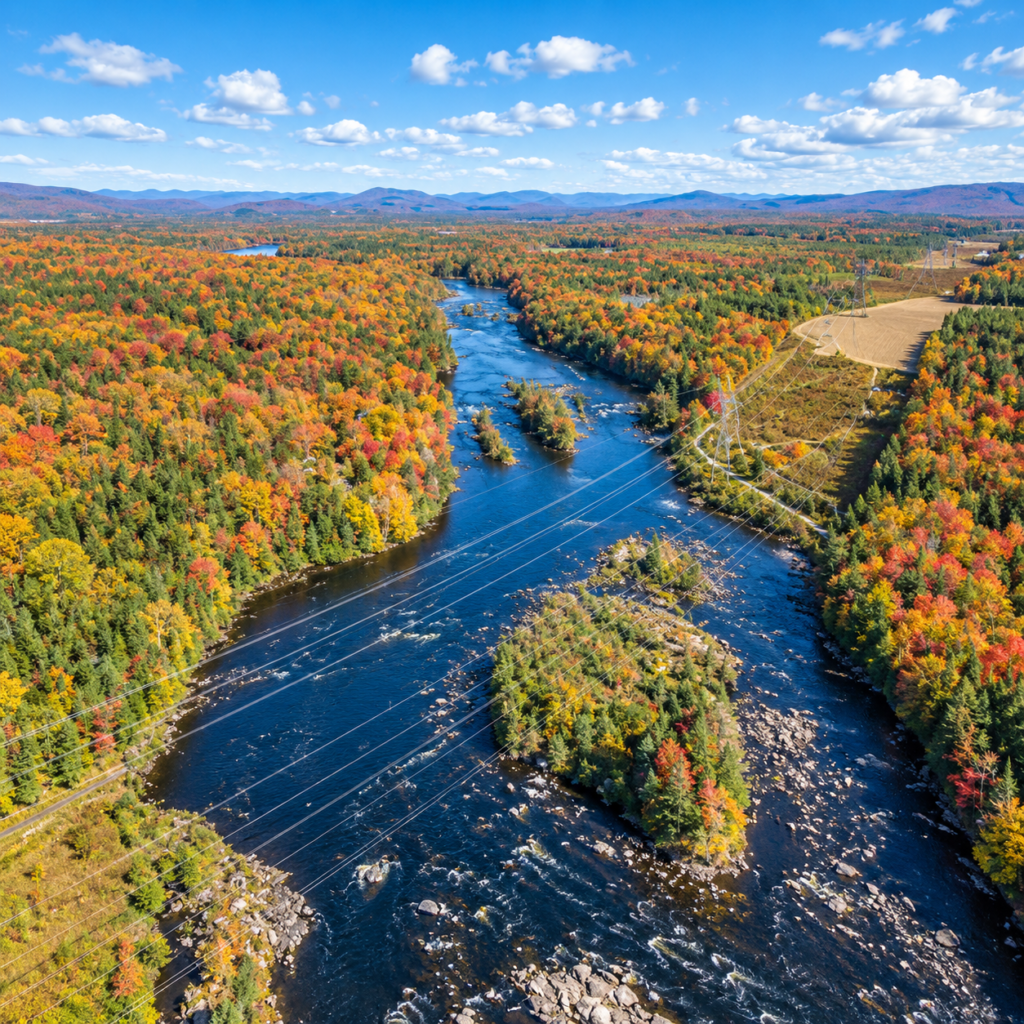
Industrial carbon pricing creates a financial incentive for large emitters to reduce their emissions intensity and invest in cleaner technologies.
Most jurisdictions use output-based pricing systems, while Quebec operates a cap-and-trade system and the Northwest Territories uses a direct emissions tax. These systems are designed to reduce industrial emissions while addressing competitiveness and carbon-leakage concerns.
How do carbon-pricing systems differ across Canadian provinces?
Provinces and territories can establish their own industrial carbon-pricing systems as long as they meet federal minimum standards.
Quebec uses a cap-and-trade system, while many other provinces use output-based systems. Alberta, British Columbia, Ontario, and other jurisdictions operate provincial industrial systems. Federal systems apply in jurisdictions such as Manitoba, Yukon, and Nunavut. Saskatchewan has paused its provincial industrial carbon-pricing system.
What policies is Canada using to achieve its federal climate targets?
Canada’s climate strategy includes industrial carbon pricing, clean-energy investment, methane regulations, clean-fuel measures, electric-vehicle policies, clean-electricity measures, and nature-based climate solutions.
The federal 2030 target calls for a 40–45% reduction in greenhouse-gas emissions from 2005 levels by 2030, while Canadian legislation establishes net-zero emissions as the national goal for 2050.
What impact does carbon pricing have on Canadian businesses and industries?
Industrial carbon pricing can increase the financial incentive for businesses to improve energy efficiency, reduce emissions, and adopt lower-carbon technologies.
At the same time, policymakers recognize competitiveness and carbon-leakage concerns, particularly for industries that compete in international markets. Canada’s updated industrial pricing trajectory is intended to provide businesses with greater long-term certainty for decarbonization investments.
How do Canada’s climate policies affect households and consumers?
The federal consumer fuel charge is no longer applied, meaning households no longer pay that federal carbon charge directly on gasoline and other covered fuels.
However, climate-related policies can still affect consumers indirectly through electricity systems, transportation, vehicle choices, building efficiency, energy investments, and other regulations. The overall effect can vary significantly depending on the province, household, and energy use.
How much progress is Canada making toward its 2030 and 2050 climate targets?
Canada’s 2025 progress reporting showed that emissions were approximately 14% below 2005 levels in 2023.
Current projections estimate emissions could be around 21% below 2005 levels by 2030 under existing measures, or approximately 28% below 2005 levels under additional announced measures. These projections remain below Canada’s official 40–45% reduction target, meaning substantial additional emissions reductions are still required to reach the 2030 target and ultimately achieve net-zero emissions by 2050.
Wildfires & Natural Disasters
What is the overall situation of Canada’s wildfire season in October 2026?
Canada’s 2026 wildfire season began more slowly than the exceptionally severe 2023 and 2025 seasons, but wildfire activity increased substantially during the summer.
By August 18, Canada had recorded 4,793 wildfires and approximately 4.1 million hectares burned, with 582 active fires at that time. Conditions and wildfire totals vary considerably across the country, meaning October represents the later stage of the national wildfire season rather than the complete end of wildfire risk everywhere.
What are the major causes of wildfires in Canada?
Lightning is an important natural source of wildfire ignition, particularly during hot, dry, and windy conditions.
Human activities also cause many wildfires, including accidental and deliberate ignitions. Fire behaviour is influenced by several environmental factors, including temperature, humidity, drought, wind, vegetation, terrain, and forest conditions.
How does wildfire smoke affect Canadian air quality?
Wildfire smoke contains fine particulate matter and other pollutants that can travel hundreds or even thousands of kilometres from the original fire.
Smoke can reduce visibility and create poor air-quality conditions in communities far from active fires. People with respiratory or cardiovascular vulnerabilities can be particularly affected, making air-quality monitoring and smoke advisories important during major wildfire events.
How do wildfire risks differ between British Columbia, Alberta, and other provinces?
Wildfire risk varies depending on vegetation, drought, temperature, wind, topography, and recent precipitation.
Western Canada has experienced significant fire-weather pressure, while northern and central regions can also experience severe wildfire seasons. The 2026 outlook identified persistent drought and precipitation deficits in parts of western Canada as important wildfire risk factors.
What are Canada’s major environmental risks from floods and extreme rainfall?
Flooding can result from heavy rainfall, rapid snowmelt, rain-on-snow events, and ice jams.
Canada’s 2026 climate assessment indicates that one-day and five-day precipitation extremes have increased overall since the mid-20th century and are projected to increase further. More extreme precipitation can increase the frequency and intensity of flash flooding.
How are Canadian communities supported after wildfires and natural disasters?
Emergency response generally begins at the local and provincial or territorial level.
When a disaster exceeds available local or provincial capacity, provinces and territories can request federal assistance. Public Safety Canada coordinates federal support through the Government Operations Centre while working with federal departments, provinces, territories, and other organizations.
How is Canada improving wildfire detection and emergency response?
Canada is strengthening wildfire preparedness through improved monitoring, forecasting, emergency-management resources, and cooperation among governments.
Modern wildfire management increasingly combines prevention, mitigation, preparedness, response, and recovery. The approach also recognizes the importance of community resilience and Indigenous participation in wildfire management.
How is climate change influencing extreme weather events in Canada?
Canada is warming faster than the global average, and human-caused warming has already influenced extreme temperature events.
The 2026 climate assessment indicates that extreme fire weather is becoming more frequent and intense, while drought and heavy precipitation risks are also increasing with additional warming. The exact effects vary depending on the region and type of extreme weather event.
Arctic & Northern Canada
What are Canada’s major Arctic and northern environmental issues in October 2026?
Major issues include declining sea ice, permafrost thaw, changing snow conditions, warming oceans, ecosystem disruption, and increasing risks to northern infrastructure and transportation.
Canada’s 2026 climate assessment confirms widespread changes across the northern cryosphere. These changes have implications for wildlife, traditional activities, communities, transportation, and infrastructure.
How do changes in Arctic sea ice affect northern communities?
Less predictable sea ice can make travel, hunting, and harvesting more difficult and dangerous.
Landfast ice is important for transportation, wildlife habitat, and cultural activities in many northern communities. Canada’s climate assessment indicates that landfast ice has declined across parts of the Canadian Arctic and Hudson Bay region.
How is climate change transforming Canada’s Arctic ecosystem?
Warming is changing sea ice, snow cover, freshwater systems, and marine environments.
These physical changes can affect wildlife habitats and the timing and availability of food resources. Arctic ecosystems are particularly sensitive because many species depend closely on seasonal ice, snow, and cold conditions.
What is the impact of permafrost thawing in northern Canada?
Permafrost has warmed and thawed at monitored northern Canadian locations since the 1980s.
In areas containing large amounts of ground ice, thawing can transform landscapes and damage or destabilize roads, buildings, airstrips, pipelines, and other infrastructure. Canada’s 2026 climate assessment indicates that permafrost-related landscape changes are expected to continue as temperatures rise.
How are Inuit communities experiencing the effects of climate change?
Changing sea ice affects travel, harvesting, food access, and safety, while changing weather and landscapes can disrupt established seasonal patterns.
These impacts are not identical across Inuit Nunangat because local environmental and community conditions differ. Climate change therefore has environmental, economic, cultural, and infrastructure implications for northern communities.
What does changing temperature mean for Arctic wildlife?
Species that depend on sea ice, snow, and cold environments face changing habitat conditions.
Polar bears, for example, rely heavily on marine sea-ice ecosystems for travel and hunting. Changes in sea-ice conditions can therefore affect wildlife behaviour, habitat availability, and access to food.
What Arctic research and environmental-monitoring initiatives does Canada operate?
Canada uses climate observations, satellite information, field research, and northern monitoring programs to understand changes in sea ice, permafrost, snow, ecosystems, and water systems.
The 2026 climate assessment brings together evidence from multiple monitoring and research programs. Indigenous knowledge and community participation are also increasingly incorporated into environmental monitoring and stewardship.
What is the relationship between Arctic sovereignty and environmental protection?
Environmental protection is closely connected to Canada’s ability to monitor and manage its northern territory and waters.
Reliable information about sea ice, ecosystems, infrastructure, and changing environmental conditions supports navigation, emergency preparedness, and territorial management. Northern conservation is also increasingly based on partnerships with Indigenous governments and communities.
Green Energy
What are the major developments in Canada’s clean-energy sector in October 2026?
Green Energyis expanding its focus on clean electricity, nuclear power, renewable energy, clean fuels, and energy infrastructure.
The federal government launched a new Nuclear Energy Strategy in 2026 and is also pursuing modernization of the electricity system. These efforts are intended to support increasing electricity demand while reducing emissions and maintaining energy reliability.
What are Canada’s major sources of renewable energy?
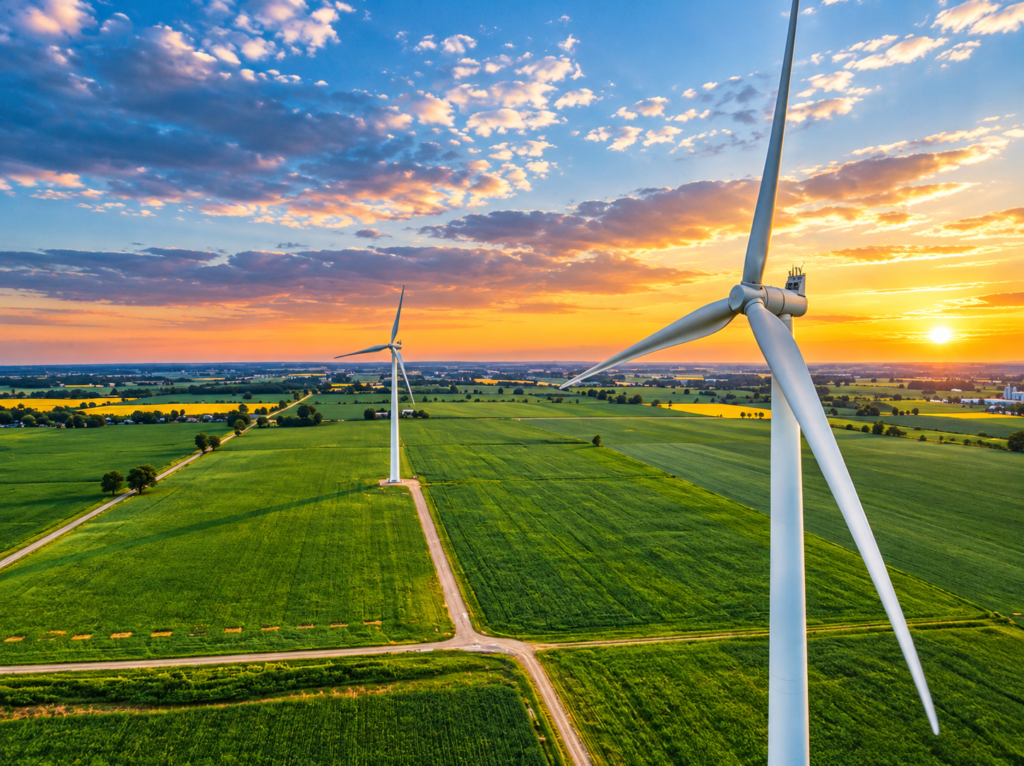
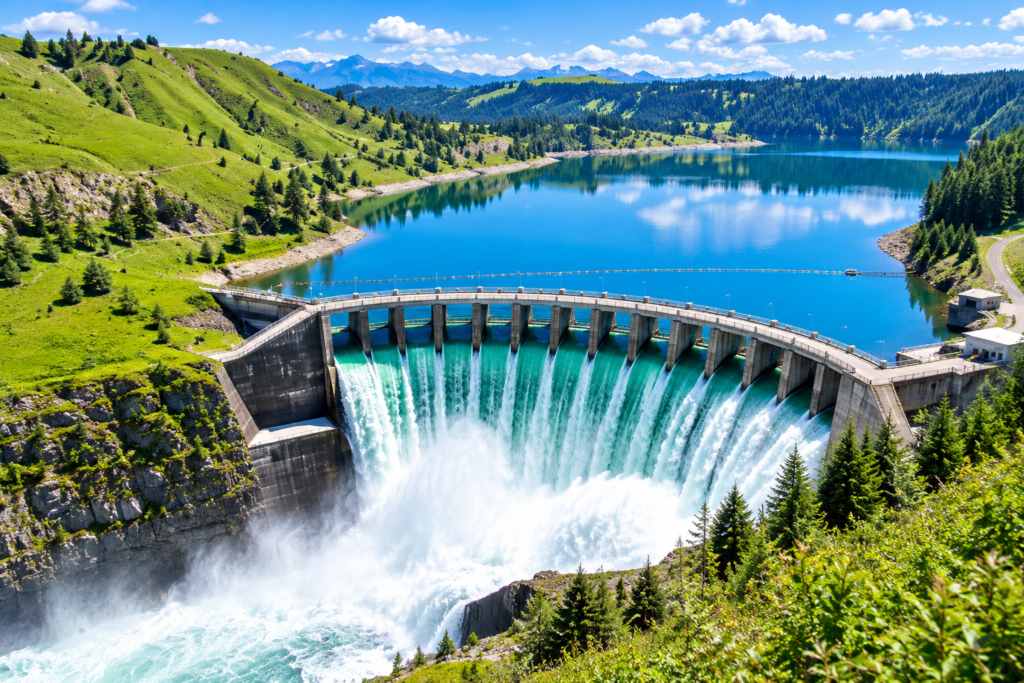
Hydroelectricity is Canada’s largest renewable electricity source and accounts for approximately 60% of national electricity generation.
Wind and solar energy are also expanding, while biomass contributes to the broader renewable-energy mix. The electricity mix varies considerably between provinces and territories.
How quickly are solar and wind energy expanding in Canada?
Wind and solar power are expanding as provinces seek additional electricity supply and lower-emission sources of generation.
Their growth is supported by falling technology costs, private investment, increasing electricity demand, and clean-energy policies. However, expansion varies between provinces because electricity systems, transmission capacity, available resources, and provincial policies differ.
Why is hydroelectric power important to Canada’s economy?
Hydroelectricity provides a large share of Canada’s electricity while producing very low operational greenhouse-gas emissions.
It supports households, industrial activity, and electricity exports. Canada’s extensive hydroelectric resources provide several provinces with an important source of reliable electricity and contribute to the country’s relatively clean electricity grid.
What role do small modular reactors and nuclear energy play in Canada’s clean-energy strategy?
Nuclear energy is being positioned as a source of reliable, non-emitting electricity that can complement renewable generation.
Canada’s 2026 Nuclear Energy Strategy supports new nuclear construction, CANDU technology, small modular reactors, fuel supply, and nuclear innovation. The Darlington project is intended to become the first small modular reactor deployment in the G7.
How is Canada’s electricity system preparing for electric-vehicle expansion?
The growth of electric vehicles increases electricity demand and requires additional generation, transmission, distribution, and charging infrastructure.
Canada’s broader electricity strategy focuses on expanding and modernizing electricity systems to support electrification. This need becomes increasingly important as transportation, buildings, and industry shift toward greater use of electricity.
What potential does clean hydrogen have in Canada’s energy sector?
Hydrogen could be particularly useful in sectors where direct electrification is difficult, including heavy industry, long-haul transportation, marine applications, and certain industrial processes.
Canada’s Hydrogen Strategy aims to develop a low-carbon hydrogen industry and create international market opportunities. A Clean Hydrogen Investment Tax Credit provides support ranging from 15% to 40%, depending on project characteristics and emissions performance.
What role do Indigenous communities have in clean-energy projects?
Indigenous participation is increasingly becoming part of Canada’s approach to major energy and conservation projects.
Participation can include ownership, employment, training, partnerships, environmental monitoring, and decision-making. Federal programs also support Indigenous leadership in renewable-energy and natural-resource development.
Wildlife & Conservation
What are Canada’s major wildlife-conservation priorities in 2026?
Canada’s major conservation priorities include protecting species at risk, conserving habitat, expanding protected and conserved areas, restoring ecosystems, and improving biodiversity monitoring.
The 2026 federal nature strategy includes more than $3.8 billion in investments through 2030. Indigenous-led conservation and partnerships with provinces, territories, and conservation organizations are important parts of this approach.
What measures are used to protect endangered species in Canada?
The federal Species at Risk Act provides a legal framework for listing, protecting, and recovering species and their critical habitat.
Conservation programs support recovery strategies, habitat protection, monitoring, and cooperation among federal, provincial, territorial, and Indigenous governments and organizations. Canada also uses multi-species and ecosystem-based conservation approaches.
What role do Canada’s national parks play in biodiversity conservation?
National parks protect representative natural landscapes and provide important habitat for wildlife and plants.
Parks Canada manages 37 national parks and 11 national park reserves, covering approximately 343,377 square kilometres. Conservation work includes ecosystem restoration, species protection, and maintaining ecological integrity.
How is habitat loss affecting Canadian wildlife?
Habitat loss can reduce available feeding, breeding, and migration areas while fragmenting wildlife populations.
Development, roads, agriculture, resource activities, and changing climate conditions can all contribute to habitat pressure. Canada’s conservation strategy therefore emphasizes protected areas, habitat restoration, ecological connectivity, and species recovery.
What are the conservation issues facing polar bears, caribou, and whales?
Polar bears depend heavily on sea ice, making changes in Arctic ice conditions an important conservation concern.
Caribou face habitat disturbance, changing ecosystems, and pressures that vary between herds. Whales and other marine species face issues involving habitat, food availability, pollution, vessel activity, and changing ocean conditions.
Why is protecting forests and wetlands important in Canada?
Forests and wetlands provide wildlife habitat, store carbon, support biodiversity, and help regulate water.
Wetlands can also reduce flood impacts by storing and slowing water. Protecting these ecosystems therefore supports wildlife conservation as well as climate adaptation, water security, and broader ecosystem services.
How is Indigenous-led conservation expanding in Canada?
Indigenous-led conservation is becoming an important component of Canada’s biodiversity strategy.
Programs such as Indigenous Guardians support community-led monitoring and stewardship, while Indigenous-Led Area-Based Conservation supports protected areas and other conservation measures. Since 2018, more than 240 First Nations, Inuit, and Métis initiatives have received Indigenous Guardians funding.
How is climate change affecting Canadian wildlife populations?
Climate change is altering temperature, sea ice, snow, water availability, wildfire patterns, and habitat conditions.
Species that depend on specific climate conditions can experience changes in food availability, migration, reproduction, and habitat. The effects differ significantly between species and regions, but continued warming is expected to intensify many ecological pressures.
Pollution & Water
What are Canada’s major pollution concerns in October 2026?
Major environmental concerns include air pollution, industrial emissions, wildfire smoke, plastic pollution, wastewater, contaminated sites, and pressures on freshwater systems.
Pollution risks vary significantly between urban, industrial, agricultural, northern, and remote communities. Canada is also developing a broader national approach to freshwater security.
What are the major sources of air pollution in Canada?
Important sources of air pollution include transportation, oil and gas production, industrial activity, agriculture, off-road equipment, and other combustion sources.
According to Canada’s 2024 emissions inventory, oil and gas, transportation, off-road equipment, and agriculture were among the largest contributors to several major air pollutants.
How does wildfire smoke affect air quality in Canadian cities?
Wildfire smoke can travel long distances and increase concentrations of fine particulate matter even when fires are located far away.
Smoke can produce hazy skies, poor visibility, and unhealthy air-quality conditions. Because wildfire seasons are becoming longer in many regions, smoke management and public air-quality information are increasingly important.
What are the major challenges facing Canada’s drinking-water systems?
Canada’s drinking water systems face challenges involving aging infrastructure, source-water contamination, drought, floods, pollution, changing climate conditions, and capacity constraints in some communities.
Canada’s first National Water Security Strategy is being developed partly because water quality, quantity, and availability face growing pressures.
What steps is Canada taking to reduce plastic pollution?
Canada’s Single-use Plastics Prohibition Regulations remain in force following a January 2026 Federal Court of Appeal decision.
The regulations prohibit the manufacture, import, and sale of several specified single-use plastic items. Canada also uses measures such as plastics reporting and broader waste-reduction initiatives, with a stated goal of achieving zero plastic waste by 2030.
What policies protect Canadian lakes and rivers from pollution?
Canada uses freshwater programs, environmental monitoring, pollution controls, and partnerships with provinces, territories, and Indigenous Peoples to protect freshwater systems.
In 2026, the Canada Water Agency began public engagement toward Canada’s first National Water Security Strategy. The government is also funding projects addressing environmental challenges in major freshwater systems, including the Great Lakes and Fraser River.
How does industrial pollution affect Canadian communities and ecosystems?
Industrial pollution can affect air, water, soil, and wildlife depending on the type of pollutant and its location.
Oil and gas, mining, manufacturing, electricity generation, and other industries are subject to environmental rules intended to control emissions and pollution. Environmental monitoring and assessments help identify risks and guide mitigation measures.
What is the current situation of clean drinking water in Indigenous communities?
Significant progress has been made in improving drinking-water access in First Nations communities, although some long-term advisories remain.
As of June 23, 2026, First Nations had lifted 156 long-term drinking-water advisories, while 38 active long-term advisories remained in 36 communities.
The federal government has also introduced proposed First Nations clean-water legislation and announced an additional $4.6 billion in targeted funding for water infrastructure and related needs.
Final Overview
Canada’s environmental agenda in 2026 is increasingly focused on industrial emissions, climate adaptation, wildfire resilience, clean electricity, Arctic monitoring, biodiversity, freshwater security, and Indigenous-led conservation.
The country has made measurable progress in several areas, but the latest federal projections indicate that additional emissions reductions are still required to meet Canada’s 2030 climate target. At the same time, Canada’s 2026 climate assessment highlights increasing risks from extreme heat, wildfire weather, drought, flooding, sea-ice loss, and permafrost thaw.
Freshwater is also becoming a major national environmental priority. The Canada Water Agency is accepting public feedback for Canada’s first National Water Security Strategy through October 25, 2026, with a focus on water quality, water availability, climate resilience, and ecosystem protection.
Overall, Canada’s climate and environmental challenges in 2026 are closely connected. Climate change is affecting communities, infrastructure, wildlife, water resources, energy systems, and the Arctic, while environmental policies are increasingly focused on reducing emissions, preparing for climate risks, protecting ecosystems, and strengthening long-term resilience.
Table of Contents

Leave a Reply