
Canada in October 2026
introduction
Canada in October 2026 offers a diverse picture of everyday life, shaped by changing food trends, outdoor travel, education, sports, multiculturalism, Canadian identity, and community life. Across the country, Canadians are adapting to rising living costs while continuing to explore new dining experiences, seasonal travel opportunities, educational pathways, sports, and cultural activities.
Food culture combines traditional Canadian favourites with cuisines from around the world, while fall brings opportunities to experience Canada’s parks, mountains, scenic routes, and colourful landscapes.
At the same time, Canada’s education and sports landscapes are evolving through artificial intelligence, skilled-trades training, international-student policy, youth participation, and growing opportunities in women’s sports.
Canada’s identity also continues to develop through multiculturalism, immigration, Indigenous history, official languages, regional cultures, and community participation. With hundreds of cultural backgrounds and languages represented across the country, multiculturalism has become an important part of Canadian social and cultural life.
This guide explores the major trends and developments shaping Canadian life in October 2026, from food and travel to education, sports, culture, multicultural communities, religion, and local community life. It provides an overview of what is changing, what remains important, and how these developments connect to the everyday experiences of people across Canada.
Food & Dining
What are the major food trends in Canada in October 2026?
Canada’s food scene in 2026 is being shaped by a combination of value-conscious dining, global cuisines, experiential restaurants and nostalgic comfort foods. OpenTable reports that 65% of Canadians expect dining out to feel more like a special treat, while 42% want more happy-hour and value promotions. Experiential dining has also increased, with diners showing interest in chef’s tables, tasting menus, pop-ups and themed events. Global flavours and familiar classics are appearing together on restaurant menus.

What popular Canadian foods and dishes are Canadians known for?
Popular Canadian foods include poutine, butter tarts, Nanaimo bars, tourtière, Montreal-style bagels, smoked meat, maple products, salmon and various regional seafood dishes. Poutine remains one of Canada’s most recognizable comfort foods, while maple-based products are strongly associated with Canadian food culture. Canada’s large immigrant communities have also made dishes such as butter chicken, sushi, tacos, pho and other international foods common parts of everyday dining. Restaurant trends in 2026 show both international cuisines and nostalgic Canadian-style comfort foods continuing to attract diners.
How are restaurants and dining culture changing in Canadian cities?
Canadian restaurant culture is becoming more focused on experience, social connection and value. OpenTable reports a 28% year-over-year increase in group dining involving six or more people, while experiential dining also recorded strong growth. Restaurants are increasingly using chef counters, tasting menus, pop-ups and distinctive interiors to attract customers. At the same time, affordability pressures are encouraging restaurants to offer promotions, happy hours and more accessible dining options.
How are food prices affecting Canadian households?
Food affordability remains an important household issue in Canada. Canada’s Food Price Report 2026 forecast overall food prices to rise by 4% to 6% during 2026, with an average family of four potentially spending about $17,572 on food. The report also estimated that food prices were already 27% higher than five years earlier. These pressures can lead households to change shopping habits, choose less expensive products and reduce spending on restaurant meals.
What is the current trend in grocery prices and eating-out costs in Canada?
Grocery and restaurant costs are both putting pressure on consumers, although their price movements are not identical. Statistics Canada’s September data show grocery prices increased 2.4% year over year, while restaurant prices increased 3.5%. Meat prices were up 3.1% and fresh vegetables 4.4% over the same period. Restaurants Canada also reported in September that 80% of Canadians were eating out less frequently because of the rising cost of living.
What are the differences between the food scenes in Toronto, Vancouver, Montreal and Calgary?
Toronto has an extremely diverse restaurant market reflecting the city’s multicultural population, with strong Asian, Indian, Caribbean, Middle Eastern, Italian and contemporary cuisines. Vancouver is particularly influenced by Pacific Rim and Asian cuisines, with strong Japanese and seafood traditions. Montreal remains closely associated with French and Québécois food culture while also having a broad international restaurant scene. Calgary has traditionally been known for beef and steak but has developed a much more diverse restaurant culture, including Asian, Middle Eastern and contemporary dining.

Why is multicultural cuisine so popular in Canada?
Canada’s multicultural population has helped create a food culture where international cuisines are part of everyday life rather than limited to specialty restaurants. Large communities with roots in Asia, Europe, the Middle East, Africa, Latin America and the Caribbean have contributed recipes, restaurants, ingredients and cooking traditions. Major cities have therefore developed neighbourhoods where different cuisines exist side by side. Restaurant trends also show strong consumer interest in Asian, Greek, Japanese and other global flavours.
What foods and dining experiences are popular during the fall season in Canada?
Fall dining in Canada traditionally emphasizes warm comfort foods, seasonal produce, apples, pumpkins, squash, root vegetables, soups, stews, baked goods and maple-inspired flavours. Cooler weather also encourages Canadians to spend more time in cafés, bakeries and restaurants offering cozy indoor experiences. In 2026, this seasonal preference fits with the broader trend toward comfortable restaurant environments: 52% of Canadians surveyed by OpenTable identified cozy or local charm as their preferred restaurant interior style.
Travel & Outdoors
What destinations are popular for travel in Canada in October 2026?
October is a popular month for fall-colour trips, mountain travel, scenic drives and outdoor getaways. Ontario’s Algonquin Provincial Park, Quebec’s Laurentians, Nova Scotia and Cape Breton Island are popular choices for autumn scenery. In Western Canada, Banff, Jasper and Waterton Lakes offer mountain landscapes, hiking and changing larch and aspen colours. Cape Breton’s Cabot Trail is also a major autumn road-trip destination, with forests, coastal cliffs and seasonal foliage.
What are the best outdoor activities in Canada during the fall season?
Popular fall activities include hiking, scenic driving, cycling, canoeing, wildlife viewing, photography and camping. Parks Canada specifically highlights colourful hikes, scenic drives, biking, camping and dark-sky experiences as autumn activities. Cooler temperatures can make daytime hiking more comfortable than during the summer, although conditions can change quickly in mountain and northern regions.
What activities are available in Canadian national and provincial parks in October?
Many parks continue to offer hiking, sightseeing, paddling, cycling, camping and wildlife viewing during October, but services and facilities become increasingly seasonal. Ontario Parks, for example, is reporting active fall-colour conditions across several parks, with hiking, paddling and scenic viewing opportunities. Parks Canada also promotes autumn hiking, scenic drives and camping, but visitors should check individual park notices for closures, operating hours and restrictions before travelling.
What are October conditions like for hiking and camping in Canada?
October conditions can vary significantly depending on location and elevation. Southern areas may still have relatively comfortable daytime temperatures, while mountain and northern regions can experience freezing temperatures, snow, ice and rapidly changing weather. Camping therefore requires warmer sleeping equipment and suitable clothing, and hikers should check trail conditions before departure. In the Rockies, seasonal restrictions and closures can already affect particular trails, roads and activities.
Which regions of Canada are popular for seeing fall colours?
Ontario and Quebec are among Canada’s best-known autumn destinations, with extensive forests producing red, orange and yellow foliage. In Ontario, Algonquin, Arrowhead, Restoule and Lake Superior Provincial Park are showing substantial colour change around the beginning of October 2026. Atlantic destinations such as Cape Breton Island are also popular for autumn scenery, particularly along the Cabot Trail.
What are the major autumn attractions in the Canadian Rockies?
The Rockies offer a combination of mountain scenery, hiking, lakes, wildlife viewing and golden larch and aspen forests. Waterton Lakes National Park highlights autumn hiking and golden larches, while Banff provides access to mountain landscapes and numerous scenic areas. Travellers should remember that some roads, trails and facilities have seasonal restrictions, so checking current Parks Canada conditions is important before visiting.
What should travellers consider when taking road trips in Canada in October?
Road-trip planning becomes more important because daylight decreases and weather can change quickly. Travellers should check highway and park-road conditions, fuel availability, construction, closures and weather forecasts before departure. Wildlife can also be a significant road hazard during autumn, particularly around dawn and dusk. Remote highways may have limited or no cellular coverage, making fuel planning and emergency preparation especially important.
How can travellers manage weather and safety during outdoor travel in Canada?
Travellers should check weather forecasts, trail conditions, park advisories and road reports before leaving. Layered clothing, waterproof footwear, extra food and water, navigation equipment and appropriate emergency supplies are useful for October outdoor trips. In mountain areas, visitors should be prepared for sudden temperature changes and early snow or ice. Wildlife awareness is also important: maintain safe distances, follow park rules and slow down when driving through areas where animals may cross roads.
Education
What are the major developments in Canada’s education system in October 2026?
Canada’s education sector is entering the 2026–27 academic year amid changes in international student policy, AI education, skills training and student financial assistance. The federal government expects to issue up to 408,000 study permits in 2026, including 155,000 for newly arriving international students. Public-institution master’s and doctoral students are exempt from PAL/TAL requirements from January 1, 2026. At the same time, the government has launched a national AI literacy initiative for students and educators.
What are the current academic trends in Canadian schools and universities?
Canadian post-secondary education is increasingly focused on digital skills, artificial intelligence, career readiness and practical workforce training. Statistics Canada reports that Canada had more than 1.15 million domestic university students and about 284,000 international university students in 2023/24. Universities and colleges are also responding to changing labour-market requirements by expanding technology-related and career-oriented programs. AI literacy is becoming an additional area of attention across post-secondary education.
What is the education environment like for international students in Canada?
The environment remains accessible but more regulated than in previous years. Canada’s 2026 international-student system operates under a study-permit cap, with up to 408,000 permits expected to be issued, while PAL/TAL requirements continue to apply to many applicants. Public master’s and doctoral students are among the groups exempt from PAL/TAL requirements. Students also need to meet the applicable study-permit, financial and institutional requirements before beginning their studies.
What is the current trend in tuition costs at Canadian universities and colleges?
Tuition costs vary substantially by province, institution, program and student status. International students generally pay substantially higher tuition than Canadian students, while professional programs such as medicine, dentistry and some business programs can have different fee structures. Statistics Canada is publishing 2026/27 tuition-fee data for degree programs, making this academic year an important reference point for comparing costs across provinces and programs. Students should also consider housing, transportation, books and other living expenses when calculating the overall cost of education.
What are the major scholarship and financial-aid options for students?
Students can access a combination of government grants, student loans, scholarships, bursaries and institution-specific financial assistance. The Canada Student Financial Assistance Program provides grants that do not have to be repaid and loans that generally must be repaid after studies. Assistance can support tuition, living expenses and other education-related costs, with eligibility depending on factors such as income and family circumstances. From August 1, 2026, students attending private, for-profit international schools are generally no longer eligible for federal student aid, subject to transitional provisions and exemptions.
How is AI changing education and classrooms in Canada?
AI is becoming a more visible part of Canadian education through AI literacy, classroom resources and responsible-use training. In September 2026, the federal government launched the National AI Literacy Initiative with the Alberta Machine Intelligence Institute (Amii). The initiative is expected to reach up to one million post-secondary students and more than 50,000 K–12 educators, with training covering responsible AI use, misinformation, bias and privacy risks.
Why is demand for skilled trades and vocational education important?
Skilled trades are increasingly connected to Canada’s housing, infrastructure, energy, transportation and industrial-development plans. In April 2026, the federal government announced Team Canada Strong, a $6 billion initiative intended to recruit, train and hire 80,000–100,000 new Red Seal trades workers over five years. The plan includes apprenticeship support, training assistance and measures designed to make certification faster. This places vocational and trades education directly alongside university education as an important pathway into Canada’s labour market.

What are the current challenges facing Canada’s education system?
Canada’s education system faces several challenges, including education affordability, housing and living costs for students, international-student policy changes, access to financial assistance, workforce shortages and the responsible use of AI. Institutions also need to balance academic quality with changing labour-market requirements and technological developments. International enrolment changes can have particularly significant effects on colleges and universities that have historically relied heavily on international students. At the same time, expanding skilled-trades capacity remains an important workforce objective.
What are the major sports events in Canada in October 2026?
October is a busy month for Canadian sports, with NHL hockey, CFL football, soccer and international events all taking place. The 2026 NHL Heritage Classic between the Montreal Canadiens and Winnipeg Jets is scheduled for October 25 in Winnipeg. Canada is also hosting the Skate Canada International in Kelowna and the ISU Short Track World Tour in Montreal from October 30 to November 1. The CFL regular season concludes on October 24 before the playoffs begin on October 31.
What is the cultural importance of hockey in Canada?
Hockey remains deeply connected to Canadian culture, community life and national sporting identity. It is played and followed across many provinces and communities, from youth leagues to professional teams and national competitions. Hockey Canada reported more than 615,000 registered players in the 2025–26 season, marking five consecutive years of registration growth. Women’s and girls’ hockey also reached a record level, with more than 121,000 registered players.
How are Canadian football and soccer developing in popularity?
Soccer has been experiencing particularly strong growth, especially among younger Canadians. A 2026 national survey reported that soccer had become the most participated youth sport and had overtaken hockey among Canadians aged 18–29 in sporting interest. The same research found that 54% of Canadian adults had at least some interest in soccer. Canadian football also remains an important professional sport, with the CFL’s 2026 season running through October and the Grey Cup playoffs beginning at the end of the month.
What are Canada’s major professional sports teams?
Canada’s major professional sports include NHL hockey, NBA basketball, MLB baseball, MLS soccer and CFL football. Major Canadian franchises include the Toronto Maple Leafs, Montreal Canadiens, Ottawa Senators, Winnipeg Jets, Calgary Flames, Edmonton Oilers and Vancouver Canucks in the NHL; the Toronto Raptors in the NBA; the Toronto Blue Jays in MLB; and Toronto FC, CF Montréal and Vancouver Whitecaps FC in MLS. The CFL also has teams across several Canadian cities, including Toronto, Montreal, Winnipeg, Calgary, Edmonton, Saskatchewan, Ottawa, Hamilton and British Columbia.
How are Canadian athletes representing the country in international competitions?
Canadian athletes compete internationally across hockey, speed skating, figure skating, soccer, athletics, swimming, cycling and many other sports. October 2026 is particularly significant because Canada is hosting several international competitions, including the Pan-American Sixes Lacrosse Championship in Oshawa, Skate Canada International in Kelowna and the ISU Short Track World Tour in Montreal. The federal government has described international sport hosting as part of its broader investment in Canadian athletes and sport development.
How popular are youth sports in Canada?
Youth sports have a strong presence across Canada. According to the Canadian Fitness and Lifestyle Research Institute’s 2022 survey, 68% of Canadian children and youth aged 5–17 participated in sport, compared with 44% during the pandemic low in 2021. Soccer ranked first among sports reported by young participants at 28%, followed by basketball at 17% and hockey or ringette at 16%. These figures show the broad participation base for organized youth sport in Canada.
How are women’s sports growing in Canada?
Women’s sports are expanding through increased participation, professional opportunities and greater public attention. Hockey Canada reported a record 121,000-plus women and girls registered for hockey in 2025–26, a 5% year-over-year increase. Women’s participation is also supported by grassroots programs, development pathways and opportunities for players, coaches, officials and volunteers. The growth of women’s professional and national teams is contributing to greater visibility for women’s sport across Canada.
What major sporting events are Canadians following in October?
Among the major events to follow are the NHL’s early-season action, the CFL’s final regular-season games and the start of the CFL playoffs. Soccer fans can also follow the 2026 TELUS Canadian Championship, whose competition includes clubs from MLS, the Canadian Premier League and other Canadian leagues; CF Montréal and Forge FC are scheduled to meet in Montreal on October 21. Later in the month, the NHL Heritage Classic in Winnipeg and international skating competitions in Quebec and British Columbia provide additional major events.
Canadian Identity
What factors are shaping Canadian identity in 2026?
Canadian identity is shaped by multiculturalism, immigration, Indigenous history, official languages, regional cultures, human rights, community life and shared national institutions. Canada’s population includes people with hundreds of cultural and ethnic backgrounds, while English and French remain the country’s official languages. The government also identifies Indigenous peoples, Canada’s history, symbols, rights and cultural diversity as important elements of Canadian identity.
What is the relationship between national identity and multiculturalism in Canada?
Multiculturalism is an established part of Canada’s national identity. Canada adopted multiculturalism as an official policy in 1971 and introduced the Canadian Multiculturalism Act in 1988. The policy supports the ability of people to maintain their cultural identities while participating in Canadian society and emphasizes equality, human rights, inclusion and mutual respect.
How are Canadian values commonly described?
Canadian values are commonly associated with democracy, equality, human rights, individual freedoms, inclusion, mutual respect and the rule of law. Canada’s Charter of Rights and Freedoms provides constitutional protection for fundamental rights and freedoms. Multiculturalism policy also emphasizes that Canadians can maintain cultural identities while sharing participation in wider Canadian society.
What role do hockey, nature and community play in Canadian identity?
Hockey, Canada’s natural environment and community activities are important cultural symbols and everyday experiences for many Canadians. Canada’s landscapes, national parks and outdoor traditions contribute to the country’s image, while hockey connects professional sport with local and youth communities. Community festivals, volunteering, cultural events and local traditions also create opportunities for people from different backgrounds to participate in shared Canadian life.
How do newcomers become part of Canadian society?
Newcomers become part of Canadian society through employment, education, community participation, language learning, citizenship and cultural exchange. Immigration has played an important role in Canada’s population growth, and Statistics Canada reports that immigrants represented 23% of Canada’s population in the 2021 Census. Settlement programs and community organizations can also help newcomers access employment, language training, education and local services.
How does Indigenous history influence Canadian identity?
Indigenous peoples are an essential part of Canada’s history and identity, including First Nations, Inuit and Métis peoples, each with distinct histories, cultures and languages. Canada’s contemporary understanding of identity increasingly includes recognition of Indigenous rights, reconciliation and the historical experiences of Indigenous communities. The federal government’s implementation of the United Nations Declaration on the Rights of Indigenous Peoples Act is part of this ongoing process.
What are the differences between the cultural identities of Canada’s provinces?
Canada’s provinces and territories have distinct cultural characteristics shaped by history, language, geography, Indigenous cultures and migration. Quebec has a particularly strong French-language and Québécois identity, while Atlantic Canada has its own Acadian, Indigenous and maritime traditions. Western provinces have cultural connections to agriculture, resource industries and Indigenous communities, while Ontario and British Columbia contain highly diverse metropolitan populations. These regional identities exist alongside a broader Canadian identity.
How is modern Canadian identity evolving through immigration and demographic change?
Modern Canadian identity is becoming increasingly diverse as immigration changes Canada’s languages, cultures, communities and demographic composition. The 2021 Census recorded more than 450 ethnic or cultural origins and 450 languages spoken regularly at home, including Indigenous languages. Statistics Canada also reports that one in four Canadians had a mother tongue other than English or French in 2021. These demographic changes are contributing to an evolving Canadian identity while multiculturalism provides a framework for maintaining cultural diversity within Canadian society.
Multicultural Canada
What are the major trends in Canada’s multicultural society in October 2026?
Canada’s multicultural society continues to be shaped by immigration, demographic diversity, cultural exchange and community participation. Statistics Canada reported from the 2021 Census that more than 450 ethnic or cultural origins were reported, while 450 languages were spoken regularly at home, including 68 Indigenous languages. One in four Canadians had a mother tongue other than English or French.
In 2026, multiculturalism is also connected to social inclusion, anti-racism and community cohesion. The federal government’s latest multiculturalism reporting identifies cultural celebrations, intercultural dialogue and participation in Canadian society as continuing priorities.
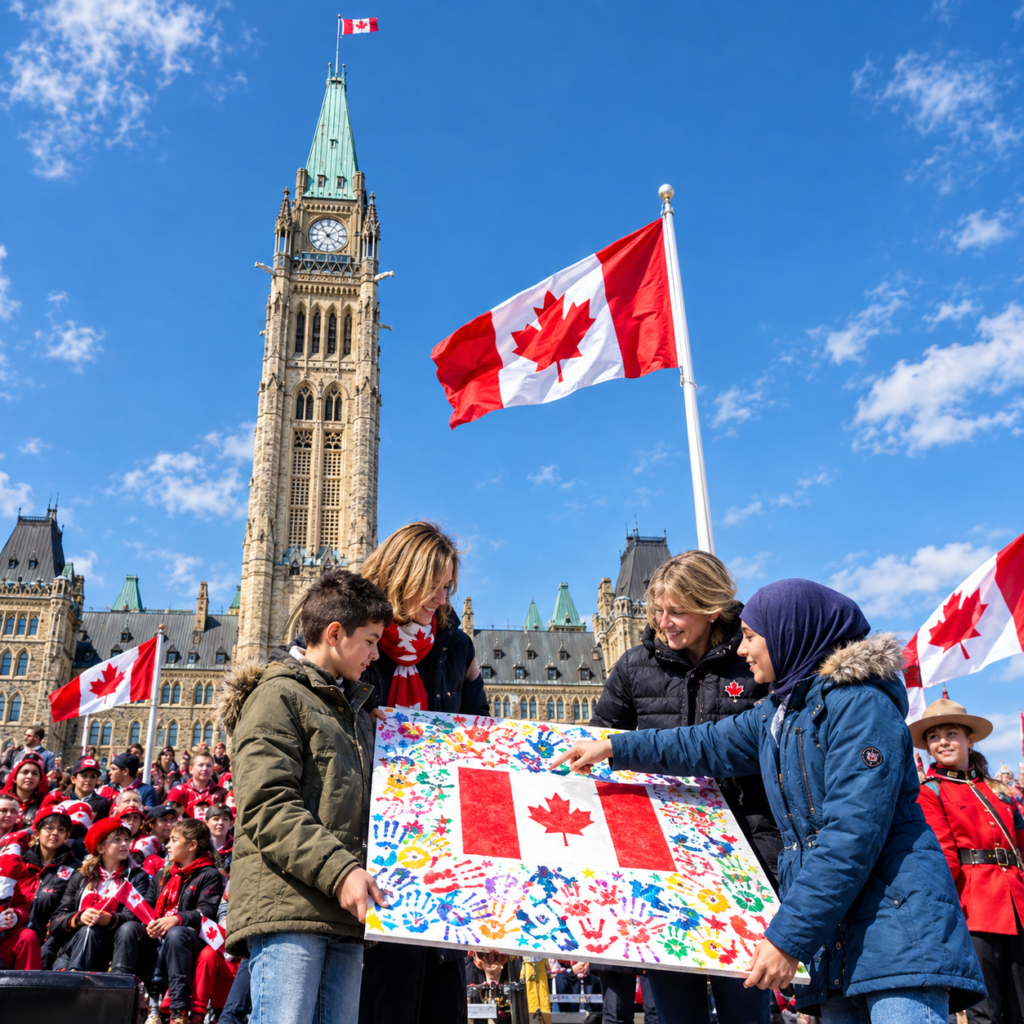
How do different cultural communities contribute to Canada?
Cultural communities contribute to Canada through businesses, employment, entrepreneurship, education, arts, food, community organizations and civic participation. Immigrant communities also contribute to population and labour-force growth while maintaining cultural traditions and languages.
Canada’s multicultural framework encourages people to participate fully in Canadian society while maintaining cultural identities. Federal multiculturalism programs support community organizations working on inclusion, intercultural understanding and participation.
Where are multicultural communities most concentrated in Canadian cities?
Large multicultural populations are particularly concentrated in major metropolitan areas such as Toronto, Vancouver and Montréal, although diverse communities exist across Canada. The 2021 Census showed that Toronto and Vancouver had particularly high proportions of immigrants compared with many other Canadian population centres.
Within cities, communities may also become concentrated in particular neighbourhoods because of family networks, language, housing patterns, businesses and established cultural institutions. This has contributed to recognizable cultural districts and neighbourhoods featuring restaurants, shops, places of worship and community organizations.
How is immigration influencing Canadian culture and society?
Immigration is one of the major forces behind Canada’s demographic and cultural diversity. Newcomers bring different languages, religions, traditions, foods, businesses and cultural practices, while their children and later generations contribute to an evolving Canadian culture.
Statistics Canada notes that immigration has contributed to the increasing share of Canadians whose mother tongue is neither English nor French. At the same time, immigrants generally participate in Canadian social and civic life, with settlement services supporting language learning, employment and community integration.
What role do cultural festivals and celebrations play in Canada?
Cultural festivals provide opportunities for communities to celebrate traditions, introduce cultural practices to wider audiences and create social connections. Events connected to cultural heritage, food, music, religion and national communities take place in cities and smaller communities throughout Canada.
The federal government’s multiculturalism program supports cultural and community initiatives designed to encourage intercultural understanding and participation. Canadian Multiculturalism Day, Black History Month and other commemorations are also used to highlight different communities and their contributions.
How do multicultural food, music and arts influence Canadian society?
Food, music and the arts are among the most visible expressions of Canada’s multicultural society. Restaurants, festivals, music performances, films, literature and visual arts allow cultural traditions to become part of everyday Canadian life.
Major Canadian cities have developed food and arts scenes influenced by communities from Asia, Europe, Africa, the Middle East, Latin America and the Caribbean. These cultural influences also interact with Indigenous, French-Canadian and other long-established Canadian traditions, creating new forms of cultural expression.
What role do community organizations play in integrating newcomers?
Community organizations provide practical support that can help newcomers learn official languages, find employment, understand local services, build social networks and participate in community life. IRCC says more than 530 third-party organizations deliver federally funded settlement services outside Quebec.
These organizations can also provide interpretation, childcare, transportation assistance, employment support and referrals. Local Immigration Partnerships and Francophone immigration networks coordinate services between governments, community organizations and other local partners.
How does Canada maintain social cohesion alongside cultural diversity?
Canada’s multicultural framework combines cultural diversity with shared participation in Canadian society, human rights, equality, official languages and the rule of law. Federal multiculturalism programs also focus on combating racism and discrimination and encouraging intercultural and interfaith understanding.
Integration is viewed as a two-way process: newcomers are supported in participating in Canadian society, while institutions and communities work to reduce barriers to participation. Current policy discussions also recognize challenges involving social cohesion, discrimination, housing pressures and access to settlement services
Religion & Community
What are the major trends in religion and community life in Canada in October 2026?
Canada’s religious landscape continues to become more diverse, while the share of Canadians reporting no religious affiliation has also increased. The latest comprehensive Census data from 2021 found that 53.3% of Canadians reported a Christian religion, 34.6% reported no religious affiliation or a secular perspective, and 12.1% reported another religion. Muslim, Hindu and Sikh populations all increased their shares between 2001 and 2021.
In 2026, religion remains connected to community life through places of worship, charitable activities, cultural events, newcomer support and social networks. At the same time, Canada’s community landscape includes both religious and non-religious organizations.
What role do different religious communities play in Canadian society?
Religious communities contribute through volunteering, charitable activities, cultural programs, social services, education and community organizations. Places of worship can provide spaces where people build social connections and maintain cultural and religious traditions.
Canada’s 2021 Census recorded more than 200 religious groups or denominations, demonstrating the country’s broad religious diversity. Statistics Canada notes that religious data are also useful for governments and service providers when planning programs and understanding the needs of different communities.
How does religious diversity shape Canadian communities?
Religious diversity influences Canadian communities through neighbourhoods, schools, workplaces, cultural events, food, places of worship and community organizations. Immigration has been an important factor in the growth of several non-Christian religious communities.
According to the 2021 Census, the proportion of Canadians reporting Islam, Hinduism or Sikhism had more than doubled between 2001 and 2021. Muslim Canadians represented 4.9% of the population, Hindus 2.3%, and Sikhs 2.1% in the 2021 Census.
What role do mosques, churches, temples, gurdwaras and synagogues play in community services?
Places of worship often serve purposes beyond religious services. They can provide food assistance, social support, cultural activities, volunteer opportunities, community gatherings and connections to local resources.
The federal newcomer-settlement service specifically identifies places of worship as useful community connections. IRCC notes that they can help newcomers find culturally appropriate food, connect with people who speak their language and access social support while adjusting to life in Canada.
How do religious organizations support newcomers with settlement?
Religious organizations can help newcomers develop social networks and community connections, particularly when newcomers share a language, cultural background or faith tradition with members of the organization. They may provide referrals, community information, food support, social gatherings and volunteer opportunities.
IRCC’s 2025 Settlement Outcomes Report found that among newcomers who participated in organizations, 35% participated in a religious organization, making it the most commonly reported type among the listed organization categories. The same report found that 90% of newcomers surveyed considered their community welcoming to newcomers.
How are interfaith activities and community cooperation developing in Canada?
Interfaith cooperation can bring people from different religious traditions together through dialogue, community events, educational programs, charitable activities and responses to local issues. Such activities can create opportunities for communities to learn about different religious traditions and work together on shared community needs.
This approach fits within Canada’s broader framework of religious freedom and multicultural participation. However, the scale and form of interfaith activity varies between communities, so there is no single national model for how religious organizations cooperate.
How do young people participate in religious and community organizations?
Young Canadians can participate through youth groups, sports, volunteering, cultural programs, educational activities, community service and religious events. These organizations can provide opportunities to develop leadership skills and maintain connections with family, culture and community.
Participation varies considerably by individual and community. Canada’s changing religious profile also means that youth community life includes people who identify with different faiths as well as Canadians who identify with no religion. The 2021 Census recorded 34.6% of Canadians as having no religious affiliation or a secular perspective.
What is Canada’s legal framework for religious freedom and community participation?
Religious freedom is protected by Section 2(a) of the Canadian Charter of Rights and Freedoms, which guarantees freedom of conscience and religion. The Charter also protects freedom of peaceful assembly and freedom of association under Sections 2(c) and 2(d).
Canadian human-rights law also prohibits discrimination based on religion. The legal framework protects the right to hold and express religious beliefs while also protecting people who have no religious belief. Courts can consider whether government measures unjustifiably interfere with protected religious freedom, subject to the Charter’s general limitation framework
conclusion
Canada in October 2026 reflects a country where everyday life continues to evolve across food, travel, education, sports, culture and community. Canadians are balancing affordability concerns with changing dining habits, while fall travel continues to highlight the country’s parks, mountains, scenic routes and natural landscapes. Education is being influenced by artificial intelligence, international-student policies and growing demand for skilled workers, while sports remain an important part of community and national life.
Canadian identity is also continuing to evolve through multiculturalism, immigration, Indigenous history, regional cultures, official languages and community participation. Canada’s diverse cultural and religious communities contribute to food, arts, festivals, businesses, social services and everyday community life. At the same time, shared values, human rights, equality, inclusion and participation provide important connections across different communities.
Overall, October 2026 shows the many dimensions of life in Canada, from seasonal experiences and changing consumer habits to education, sports, cultural diversity and community connections. Understanding these trends provides a broader picture of how Canadian society is changing while maintaining many of the traditions and institutions that remain important across the country.
Table of Contents

Leave a Reply