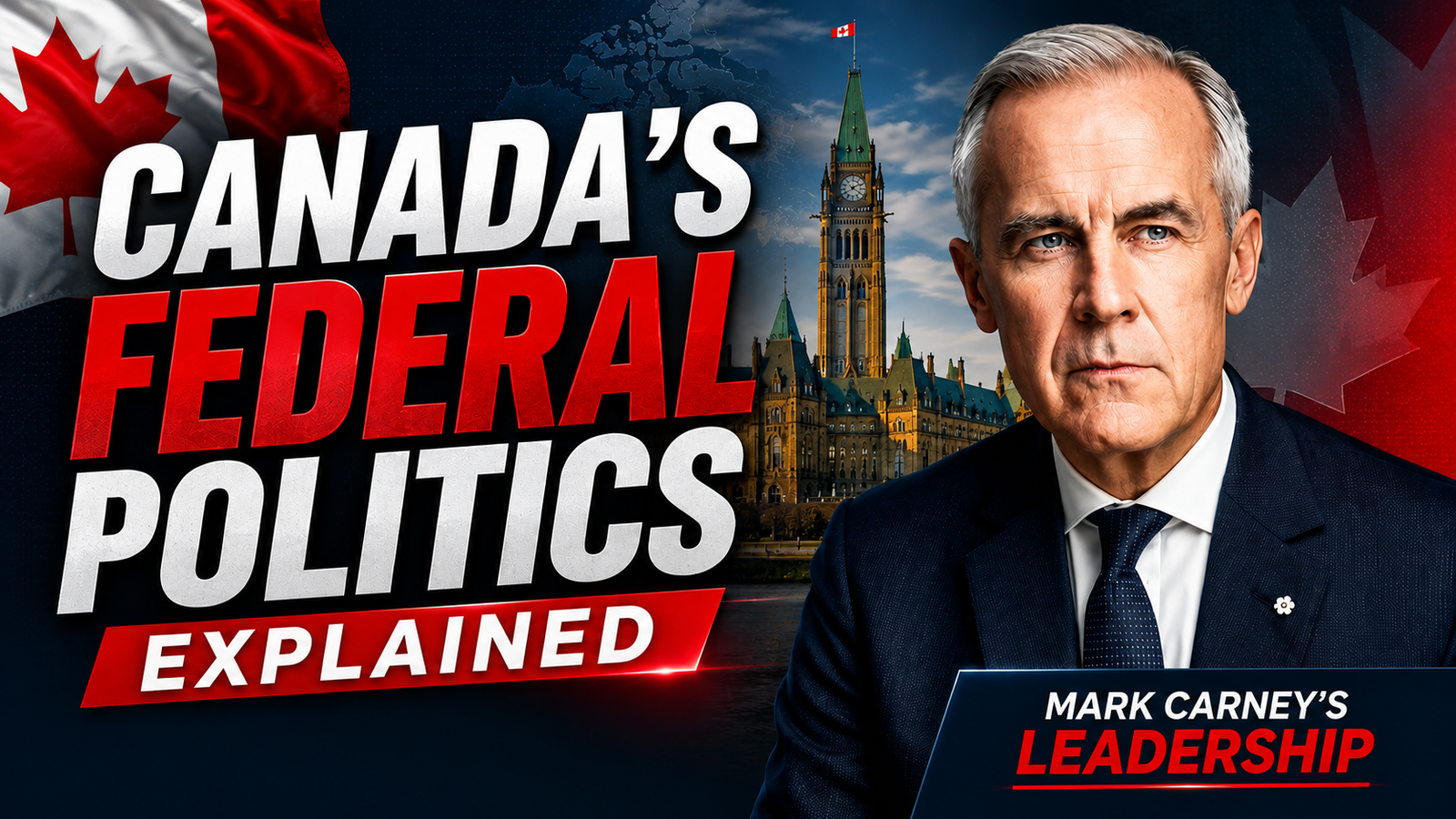
Federal Politics in Canada Explained
Introduction
Federal politics plays a major role in the political and economic life of Canada. Decisions made by the federal government can affect millions of Canadians through policies related to taxes, immigration, housing, the economy, trade, national defence and foreign affairs. Canada is a parliamentary democracy and constitutional monarchy.
Canadians elect Members of Parliament (MPs) to represent their local electoral districts. Canadians do not directly elect the Prime Minister. Instead, the leader who can command the confidence of the House of Commons normally becomes Prime Minister. Canada’s federal political landscape underwent a significant change in 2025 when Mark Carney became Prime Minister after Justin Trudeau stepped down as Liberal Party leader.
Carney brought a different background to the Prime Minister’s Office. Before entering politics, he had a long career in economics, finance, and central banking, including leadership roles at the Bank of Canada and the Bank of England.
What Is Federal Politics in Canada?
Federal politics in Canada refers to political activities and government decisions at the national level.
It includes the federal government, Parliament, the Prime Minister, Cabinet, political parties, federal elections and national policies.
Federal politics focuses on issues that affect Canada as a whole. These include national defence, immigration, foreign affairs, criminal law, taxation, banking, international trade and other areas under federal jurisdiction.
How Does Federal Politics Work in Canada?
Canada operates under a parliamentary system.
During a federal election, Canadians vote for candidates in their local electoral districts, also known as ridings. The candidate who receives the most votes in a riding normally becomes the Member of Parliament for that area.
Canadians do not directly vote for the Prime Minister.
After an election, the political party that can command the confidence of the House of Commons normally forms the government. The leader of that party becomes Prime Minister.
The Prime Minister then chooses Cabinet ministers to manage different areas of government.
What Are the Main Responsibilities of the Canadian Federal Government?
The federal government is responsible for many national issues.
Its major responsibilities include:
National defence and security
Foreign Affairs and International Relations
Immigration and citizenship
Criminal law
Federal Taxes and National Economic Policy
Banking and financial matters
International and interprovincial trade
Indigenous affairs
Employment insurance
National infrastructure and economic programs
Criminal Law and Federal Justice
Transportation and Infrastructure
Environmental Protection
Public Health and National Health Programs
Natural Resources and Energy
National Parks and Federal Lands
Provincial and territorial governments are responsible for other important areas, including education and many aspects of healthcare delivery.
How Is the Canadian Federal Government Structured?
Canada’s federal government has several major components.
The Prime Minister
The Prime Minister is the head of Canada’s federal government and leads the Cabinet.
Cabinet
Cabinet consists of ministers responsible for different government departments and policy areas. Cabinet ministers are normally selected by the Prime Minister.
Parliament
The Parliament of Canada has two chambers:
House of Commons
Senate
Members of the House of Commons are elected by Canadians. Senators are appointed and represent Canada’s regions.
Federal Departments and Agencies
Federal departments and agencies implement government programs, policies, and laws.
How Is the Canadian Prime Minister Chosen?
The Canadian Prime Minister is not directly elected by the public.
Canadians vote for local Members of Parliament. After an election, the Governor General normally invites the leader who can command the confidence of the House of Commons to form the government.
That leader becomes Prime Minister.
This system explains why Canadians vote for MPs and political parties rather than directly voting for a candidate for Prime Minister.
What Powers Does the Federal Government Have?
The Canadian Constitution gives the federal government authority over several important areas.
These include national defence, foreign affairs, criminal law, immigration, citizenship, taxation, banking, currency and international trade.
However, federal power is not unlimited. Canada’s Constitution divides responsibilities between the federal government and provincial governments.
What Are the Major Federal Political Parties in Canada?
Canada has several major federal political parties.
They include:
Liberal Party of Canada
Conservative Party of Canada
New Democratic Party (NDP)
Bloc Québécois
Green Party of Canada
The number of seats held by each party can change following federal elections.
Who Is the Prime Minister of Canada?
Mark Carney is the Prime Minister of Canada.
He became Prime Minister on March 14, 2025, after winning the Liberal Party leadership election and succeeding Justin Trudeau.
Carney is Canada’s 24th Prime Minister.
Who Is Mark Carney?
Mark Carney is a Canadian economist, former central banker, and politician.
Before entering politics, he built an international career in economics and finance. He served as Governor of the Bank of Canada and later became Governor of the Bank of England.
His experience in central banking and international finance became an important part of his political profile when he entered the Liberal leadership race in 2025.
Mark Carney’s Family
Personal Life
Mark Carney’s Wife and Four Daughters Today
Mark Carney met Diana Fox while they were both studying at Oxford University, and the couple married in 1994. They shared a passion for ice hockey and played together for Oxford’s Ice Hockey Club. Tennis is another interest they enjoy together, and they have attended Wimbledon in both 2016 and 2018
. Diana, an Oxford-educated economist, has worked in public policy and later joined the Eurasia Group, where she advises on global climate and energy policy. Although she generally prefers to stay out of the spotlight, Diana stood beside Carney on election night.
Mark and Diana have four daughters: Sasha, Amelia, Tess, and Cleo. Cleo has attracted the most public attention. She studies at Harvard University and is involved in sustainability-focused work
. She reports for the newsletter Blue Dot Living and hosts Cleo’s Clean Cooking, a show that combines cooking with conversations about climate change. Her father, Mark Carney, has appeared as a guest on the show. Cleo also serves on the board of the nonprofit Blue Dot Institute and leads Harvard’s Resource Efficiency Program, where she works on reducing energy consumption.
THE MARK CARNEY FAMILY
Full Family Details & Family Tree
The other three daughters maintain a lower public profile. Amelia graduated from the University of Edinburgh. Sasha uses they/them pronouns and earned a degree in English and Gender Studies from Yale University. They write freelance from Brooklyn, New York, and have also been involved in advocacy for the rights of incarcerated people. Tess, meanwhile, keeps an especially private life, and little is publicly known about her.
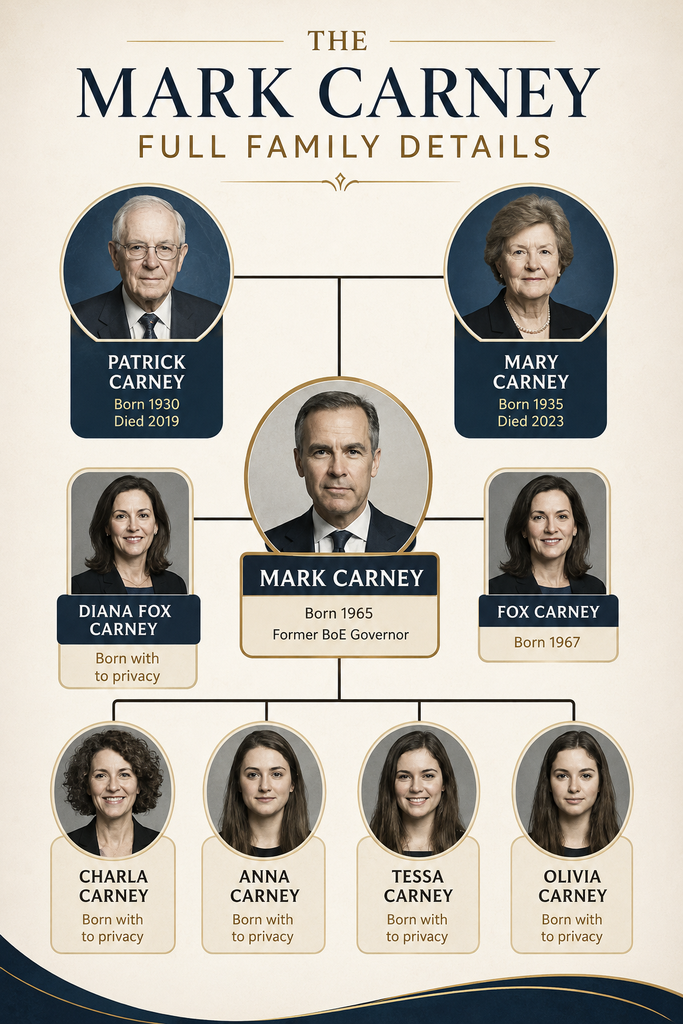
Full Family Details & Family Tree
Mark Carney and Diana Fox Carney have four daughters: Cleo, Tess, Amelia, and Sasha. The family has generally kept their personal lives away from the media, so detailed public information about the children is limited.
Cleo Carney
Cleo Carney is the most publicly known of Mark Carney’s daughters. She has been associated with environmental and sustainability-related interests and has studied at Harvard University.
Cleo also attracted public attention in March 2025 when she introduced her father during the Liberal Party leadership event. Her appearance provided the public with a rare glimpse into Mark Carney’s family life.
Tess, Amelia and Sasha Carney
Mark and Diana’s other three daughters are Tess, Amelia, and Sasha. Unlike Cleo, they have largely stayed out of the public spotlight. Reliable information about their education, careers, and personal lives is limited, reflecting the family’s preference for privacy.
Overall, Diana Fox Carney and their four daughters are an important part of Mark Carney’s family background, but the Carney family has maintained a clear separation between his public career and their private lives. Diana’s professional work in climate and policy and Cleo’s public appearances have occasionally brought the family into the public eye, while Tess, Amelia, and Sasha have remained largely private.
Mark Carney’s Four Daughters: Names, Studies and Careers
Mark Carney and his wife, Diana Fox Carney, have four daughters: Cleo, Tess, Amelia, and Sasha. The family has generally kept their personal lives private, so detailed information about the daughters’ education and careers is not publicly available for all four.
Cleo Carney
Cleo Carney is the eldest and most publicly known of Mark Carney’s daughters. She is a student at Harvard University. Her publicly available academic profile lists her field of study as History of Science with a minor in Global Health and Public Policy.
Cleo also became known publicly in March 2025 when she introduced her father after he won the Liberal Party leadership contest. She spoke about her father’s character and described him as focused, principled, funny, and kind.

Tess Carney
Tess Carney is one of Mark and Diana Carney’s four daughters. However, reliable public sources do not provide enough confirmed information about her current university, degree, field of study, or career.
Because the Carney family has maintained a high level of privacy around their children, it is safer to state that Tess’s current studies and professional career are not publicly confirmed rather than relying on unverified online claims.

Amelia Carney
Amelia Carney is another daughter of Mark and Diana Carney. Like Tess, she has largely stayed away from the public spotlight.
There is limited reliable public information confirming Amelia’s current field of study, university, or career. Therefore, specific claims about her education should not be included in an article unless they can be confirmed through a reliable source.

Sasha Carney
Sasha Carney is the fourth daughter of Mark and Diana Carney. Public reporting confirms her as one of the couple’s four daughters, but detailed information about her education and career is limited.
Some media reports have discussed Sasha’s education, but the available information is not as consistently documented as Cleo’s Harvard studies. For an accurate article, it is best to describe her education and career as largely private unless a reliable source confirms specific details.

Family’s Privacy
Mark Carney and Diana Fox Carney have generally kept their daughters away from extensive media coverage. While Cleo has appeared publicly alongside her father, particularly during the 2025 Liberal leadership campaign, the other three daughters have maintained much more private lives. Global News also confirms the names of all four daughters while providing specific public information primarily about Cleo.
For this reason, an accurate article should clearly distinguish between verified information and claims circulating on less reliable websites. At present, Cleo’s Harvard education is the best-documented academic information among the four daughters.
When Did Mark Carney Become Prime Minister?
Mark Carney officially became Prime Minister on March 14, 2025.
He became Prime Minister after winning the Liberal Party of Canada’s leadership election on March 9, 2025.
It is important to distinguish this from the federal election. Canadians did not directly elect Carney as Prime Minister in March. He became Prime Minister through the Liberal Party leadership process and Canada’s parliamentary system.
What Number Prime Minister of Canada Is Mark Carney?
Mark Carney is the 24th Prime Minister of Canada.
His appointment was significant because he came to the Prime Minister’s Office after a career primarily focused on economics, finance, and central banking rather than elected politics.
What Is Mark Carney’s Political Background?
Carney’s political background is relatively different from that of many Canadian prime ministers.
Before becoming Liberal Party leader, he had not spent decades serving as an elected politician.
His professional background was mainly in economics, finance, public policy, and central banking.
He entered partisan politics in 2025 when he ran for the leadership of the Liberal Party.
What Did Mark Carney Do Before Entering Politics?
Before entering politics, Mark Carney worked in investment banking and government.
He worked at Goldman Sachs and later held senior positions within Canada’s financial and economic policy institutions.
He eventually became Governor of the Bank of Canada and later Governor of the Bank of England.
This career gave him extensive experience in financial markets, monetary policy, economic crises, and international finance.
When Was Mark Carney Governor of the Bank of Canada?
Mark Carney served as Governor of the Bank of Canada from 2008 to 2013.
He took the position during a major period of global financial uncertainty, including the global financial crisis.
His experience during this period contributed to his reputation as an experienced economic leader.
When Was Mark Carney Governor of the Bank of England?
Mark Carney served as Governor of the Bank of England from 2013 to 2020.
He was the first Canadian to serve as Governor of the Bank of England.
rney’s Journey From Global Finance to Canada’s Prime Minister
Mark Carney’s rise to Canada’s prime ministership is unlike a traditional political career. Before entering federal politics, Carney spent decades working in central banking, international finance, climate finance, and corporate leadership. In 2025, he moved into active politics, won the leadership of the Liberal Party of Canada and soon became the country’s 24th prime minister.
His financial background has remained an important part of his public profile. From working on global climate-finance initiatives through the United Nations to holding senior positions at Brookfield Asset Management and Bloomberg, Carney built a career focused on economic policy, financial stability, and investment.
A Career Built in Central Banking and Global Finance
Mark Carney spent much of his professional career in central banking and financial policy before moving into international finance and corporate leadership.
Between 2021 and 2025, his work extended well beyond Canada. He was involved in global efforts related to climate finance, sustainable investment, financial stability, and the transition toward a lower-carbon economy.
This experience later became an important part of his political profile, particularly as economic policy and Canada’s position in the global economy became central issues in his political career.
Mark Carney as UN Special Envoy for Climate Action and Finance
Carney served as the United Nations Special Envoy for Climate Action and Finance, a role focused on mobilizing financial resources to address climate change.
His responsibilities included working with governments, financial institutions, investors, and businesses to encourage greater investment in the transition to a low-carbon economy.
He also promoted efforts to align the global financial system with Net Zero goals, emphasizing the role of private capital in supporting clean energy and climate-related investment.
His work in this area helped establish Carney as an influential figure at the intersection of finance and climate policy.
Leadership Role at Brookfield Asset Management
Carney also held a senior leadership position at Brookfield Asset Management, where he worked on ESG, impact investing, and transition investing.
His responsibilities included helping develop investment strategies related to the transition toward a more sustainable and lower-carbon economy.
Carney remained associated with Brookfield for approximately five years before stepping down on January 16, 2025. His departure came as he prepared to enter Canadian politics and pursue the leadership of the Liberal Party.
The decision marked a major turning point in his career, shifting his focus from global finance and investment toward national political leadership.
Chair of Bloomberg’s Board of Directors
Carney also held an important corporate leadership role at Bloomberg L.P.
In October 2023, he was appointed Chair of Bloomberg’s Board of Directors. The position added another significant corporate governance responsibility to his already extensive international financial career.
His association with Bloomberg reflected his continued influence in global finance and business leadership before his move into Canadian politics.
Carney’s Association With Stripe and Harvard University
Carney’s professional network also included positions outside traditional financial institutions.
He served as an external member of Stripe’s Board and was associated with the Harvard University Board of Overseers.
These roles reflected his broader experience across finance, technology, education, and corporate governance.
After entering active politics in 2025, Carney stepped away from several of his corporate and external board responsibilities to focus on his political career.
Mark Carney Enters Canadian Politics
The biggest turning point in Carney’s career came on January 16, 2025, when he announced his candidacy for the leadership of the Liberal Party of Canada.
His decision was significant because, until then, Carney had primarily been known as an economist, central banker and global financial leader rather than a career politician.
His entry transformed the Liberal leadership race and brought a candidate with extensive experience in monetary policy, financial markets and international economics into Canadian federal politics.
Carney Wins the Liberal Party Leadership
On March 9, 2025, Mark Carney won the Liberal Party leadership election.
The victory made him the new leader of the Liberal Party and positioned him to become Canada’s next prime minister.
His leadership victory came during an important period of transition for the Liberal Party, following Justin Trudeau’s decision to step down as party leader.
For Carney, the political transition happened remarkably quickly. He announced his leadership campaign in January, won the Liberal leadership in March, and became prime minister later that same month.
From Liberal Leader to Canada’s 24th Prime Minister
On March 14, 2025, Mark Carney was sworn in as Canada’s 24th prime minister .
His appointment followed the Liberal Party’s leadership transition after Justin Trudeau announced his resignation as Liberal leader and his intention to step down as prime minister**.
The Liberal Party subsequently held a leadership election, which Carney won. He then succeeded Trudeau as prime minister and formed a new federal government.
Carney’s rapid transition from global financial leadership to the highest political office in Canada marked one of the most notable developments in the country’s recent political history.
Why Mark Carney’s Financial Background Matters
Carney’s political identity cannot be separated from his financial career. His experience spans monetary policy, central banking, financial markets, international finance, climate investment and corporate governance.
Supporters have pointed to this background as an important asset at a time when Canada faces major economic challenges involving growth, investment, international trade and global economic uncertainty.
At the same time, Carney’s relatively recent entry into electoral politics distinguishes him from many traditional political leaders. Rather than spending decades building a career inside political parties, he entered national politics after establishing himself as an internationally recognized financial leader.
Mark Carney’s Career Timeline
| Date/Period | Major Career Milestone
2021–2025 Continued work in global finance, climate finance and corporate leadership
2021 onward Continued involvement as UN Special Envoy for Climate Action and Finance
2021–2025 Senior leadership role at Brookfield Asset Management October 2023 Became Chair of Bloomberg L.P.’s Board of Directors
January 16, 2025 Announced his Liberal Party leadership campaign
March 9, 2025 Won the Liberal Party leadership election
March 14, 2025 Sworn in as Canada’s 24th prime minister
How Did Mark Carney Become Leader of the Liberal Party of Canada?
Justin Trudeau announced in January 2025 that he would step down as Liberal Party leader once a successor was selected.
The Liberal Party then held a leadership election.
Mark Carney entered the race and won the Liberal leadership on March 9, 2025.
He was sworn in as Canada’s Prime Minister five days later, on March 14.
Why Did Justin Trudeau Resign as Prime Minister?
Justin Trudeau faced increasing political pressure before announcing his resignation.
His government was experiencing declining public support, internal party concerns, and growing questions about the Liberal Party’s electoral prospects.
In January 2025, Trudeau announced that he would step down as Liberal Party leader once a successor was chosen.
His decision triggered a leadership contest that ultimately resulted in Mark Carney becoming Liberal leader and Prime Minister.
This change significantly reshaped Canada’s federal political leadership before the 2025 election.
What Are the Main Priorities of Mark Carney’s Government?
Mark Carney’s government has placed strong emphasis on Canada’s economic strength and long-term competitiveness.
Major priorities have included:
Economic growth
Housing construction and affordability
Infrastructure investment
Productivity
Business investment
Trade diversification
Canadian competitiveness
National security
Economic resilience
Canada–U.S. relations
What Is Mark Carney’s Economic Policy?
Mark Carney’s economic approach focuses on economic growth, investment, productivity, and strengthening Canada’s domestic economic capacity.
His background as a central banker has influenced his understanding of monetary policy, financial markets, and economic stability.
His government has also emphasized infrastructure, housing, investment and improving Canada’s competitiveness in the global economy.
How Does Mark Carney Plan to Strengthen Canada’s Economy?
Carney’s government has focused on increasing investment, supporting infrastructure and housing construction, improving productivity, and strengthening Canadian industries.
Another important goal is trade diversification.
Canada has traditionally had very strong economic ties with the United States. Expanding trade relationships with other international markets could help Canada become more economically resilient.
Why Are Canada–U.S. Relations Important to Mark Carney’s Government?
Canada and the United States have extremely close economic relationships.
The two countries are deeply connected through trade, manufacturing, energy, supply chains, and investment.
Changes in U.S. tariffs or trade policies can therefore have significant consequences for Canadian businesses and workers.
For Carney’s government, maintaining a strong relationship with the United States while developing alternative international markets is an important challenge.
What Role Did Mark Carney Play in the 2025 Federal Election?
Mark Carney led the Liberal Party during the April 28, 2025 federal election.
The election was particularly important because Carney had become Prime Minister only a few weeks earlier.
The Liberal Party won the largest number of seats, securing 169 seats, while the Conservative Party won 144 seats.
The Liberal Party therefore remained in government.
Who Was Mark Carney’s Main Political Rival in the 2025 Federal Election?
Mark Carney’s main political rival was Pierre Poilievre, leader of the Conservative Party of Canada.
The 2025 federal election was a major contest between the Liberals under Carney and the Conservatives under Poilievre.
The Liberals won the largest number of seats, while the Conservatives finished second.
How Did Mark Carney’s Liberal Party Win the 2025 Election?
The Liberal victory resulted from several political factors rather than one single issue.
Carney’s economic and financial background was an important part of his campaign image, particularly during a period of economic uncertainty and tensions with the United States.
Mark Carney’s government has placed strong emphasis on Canada’s economic strength and long-term competitiveness.
Major priorities have included:
Economic growth
Housing construction and affordability
Infrastructure investment
Productivity
Business investment
Trade diversification
Canadian competitiveness
National security
Economic resilience
Canada–U.S. relations
What Is Mark Carney’s Economic Policy?
Mark Carney’s economic approach focuses on economic growth, investment, productivity, and strengthening Canada’s domestic economic capacity.
His background as a central banker has influenced his understanding of monetary policy, financial markets, and economic stability.
His government has also emphasized infrastructure, housing, investment and improving Canada’s competitiveness in the global economy.
How Does Mark Carney Plan to Strengthen Canada’s Economy?
Carney’s government has focused on increasing investment, supporting infrastructure and housing construction, improving productivity, and strengthening Canadian industries.
Another important goal is trade diversification.
Canada has traditionally had very strong economic ties with the United States. Expanding trade relationships with other international markets could help Canada become more economically resilient.
Why Are Canada–U.S. Relations Important to Mark Carney’s Government?
Canada and the United States have extremely close economic relationships.
The two countries are deeply connected through trade, manufacturing, energy, supply chains, and investment.
Changes in U.S. tariffs or trade policies can therefore have significant consequences for Canadian businesses and workers.
For Carney’s government, maintaining a strong relationship with the United States while developing alternative international markets is an important challenge.
What Role Did Mark Carney Play in the 2025 Federal Election?
Mark Carney led the Liberal Party during the April 28, 2025 federal election.
The election was particularly important because Carney had become Prime Minister only a few weeks earlier.
The Liberal Party won the largest number of seats, securing 169 seats, while the Conservative Party won 144 seats.
The Liberal Party therefore remained in government.
Who Was Mark Carney’s Main Political Rival in the 2025 Federal Election?
Mark Carney’s main political rival was Pierre Poilievre, leader of the Conservative Party of Canada.
The 2025 federal election was a major contest between the Liberals under Carney and the Conservatives under Poilievre.
The Liberals won the largest number of seats, while the Conservatives finished second.
What Is Mark Carney’s Economic Policy?
Mark Carney’s economic approach focuses on economic growth, investment, productivity, and strengthening Canada’s domestic economic capacity.
His background as a central banker has influenced his understanding of monetary policy, financial markets, and economic stability.
His government has also emphasized infrastructure, housing, investment and improving Canada’s competitiveness in the global economy.
How Does Mark Carney Plan to Strengthen Canada’s Economy?
Carney’s government has focused on increasing investment, supporting infrastructure and housing construction, improving productivity, and strengthening Canadian industries.
Another important goal is trade diversification.
Canada has traditionally had very strong economic ties with the United States. Expanding trade relationships with other international markets could help Canada become more economically resilient.
Why Are Canada–U.S. Relations Important to Mark Carney’s Government?
Canada and the United States have extremely close economic relationships.
The two countries are deeply connected through trade, manufacturing, energy, supply chains, and investment.
Changes in U.S. tariffs or trade policies can therefore have significant consequences for Canadian businesses and workers.
For Carney’s government, maintaining a strong relationship with the United States while developing alternative international markets is an important challenge.
Who Was Mark Carney’s Main Political Rival in the 2025 Federal Election?
Mark Carney’s main political rival was Pierre Poilievre, leader of the Conservative Party of Canada.
The 2025 federal election was a major contest between the Liberals under Carney and the Conservatives under Poilievre.
The Liberals won the largest number of seats, while the Conservatives finished second.
How Did Mark Carney’s Liberal Party Win the 2025 Election?
The Liberal victory resulted from several political factors rather than one single issue.
Carney’s economic and financial background was an important part of his campaign image, particularly during a period of economic uncertainty and tensions with the United States.
Voter concerns about the economy, trade, national leadership, and Canada’s relationship with the United States also played important roles.
Regional voting patterns and campaign strategy also influenced the final result.
Why Did Canadians Support Mark Carney?
This question needs an important clarification.
Canadians did not directly elect Mark Carney as Prime Minister in March 2025.
Liberal Party members selected Carney as their party leader, and he subsequently became Prime Minister.
During the April 2025 federal election, Canadians voted for candidates in their local ridings. The Liberal Party won the largest number of seats.
Carney’s economic experience, international reputation, and leadership during a period of uncertainty were important parts of his political appeal.
What Made Mark Carney Popular Among Canadians?
Carney’s economic expertise and international experience helped distinguish him from many traditional political leaders.
His previous roles at the Bank of Canada and Bank of England gave him a strong reputation in economic and financial circles.
His supporters viewed this experience as particularly valuable at a time of economic uncertainty and trade tensions.
However, political support varies among Canadians, and not all voters supported Carney or the Liberal Party.
Why Did Some Canadians Trust Mark Carney to Lead the Country?
Supporters viewed Carney’s experience managing major financial institutions and dealing with economic challenges as an advantage.
His background gave him experience with inflation, financial markets, monetary policy, and global economic issues.
For voters concerned about economic uncertainty, this background was an important part of his appeal.
Why Did Mark Carney Become Prime Minister for the First Time in 2025?
Mark Carney became Prime Minister after winning the Liberal Party leadership election following Justin Trudeau’s decision to step down as Liberal leader.
He won the leadership on March 9, 2025, and officially became Prime Minister on March 14, 2025.
How Does Mark Carney’s Leadership Affect Canadian Federal Politics?
Carney’s leadership has changed the political conversation in Canada.
Because of his economic background, issues such as investment, productivity, trade, housing, and economic resilience have received significant attention.
His government also faces strong political pressure from opposition parties, provinces, businesses, and voters over the country’s economic future.
What Are the Biggest Political Challenges Facing Mark Carney?
Mark Carney’s government faces several major challenges.
Housing Affordability
High housing costs and limited supply remain important concerns for many Canadians. Increasing housing construction while improving affordability is a major challenge.
Economic Growth
Canada needs stronger productivity and investment to support long-term economic growth.
U.S. Trade Relations
Changes in American trade policy can significantly affect Canada’s economy.
Cost of Living
Food, housing, and other household expenses remain important political concerns.
Government Spending
The government must balance investment in major programs and infrastructure with concerns about fiscal responsibility.
How Important Are Inflation and Housing to Mark Carney’s Government?
Inflation and housing are two major economic issues affecting Canadian households.
Inflation reduces purchasing power, while high housing costs can make it difficult for people to buy or rent homes.
The federal government therefore faces pressure to support economic growth while also helping improve affordability.
How Does Mark Carney’s Central Banker Experience Help Him as Prime Minister?
Carney’s central-banking experience gives him a strong understanding of monetary policy, inflation, financial markets, and economic crises.
As Governor of both the Bank of Canada and the Bank of England, he dealt with complex financial and economic challenges.
However, being Prime Minister requires more than economic knowledge. The role also involves foreign affairs, national security, public services, Parliament, and political negotiations.
What Are the Major Differences Between Mark Carney and Justin Trudeau’s Leadership?
Justin Trudeau and Mark Carney have very different professional backgrounds.
Trudeau was a career politician who became Liberal Party leader and then Prime Minister in 2015.
Carney entered the Prime Minister’s Office after a long career in economics, finance, and central banking.
As a result, Carney’s leadership has a stronger emphasis on economic and financial expertise, while Trudeau’s political career was built primarily through elected politics.
Why Is Mark Carney Important to Canadian Federal Politics?
Mark Carney is important because his rise to the Prime Minister’s Office represents a significant change in Canadian federal leadership.
He entered the position with an international reputation in economics and finance rather than decades of elected political experience.
His government also took office during a period of major economic, trade, and geopolitical uncertainty.
How Could Mark Carney’s Government Affect Canada’s Trade Policy?
Carney’s government could continue efforts to diversify Canada’s international trade relationships.
Although the United States remains Canada’s most important trading partner, Canada can also strengthen relationships with Europe, Asia, and other international markets.
Trade diversification could help Canada reduce its economic vulnerability to changes involving a single trading partner.
Why Is Mark Carney’s Leadership Considered Important in Modern Canadian Politics?
Mark Carney became Prime Minister during a period of significant economic and geopolitical change.
His international financial experience and central-banking background give him a unique political profile.
His government’s decisions on trade, investment, housing, infrastructure, and economic policy could have long-term effects on Canada’s political and economic direction.
How Does Federal Politics Affect Canadians’ Daily Lives?
Federal political decisions can affect Canadians in many ways.
Government policies can influence:
Taxes
Immigration
Employment programs
Housing
Trade
Infrastructure
National security
Economic growth
Federal benefits
Environmental policy
This is why understanding federal politics is important for Canadians. Decisions made in Ottawa can influence both households and businesses across the country.
.
Mark Carney’s Major Projects Office: Accelerating Canada’s Nation-Building Agenda
In 2025, Canadian Prime Minister Mark Carney launched the Major Projects Office (MPO) as part of his government’s broader strategy to accelerate major nation-building projects across Canada. The initiative was designed to help strategically important projects move through federal approval and regulatory processes more efficiently while supporting economic growth, investment, infrastructure development, and national resilience.
The Major Projects Office focuses on projects considered important to Canada’s long-term economic and strategic interests. These include developments in liquefied natural gas (LNG), nuclear energy, critical minerals, electricity transmission, transportation infrastructure, and northern development.
First Tranche of Major Projects
The first group of projects was announced in September 2025. The initial tranche represented approximately $60 billion in potential investment and included five major projects located across British Columbia, Ontario, Québec, and Saskatchewan.
The projects included:
LNG Canada Phase 2: in Kitimat, British Columbia, which involves expanding LNG infrastructure and increasing Canada’s export capacity.

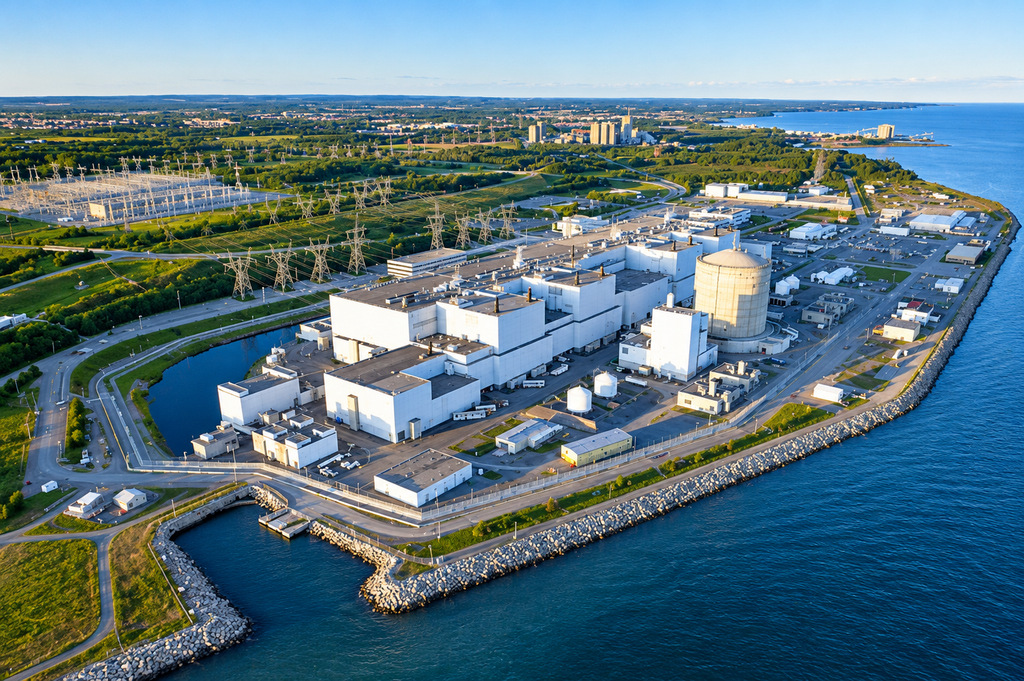
Darlington New Nuclear Project: in Ontario, supporting the expansion of nuclear power generation and Canada’s electricity supply.
Contrecoup Container Terminal Project in Québec, aimed at expanding the Port of Montreal’s container-handling capacity and strengthening Canada’s trade infrastructure.

McIlvenna Bay Furan Copper Mine Project in Saskatchewan, focused on developing important copper and other mineral resources.

Red Chris Mine Expansion in northwestern British Columbia, designed to expand the development of critical mineral resources.
The first tranche reflected the federal government’s effort to strengthen Canada’s position in energy, mining, nuclear power, and international trade while attracting major private and public investment.
Second Tranche of Projects
In November 2025, the Carney government announced a second group of seven projects under the Major Projects Office framework. The new tranche expanded the initiative beyond the initial energy and mining focus and included projects related to electricity transmission, conservation, LNG, critical minerals and northern infrastructure.
The second group included:
- North Coast Transmission Line
- Northwest Critical Conservation Corridor
- Ski Lysis LNG Project
- Canada Nickel’s Crawford Project
- Nouveau Monde Graphite’s Mateine Mine
- Northcliff Resources’ Sisson Mine
- Iqaluit Nurkic Sautoir Hydro Project
These projects span different parts of Canada and represent a broad approach to national infrastructure development. They also highlight the government’s focus on strengthening domestic supply chains and developing resources that could become increasingly important to Canada’s economy and energy security.
Why Did Mark Carney Create the Major Projects Office?
The Major Projects Office is intended to improve coordination between federal departments and agencies involved in major project approvals. Large infrastructure and resource projects can require multiple regulatory reviews, permits, and consultations. The MPO is designed to help coordinate these processes and provide greater clarity for projects considered to be in the national interest.
For the Carney government, speeding up major projects is also connected to a larger economic objective: attracting investment, creating jobs, expanding infrastructure and making Canada more competitive in global markets.
At the same time, major projects can involve complex environmental, regulatory, and Indigenous consultation issues. As a result, the government’s challenge is to accelerate development while maintaining appropriate environmental standards and respecting legal and consultation requirements.
Mark Carney’s Broader Economic Strategy
The Major Projects Office forms part of a broader economic agenda under Prime Minister Mark Carney. His government has emphasized strengthening Canada’s economic resilience, reducing infrastructure bottlenecks, expanding trade opportunities and making greater use of Canada’s natural resources.
The projects selected for the MPO therefore go beyond individual construction or mining developments. They represent an attempt to build stronger energy systems, transportation networks, critical-mineral supply chains and trade infrastructure.
Mark Carney’s Major Projects and National Initiatives in 2026
Gull Island Hydroelectricity Project
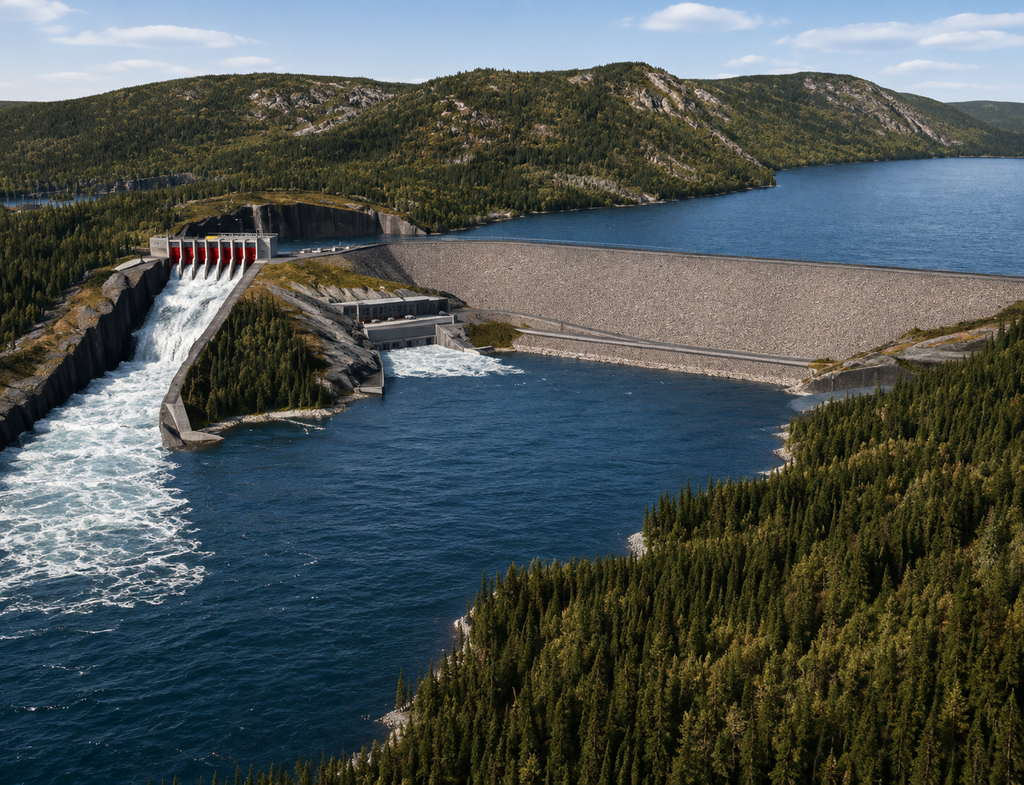
The Gull Island Hydroelectricity Project is one of Canada’s major clean-energy initiatives. In August 2026, the federal government announced a clean-energy investment framework involving the Churchill Falls Generating Station upgrade and expansion, Gull Island, related transmission infrastructure, and Labrador onshore wind development.
The overall investment framework is valued at approximately C$70 billion, with the federal government providing C$10 billion in financing. The government says the projects could generate around 14,000 megawatts of clean electricity, helping strengthen Canada’s long-term energy supply.
Building Canada Act and Major Projects
The Building Canada Act is designed to help Canada move major projects through federal processes more efficiently. The legislation received Royal Assent in June 2025 and provides a framework for projects considered important to the national interest.
In 2026, projects including the Mackenzie Valley Highway, Grays Bay Road and Port, and the NWMO Deep Geological Repository were advanced under this framework. These projects are connected to northern transportation, critical minerals, energy, and long-term infrastructure development.

Canada Strong Fund
The Canada Strong Fund is a major federal investment initiative designed to support strategic Canadian businesses and projects.
The fund is planned to receive C$25 billion over three years and is intended to make commercial investments in areas such as infrastructure, advanced manufacturing, energy and mining. The objective is to attract additional private investment while building long-term economic capacity in Canada.
Build Communities Strong Fund
The Build Communities Strong Fund (BCSF) is a C$51 billion, 10-year infrastructure funding program.
It is designed to support projects involving housing-enabling infrastructure, water and wastewater systems, healthcare, education, public transit, climate resilience, and community infrastructure. The program gives Canadian communities additional resources to build the infrastructure needed to support population and economic growth.
Toronto Housing Partnership
The Toronto Housing Partnership is a major housing initiative involving the federal government and the City of Toronto.
The partnership supports 18 housing projects expected to deliver more than 5,600 rental homes. The housing will include affordable, supportive, rent-geared-to-income and rent-controlled units.
The initiative is supported through federal housing programs, including Build Canada Homes and the Canada Mortgage and Housing Corporation’s Apartment Construction Loan Program.
Quebec Icebreaker Shipbuilding Project
Canada is also investing heavily in icebreaker construction to strengthen its Arctic and maritime capabilities.
The program is focused on building new Canadian Coast Guard icebreakers and expanding Canada’s ability to operate in northern waters. Beyond shipbuilding, the initiative is connected to Arctic sovereignty, maritime security, emergency response, and northern economic development.
Port of Vancouver Gateway Strategy
The Port of Vancouver Gateway Strategy is focused on strengthening Canada’s trade infrastructure and expanding access to international markets.
The strategy includes major investments in port and transportation infrastructure, including the proposed Roberts Bank Terminal 2. The broader objective is to increase Canada’s export capacity, diversify trade routes, and make national supply chains more resilient.
Defense Industrial Strategy
The Defense Industrial Strategy is designed to strengthen Canada’s domestic defense industry and increase Canadian participation in defense procurement.
The strategy emphasizes Canadian suppliers, domestic manufacturing, innovation, and advanced technologies. It is also intended to make defence procurement more predictable while creating economic opportunities for Canadian companies.
Defense Investment Agency
A further component of Canada’s defense agenda is the creation of a Defense Investment Agency.
The agency is intended to support Canada’s military re-equipment and defense investment programs while ensuring that defense spending creates broader economic benefits inside Canada. It is part of the government’s effort to strengthen Canada’s domestic defense-industrial base.
National AI Strategy
Canada’s National AI Strategy focuses on strengthening the country’s position in artificial intelligence and emerging technologies.
Key areas include AI skills, research, innovation, technology adoption, and responsible AI development. The strategy is particularly important to Canada’s long-term economic competitiveness because AI is expected to influence industries ranging from manufacturing and finance to healthcare and public services.
- 24 Sussex Drive Restoration
The 24 Sussex Drive Restoration Project concerns the restoration and modernization of the official residence of Canada’s Prime Minister in Ottawa.
The initiative is focused on preserving the historic property while addressing modern requirements such as safety, accessibility, sustainability, and building infrastructure. Unlike the major economic and infrastructure projects above, this is primarily a national heritage and government-property initiative.
Overall Impact of Mark Carney’s 2026 Agenda
Mark Carney’s 2026 agenda extends beyond individual construction projects. His government is using major investments and new policy frameworks to focus on clean energy, housing, infrastructure, trade, critical minerals, defense and technology.
The federal government says the broader nation-building agenda includes 21 major initiatives and seven transformative strategies* with more than C$125 billion in potential investment and an estimated 60,000 construction-phase jobs.
Key Areas of the 2026 Agenda
Area | Major Initiatives
Clean Energy Gull Island, Churchill Falls, Labrador Wind
Infrastructure Building Canada Act, northern infrastructure
Housing Toronto Housing Partnership
Trade Port of Vancouver Gateway Strategy
Defense Industrial Strategy, Defense Investment Agency
Technology National AI Strategy
Communities Build Communities Strong Fund
National Heritage 24 Success Drive Restoration
Opinion: Mark Carney’s Leadership
In my opinion, Mark Carney’s leadership as Canada’s Prime Minister represents an important moment for the country, particularly in strengthening the economy, attracting investment, and improving Canada’s position on the global stage.
His strong financial and economic background gives him valuable experience in dealing with complex economic challenges, but his leadership will ultimately be judged by results. Inflation, housing costs, employment, trade, and economic growth remain major concerns for Canadians.
If Carney can turn his economic expertise into practical improvements in people’s daily lives, create better opportunities, strengthen the economy, and reduce financial pressure on Canadian families, his leadership could shape Canada’s economic future in a meaningful way. In my view, the real test of Mark Carney will not be his promises, but the results Canadians see under his leadership.
Conclusion
Federal politics is central to Canada’s national decision-making system. The federal government manages important areas such as defence, immigration, foreign affairs, taxation, criminal law and international trade.
Canada’s parliamentary system means that citizens elect Members of Parliament rather than directly electing the Prime Minister.
The arrival of Mark Carney as Canada’s 24th Prime Minister on March 14, 2025, was an important moment in Canadian federal politics. His rise followed Justin Trudeau’s decision to step down as Liberal Party leader and Carney’s victory in the Liberal leadership election.
Carney brought extensive experience from the financial and economic sectors, including his service as Governor of the Bank of Canada and Governor of the Bank of England.
His government faces major challenges involving housing, affordability, economic growth, trade and Canada–U.S. relations.
The 2025 federal election further strengthened his position after the Liberal Party won the largest number of seats.
As Canada’s federal politics continues to evolve, Mark Carney’s leadership will remain an important part of the country’s political, economic and international story.
Table of Contents

Leave a Reply