World News Canada
Introduction
Canada’s role in the world is evolving rapidly in October 2026 as global trade, security, energy markets and geopolitical relationships continue to change. From Canada-US trade tensions and the future of CUSMA to deeper partnerships with Europe and the Indo-Pacific, Canada’s international strategy is increasingly focused on economic diversification, trusted alliances and greater resilience.
Developments in the Middle East, Asia-Pacific, Europe, Africa and Latin America are also having important implications for Canada. Energy security, critical minerals, international trade, immigration, defence, humanitarian assistance and supply-chain stability are connecting global events more directly to Canadian businesses, communities and households.
This Canada-focused world news guide examines the major international developments affecting Canada in October 2026. It covers Canada’s relationships with the United States, Middle East, Asia-Pacific, Europe, Africa and Latin America, along with broader international relations, NATO, the United Nations, trade diversification, Arctic security and global economic challenges. The goal is to provide a clear overview of how major global developments are shaping Canada’s foreign policy, economy, security and international partnerships.
World News
Canada’s international position in 2026 is being shaped by trade diversification, changing relations with the United States, stronger engagement with Europe and the Indo-Pacific, energy security, Arctic security and evolving global conflicts. Global Affairs Canada has identified economic resilience, strategic autonomy, trusted partnerships and diversification of Canada’s export markets as major priorities for 2026–27. The government has also set an objective of doubling Canada’s non-U.S. exports within the next decade.
🇺🇸 United States
What are the major developments in Canada-US relations in October 2026?
Canada-US relations remain heavily focused on trade, tariffs, energy, border security and the future of CUSMA. The first six-year joint review of CUSMA took place on July 1, 2026, beginning a process that is now moving into annual reviews after the United States did not agree to renew the agreement for another 16 years. Canada is also pursuing a broader trade-diversification strategy while continuing negotiations with Washington.
What changes are taking place in Canada-US trade relations?
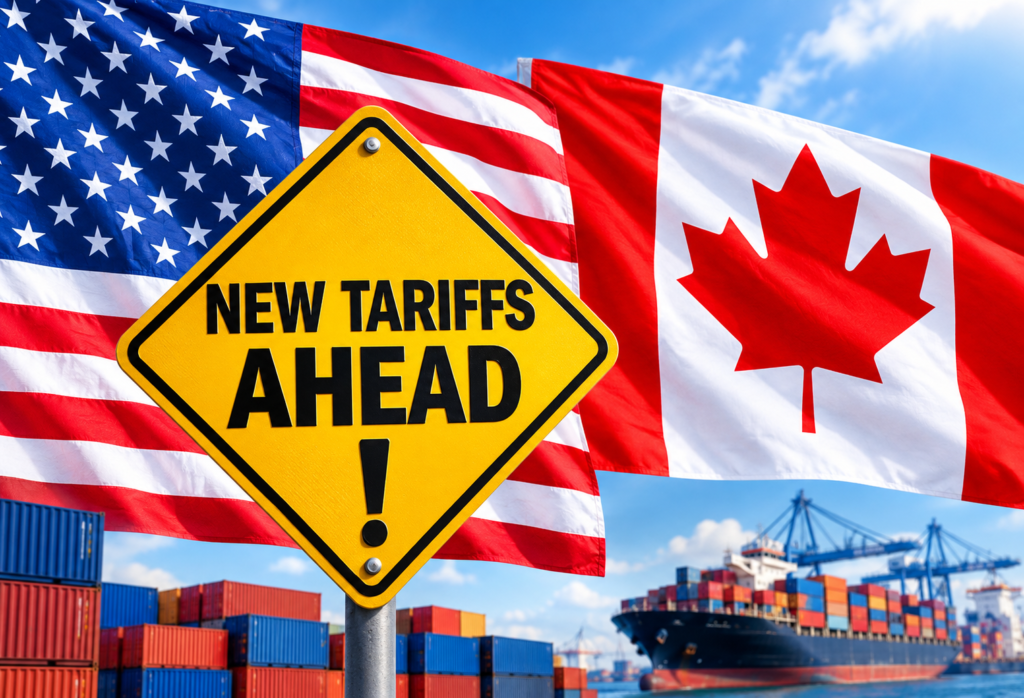
Trade relations are being affected by U.S. tariffs and Canadian countermeasures. Canada has introduced counter-tariff measures on specified U.S. products while continuing engagement with Washington. At the same time, the government is attempting to maintain the large North American trading relationship while expanding markets outside the United States.
How are US tariffs affecting Canadian businesses and consumers?
Tariffs can increase costs for businesses that depend on affected cross-border goods and supply chains. Exporters can also face reduced market access or uncertainty when additional duties are imposed. Global Affairs Canada has reported that Canadian goods exports to the United States were down 14.9% year-to-date in Q1 2026 compared with the same period a year earlier, although trade data can reflect several factors beyond tariffs alone.
What are the current issues at the Canada-US border?
Border policy remains connected to trade, immigration, security and the movement of goods and people. Canada and the United States continue to manage cross-border commercial flows while dealing with changing tariff and customs requirements. The border is particularly important because Canada-US trade is valued at more than US$2.5 billion per day.
What developments are taking place in Canada-US energy trade?
Energy remains one of the most important elements of the bilateral relationship. Canada is a major crude-oil exporter and continues to supply energy to international partners, while the Canada-US relationship includes extensive electricity, oil and natural-gas connections. Energy stability is also specifically identified as an issue for the CUSMA review.
What major changes are occurring in Canada-US immigration and border policies?
Immigration and border management continue to involve cooperation on entry screening, asylum, enforcement and the movement of workers and visitors. Changes in either country’s immigration policies can affect cross-border travel, temporary workers, students and asylum claims. These issues are being managed alongside broader discussions about North American security and economic relations.
What is the current status of Canada-US defence and security cooperation?
Canada continues to cooperate closely with the United States through NATO and North American defence arrangements. Arctic security, continental defence, intelligence, border security and military interoperability remain important areas of cooperation. Canada’s broader 2026 foreign-policy approach also emphasizes stronger defence relationships with trusted allies.
How are Canada-US relations affecting the Canadian economy?
The United States remains Canada’s largest trading partner, so changes in tariffs, market access and supply chains can have significant effects on Canadian exporters and importers. At the same time, Canada is attempting to reduce exposure to individual markets by expanding trade with Europe, Asia-Pacific, Latin America, Africa and other partners.
Middle East
What are the major developments in Canada-Middle East relations in October 2026?
Canada’s Middle East policy is being shaped by regional conflict, humanitarian conditions, energy security, Iran-related security issues and relations with Gulf partners. Ottawa continues to support diplomatic efforts, humanitarian assistance and regional stability while maintaining sanctions and other measures concerning Iran. The government has also identified deeper economic engagement with Gulf countries as part of its broader diversification strategy.
What diplomatic position does Canada take on Middle East conflicts?
Canada has called for respect for international humanitarian law, protection of civilians and diplomatic efforts toward durable political solutions. Its 2026 departmental plan includes support for implementation of the Gaza Peace Plan, humanitarian and reconstruction efforts, and a two-state solution for Israelis and Palestinians. Canada’s approach also includes support for regional stability and international non-proliferation efforts concerning Iran.
What role does Canada play in Middle East humanitarian assistance?
Canada provides humanitarian assistance through international and partner organizations responding to crises in places such as Gaza, Lebanon and other affected areas. Assistance can include food, healthcare, shelter, water and other emergency support. Canada’s foreign-policy plan also connects humanitarian assistance with longer-term stabilization and reconstruction efforts.
What is the current status of Canada-Gulf trade relations?
The Gulf region is an increasingly important part of Canada’s trade-diversification efforts. The UAE, Saudi Arabia and Qatar are among the countries where Canada is pursuing stronger economic and investment relationships. Canada’s 2026–27 plan includes negotiations on foreign-investment agreements with Qatar and Saudi Arabia and broader economic engagement with Gulf partners.
How can Middle East instability affect Canadian energy prices?
Conflict affecting major shipping routes or oil-producing countries can influence global crude-oil and natural-gas prices. The Strait of Hormuz is particularly important because a large share of global energy flows normally passes through it. Canadian producers can experience different effects from international price changes because Canada is also a major energy exporter.
How does Canada support peace and diplomatic efforts in the Middle East?
Canada works through bilateral diplomacy and multilateral organizations while supporting humanitarian and stabilization initiatives. Ottawa has also welcomed diplomatic negotiations aimed at reducing regional hostilities and restoring maritime traffic. Its approach includes cooperation with partners such as the United States, Gulf states and international institutions.
What are Canada’s Middle East trade and investment interests?
Canada’s interests include energy, agriculture, machinery, financial services, infrastructure, technology and investment. In 2025, Canada’s two-way merchandise trade with the Middle East reached approximately C$11.5 billion. The UAE was an important Canadian export market, while Saudi Arabia was a major source of Canadian imports from the region.
How are Middle East developments affecting Canada’s foreign policy?
The region affects Canada’s foreign policy through energy security, humanitarian assistance, international security, sanctions and diplomatic relationships. Instability in the region can also influence inflation, transportation costs and global supply chains. Canada therefore treats Middle East developments as both foreign-policy and economic-security issues.
Asia & Pacific
What are the major Canada-Asia-Pacific developments in October 2026?
Canada is increasing its engagement across the Indo-Pacific through trade, investment, defence, supply-chain resilience and diplomatic partnerships. Global Affairs Canada identifies Europe and the Indo-Pacific as particularly important regions for trusted partnerships and economic diversification. The strategy also aims to strengthen Canada’s regional presence and people-to-people connections.
What are the major issues in Canada-China relations?
Canada is pursuing a more pragmatic relationship with China while maintaining economic and national-security safeguards. Canadian officials describe China as Canada’s second-largest single-country trading partner and have emphasized maintaining communication while addressing issues such as foreign interference and economic security. Canada is also seeking greater access to Chinese markets as part of trade diversification.
What are the current developments in Canada-India diplomatic relations?
Canada and India have been working to rebuild their bilateral relationship through a renewed strategic partnership. Economic cooperation is a major component, including negotiations toward a Comprehensive Economic Partnership Agreement. The two countries have also continued discussions involving national security, law enforcement and broader diplomatic relations.
What is the status of Canada-Japan economic and security cooperation?
Japan is an important Canadian partner in the Indo-Pacific, particularly in trade, investment, energy, critical minerals and security. Canada also works with Japan through the G7 and other multilateral institutions. Japan’s role in supply-chain diversification makes the relationship relevant to Canada’s economic-security strategy. Canada’s Q1 2026 data recorded C3.2billion in good sexports to Japan and C4.4 billion in imports.
What developments are taking place in Canada-South Korea trade relations?
South Korea remains an important Canadian Indo-Pacific trading partner. Cooperation includes energy, critical minerals, advanced manufacturing, technology and supply chains. In Q1 2026, Canada exported about C1.9billioningoodstoSouthKoreaandimportedapproximatelyC4.1 billion.
Why is the Indo-Pacific strategy important for Canada?
The Indo-Pacific is important because of its economic scale, supply chains, strategic waterways, technology industries and growing geopolitical importance. Canada’s strategy focuses on peace and security, trade and investment, supply-chain resilience, sustainable development and stronger people-to-people connections.
How is Canada pursuing trade diversification in the Asia-Pacific?
Canada is expanding commercial relationships through existing agreements and new negotiations. Priorities include strengthening CPTPP relationships, progressing trade negotiations with ASEAN and other partners, and expanding economic links with India and China. The government also wants Canadian companies to develop new markets beyond North America.
How do Asia-Pacific developments affect Canada’s economy and immigration?
Asia-Pacific developments can affect Canadian exports, imports, investment, supply chains and critical-mineral markets. The region also has major people-to-people connections with Canada through students, immigrants, tourists and business communities. As Canada diversifies trade, developments in major Asian economies can therefore have broader domestic economic effects.
🇪🇺 Europe
What are the major Canada-Europe developments in October 2026?
Canada is deepening economic, security and diplomatic relations with Europe as part of its strategy to diversify partnerships. The federal government has described Europe as one of its key trusted-partner regions and is pursuing stronger cooperation with the European Union and European allies. Recent discussions have also focused on defence, trade, energy and strategic cooperation.
What is the current status of Canada-EU trade relations?
Canada-EU trade has expanded under the Comprehensive Economic and Trade Agreement, or CETA. Global Affairs Canada reported strong growth in Canada-EU goods trade in early 2026, with Q1 Canadian exports to the EU at approximately C11.8billionandimportsatC21.5 billion. Germany, France and other EU markets are important components of this relationship.
What role does CETA play in Canada-Europe relations?
CETA provides the framework for preferential trade between Canada and the European Union. It reduces or eliminates many tariffs and establishes rules covering areas such as services, investment and government procurement. The agreement remains an important foundation for Canada’s European trade diversification.
What developments are taking place in Canada-European defence cooperation?
Canada and European partners cooperate through NATO and other security arrangements. Canada also participates in EU defence-related initiatives, including Permanent Structured Cooperation projects. European security has become increasingly relevant to Canada’s defence planning, particularly because of Russia’s war against Ukraine and broader NATO priorities.
What is Canada’s current role in NATO?
Canada remains a NATO member and contributes to collective defence, military deployments, deterrence and alliance planning. Canada has also identified Arctic security as an area where it intends to strengthen its role within NATO. Cooperation with European allies is therefore closely connected to Canada’s broader defence and security policy.
How can European economic developments affect Canadian businesses?
European economic conditions can influence Canadian exports, imports, investment and demand for Canadian products. Canada has been increasing trade with European markets as part of diversification efforts. In Q1 2026, Canadian exports to the EU were up 19.9% year-to-date according to Global Affairs Canada’s trade report.
How do Canada and Europe cooperate on climate and energy?
Canada and European countries cooperate on clean energy, climate policy, critical minerals and the energy transition. Canada also sees its natural resources, including energy and critical minerals, as important elements of its international economic strategy. European demand can create opportunities for Canadian energy and clean-technology exporters.
8. How do European geopolitical developments affect Canada’s foreign policy?
European security developments directly affect Canada’s NATO commitments and defence planning. Russia’s war against Ukraine remains a major Canadian foreign-policy concern, and Canada continues to support Ukraine’s territorial integrity and a just and lasting peace. European geopolitical developments also influence Canada’s approach to sanctions, energy security and transatlantic cooperation.
Africa
What are the major Canada-Africa developments in October 2026?
Canada is implementing its Africa Strategy, which places greater emphasis on economic cooperation, trade, investment, peace and security, development and people-to-people relationships. The strategy also seeks to strengthen Canadian engagement with African institutions and the African diaspora in Canada.
What role does Canada play in development assistance in Africa?
Canada provides development and humanitarian assistance covering areas such as health, education, poverty reduction, youth employment, climate adaptation and economic development. Canada has provided approximately C$4.5 billion in bilateral international assistance programming in Africa over the five years covered by its Africa Strategy.
What is the current status of Canada-Africa trade relations?
Canada is seeking to increase trade with African countries as part of its global diversification strategy. Canada’s merchandise trade with African countries reached approximately C$15.1 billion in 2024, according to the Africa Strategy. Ottawa is also supporting implementation of the African Continental Free Trade Area.
What role do Canadian mining companies play in Africa?
Canadian mining expertise and investment are relevant to Africa’s mineral-resource sector. Canada is interested in responsible production and resilient supply chains for critical minerals, while African countries are seeking investment, technology, infrastructure and local economic benefits. Canada’s Africa Strategy specifically identifies critical minerals as an area for stronger cooperation.
How does Canada support peace and security efforts in Africa?
Canada supports African-led peace operations, conflict prevention, security institutions and initiatives addressing terrorism and transnational crime. The Africa Strategy also emphasizes democracy, human rights and the participation of women and youth in peace and security. Canada is adjusting its engagement to work more closely with African regional organizations.
What are the Canada-Africa education and immigration connections?
People-to-people relationships include international students, skilled workers, researchers, educators, families and African diaspora communities in Canada. Education and skills development are also part of Canada’s development cooperation. The Africa Strategy specifically highlights youth skills training and stronger engagement with African diaspora communities.
Why are African economic developments important for Canadian businesses?
Africa has a large and growing population, expanding consumer markets and significant natural resources. Canadian companies can find opportunities in mining, agriculture, infrastructure, financial services, technology, renewable energy and professional services. Canada’s Africa Strategy is designed in part to help Canadian businesses access these emerging markets.
What are the major priorities of Canada’s Africa policy?
The five broad areas are stronger diplomatic and people-to-people ties, enhanced economic cooperation, development assistance, peace and security partnerships, and cooperation on global priorities. Canada is also creating tools such as an Africa Trade Hub and an Africa Trade and Development Program to connect trade and development objectives.
Latin America
What are the major Canada-Latin America developments in October 2026?
Canada is strengthening economic and diplomatic engagement with Latin America as part of its trade-diversification strategy. Current priorities include Mexico, mining, agriculture, investment, regional trade agreements and technical assistance. Canada is also pursuing broader relationships with countries across the Americas.
What are the major issues in Canada-Mexico relations?
Canada and Mexico continue to cooperate closely through CUSMA, while also discussing trade, investment, supply chains and North American economic integration. The two countries have expressed interest in maintaining and expanding their bilateral commercial relationship. A Canada-Mexico Action Plan for 2025–2028 focuses on trade promotion, investment and business connections.
How does CUSMA affect Canada-Mexico-US trade?
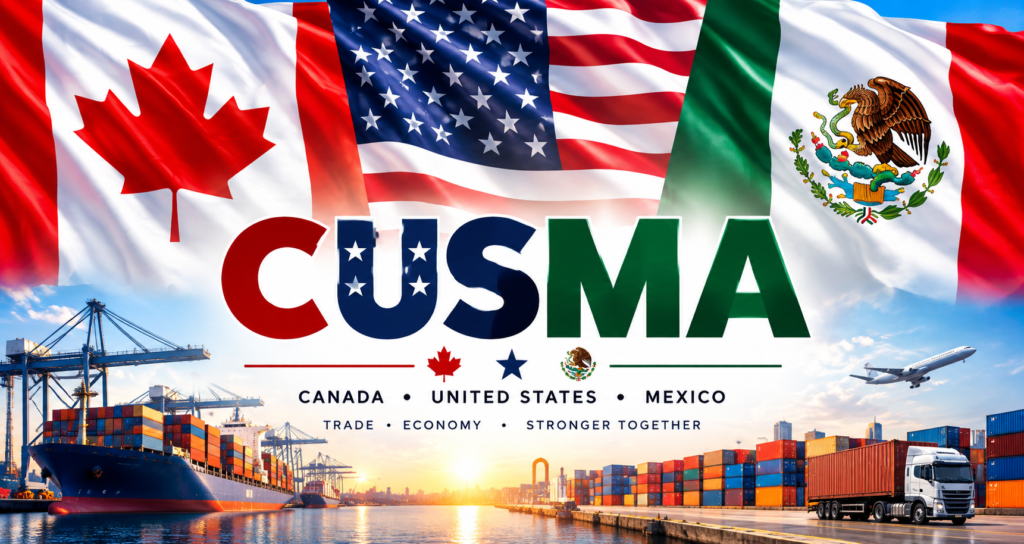
CUSMA provides the legal framework for much of North American trade between Canada, Mexico and the United States. The agreement entered its first joint review in 2026. Canada and Mexico supported extending the agreement for another 16 years, while the United States did not agree to renewal at that stage and the parties moved into an annual-review process.
How is Canada expanding trade with Latin American countries?
Canada is using existing free-trade agreements, new negotiations, investment agreements and commercial diplomacy to expand regional trade. The government is also supporting trade-related technical assistance and sectors such as mining and agri-food. Canada has stated that Latin America and the Caribbean are part of its wider effort to create more diversified export markets.
What role do Canadian mining and investment play in Latin America?
Canadian companies have long been active in Latin American mining and other resource industries. Canada’s policy increasingly connects commercial investment with responsible resource development, supply-chain resilience and local economic benefits. Mining and agri-food are specifically identified as priority areas for Canada-Latin America cooperation.
What are Canada’s immigration connections with Latin America?
Canada and Latin American countries have significant connections through temporary workers, international students, permanent immigration, family relationships and tourism. Labour mobility can also support Canadian sectors that experience worker shortages. Immigration links therefore form part of the broader people-to-people relationship between Canada and the region.
How can Latin American political and economic developments affect Canada?
Political instability, economic growth, commodity prices and changes in investment policy can affect Canadian companies operating in the region. Developments can also influence migration, supply chains and Canadian investment. Mexico is particularly important because of its direct connection to Canada’s North American trade system through CUSMA.
What are the major priorities of Canada’s Latin America policy?
Canada’s current priorities include trade diversification, investment, mining and agriculture, institutional capacity, regional security and development cooperation. Canada is also working to improve business environments and strengthen trade-related institutions in Latin America and the Caribbean.
International Relations
What are the major developments in Canada’s international relations in October 2026?
Canada’s foreign policy is increasingly focused on economic diversification, strategic autonomy, trusted partnerships, Arctic security and international cooperation. Global Affairs Canada describes 2026–27 priorities as strengthening global partnerships, protecting Canada’s sovereignty, supporting economic interests and contributing to international peace and security.
What are Canada’s current foreign-policy priorities?
Major priorities include strengthening economic resilience, diversifying trade, deepening relationships with Europe and the Indo-Pacific, maintaining a strong North American relationship, supporting Ukraine, advancing Middle East diplomacy and strengthening Arctic security. Canada is also seeking greater cooperation among middle powers and trusted allies.
Why is Canada diversifying its international trade relationships?
The United States remains Canada’s largest trading partner, but recent trade tensions have highlighted the economic risks associated with dependence on one market. Canada’s Trade Diversification Strategy aims to double non-U.S. exports within the next decade. The strategy includes new markets in Europe, the Indo-Pacific, Africa, Latin America and the Gulf.
What role does Canada play in the United Nations?
Canada uses the UN to participate in international diplomacy, peace and security discussions, humanitarian work, human rights initiatives and global rule-making. In September 2026, Foreign Affairs Minister Anita Anand emphasized Canada’s interest in multilateral cooperation and Canada’s participation in global institutions.
What is Canada’s role in NATO and other international organizations?
Canada participates in NATO collective defence and works through organizations including the United Nations, G7, G20, WTO and other multilateral institutions. NATO is particularly important for Canada’s European and Arctic security interests. Canada also uses multilateral institutions to address trade, climate change, conflict, health and international security.
What are Canada’s international security priorities?
Key priorities include Arctic and continental security, NATO cooperation, support for Ukraine, countering foreign interference and transnational crime, cyber security and protection of critical infrastructure. Canada is also strengthening defence relationships with trusted international partners.
What role does Canada play in global climate cooperation?
Canada participates in international climate negotiations and works with other countries on emissions reduction, clean energy, climate finance and environmental protection. Climate cooperation is increasingly connected to Canada’s economic diplomacy because clean technology, critical minerals and energy infrastructure are also important export and investment areas.
How can international conflicts affect Canada’s economy, trade and security?
International conflicts can affect energy prices, shipping routes, food and fertilizer supplies, supply chains, financial markets and inflation. They can also require Canada to adjust sanctions, humanitarian assistance and military commitments. The 2026 Middle East conflict, for example, created an energy shock and disrupted important shipping routes, demonstrating how events far from Canada can affect Canadian economic conditions.
Final Verdict
Canada’s international agenda in 2026 is centered on trade diversification, economic resilience, trusted partnerships, national security and continued multilateral engagement. The United States remains central to Canada’s economy, but Ottawa is simultaneously expanding relationships with Europe, the Indo-Pacific, Africa, Latin America and the Gulf.
For Canadian businesses and households, international developments matter through tariffs, energy prices, supply chains, export markets, immigration, investment and security. The direction of individual relationships can change quickly, so current government announcements, trade data and diplomatic developments should be checked when publishing updates.
Table of Contents

Leave a Reply