
Housing Market 2026
Introduction
Canada’s Housing Market in 2026 is showing a mixed picture as home sales, prices, rental costs, mortgage rates, and housing supply continue to change across the country. While some major markets such as Toronto and Vancouver are experiencing year-over-year price declines, other cities including Edmonton, Calgary, Winnipeg, and Regina offer different affordability conditions for buyers.
Nationally, the Canada Housing Market has become more balanced, with slower sales and increased choices in several regions. At the same time, housing affordability remains an important concern for buyers and renters, particularly in Canada’s largest cities. Mortgage rates, household income, population growth, construction activity, rental supply, and local economic conditions are all influencing the Canada Housing Market.
This guide explains the Canada Housing Market in 2026, including current home prices, rent prices, mortgage rates, housing supply, first-time home buyer programs, major Canadian cities, rental rules, and new housing construction. It also examines what buyers, renters, newcomers, and homeowners should know about the changing Canadian real estate market.
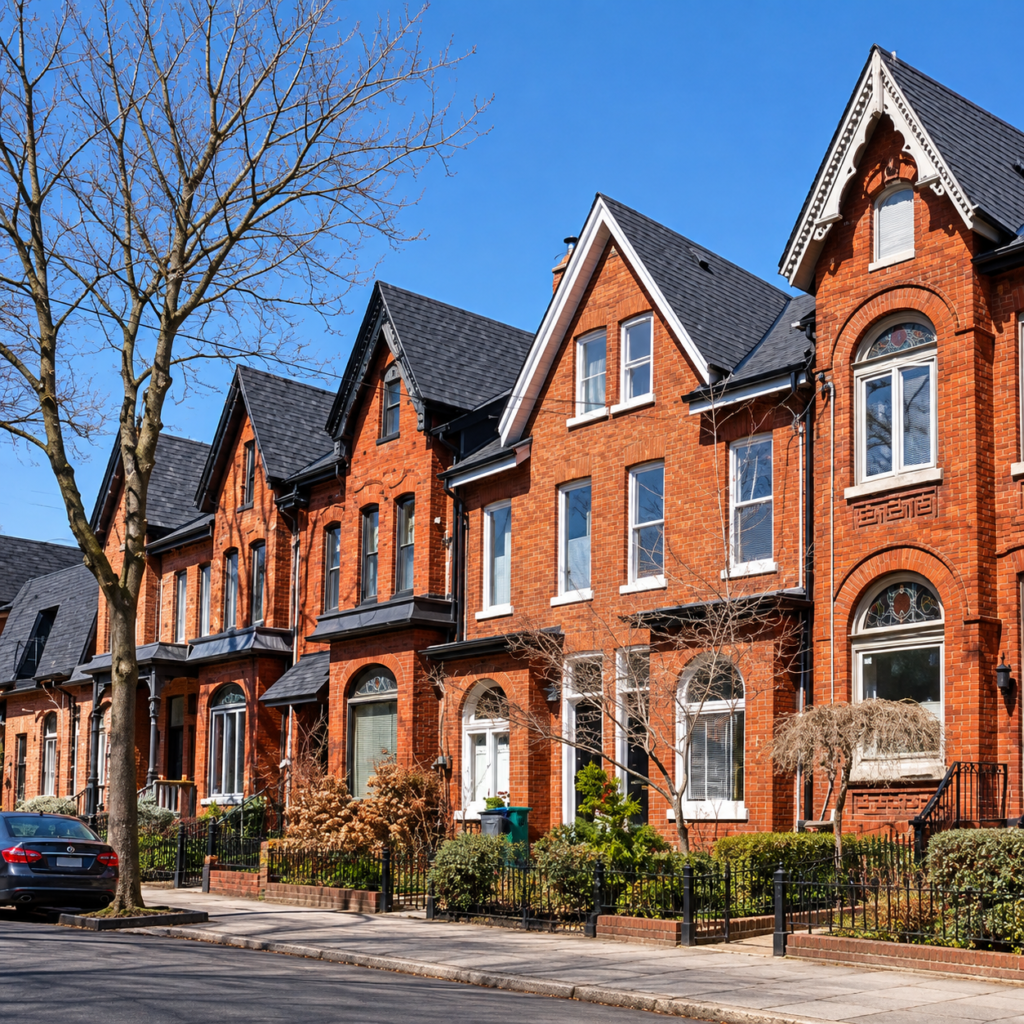
Canada Ka Current Housing Market Kaisa Hai?
Canada Housing Market in 2026 is showing slower sales, more balanced conditions in some areas, and price declines compared with 2025 in several major markets. However, the Canada Housing Market situation is different from province to province and city to city.
Nationally, the Canada Housing Market saw home sales fall 0.7% month over month in August 2026 and were 6.9% below August 2025. The national MLS Home Price Index was unchanged from July but was 3% lower year over year. The national average home price was C$668,219, up 0.6% from August 2025.
The Canada Housing Market also had 4.8 months of inventory at the end of August. This was unchanged from July and slightly below the long-term average of five months. This means the national market was not uniformly a strong seller’s or buyer’s market; local conditions varied considerably across the Canada Housing Market.
How Are House Prices Changing?
House prices have been relatively stable nationally in recent months, but they remain below 2025 levels on the MLS Home Price Index.
In August 2026, the national MLS HPI was 3% lower than a year earlier, while the actual national average selling price was C$668,219, 0.6% higher than August 2025. The difference is because the average price can be affected by the types and locations of homes sold, while the HPI is designed to track price changes for comparable properties.
Price movements are also different across cities. Toronto and Vancouver recorded year-over-year declines, while Calgary prices were relatively stable overall and Montreal continued to show comparatively stronger price levels in several property categories.
Toronto Housing Market
The Toronto-area housing market remained slower in August 2026. The Greater Toronto Area recorded 5,057 home sales, down 2.1% from August 2025.
New listings were 12,075, down 14.1% year over year, while the MLS HPI Composite benchmark price was 4.5% lower than a year earlier. The average selling price was about C$993,410, down 2.7% year over year.
The decline in new listings means buyers had fewer properties to choose from than a year earlier. Market conditions can therefore vary considerably between Toronto neighbourhoods and different property types.
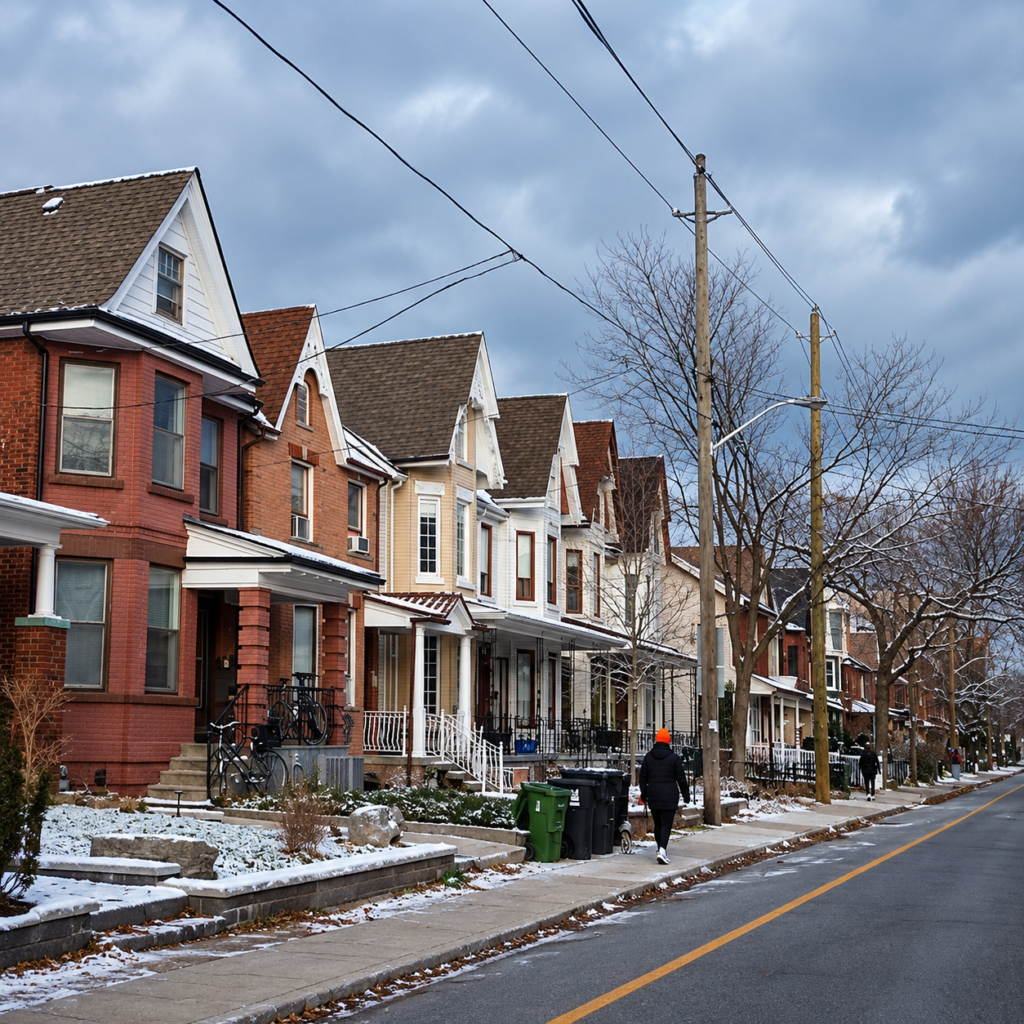
Vancouver Housing Market
Greater Vancouver also experienced a slower housing market in August 2026. Residential sales totalled 1,869, which was 4.6% lower than August 2025 and about 20.7% below the region’s 10-year seasonal average.
There were 4,100 new listings, down 3% from a year earlier. The composite benchmark price was approximately C$1.082 million, down 5.6% year over year.
The market had about 8.5 months of inventory, indicating considerably more supply relative to sales than the national market. Conditions also differed by property type, with apartments, townhouses, and detached homes experiencing different levels of price and demand.

Calgary Housing Market
Calgary’s housing market has also slowed in 2026. In August, Calgary recorded 1,660 residential sales, down 16% from August 2025. New listings fell by nearly 10% to 3,141.
The total residential benchmark price was C$569,800, roughly unchanged from July and 1% lower than a year earlier. However, price performance differed substantially by property type.
Apartment-style homes faced more supply pressure. Their August benchmark price was C$295,400, down about 8% year over year, while detached homes had a benchmark price of about C$744,300, down 1%.
Calgary therefore shows why national housing figures do not tell the whole story: detached, semi-detached, row and apartment properties can experience very different market conditions.
Montreal Housing Market
Montreal’s housing market also slowed in August 2026. The Montreal Census Metropolitan Area recorded 2,853 residential sales, down 13% from August 2025 and 2% lower than July on a seasonally adjusted basis.
At the same time, active listings increased to 20,128, which was 18% higher than a year earlier. This indicates that buyers had more available properties than they did in August 2025.
Price performance remained stronger than in some other major markets. Based on August market data, the average selling price was around C$689,824, while median prices for single-family homes and condominiums were approximately C$650,000 and C$437,000 respectively.
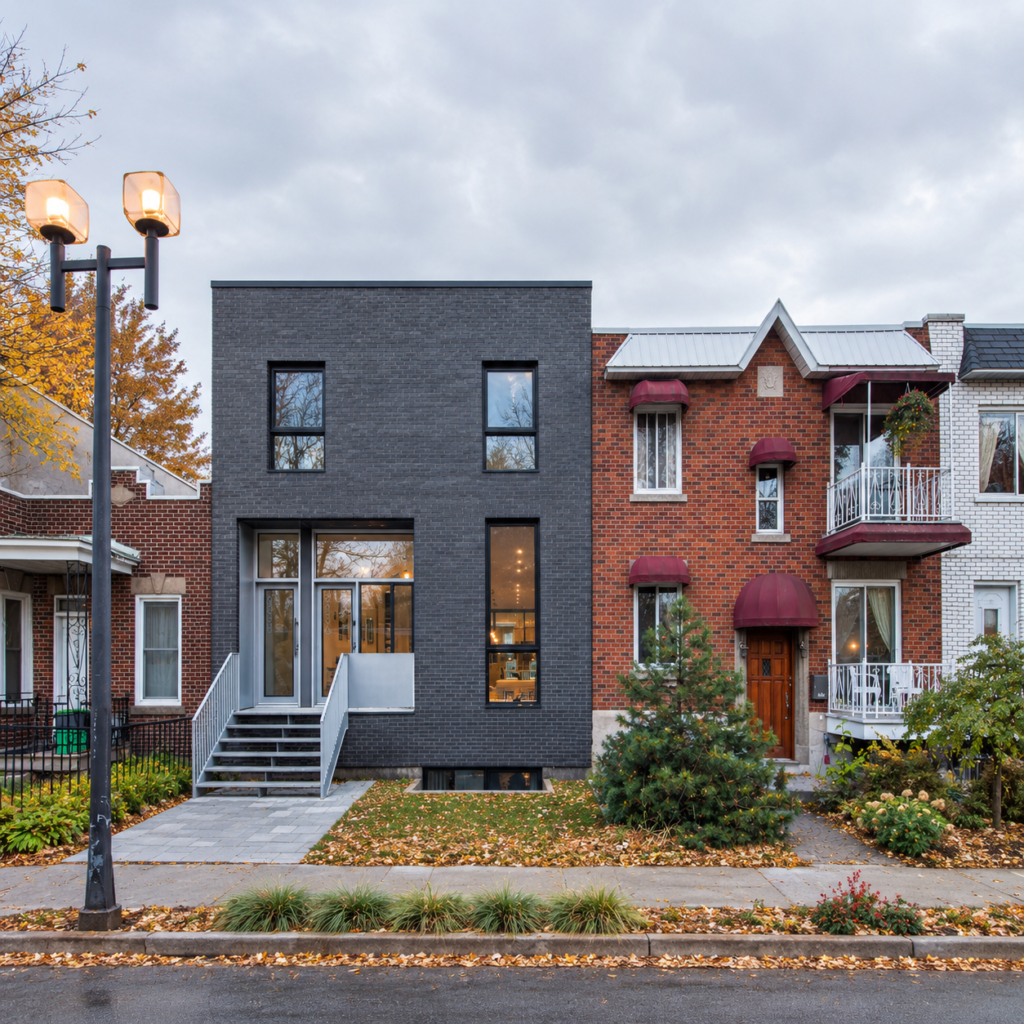
Home Sales air Listings
Home sales and new listings are two important indicators of housing-market activity. Sales show how many properties were actually purchased, while new listings show how many properties were newly put on the market.
Nationally, August 2026 home sales decreased 0.7% from July and were 6.9% below August 2025. New listings, however, increased 3.3% from July.
The relationship between sales and listings helps determine whether buyers or sellers have more negotiating power. When listings rise faster than sales, buyers generally havehttps://www.cbc.ca/news/business/canada-housing-market-annual-sales-9.7045276 more choice. When sales rise faster than listings, competition among buyers can increase.
Housing Supply aur Demand
Housing supply refers to the number of homes available for sale or rent, while demand represents the number of people looking to purchase or rent housing.
Canada’s national housing market had 4.8 months of inventory at the end of August 2026. This was unchanged for the fourth consecutive month.
However, supply and demand are very different across cities. Vancouver had around 8.5 months of inventory, while Calgary had nearly four months of supply overall and significantly more supply for apartment-style homes. Montreal’s active listings were up 18% year over year.
Population growth, immigration, employment, mortgage rates, household income, construction activity, and local economic conditions can all influence housing demand.
New Housing Starts
Housing starts measure residential construction projects that have begun. They are an important indicator of future housing supply.
According to CMHC, the six-month trend in Canadian housing starts decreased 1.3% in August 2026 to 244,149 units. Actual monthly starts in centres with populations of 10,000 or more were 17,691 units, down 2% from August 2025. The year-to-date total was 149,542 units, down 4% from the same period in 2025.
The monthly seasonally adjusted annual rate of housing starts was 229,046 units in August, almost unchanged from July. CMHC reported that Quebec and Alberta recorded some gains in the six-month trend, while Ontario experienced a notable decline.
Housing starts are important because continued construction is needed to increase the supply of homes over time.
Regional Housing Market Updates
Canada Housing Market does not have one single housing market. Conditions vary significantly between provinces, cities, and even neighbourhoods.
Ontario: Toronto-area sales and prices remained below year-earlier levels, while new listings also declined. CMHC reported that Ontario was one of the provinces contributing to the national decline in housing-start trends.
British Columbia: Greater Vancouver experienced lower sales and prices compared with a year earlier, with substantially higher inventory than the national level.
Alberta: Calgary sales declined, but the overall benchmark price remained relatively stable. Apartment properties faced considerably more supply pressure than detached homes.
Quebec: Montreal sales declined and active listings increased, while prices remained comparatively resilient. CMHC also reported a 6% month-over-month increase in Montreal’s six-month housing-start trend in August.
Prairies and Atlantic Canada: Housing conditions continue to vary by city and province. Construction trends also differ, with CMHC reporting changes in starts, construction, and completions across the regions.
How Can You Buy Your First Home in Canada?
To buy your first home in Canada, start by determining your budget, savings, and mortgage affordability. You can then get a mortgage pre-approval to understand how much a lender may be willing to finance.
Next, search for a home based on your preferred location, property type, and price range. Using a real estate agent is optional, but an agent can help with property searches, offers, negotiations, and paperwork.
After choosing a home, you can make an offer and complete the required financing and home inspection. A lawyer or notary can help complete the legal and closing documents. Remember that you need money for closing costs in addition to your down payment.
Who Is Considered a First-Time Home Buyer?
The definition of a first-time home buyer can vary depending on the program. For example, for the FHSA, you generally must not have lived in a qualifying home that you owned or jointly owned with your spouse or common-law partner during the current year or the previous four calendar years.
Some federal tax benefits and home-buying programs have their own eligibility requirements. Therefore, buyers should check the specific rules before applying for a program.
Previous home ownership by a spouse or common-law partner can also affect eligibility for certain programs.
How Much Down Payment Do You Need?
The minimum down payment in Canada depends on the purchase price of the home:
- C$500,000 or less: Minimum 5%
- More than C$500,000 but less than C$1.5 million: 5% on the first C$500,000 and 10% on the remaining amount
- C$1.5 million or more: Minimum 20%
For example, a C$600,000 home requires a minimum down payment of C$35,000 under these rules.
If your down payment is less than 20%, you will generally need mortgage loan insurance. A larger down payment can reduce the amount you need to borrow and may reduce your overall interest costs.
First-Time Home Buyer Incentives
Canada offers several federal programs and tax benefits that may help eligible first-time home buyers. These include the First Home Savings Account (FHSA), Home Buyers’ Plan (HBP), Home Buyers’ Amount, and the First-Time Home Buyers’ GST/HST Rebate for eligible new homes.
In 2026, eligible first-time buyers may qualify for the new GST/HST rebate when purchasing an eligible newly constructed or substantially renovated home. The maximum benefit can be up to C$50,000, depending on the purchase and eligibility requirements.
Provinces and territories may also offer additional rebates, tax benefits, or home-buying programs. Eligibility rules vary by location.
What Is an FHSA?
The First Home Savings Account (FHSA) is a registered account designed to help eligible first-time home buyers save for a qualifying home.
The annual contribution room is C$8,000, with a lifetime contribution limit of C$40,000. Eligible contributions are generally tax-deductible, while qualifying withdrawals used to purchase a qualifying home can be tax-free.
To open an FHSA, you generally need to be a resident of Canada, meet the applicable age requirements, and satisfy the program’s first-time home buyer conditions.
What Is the Home Buyers’ Plan (HBP)?
The Home Buyers’ Plan (HBP) allows eligible individuals to withdraw money from their RRSP to buy or build a qualifying home.
The maximum HBP withdrawal is C$60,000. In some situations, buyers can use both the FHSA and HBP for the same qualifying home, provided they meet the requirements of both programs.
There is also temporary repayment relief for people making their first HBP withdrawal between 2026 and 2028. For a first withdrawal made in 2026, the repayment period begins in 2031.
What Are Closing Costs?
In addition to the down payment, home buyers need to pay various closing costs. These may include legal fees, home inspection costs, title insurance, property-tax adjustments, and other transaction-related expenses.
Canadian government consumer guidance suggests that buyers should generally budget around 1.5% to 4% of the home’s purchase price for closing and upfront costs.
For example, on a C$500,000 home, 1.5% to 4% would be approximately C$7,500 to C$20,000. The actual amount can vary depending on the property, province, municipality, and transaction.
What Is Land Transfer Tax?
Land transfer tax is a provincial or municipal tax that may apply when you purchase a property. The tax rates and calculation methods vary depending on where the property is located.
Some provinces and municipalities offer land transfer tax rebates or exemptions for eligible first-time home buyers. The eligibility requirements and maximum amounts vary.
For example, Ontario has a provincial land transfer tax rebate for eligible first-time home buyers. Toronto also has its own municipal land transfer tax and a separate first-time home buyer rebate.
Before purchasing a home, buyers should check the current land transfer tax rules for their province and municipality.
What First-Time Home Buyer Tax Benefits Are Available?
First-time home buyers in the Canada Housing Market may have access to several tax benefits. One important federal benefit is the Home Buyers’ Amount, which provides an eligible buyer with a non-refundable federal tax credit related to the purchase of a qualifying home.
FHSA contributions are generally tax-deductible, while qualifying FHSA withdrawals used to purchase a qualifying home can be tax-free. These benefits can help eligible buyers manage some of the costs associated with entering the Canada Housing Market.
Eligible buyers of newly constructed or substantially renovated homes may also qualify for the First-Time Home Buyers’ GST/HST Rebate introduced for eligible purchases in 2026. The maximum benefit can be up to C$50,000, subject to the program’s eligibility requirements. These programs are an important consideration for first-time buyers exploring the Canada Housing Market in 2026.
What Is the Home-Buying Process Step by Step?
The basic process for buying a first home in Canada usually includes the following steps:
Step 1: Determine your budget and available savings.
Step 2: Prepare funds for your down payment and closing costs.
Step 3: Get a mortgage pre-approval to understand your borrowing capacity.
Step 4: Choose your preferred location, property type, and price range.
Step 5: Search for homes and select a suitable property.
Step 6: Make an offer to purchase and understand any conditions, such as financing or inspection conditions.
Step 7: Complete the home inspection and finalize mortgage approval.
Step 8: Work with a lawyer or notary to complete the legal documents and closing requirements.
Step 9: Pay the required down payment, closing costs, and applicable adjustments.
Step 10: Once the closing is completed, ownership of the property is transferred to you and you can move into your new home.
Why Is Rent So High in Canada?
Rent has become expensive in many parts of the Canada Housing Market because demand for rental housing has been strong while housing supply has not always kept pace. Population growth, immigration, limited rental construction, high home prices, and higher costs for building and operating housing have all contributed to rental pressure in the Canada Housing Market.
The situation also varies significantly by city. Toronto and Vancouver have traditionally had some of Canada’s highest housing costs, although rental conditions have started to ease as more rental units become available in the Canada Housing Market.
CMHC reported that the Canada Housing Market purpose-built rental vacancy rate increased to 3.1% in 2025 as new rental supply increased and demand slowed. However, affordability remains a challenge for many households across the Canada Housing Market.
What Are the Current Rental Prices in Canada?
According to the September 2026 Rentals.ca National Rent Report, the average asking rent for all residential property types in Canada was C$2,035 per month in August 2026. This was down 4.8% from August 2025.
For apartments and condominiums, the national average asking rent was approximately C$2,040. Rental prices vary considerably depending on the city, property type, size, and neighbourhood.
In August 2026, average apartment and condo asking rents were approximately:
- Toronto: C$2,570
- Vancouver: C$2,704
- Calgary: C$1,825
- Montreal: C$1,955
- Ottawa: C$2,168
- Edmonton: C$1,520
These are asking rents for available listings, so they should not be confused with the average rent paid by all existing tenants.
What Is Canada’s Rental Vacancy Rate?
The rental vacancy rate shows the percentage of rental homes that are available but not currently occupied in the Canada Housing Market.
CMHC’s latest national Rental Market Report found that Canada’s purpose-built rental vacancy rate increased to 3.1% in 2025, up from 2.2% in 2024. The increase was linked to higher rental construction and slower demand growth in the Canada Housing Market.
In 2025, the purpose-built vacancy rate was 3.0% in the Greater Toronto Area and 3.7% in Vancouver. CMHC’s 2026 mid-year analysis indicates that higher vacancy levels and additional rental supply are changing conditions in several major Canada Housing Market areas.
A higher vacancy rate generally gives renters more choice and can increase competition among landlords for tenants, influencing rental conditions across the Canada Housing Market.
What Is Affordable Rent?
Affordable rent generally means housing costs that a household can reasonably pay while still having enough income for other essential expenses such as food, transportation, utilities, healthcare, and education.
A commonly used housing affordability measure considers housing costs of around 30% or less of before-tax household income to be affordable. However, affordability can vary depending on household size, income, location, utilities, and other expenses.
For example, a household earning C$5,000 per month before tax may consider a rent around C$1,500 to be near the 30% benchmark. This is only a general affordability measure and does not mean every household can comfortably afford that amount.
What Are Rents Like in Toronto and Vancouver?
Toronto and Vancouver remain among Canada’s most expensive major rental markets.
In August 2026, the average asking rent for apartments and condominiums was approximately C$2,570 in Toronto and C$2,704 in Vancouver. Toronto rents were down 1.4% year-over-year, while Vancouver rents were down 4.1%.
CMHC’s 2025 Rental Market Report also showed that the purpose-built rental vacancy rate reached 3.0% in Toronto and 3.7% in Vancouver. More rental supply has given tenants additional choices in both markets.
However, prices can vary significantly between neighbourhoods, apartment sizes, and property types.
What Is the Rental Supply Problem?
The Canada Housing Market rental supply problem is mainly related to the number of affordable rental homes available compared with demand.
Building rental housing can be expensive because of land costs, construction costs, financing costs, development charges, regulations, and limited availability of suitable land in some urban areas across the Canada Housing Market.
There has been significant new rental construction. CMHC reported that historically high rental completions helped push vacancy rates higher in 2025. However, many of the new units are not necessarily affordable for lower-income households in the Canada Housing Market.
The challenge is therefore not only building more rental homes but also increasing the supply of housing that households with lower and moderate incomes can afford within the Canada Housing Market.
What Are Tenant Rights in Canada?
Tenant rights are mainly governed by provincial and territorial laws, so the rules are different across Canada.
Depending on the province, tenants may have legal protections relating to rent increases, security deposits, repairs and maintenance, privacy, eviction notices, lease agreements, and dispute resolution.
For example, Ontario’s Residential Tenancies Act provides rules covering most private residential rental units and establishes requirements for rent increases and eviction procedures.
Tenants should check the official rules in their province or territory and keep copies of their lease, rent receipts, notices, and communications with their landlord.
What Are the Rent Increase Rules in Canada?
There is no single rent-increase rule for the entire country. Each province or territory has its own regulations.
For example, in Ontario, the 2026 rent increase guideline is 2.1% for most rent-controlled units. Generally, a landlord must wait at least 12 months between rent increases and provide at least 90 days’ written notice. Some units, including many first occupied after November 15, 2018, are exempt from the guideline.
In British Columbia, landlords generally cannot increase rent more than once every 12 months and must provide at least three months’ notice. The maximum allowable increase for 2026 is 2.3%.
Because the rules differ across Canada, tenants should check the official regulations for their province before accepting or disputing a rent increase.
How Can You Avoid Rental Scams?
Rental scams are a concern in the Canada Housing Market, especially when searching for housing online. Scammers may advertise properties that they do not own or control and ask for deposits before allowing the applicant to properly view the property.
To reduce the risk of fraud, renters should verify the landlord and property, visit the property when possible, review the lease carefully, and avoid sending money before confirming that the rental is legitimate in the Canada Housing Market.
Be particularly careful if someone demands immediate payment, offers a rent far below the normal market price, refuses to meet in person, or asks for unusual payment methods when offering a rental property in the Canada Housing Market.
Newcomers should also be cautious about landlords or agents asking for excessive personal information or money before providing a legitimate rental agreement in the Canada Housing Market.
What Rental Housing Options Are Available for Newcomers?
Newcomers to Canada can look for apartments, condominiums, basement units, shared accommodation, townhouses, and purpose-built rental apartments.
Newcomers may be asked to provide identification, proof of income, employment information, references, or a credit history. People who have recently arrived and do not have Canadian credit history may need to provide additional documentation or a guarantor, depending on the landlord and provincial rules.
Newcomers should compare several properties, understand the lease terms, confirm what utilities are included, and learn the tenant rules in their province.
What Is a Mortgage?
Mortgage in the Canada Housing Market
A mortgage is a loan used to buy a home or other real estate in the Canada Housing Market. The property is used as security for the loan, and the borrower normally repays the mortgage through regular payments that include principal and interest.
A mortgage usually has a specific term, such as 1, 3, or 5 years, while the full amortization period can be much longer. When the term ends, the mortgage normally needs to be renewed or paid off, which can affect buyers and homeowners in the Canada Housing Market.
The interest rate, mortgage amount, amortization period, payment frequency, and down payment all affect the total cost of borrowing in the Canada Housing Market.
How Can You Get a Mortgage in Canada?
To get a mortgage in Canada, you normally start by reviewing your income, employment, debts, credit history, savings, and down payment.
You can then apply for mortgage pre-approval through a bank, credit union, mortgage broker, or other lender. The lender will assess your financial situation and determine how much you may be able to borrow.
After finding a home, you submit the property information and complete the lender’s approval process. If approved, the mortgage is finalized and the funds are provided at closing.
Fixed vs. Variable Mortgage
A fixed-rate mortgage has an interest rate that remains unchanged during the mortgage term. This can make monthly payments more predictable.
A variable-rate mortgage has an interest rate that can change when the lender’s prime rate changes. Variable rates are generally influenced by the Bank of Canada’s policy rate because that rate affects lenders’ prime rates.
Fixed and variable mortgages have different risks and payment structures. Borrowers should compare the interest rate, payment terms, penalties, flexibility, and their ability to handle future rate changes.
What Are the Current Mortgage Rates in Canada?
Mortgage rates change regularly and depend on the lender, mortgage type, borrower, down payment, credit profile, and term.
The Bank of Canada’s latest weekly data available in September 2026 showed typical posted rates at Canada’s six major banks of 5.49% for a 1-year conventional mortgage, 6.05% for a 3-year mortgage, and 6.09% for a 5-year mortgage as of September 16, 2026. These are posted rates and are not necessarily the lowest rates available to individual borrowers.
Bank of Canada monthly data also showed that the average rate on newly advanced insured residential mortgages was 4.22% in June 2026, while the average rate on newly advanced uninsured residential mortgages was 4.32%.
Mortgage rates can change quickly, so buyers should compare current offers from several lenders rather than relying on one advertised rate.
How Does the Bank of Canada Interest Rate Affect Mortgages?
The Bank of Canada’s policy interest rate can have a major effect on mortgage borrowing costs, particularly variable-rate mortgages.
When the Bank raises its policy rate, lenders generally increase their prime rates. This can increase payments or borrowing costs for many variable-rate mortgage holders.
When the policy rate falls, variable mortgage rates can also decrease, depending on the lender and mortgage contract.
As of September 2, 2026, the Bank of Canada had kept its overnight policy rate at 2.25%. The Bank also noted that long-term Canadian bond yields had increased, which is important because fixed mortgage rates are influenced more directly by bond-market conditions than by the overnight rate.
How Do You Qualify for a Mortgage?
Mortgage qualification depends on several factors, including:
- Income and employment
- Credit history and credit score
- Existing debts
- Down payment
- Property value
- Mortgage amount
- Interest rate
- Amortization period
- Debt-service ratios
Lenders generally want to make sure that borrowers can afford their housing costs and other debts.
Borrowers with stable income, manageable debt, good credit, and sufficient savings may have more mortgage options, although every lender has its own approval criteria.
How Much Down Payment Do You Need?
The minimum down payment depends on the home’s purchase price.
For homes priced at C$500,000 or less, the minimum is generally 5%.
For homes priced above C$500,000 but below C$1.5 million, the minimum is 5% on the first C$500,000 and 10% on the remaining amount.
For homes priced at C$1.5 million or more, the minimum down payment is generally 20%.
If your down payment is less than 20%, you will generally need mortgage loan insurance. A larger down payment can reduce the amount borrowed and may reduce the overall cost of the mortgage.
What Is the Mortgage Stress Test?
The mortgage stress test is a federal qualification requirement used by federally regulated lenders to determine whether borrowers could still afford their mortgage if interest rates were higher.
For many uninsured mortgages, borrowers must qualify using the greater of 5.25% or their mortgage contract rate plus 2 percentage points.
The stress test does not mean you will actually pay the higher qualifying rate. Instead, it is used to assess whether you can afford the mortgage under a higher-rate scenario.
This requirement can reduce the maximum mortgage amount a borrower qualifies for.
What Is Mortgage Renewal?
A mortgage term eventually ends, even if the mortgage has not been fully paid off. At the end of the term, the borrower normally renews the mortgage with the existing lender or switches to another lender.
Before renewal, borrowers should compare available interest rates and review their financial situation.
Renewal can be particularly important when interest rates have changed significantly since the original mortgage was taken out. Bank of Canada analysis has shown that many Canadian mortgage holders have faced or may face payment changes when renewing mortgages issued during periods of unusually low rates.
Borrowers should start reviewing their options before the renewal date rather than waiting until the last minute.
What Is Mortgage Refinancing?
Mortgage refinancing means changing the terms of an existing mortgage, often to borrow additional money, change the interest rate, consolidate debt, or access home equity.
For example, a homeowner may refinance to obtain funds for renovations or to consolidate higher-interest debt.
Refinancing can involve appraisal costs, legal fees, lender fees, and potentially a mortgage penalty if the existing mortgage is broken before the end of its term.
Before refinancing, homeowners should compare the potential savings or benefits with all associated costs.
How Are Mortgage Payments Calculated?
Mortgage payments depend mainly on the loan amount, interest rate, amortization period, and payment frequency.
For example, if you borrow C$500,000 at a fixed interest rate, your payment will depend on the interest rate and the number of years over which you repay the mortgage.
A simplified mortgage calculation uses the principal amount, periodic interest rate, and total number of payments:
M = P × [r(1+r)ⁿ] ÷ [(1+r)ⁿ − 1]
Where:
- M = mortgage payment
- P = principal borrowed
- r = periodic interest rate
- n = total number of payments
The payment normally includes both principal and interest. At the beginning of the mortgage, a larger portion of each payment generally goes toward interest. As the principal decreases, more of the payment goes toward reducing the loan balance.
Online mortgage calculators can provide an estimate, but the actual payment depends on the lender’s rate, payment schedule, mortgage features, and other contract terms.
What New Housing Projects Are Being Built in Canada?
Canadahousing market is seeing continued development of new housing projects, including detached homes, townhouses, condominiums, rental apartments, and mixed-use communities.
New construction is particularly important in major urban areas where population growth and housing demand remain high. However, construction activity varies between provinces and cities.
According to CMHC, Canada’s six-month trend for housing starts was 244,149 units in August 2026, down 1.3% from July. CMHC also reported 17,691 actual housing starts in August 2026 in centres with populations of 10,000 or more.
What Are New Homes and Condos?
New homes are properties built recently by developers or builders. They can include detached houses, semi-detached homes, townhouses, and other residential properties.
New condominiums are typically units within larger buildings or developments. Buyers may purchase a condo after construction is completed or buy it before completion through a pre-construction agreement.
New homes and condos may offer modern designs, energy-efficient systems, new appliances, and updated building standards. However, buyers should carefully review the purchase agreement, additional fees, completion date, and warranty coverage.
What Are Major Housing Development Projects?
Major housing developments can include large residential communities containing hundreds or thousands of homes. These projects may also include schools, parks, retail stores, community facilities, roads, and public transportation connections.
Large developments are often planned over several years and may be built in multiple phases.
The scale of new construction varies across Canada. CMHC’s August 2026 data showed significant numbers of units under construction in provinces including Ontario, British Columbia, Quebec, and Alberta. Nationally, 371,658 units were under construction in centres with populations of 50,000 or more in August 2026.
What Are the Latest New Construction Updates?
Canada’s housing construction market remains active, but the pace is changing.
In August 2026, actual housing starts were 2% lower than August 2025, while the year-to-date total was down 4%. The six-month trend was also down 1.3% from July.
Construction trends differ by region. For example, the six-month trend increased in Quebec and Alberta in August, while Ontario recorded a decline. Montreal’s trend increased 6% month-over-month, while Vancouver also recorded a 6% increase, mainly because of higher multi-unit construction.
What Housing Supply Projects Are Being Built?
Housing supply projects include new rental buildings, condominiums, affordable housing, townhouses, purpose-built rental communities, and large mixed-use developments.
Increasing housing supply is a major part of Canada’s response to housing affordability challenges. CMHC’s Fall 2026 Housing Supply Report says Canada still faces a significant housing supply gap and estimates that roughly 417,000 to 469,000 new homes per year would be needed through 2036 to restore housing affordability to pre-pandemic levels.
The challenge is not simply building more homes. New housing also needs to be located where people want to live and should include different price points and housing types.
What Are Transit-Oriented Developments?
Transit-oriented development (TOD) is housing and mixed-use development built around or near major public transportation stations and corridors.
These communities can include apartments, condos, retail stores, offices, parks, and public services close to transit.
The goal is to make it easier for residents to use public transportation and reduce the need for long car journeys. Transit-oriented housing can also allow cities to accommodate more residents near existing transportation infrastructure.
What Are New Community Developments?
New community developments are larger projects that create an entire neighbourhood rather than only a single building.
A new community may include detached homes, townhouses, condos, rental apartments, parks, schools, roads, shopping areas, and community services.
These developments can take many years to complete and are often constructed in phases. The first phase may include a limited number of homes, while additional phases are added as infrastructure and demand develop.
What Is Happening With Condo Construction?
Condominium construction remains an important part of Canada’s urban housing supply, particularly in large metropolitan areas.
Multi-unit buildings can provide a large number of homes on relatively limited land, making them important for growing cities.
CMHC’s August 2026 data showed that multi-unit construction continued to account for a large share of housing activity. In Calgary, for example, the six-month trend for all housing starts increased 7% month-over-month in August, driven by both single-detached and multi-unit construction.
However, condo projects can face challenges such as construction costs, financing conditions, sales levels, development approvals, and changing market demand.
What Are Pre-Construction Homes?
A pre-construction home is a property purchased before construction has been completed. This can include new condos, townhouses, and detached homes.
The buyer usually signs an agreement with the developer and pays deposits according to the contract. The property is then constructed and completed at a later date.
Pre-construction purchases can provide access to a new property with modern features, but buyers should understand the risks. Completion dates can change, costs can vary, and market conditions may be different when the project is completed.
Before buying, buyers should review the developer’s reputation, purchase agreement, deposit structure, estimated completion date, maintenance fees, financing requirements, and applicable provincial protections.
What Government-Supported Housing Projects Are Available?
The Canadian government supports housing construction through programs and funding initiatives designed to increase housing supply, improve affordability, and support rental and affordable housing.
Government-supported projects can include affordable rental housing, community housing, supportive housing, and housing infrastructure.
Federal housing programs may work with provinces, territories, municipalities, Indigenous organizations, non-profit housing providers, and private-sector partners.
Government support can help reduce development barriers and encourage the construction of housing that may otherwise be difficult to build. However, the availability and eligibility of specific programs can change over time.
Canada’s housing supply remains a major policy challenge. CMHC’s Fall 2026 report notes that construction is expected to slow faster than demand, which could make it difficult to close the existing housing supply gap.
Why are rents so high in Canada?
Rents became very expensive because demand for rental housing grew faster than supply in many Canadian cities. Population growth, immigration, limited rental construction, high home prices, and higher costs for construction and property operations all contributed to rental pressure.
However, the market has started to change. CMHC reported that Canada’s purpose-built rental vacancy rate increased to 3.1% in 2025, from 2.2% in 2024, as more rental units were completed and rental demand became softer.
Current rental prices
According to the September 2026 Rentals.ca National Rent Report, the average asking rent for all residential property types in Canada was C$2,035 in August 2026. This was 4.8% lower than a year earlier.
Purpose-built rental asking rents averaged about C$2,038, while condo rents averaged about C$2,050. Asking rents have declined for 23 consecutive months on a year-over-year basis.
Rental vacancy rate
The rental vacancy rate shows the percentage of rental units that are available but not currently occupied. A higher vacancy rate generally gives renters more choices, while a very low rate can indicate a tighter rental market.
CMHC’s 2025 Rental Market Report recorded a 3.1% national vacancy rate for purpose-built rental apartments, up from 2.2% in 2024. CMHC linked the increase to historically high rental construction and slower population and economic growth.
What is affordable rent?
Affordable rent generally means housing costs that a household can reasonably pay without putting excessive pressure on its budget. A commonly used Canadian housing affordability benchmark considers housing costs below about 30% of before-tax household income to be affordable.
For renters, the calculation can include rent and, depending on the housing situation, certain utility costs. Affordability can vary significantly by income, household size, location, and other expenses.
Toronto and Vancouver rent
Toronto and Vancouver remain among Canada’s most expensive rental markets. In August 2026, average apartment and condo asking rents were approximately C$2,570 in Toronto and C$2,704 in Vancouver.
Rentals.ca reported that Toronto rents were down 1.4% year over year, while Vancouver rents were down 4.1%. However, Vancouver rents increased 1.0% from July to August, showing that monthly market movements can differ from annual trends.
Rental supply problem
Canada’s rental supply has increased, but many markets still have a shortage of homes that are affordable to lower- and moderate-income households. New construction can take several years because projects require land, financing, approvals, construction, and infrastructure.
CMHC reported that strong rental construction helped increase vacancy rates in 2025. At the same time, CMHC noted that the most affordable rental units remained in high demand.
Tenant rights
Tenant rights in Canada are mainly controlled by provincial and territorial laws. These rules can cover rent increases, deposits, repairs, privacy, eviction procedures, leases, and landlord responsibilities.
Tenants should keep a copy of their lease, payment records, notices, and important communications with the landlord. If there is a dispute, tenants can contact their provincial or territorial residential tenancy authority for information about their rights and the available dispute-resolution process.
Rent increase rules
Rent increase rules are different across Canada. In provinces with rent-control systems, governments may set an annual maximum increase for certain rental units. Other units may have different rules or may be exempt from the annual guideline.
For example, Ontario’s 2026 rent increase guideline is 2.1% for most rent-controlled units. Generally, landlords must wait at least 12 months between increases and provide at least 90 days’ written notice. Some units, including many first occupied after November 15, 2018, are exempt from the guideline. Tenants should check the rules that apply in their province and their specific rental unit.
Rental scams
Rental scams can involve fake listings, stolen property photos, fake landlords, or requests for money before the renter has properly verified the property. Scammers may ask for deposits through unusual payment methods or pressure applicants to make quick decisions.
Renters should verify the address, landlord or property manager, lease terms, and payment requirements. They should be cautious if the rent is far below comparable properties or if someone refuses to show the property or provide reasonable documentation.
Rental housing for newcomers
Newcomers may face additional rental challenges because they may not yet have Canadian credit history, employment records, or local references. Landlords may request identification, proof of income, references, or other documents allowed under provincial or territorial law.
Newcomers can consider different housing options, including apartments, shared accommodation, purpose-built rentals, and temporary housing while searching for a long-term home. It is important to understand the lease, total monthly costs, deposit rules, and tenant rights before signing an agreement.
What are the Airbnb rules in Canada?
Canada does not have one single Airbnb rule for the entire country. Short-term rental rules can come from federal tax law, provincial regulations, and municipal bylaws. Cities can decide where short-term rentals are allowed, whether hosts need registration or a licence, and how many nights a property can be rented.
Hosts should check the rules for the exact city and property before listing a home. Federal tax obligations can apply even when a short-term rental is legal under local rules.
What is a short-term rental?
A short-term rental is a property or part of a property rented to guests for a relatively short period, usually through platforms such as Airbnb or other booking websites.
The exact legal definition varies by location. For example, Toronto defines a short-term rental as a dwelling unit rented for less than 28 consecutive days, while Vancouver’s rules generally cover stays of less than 90 consecutive days.
What are the Toronto Airbnb rules?
Toronto allows short-term rentals only in a host’s principal residence. Hosts must register with the City and renew their registration annually.
A host can rent up to three bedrooms in the principal residence for an unlimited number of nights, or rent the entire home for a maximum of 180 nights per calendar year. Toronto’s 2026 registration renewal fee is C$390.
Toronto also requires registered short-term rental operators to collect and remit a 6% Municipal Accommodation Tax (MAT). The temporary 8.5% rate ended on August 1, 2026.
What are the Vancouver Airbnb rules?
Vancouver requires a short-term rental licence for homes rented for less than 90 consecutive days. The property must generally be the host’s principal residence.
Hosts must have the required landlord or strata approval where applicable and must include their licence number in online listings. The current City licence fee is C$1,108 annually, plus a C$77 application fee. Vancouver also requires hosts to register with the Province of British Columbia under the provincial short-term rental system.
What is short-term rental registration?
Short-term rental registration is a process through which a city or province identifies and authorizes eligible hosts. Depending on the jurisdiction, a host may need to provide identification, proof that the property is their principal residence, safety information, insurance details, or landlord/strata approval.
Registration or licensing does not automatically mean a property can operate anywhere. Hosts must first confirm that short-term rentals are permitted at that specific property and comply with all applicable local requirements.
What taxes apply to Airbnb rentals?
Airbnb income is generally taxable in Canada. The Canada Revenue Agency (CRA) may treat the income as rental income or business income depending on the services provided and the nature of the activity.
GST/HST can also apply to short-term accommodation. Generally, accommodation for less than one month is taxable, and a host who exceeds the C$30,000 small-supplier threshold for taxable revenue over the applicable four-quarter period generally has to register for GST/HST.
Hosts may also have to pay municipal accommodation taxes. For example, Toronto’s current Municipal Accommodation Tax is 6%. Local taxes and requirements vary by municipality.
What are provincial and municipal regulations?
Short-term rental regulation can involve several levels of government. Federal rules mainly cover taxation, while provinces and territories can establish additional requirements and municipalities can create local licensing and zoning rules.
For example, Vancouver has both municipal licensing requirements and provincial registration requirements. Toronto has its own municipal registration, operating limits, and accommodation tax system. Therefore, hosts should check federal, provincial, and municipal requirements before starting a short-term rental.
Long-term vs. short-term rental
A long-term rental normally involves a tenant living in a property for an extended period under a residential tenancy agreement. A short-term rental provides temporary accommodation, often for tourists, business travellers, or visitors.
Short-term rentals can potentially generate higher income during busy periods, but they can also involve more frequent cleaning, guest communication, licensing, taxes, insurance, and regulatory requirements. Long-term rentals usually provide more stable occupancy but may be subject to provincial or territorial residential tenancy rules.
What effect do short-term rentals have on housing supply?
The effect can vary by market and by the type and scale of short-term rental activity. When an entire housing unit is repeatedly used for short-term guests instead of long-term tenants, it can reduce the number of homes available to the long-term rental market.
This is one reason cities such as Toronto and Vancouver restrict short-term rentals largely to principal residences. Toronto states that its rules are intended to allow residents to rent their principal residences while preserving other housing units for long-term rental use.
What are the legal requirements for Airbnb hosts?
Hosts should confirm that short-term rentals are permitted at their property before creating a listing. Depending on the location, requirements may include municipal registration or licensing, provincial registration, principal-residence rules, building and fire-safety compliance, insurance, tax registration, record keeping, and accommodation taxes.
What are the Airbnb rules in Canada?
Canada does not have one nationwide Airbnb rule. Short-term rentals are regulated through a combination of federal tax rules, provincial regulations, and municipal bylaws. Cities can decide whether short-term rentals are allowed and can require licences, registrations, principal-residence rules, or operating limits.
Hosts must check the rules for the specific city and property before listing a home. Federal tax rules can still apply even when a short-term rental is permitted locally. The CRA also restricts certain income-tax deductions for non-compliant short-term rentals.
What is a short-term rental in Canada?
A short-term rental is generally a home, apartment, condominium, or part of a property rented to guests for a short period. The exact definition can differ between governments and cities.
For federal tax purposes, the CRA defines a short-term rental as a residential property rented or offered for rent for less than 90 consecutive days. Individual municipalities can use different definitions. For example, Toronto uses a period of less than 28 consecutive days, while Vancouver regulates stays of less than 90 consecutive days.
What are the Toronto Airbnb rules?
Toronto allows short-term rentals only in the host’s principal residence. Hosts must register with the City and renew their registration annually.
A registered host can rent up to three bedrooms in their principal residence for an unlimited number of nights, or rent the entire home for a maximum of 180 nights per calendar year. The 2026 registration or renewal fee is C$390. The City also requires hosts to collect and remit a 6% Municipal Accommodation Tax (MAT).
What are the Vancouver Airbnb rules?
Vancouver requires a short-term rental business licence when a home is rented for less than 90 consecutive days. The property must generally be the host’s principal residence.
Hosts need the required landlord or strata approval where applicable and must display their licence number in online listings. The current City fees are C$77 for the application and C$1,108 for the annual licence. Hosts must also register with the Province of British Columbia under the provincial short-term rental system.
What taxes apply to Airbnb rentals in Canada?
Income earned from Airbnb and other accommodation-sharing activities is generally taxable in Canada. Depending on the services provided and the nature of the activity, the CRA may treat the income as rental income or business income.
GST/HST can also apply to short-term accommodation. For federal GST/HST purposes, accommodation for less than one month is generally taxable. If taxable accommodation-sharing revenue exceeds C$30,000 over four calendar quarters, the host generally has to register for, collect, and remit GST/HST. Municipal accommodation taxes may also apply.
What is short-term rental registration in Canada?
Short-term rental registration is a process used by a city or province to identify and regulate hosts who provide temporary accommodation. Depending on the location, registration may require identification, proof of principal residence, safety information, insurance details, or other documents.
There is no single national registration system for all Airbnb hosts. For example, Toronto requires City registration, while Vancouver requires a municipal business licence and also requires provincial registration.
What are the legal requirements for Airbnb hosts in Canada?
The requirements depend on the location and property. A host may need a municipal licence or registration, provincial registration, permission from a landlord or condominium/strata, appropriate insurance, safety equipment, tax registration, and compliance with zoning and building rules.
Hosts should also keep records of rental income and expenses. The CRA says that for tax years after 2023, deductions related to a non-compliant short-term rental can be denied if the rental is not permitted or does not meet applicable registration, licensing, or permit requirements.
What are the provincial and municipal Airbnb regulations?
Airbnb rules can differ significantly between provinces and municipalities. A province may establish broad short-term rental requirements, while a city can impose additional licensing, zoning, principal-residence, occupancy, or tax rules.
For example, Vancouver has municipal licensing requirements as well as provincial registration. Toronto operates its own registration system, limits short-term rentals to principal residences, and applies a Municipal Accommodation Tax. Hosts should therefore check both provincial and municipal rules before operating.
What effect do short-term rentals have on Canada’s housing supply?
The effect depends on the type and scale of short-term rental activity. When an entire home is repeatedly used for short-term visitors instead of being available to long-term tenants, that property is not serving the long-term rental market during those periods.
This housing-supply concern is one reason some Canadian cities restrict short-term rentals to principal residences or impose operating limits. Toronto, for example, allows short-term rentals in principal residences but does not allow secondary or investment properties to operate as short-term rentals under its regular rules.
What is the difference between long-term and short-term rentals in Canada?
A short-term rental provides temporary accommodation, often to tourists, business travellers, or visitors. A long-term rental is generally intended for people who use the property as their home for a longer period under a residential tenancy arrangement.
What documents are required to get a mortgage in Canada?
Canada Housing Market lenders generally ask for identification, proof of employment and income, proof of the down payment and closing costs, information about your assets, and details of your debts and financial obligations.
Depending on your situation, you may need recent pay stubs, employment information, tax documents, bank or investment statements, and information about loans and credit cards. Requirements can vary between lenders.
What proof of income does a Canadian bank require for a mortgage?
Employees may be asked for recent pay stubs, proof of salary or hourly wages, employment details, and sometimes T4 slips or other income documents. The lender may also verify your position and length of employment.
Self-employed applicants may need additional documents such as Canada Revenue Agency Notices of Assessment (NOAs), tax returns, and business financial information.
How do you prove your down payment for a mortgage in Canada?
You normally prove your down payment by providing recent bank or investment statements showing where the money came from. Other acceptable sources can include savings, the sale of another property, eligible registered-account funds, or a non-repayable gift from a family member.
The lender may also ask for documentation showing that the money is actually available and can be used for the home purchase.
What bank statements are required for a Canadian mortgage?
A lender may request recent statements for bank accounts, investment accounts, or other financial accounts that contain your down payment or other assets. The statements help the lender verify the amount of money available and its source.
The exact number of months requested can vary by lender and by the source of your funds. You may also need statements for accounts used to demonstrate savings or other financial assets.
What documents are required for self-employed mortgage applicants?
Self-employed applicants generally need more detailed income and business documentation. Depending on the situation, this can include the previous two years of NOAs and T1 General tax returns, T2125 statements of business activities, business financial statements, GST returns, business account statements, and business registration documents.
CMHC also lists documents such as business licences, articles of incorporation, contracts, and accountant-prepared financial statements as possible supporting documents. The exact requirements depend on the lender and the applicant’s circumstances.
What proof of identity and status is required for a mortgage in Canada?
Lenders normally require government-issued identification. Depending on the applicant’s circumstances, they may also need documents confirming their status in Canada Housing Market.
For example, Canadian citizens, permanent residents, and certain non-permanent residents authorized to work in Canada can qualify for mortgage financing under applicable programs. The lender will determine which identity and status documents are required for the application.
Does your credit score affect mortgage approval in Canada?
Yes. Lenders review your credit report and credit history when assessing a mortgage application. A poor credit history can make approval more difficult, and a lender may require a larger down payment, a co-signer, a different mortgage amount, or other conditions.
Your credit score is only one part of the assessment. Lenders also consider income, debts, down payment, expenses, the property, and your ability to make the mortgage payments.
What property documents are required when buying a home in Canada?
Once you have selected a property, the lender may request documents such as the MLS listing, signed Offer to Purchase, deposit information, property tax statements, heating costs, condominium fees, building specifications, and previous appraisal information when applicable.
The lender also assesses the property because the home is security for the mortgage. The final mortgage approval can therefore depend on both the borrower’s finances and the property.
What is a gift letter for a mortgage down payment?
A gift letter is a signed document confirming that money given by a family member is intended to help with the home purchase and is not required to be repaid. Lenders may request this letter when part of the down payment comes from a family gift.
The lender may also ask for evidence showing that the gifted funds have been transferred and are available for the purchase. Requirements can vary by lender.
What documents do banks check before approving a home loan in Canada?
Before final approval, a bank may review your identification, employment and income, credit history, debts, bank and investment statements, down-payment source, and other financial information. It may also assess the property and confirm that it meets the lender’s requirements.
Banks also assess whether you can afford the mortgage using debt-service calculations and, for federally regulated lenders, the mortgage stress test. The qualifying rate is generally the higher of 5.25% or the mortgage contract rate plus 2 percentage points.
Banks & Mortgage Lenders in Canada
Canada Housing Market mortgage market includes large banks, digital banks, credit unions, and alternative or non-bank mortgage lenders. The right lender can depend on the borrower’s income, credit history, down payment, property, location, and mortgage requirements.
1. Big Six Banks
The Big Six are Canada’s six major banks: RBC, TD, Scotiabank, BMO, CIBC, and National Bank of Canada. These institutions provide residential mortgages along with other banking and financial services. Canada’s six systemically important banks include these institutions.
- RBC (Royal Bank of Canada) Offers residential mortgages, mortgage renewals, refinancing, and other home-financing products.
- TD (Toronto-Dominion Bank) Provides Canadian personal banking and mortgage services through TD Canada Trust.
- Scotiabank Offers mortgage and home-financing products through its Canadian banking operations.
- BMO (Bank of Montreal) Provides residential mortgage products, including purchases, renewals, and mortgage switches.
- CIBC (Canadian Imperial Bank of Commerce) Provides personal banking and residential mortgage financing.
- National Bank of Canada Provides personal and commercial banking services and is one of Canada’s six systemically important banks.
2. Digital & Online Banks
Digital banks provide many banking services online or through mobile applications. Some also offer mortgage products, although their mortgage options and application processes can differ from traditional branch-based banks.
- Tangerine A digital bank owned by Scotiabank that offers banking and mortgage products. Its mortgage rates and eligibility requirements are published online.
- Simplii Financial A digital banking brand associated with CIBC that provides online banking and lending products.
- EQ Bank A digital banking platform operated by Equitable Bank, offering digital banking and financial products.
Digital lenders can be useful for borrowers who prefer online applications and account management. However, borrowers should compare the complete mortgage offer, including the interest rate, term, prepayment privileges, penalties, and other conditions.
3. Credit Unions
Credit unions are member-owned financial institutions that operate across Canada. Their availability, membership requirements, mortgage products, and lending policies can vary by province and institution.
- Meridian Credit Union A major Ontario credit union offering personal banking and mortgage services.
- Vancity A British Columbia-based credit union providing banking and mortgage products.
- Servus Credit Union An Alberta-based credit union offering personal banking and home-financing services.
- Desjardins A major cooperative financial group with extensive operations in Quebec and other parts of Canada. It offers mortgage pre-approval, mortgage renewals, transfers, and other home-financing services.
Credit unions may have membership requirements, so borrowers should check eligibility before applying.
4. B-Lenders & Alternative Mortgage Lenders
Alternative mortgage lenders serve borrowers who may not meet the lending criteria of a traditional bank. They can consider different borrower circumstances, but their mortgage terms, interest rates, fees, and qualification requirements can differ.
- Equitable Bank A Canadian bank that provides alternative lending and mortgage solutions.
- Home Trust Provides mortgage and other financial products and describes its lending approach as tailored to individual financial circumstances. Home Trust became part of the Fairstone Bank family of brands in 2025.
- First National One of Canada’s largest non-bank mortgage lenders, offering residential and commercial mortgage solutions.
Alternative lenders can be relevant for borrowers with unusual income situations, self-employment, credit challenges, or other circumstances that make conventional bank financing more difficult. Borrowers should carefully compare the total borrowing cost and conditions before signing a mortgage.
Comparing Canadian Mortgage Lenders
When comparing lenders, borrowers should look beyond the advertised interest rate. Important factors include the mortgage rate, term, amortization, down payment requirements, prepayment privileges, penalties, renewal options, fees, qualification requirements, and customer service.
A mortgage broker can also provide access to multiple lenders, while borrowers who prefer to deal directly can contact banks, credit unions, or other mortgage lenders themselves.
What are the best cities to buy a house in Canada in 2026?
The right city depends on your budget, income, employment, family needs, lifestyle, and long-term plans. In 2026, Edmonton, Calgary, Winnipeg, Regina, Montreal, and Fredericton offer different combinations of home prices, employment opportunities, education, and lifestyle.
Edmonton stands out for its relative affordability among Canada’s large metropolitan markets. Calgary has experienced strong housing construction and continued demand, while Winnipeg and Regina generally have lower home prices than Canada’s most expensive markets.
Which Canadian cities are most affordable for home buyers?
Affordability varies by property type and neighbourhood, but cities such as Edmonton, Winnipeg, Regina, and Fredericton generally have lower housing costs than Toronto and Vancouver.
For example, Edmonton’s August 2026 average residential selling price was about C$469,602, while Regina’s August benchmark price was C$348,900. Winnipeg’s August detached-home average was about C$439,216.
Which cities offer the best combination of home affordability and market growth?
There is no single measure that determines the best combination. Buyers should compare the purchase price with local employment, population trends, housing supply, mortgage costs, and expected household needs.
In 2026, Edmonton combines relatively affordable ownership costs with strong homeownership construction. Calgary also has substantial new housing construction, although its market varies considerably by property type and price range.
Which Canadian cities are best for buying a home with a mortgage?
Mortgage affordability depends more on the relationship between home price and household income than on the city name alone. A lower-priced city can require a smaller mortgage, but buyers must also consider interest rates, property taxes, insurance, utilities, condo fees, and other costs.
Edmonton, Winnipeg, Regina, and some Atlantic Canadian markets can offer lower purchase prices than Toronto or Vancouver. Buyers should calculate the complete monthly housing cost before deciding where to purchase.
Is Edmonton a good city to buy a house in Canada?
Edmonton has relatively affordable housing compared with many large Canadian markets. CMHC’s Fall 2026 Housing Supply Report says Edmonton remains one of Canada’s most affordable major housing markets and has no measured housing supply gap relative to its pre-pandemic affordability target.
In August 2026, the Greater Edmonton Area’s average residential selling price was C$469,602, while the composite benchmark price was C$426,900.
Is Calgary a good city to buy a house in Canada?
Calgary offers a large selection of detached homes, semi-detached properties, townhouses, and condominiums. Its housing market has also experienced substantial construction, which has increased supply.
In August 2026, Calgary’s total residential benchmark price was C$569,800. Detached homes had a benchmark price of about C$744,300, while apartment condominiums were about C$295,400. Market conditions vary significantly by property type.
Is Regina an affordable city for home buyers?
Regina is generally a lower-cost housing market compared with Canada’s largest and most expensive metropolitan areas. In August 2026, Regina’s residential benchmark price was approximately C$348,900, more than 3% higher than a year earlier.
Buyers should also consider the city’s relatively tight supply. Regina entered September with about 1.72 months of supply, according to the Saskatchewan REALTORS® Association.
Is Fredericton a good city for buying real estate?
Fredericton can be considered by buyers looking for a smaller Canadian city with access to employment, education, services, and a comparatively smaller housing market.
However, buyers should compare individual neighbourhoods and property types rather than relying only on citywide averages. New Brunswick’s August 2026 market had more available homes than a year earlier and sales activity in Fredericton was relatively stable.
Which Canadian cities are best for students, families, and friends?
Different groups may prefer different cities. Montreal has a large student population and major universities, while Edmonton, Calgary, Winnipeg, and Regina offer a range of family-oriented neighbourhoods and housing types.
Students may prioritize universities and public transportation, families may focus on schools, parks, healthcare, and larger homes, and groups of friends may prioritize employment, entertainment, transportation, and rental options.
Why is Edmonton considered an affordable city for home buyers?
Edmonton has maintained a relatively large supply of homes while construction has kept pace with population growth. CMHC says this has helped preserve affordability and that Edmonton is one of the few major Canadian markets without a measured housing supply gap.
The city’s August 2026 data also show a wide range of housing prices. Average apartment-condominium prices were about C$215,422, while detached homes averaged about C$575,575.
Why is Calgary attractive for jobs, investment, and home buyers?
Calgary has a large and diversified economy with important energy, financial, professional, technology, logistics, and business sectors. Its population growth and economic activity have supported significant housing construction.
CMHC reports that Calgary’s housing supply gap has narrowed significantly following record construction. However, buyers should still examine local employment conditions, property type, neighbourhood, and mortgage affordability before purchasing.
Why is Winnipeg a good option for budget-conscious home buyers?
Winnipeg generally has lower home prices than Toronto and Vancouver and provides a broad selection of detached homes, townhouses, and condominiums.
In August 2026, Winnipeg’s detached-home average price was C$439,216, while the condominium average was C$283,715. Year-to-date through August, the detached average was C$468,679 and the condominium average was C$288,834.
Why is Montreal popular with students and families?
Montreal has major universities, colleges, public transportation, cultural institutions, healthcare services, and a wide range of neighbourhoods. These factors make it an important housing market for students, families, professionals, and newcomers.
However, housing affordability has deteriorated significantly since 2019, according to CMHC, so buyers should consider both home prices and household income when evaluating Montreal.
Which cities are best for low-budget home buyers in Canada?
Low-budget buyers can look at markets such as Regina, Winnipeg, Edmonton, and some smaller communities where entry-level properties may cost less than in Toronto or Vancouver.
The actual affordable option depends on the type of home. For example, an apartment or townhouse may require substantially less money than a detached house in the same city.
Which cities are best for high-budget home buyers in Canada?
High-budget buyers have more choices in markets such as Vancouver, Toronto, Calgary, Montreal, and other major metropolitan areas. Higher budgets can provide access to larger detached homes, luxury condominiums, newer developments, and properties in high-demand neighbourhoods.
For example, Metro Vancouver’s August 2026 composite benchmark price was about C$1.082 million, while detached homes had a benchmark of about C$1.799 million.
How much does a house cost in Edmonton, Calgary, Montreal, and Winnipeg?
Prices vary considerably by property type and neighbourhood. Some useful August 2026 figures include:
| City | Recent 2026 housing figure |
| Edmonton | C$469,602 average residential selling price |
| Calgary | C$569,800 total residential benchmark |
| Winnipeg | C$439,216 detached-home average |
| Montreal | Prices vary substantially by property type and area |
Edmonton’s figure is an average selling price, while Calgary’s figure is an MLS benchmark and Winnipeg’s figure is a detached-home average, so these numbers should not be treated as directly identical measures.
Which Canadian city has the lowest housing costs?
There is no single city that permanently has the lowest housing costs because prices change by month, property type, neighbourhood, and local supply.
For buyers comparing larger Canadian cities, Regina, Winnipeg, and Edmonton are examples of markets where housing prices are generally much lower than Vancouver and Toronto. Smaller communities can have even lower purchase prices, but employment, services, transportation, and resale demand should also be considered.
Which Canadian cities offer good universities and affordable housing?
Cities such as Edmonton, Winnipeg, Montreal, and Fredericton combine major educational institutions with housing markets that can be less expensive than Toronto or Vancouver.
Students should compare tuition, rent, transportation, food, and other living expenses rather than looking only at the purchase price of a home. For families buying near universities, neighbourhood-specific housing prices can also differ substantially.
Which Canadian cities are suitable for families looking for affordable homes?
Families often look for detached or semi-detached homes, good schools, parks, healthcare, transportation, and access to employment. Edmonton, Winnipeg, Regina, and Calgary provide a range of suburban and urban neighbourhoods with different housing options.
The best choice for a family depends on household income and where family members work or study. A cheaper house farther from employment centres can result in higher transportation costs.
Which Canadian cities offer good job opportunities for students and newcomers?
Large employment centres such as Calgary, Edmonton, Montreal, Winnipeg, Toronto, and Vancouver provide opportunities across different industries. The type of opportunity depends on education, work authorization, language skills, experience, and the local labour market.
Newcomers should compare employment opportunities with housing costs. A city with more job opportunities may also have higher housing expenses, while a lower-cost city may have fewer openings in a particular profession.
What are the main differences between Edmonton, Calgary, Montreal, and Winnipeg?
The four cities have different housing markets and economic characteristics.
Edmonton has relatively affordable housing and strong ownership-oriented construction. Calgary has higher housing prices than Edmonton but has experienced significant construction and economic activity. Montreal has a large education and cultural sector but has experienced significant affordability pressure. Winnipeg generally has lower home prices and a broad range of detached and condominium properties.
What should buyers consider when choosing a Canadian city to buy a house?
Buyers should consider:
- Home price and down payment
- Mortgage payment and interest rate
- Property taxes
- Home insurance
- Utilities and maintenance
- Employment and income
- Schools and healthcare
- Public transportation
- Crime and neighbourhood conditions
- Future housing supply
- Resale prospects
- Distance from work and family
A city should be evaluated based on the buyer’s complete financial situation rather than home price alone.
How do home prices affect mortgage affordability in different Canadian cities?
Higher home prices generally require a larger down payment and a larger mortgage. This can increase monthly principal and interest payments and may also affect whether a borrower qualifies under lender debt-service requirements.
For example, a buyer purchasing a C$400,000 home and a buyer purchasing a C$800,000 home may face very different mortgage requirements even if they receive the same interest rate. Buyers should calculate the complete monthly cost before selecting a market.
What are the low-budget housing options in Winnipeg and Edmonton?
In Winnipeg, budget-conscious buyers can consider condominiums, townhouses, smaller detached homes, and properties in neighbourhoods outside the most expensive areas. August 2026 condominium prices averaged about C$283,715.
In Edmonton, apartment condominiums averaged about C$215,422 in August 2026, while row/townhouse properties averaged about C$298,238. These lower-priced property types can provide an entry point for buyers who cannot afford a detached house.
What are the high-budget housing options in Calgary and Montreal?
Higher-budget buyers in Calgary can consider larger detached homes, luxury properties, newer construction, and premium neighbourhoods. In August 2026, Calgary’s detached benchmark price was approximately C$744,300, although individual properties can be substantially more expensive.
Montreal also has a wide range of higher-priced detached homes, luxury condominiums, and properties in established neighbourhoods. Buyers with larger budgets should compare property taxes, maintenance costs, location, and resale considerations in addition to the purchase price.
Canada ke 10 major Property Dealers / Real Estate Companies
| # | Company | Main Market / Strength |
| 1 | RE/MAX Canada | Residential, commercial, buying & selling |
| 2 | Royal LePage | Residential property, luxury & nationwide network |
| 3 | CENTURY 21 Canada | Residential & commercial real estate |
| 4 | Right at Home Realty | Ontario, especially GTA |
| 5 | Sutton Group | Residential & commercial, Ontario/BC |
| 6 | Coldwell Banker Canada | Residential, commercial & luxury |
| 7 | Royal Pacific Realty | Vancouver / British Columbia |
| 8 | Macdonald Realty | Vancouver / British Columbia |
| 9 | Engel & Völkers | Luxury & international real estate |
| 10 | Via Capitale | Quebec real estate market |
As of August 27, 2026, brokerage data shows that RE/MAX, Royal LePage, CENTURY 21, Right at Home, Sutton, and Coldwell Banker are among the largest real estate networks based on agent counts across tracked networks.
RE/MAX Canada
RE/MAX is a major real estate network in Canada, providing services related to buying, selling, and investing in residential properties. According to available 2026 data, 20,091 agents and 390 offices were counted for RE/MAX within the tracked network.
Royal LePage
Royal LePage is one of Canada Housing Marketmajor real estate brokerage networks. Its network is widely used for residential property buying and selling. According to tracked 2026 data, 17,473 agents and 286 offices are listed for Royal LePage.
CENTURY 21 Canada
CENTURY 21 provides residential and commercial real estate services across Canada. According to tracked 2026 data, the network has 9,373 agents and 170 offices.
Right at Home Realty
Unlike Justo Real Estate Brokerage, Right at Home Realty is a major brokerage operating specifically in Ontario and the Greater Toronto Area (GTA). According to 2026 data, the Right at Home Realty Toronto Central office had 6,345 agents, making it the largest individual office among the tracked offices.
Sutton Group
Sutton Group is an established real estate network in Canada, with a strong presence particularly in Ontario and British Columbia. According to tracked 2026 network data, Sutton Group has 4,929 agents and 102 offices listed.
Coldwell Banker Canada
Coldwell Banker operates across residential, commercial, and luxury real estate markets in Canada. According to tracked 2026 data, the network has 2,633 agents and 95 offices listed.
Royal Pacific Realty
Royal Pacific Realty has a major presence in British Columbia, particularly in the Vancouver area. According to 2026 data, 798 agents were listed for Royal Pacific Realty.
Macdonald Realty
Macdonald Realty is an established real estate brokerage in British Columbia, particularly in the Vancouver region. According to tracked 2026 data, 478 agents were listed for Macdonald Realty.
Engel & Völkers
Engel & Völkers focuses on the luxury and international real estate market. In Canada Housing Market, its network operates in major cities and serves the luxury-property segment. According to tracked 2026 data, 956 agents were listed for Engel & Völkers.
Via Capitale
Via Capitale is an important real estate brokerage network in Quebec. According to tracked 2026 data, 905 agents and 16 offices were listed for Via Capitale.
Final Verdict
The Canada Housing Market in 2026 is not moving in one direction across the entire country. National home sales have slowed, the MLS Home Price Index remains below its 2025 level, and several major markets have experienced price declines. At the same time, construction and rental supply have increased in several regions, creating different opportunities and challenges within the Canada Housing Market for buyers and renters.
Toronto and Vancouver continue to have significantly higher housing costs, while markets such as Edmonton, Winnipeg, Regina, and Calgary provide a broader range of lower-priced housing options. However, understanding the Canada Housing Market requires looking beyond the purchase price. Buyers also need to consider mortgage rates, down payments, property taxes, insurance, utilities, maintenance, employment, and transportation costs.
For renters, increased rental supply and higher vacancy rates have created more choice in some markets, although affordable rental housing remains difficult to find for many households. First-time buyers can also explore programs such as the FHSA, Home Buyers’ Plan, Home Buyers’ Amount, and eligible GST/HST rebates. These programs can play an important role for people entering the Canada Housing Market in 2026.
Overall, the Canada Housing Market in 2026 remains highly regional. Conditions can vary significantly between provinces, cities, neighbourhoods, and property types. Anyone planning to buy, sell, rent, or invest should examine the latest Canada Housing Market conditions in their specific location rather than relying only on national housing statistics.
Table of Contents

Leave a Reply