
Canada Space & Science 2026
Introduction
Canada has developed a strong position in space science, robotics, Earth observation, satellite communications and astronaut missions. In 2026, the country reached several important milestones, including Jeremy Hansen’s historic Artemis II flight around the Moon and Joshua Kutryk’s launch to the International Space Station. Canada is also investing heavily in RADARSAT, wildfire monitoring, lunar robotics and sovereign satellite capabilities. The Canadian space sector generated about $5 billion in revenue and contributed $3.8 billion to Canada’s GDP in 2024, showing its growing economic importance.
Canadian Space Program
What is the current state of Canada’s space program?
Canada’s space program is active across human spaceflight, Earth observation, robotics, satellite communications and scientific research. The Canadian Space Agency is advancing major programs including RADARSAT+, WildFireSat, Canadarm3 and lunar exploration initiatives. Canada is also maintaining its participation in the ISS through 2030. At the same time, the government is placing greater emphasis on sovereign space capabilities for national security and the Arctic.
What are Canada’s main priorities in space exploration and science?
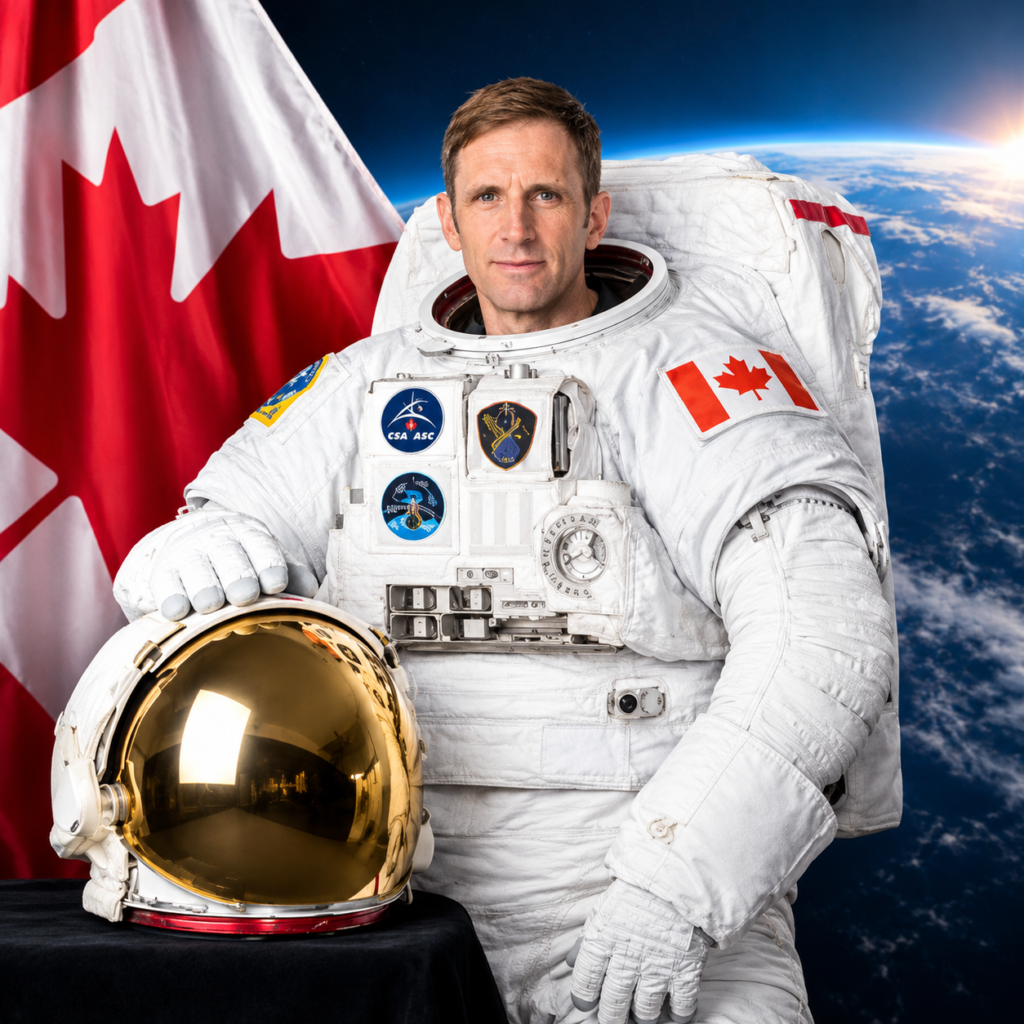
Canada’s priorities include human spaceflight, lunar exploration, Earth observation, space robotics, climate science and satellite technologies. The country is also developing technologies that could support future Moon and Mars missions. Earth observation remains particularly important because Canada’s enormous territory requires reliable monitoring from space. Space science is also being used to improve knowledge of human health, climate and the wider universe.
How important is the space sector to Canada’s technology industry?
The space sector is an important part of Canada’s high-technology economy because it creates demand for advanced engineering, software, robotics, communications and satellite technologies. In 2024, Canada’s space industry generated $5 billion in revenue and supported 14,622 direct jobs. About 72% of those jobs were in STEM fields, while engineers and scientists represented 41% of the workforce.
Which organizations lead Canada’s space research and exploration?
The Canadian Space Agency (CSA) is the main federal organization responsible for Canada’s civilian space program. Other important organizations include the National Research Council of Canada, universities, research centres, the Canadian Armed Forces and private companies such as MDA Space and Telesat. Canada also works closely with NASA, the European Space Agency and other international partners.
What role does Canada play in international space missions?
Canada often contributes specialized technologies rather than independently operating large exploration programs. Its robotics expertise, Earth-observation capabilities and scientific instruments have allowed it to participate in major international missions. Canada is a partner in the ISS and Gateway programs and contributed Canadarm3 to the lunar exploration effort. International partnerships allow Canada to participate in missions that would be difficult to undertake alone.
Joshua Kutryk & International Space Station
Who is Canadian astronaut Joshua Kutryk?
Joshua Kutryk is a Canadian Space Agency astronaut, engineer, test pilot and Royal Canadian Air Force colonel from Fort Saskatchewan, Alberta. He has more than 4,000 hours of flying experience across more than 40 aircraft types. He joined the Canadian astronaut corps in 2017 and completed astronaut training in 2020. His Crew-13 mission is his first spaceflight

What is Joshua Kutryk’s current mission aboard the International Space Station?
Joshua Kutryk is serving as a mission specialist aboard NASA’s SpaceX Crew-13 mission to the ISS. He is conducting scientific research, testing technologies and supporting station operations and maintenance. His work includes several Canadian-led human-health experiments. The mission is designed to provide knowledge useful for future long-duration missions beyond low Earth orbit.
When did Joshua Kutryk launch to the International Space Station?
Joshua Kutryk launched on October 1, 2026, aboard a SpaceX Falcon 9 rocket and Dragon spacecraft. The launch took place from Cape Canaveral, Florida, at 11:10 a.m. ET. Crew-13 subsequently docked with the ISS at about 7:05 p.m. ET. This was the first time a Canadian astronaut flew under NASA’s Commercial Crew Program.
What scientific research is Joshua Kutryk conducting in space?
Kutryk is supporting Canadian experiments including AstroFit, C-STARS, HomeBase, SANSORI-2, SPARK and CARDIOBREATH. These studies examine exercise, mental well-being, spatial orientation, vision, anemia and cardiovascular and respiratory health. Several international experiments are also part of his mission. The research is intended to improve astronaut health while producing knowledge that may benefit healthcare on Earth.
How long will Joshua Kutryk stay aboard the ISS?
Crew-13 is planned as an approximately six-month mission. During that period, Kutryk will live and work aboard the ISS as part of the station’s Expedition 75 crew. His activities will include science, maintenance, operations and public outreach. The mission will also contribute to Canada’s experience with long-duration human spaceflight.
What makes Joshua Kutryk’s ISS mission important for Canada?
Kutryk’s mission is significant because it is Canada’s first astronaut flight through NASA’s Commercial Crew Program. It is also Canada’s fourth long-duration astronaut mission to the ISS. His scientific work strengthens Canada’s human-spaceflight research and prepares researchers for future lunar and deep-space missions. The mission also gives Canadians greater visibility in international space exploration.
What experiments are Canadian astronauts supporting aboard the ISS?
Canadian astronauts support experiments studying exercise, bone health, anemia, vision, mental well-being, blood circulation and human adaptation to microgravity. Current research includes AstroFit, SPARK, HomeBase, SANSORI-2 and C-STARS. These investigations are particularly valuable because microgravity can accelerate some physical changes compared with conditions on Earth. Their findings could support both future astronauts and healthcare research on Earth.
How does Canada contribute to International Space Station operations?
Canada contributes the Canadarm2 robotic arm, Dextre and the Mobile Base System. These systems help move equipment, capture visiting spacecraft, support maintenance and assist astronauts. Canadarm2 has played a major role in assembling and maintaining the ISS and continues operating beyond its original design life. In exchange for Canada’s robotics contribution, Canadian researchers and astronauts receive access to the orbital laboratory.
Artemis II & Lunar Exploration
What was Jeremy Hansen’s role in NASA’s Artemis II mission?
Jeremy Hansen served as a mission specialist on Artemis II. He worked with NASA astronauts Reid Wiseman, Victor Glover and Christina Koch aboard the Orion spacecraft. The crew tested spacecraft systems, conducted scientific activities, monitored systems and performed observations during the lunar flight.
What made Jeremy Hansen’s Artemis II mission historic for Canada?
Hansen became the first Canadian and first non-American to participate in a lunar mission. Artemis II also marked the first crewed mission around the Moon since the Apollo era. His flight made Canada the second country to have an astronaut fly around the Moon. It demonstrated Canada’s role as an important international partner in lunar exploration.
When did Artemis II travel around the Moon?
Artemis II launched on April 1, 2026. The crew travelled around the Moon during a mission lasting 9 days, 1 hour and 32 minutes, before splashing down on April 10. The mission was designed to test Orion’s systems during a crewed deep-space flight.
How far did the Artemis II crew travel from Earth?
The Artemis II crew travelled more than 1 million kilometres during their lunar journey. They travelled beyond the far side of the Moon before returning toward Earth. This made the mission one of the most distant crewed journeys ever completed.
What did Canada contribute to the Artemis II mission?
Canada’s most important contribution is Canadarm3, the robotic system being developed for the Gateway lunar space station. Canada’s participation in Gateway helped secure astronaut opportunities, including Hansen’s Artemis II seat. Canada is also developing lunar robotics, science and technology through programs such as LEAP.
What does Artemis II mean for Canada’s future in lunar exploration?
Artemis II gives Canada practical experience in crewed deep-space exploration. It also raises the profile of Canadian technologies and researchers as international partners prepare for sustained lunar activity. Canada’s robotics, rover and science programs can build on this experience. The mission therefore connects Canada’s current capabilities with longer-term Moon and Mars exploration.
What is Canada’s role in NASA’s future Artemis missions?
Canada’s major contribution is the Canadarm3 robotic system for Gateway. The system is designed to maintain, inspect and repair Gateway, move modules, capture visiting spacecraft and support astronauts. Canada is also developing lunar science and rover technologies. These contributions give Canadian industry and researchers opportunities to participate in future lunar missions.
How could Canada contribute to future missions to the Moon and Mars?
Canada could contribute through autonomous robotics, lunar rovers, Earth observation, communications, health research and advanced AI systems. The Canadian utility rover is being designed for logistics, scientific investigations and astronaut support on the Moon. Canadian research into human health could also help prepare astronauts for longer missions. These capabilities could eventually support international missions to Mars.
Satellites & Earth Observation
Why are satellites important to Canada?
Satellites are particularly important because Canada has an enormous territory, extensive Arctic regions and long coastlines. They provide information for environmental monitoring, disaster response, maritime safety and national security. Satellite services can observe remote areas that are difficult or expensive to monitor from the ground.
What is the RADARSAT Constellation Mission?
The RADARSAT Constellation Mission, or RCM, is Canada’s current radar Earth-observation satellite system. Its satellites use Synthetic Aperture Radar, allowing them to collect imagery during both day and night and through clouds. RCM provides important information for maritime surveillance, disaster management, ecosystem monitoring and Arctic observation.
How does RADARSAT help monitor Canada’s Arctic region?
RADARSAT provides regular radar imagery of Canada’s Arctic territory and maritime approaches. Radar is particularly useful in the North because it can operate regardless of daylight and through many weather conditions. Its data supports sea-ice monitoring, surveillance and environmental management. It is therefore an important tool for both civilian services and Canadian sovereignty.
How are Canadian satellites used to monitor wildfires and natural disasters?
Satellite imagery can identify fire activity, monitor affected areas and support emergency-response decisions. Canada is also developing WildFireSat, a government-owned satellite mission designed to monitor active wildfires across Canada daily. The mission is currently in development and is planned for launch in 2029.
How does satellite technology support maritime surveillance?
Satellite radar can monitor large maritime areas and identify vessels, including ships operating in remote waters. RADARSAT data supports maritime safety and surveillance of Canada’s coastal and Arctic regions. This information can complement other systems used by federal departments and the Canadian Armed Forces.
How do satellites help Canada monitor climate and environmental changes?
Satellites provide long-term observations of ice, forests, coastlines, atmosphere and other environmental conditions. Missions such as RADARSAT and HAWC contribute different types of information about Canada’s changing environment. HAWC is being developed to improve understanding of clouds, water vapour and aerosols and their effects on weather and climate.
Why does Canada need sovereign satellite capabilities?
Sovereign satellite capabilities give Canada reliable access to critical data and reduce dependence on foreign systems. This is particularly important for Arctic surveillance, emergency response, environmental monitoring and national security. The government has identified space-based intelligence, surveillance and reconnaissance, satellite communications, space domain awareness and space launch as key sovereign capabilities.
What is the future of Earth observation in Canada?
Canada is moving toward a combination of national satellites, next-generation systems, commercial data and international partnerships. RADARSAT+ is being developed to maintain continuity of Earth-observation services. Canada is also developing WildFireSat and studying a next-generation satellite system.
RADARSAT & Satellite Investments
What is Canada’s RADARSAT replenishment program?
The replenishment program is designed to add another satellite to the RADARSAT Constellation Mission. Its purpose is to maintain access to important Synthetic Aperture Radar data as existing satellites age. This provides a bridge while Canada develops a longer-term next-generation Earth-observation system.
How much is Canada investing in the next RADARSAT replenishment satellite?
In June 2026, the Canadian Space Agency awarded MDA Space a $688 million contract to build, test and launch the replenishment satellite. The project is part of the broader RADARSAT+ initiative. Canada had previously announced a $1.012 billion, 15-year investment covering replenishment and next-generation satellite activities.
Why does Canada need to replace or replenish RADARSAT satellites?
RADARSAT satellites have finite operating lifetimes, while demand for their data continues. Losing access to radar imagery could affect environmental monitoring, Arctic surveillance, maritime safety and emergency response. The replenishment satellite is intended to help maintain continuity while longer-term capabilities are developed.
What will the next RADARSAT satellite be used for?
The replenishment satellite will continue providing radar imagery for government services. Uses include maritime surveillance, disaster management, ecosystem monitoring, environmental protection and Arctic observation. Its data will also support national-security requirements.
When is the next RADARSAT replenishment satellite expected to launch?
As of October 2026, the government has announced the $688 million build, test and launch contract, but the CSA’s current RADARSAT+ public information does not provide a confirmed launch date for the replenishment satellite. It is therefore better to avoid publishing a specific launch year unless the CSA announces one.
Which Canadian companies are involved in Canada’s satellite programs?
MDA Space is a major contractor for RADARSAT and Canadian space robotics. Other Canadian organizations involved in current Earth-observation development include C-CORE, Kepler Communications and Calian. The government is deliberately using multiple Canadian companies to develop both space and ground segments of future satellite systems.
How could new RADARSAT satellites strengthen Canada’s Arctic capabilities?
New radar satellites would help maintain continuous access to imagery of Canada’s Arctic territory and maritime approaches. They can support sea-ice monitoring, vessel detection, environmental observation and broader situational awareness. Reliable satellite coverage is increasingly important as Canada focuses on Arctic sovereignty and security.
Space Robotics
What is Canada’s history with space robotics?
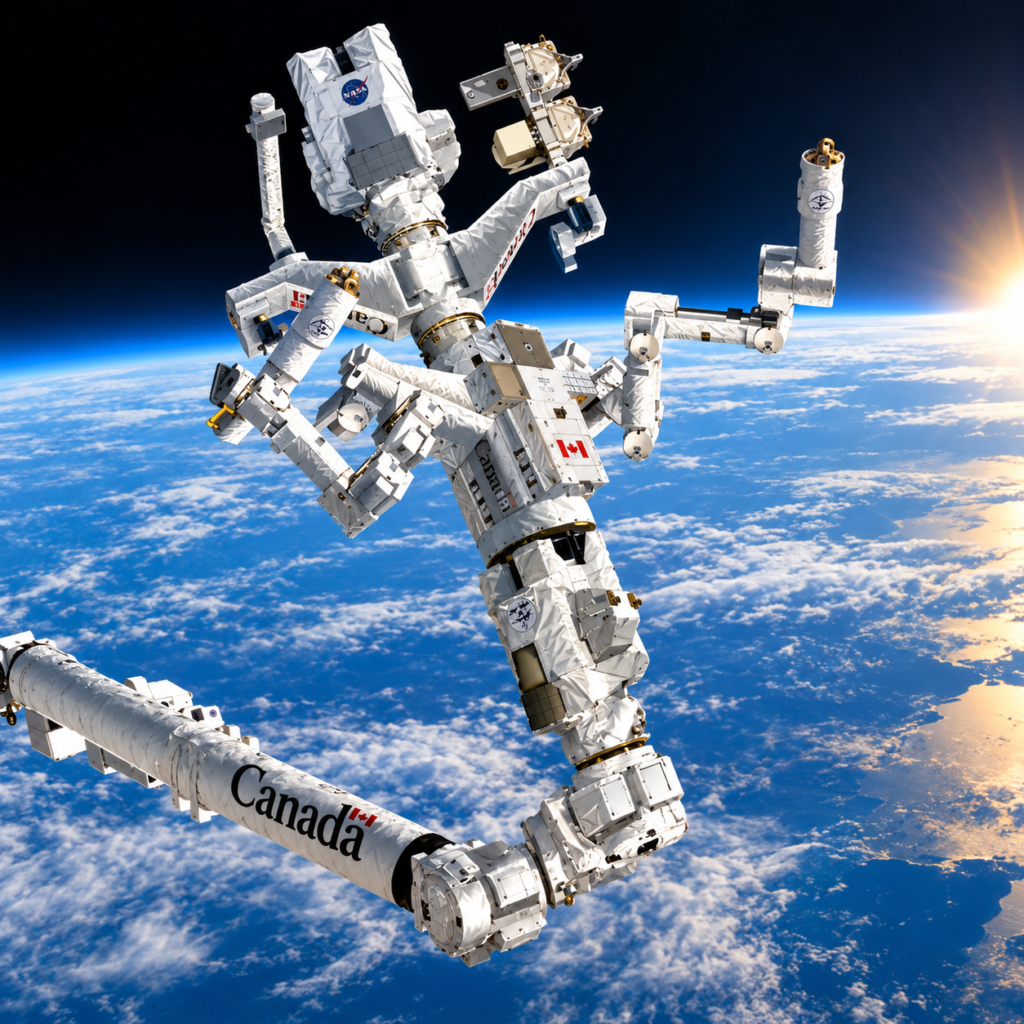
Canada has more than four decades of experience in space robotics. The original Canadarm on the Space Shuttle established Canada’s international reputation, followed by Canadarm2 and Dextre on the ISS. This expertise is now being extended toward Canadarm3 and lunar robotics.
What is the Canadarm and why is it important?
The Canadarm was a robotic arm developed by Canada for the Space Shuttle program. It demonstrated that Canadian companies could develop sophisticated robotic systems for demanding space environments. Its success created the foundation for Canadarm2, Dextre and the future Canadarm3 system.
How does Canadarm2 support the International Space Station?
Canadarm2 is a 17-metre robotic arm used for station maintenance, moving equipment and astronauts, and capturing visiting spacecraft. It was extensively involved in ISS assembly and continues to perform important operations. Canada also operates Dextre and the Mobile Base System as part of its ISS robotics contribution.
What is Dextre and what does it do in space?
Dextre is Canada’s specialized robotic handyman on the ISS. It can perform delicate maintenance and handling tasks that might otherwise require astronauts to conduct spacewalks. Together with Canadarm2 and the Mobile Base System, it forms Canada’s major robotic contribution to the ISS.
How has Canada’s robotics expertise influenced its space industry?
Canadian space robotics has created expertise in autonomous systems, machine vision, software, engineering and precision control. The technology has also generated commercial and medical spin-offs. Examples include neuroArm, IGAR and Modus V, demonstrating how space robotics research can contribute to healthcare.
How are Canadian robotics technologies being used beyond the ISS?
Canada is adapting its robotics expertise for lunar exploration. Canadarm3 is being developed for Gateway, while Canada is also developing a lunar utility rover. These systems are intended to perform tasks in environments where direct human control can be difficult because of distance and communication delays.
What role could AI and robotics play in Canada’s future space missions?
AI and robotics could allow Canadian systems to operate more independently in deep space. Canadarm3, for example, is being designed with advanced software and autonomy so it can perform maintenance, inspection and other tasks. Autonomous rovers could also navigate and conduct science without constant real-time instructions from Earth.
AI, Autonomous Systems & Space
How is artificial intelligence changing Canada’s space industry?
AI is increasingly being combined with robotics, satellite operations and scientific analysis. Canadian programs are exploring autonomous systems that can make decisions with less direct human intervention. This is particularly valuable for lunar and deep-space missions where communication delays make continuous control from Earth difficult.
How can AI improve satellite operations?
AI can help operators analyze satellite health, identify unusual behaviour and optimize operations. It can also help manage large volumes of satellite data more efficiently. Canada’s next-generation satellite programs provide opportunities to incorporate modern ground systems and data-management technologies.
How can AI analyze satellite images and Earth-observation data?
AI can help process large quantities of satellite imagery and identify patterns that may be difficult to detect manually. Applications can include wildfire monitoring, vessel detection, environmental change and disaster assessment. Combining AI with radar and optical imagery could make Canada’s Earth-observation services faster and more useful.
How are autonomous systems being developed for space missions?
Canadian organizations are developing autonomous software and robotics for future lunar missions. MDA Space, for example, has worked on autonomous software frameworks designed to support robotic arms, rovers, scientific instruments and satellites. These systems are intended to reduce operator workload and improve mission flexibility.
What role can Canadian AI companies play in future space exploration?
Canadian AI companies can contribute software, autonomous navigation, computer vision, data analytics and decision-support systems. These technologies can be integrated into satellites, lunar rovers and robotic arms. Government programs such as LEAP are specifically designed to encourage Canadian innovation in areas including AI and robotics.
How could robotics and AI support missions to the Moon and Mars?
AI-enabled robots could scout terrain, move equipment, collect scientific data and prepare infrastructure before astronauts arrive. Autonomous systems are particularly useful on the Moon and Mars because communication delays make direct control more difficult. Canada’s lunar rover and Canadarm3 programs provide opportunities to develop this type of capability.
How is Canada combining AI, robotics and aerospace technology?
Canada is bringing together its established robotics expertise with advanced software, sensors, autonomous systems and aerospace engineering. Canadarm3 is a major example because it combines robotics, machine vision and autonomy. Canadian lunar rover development also combines navigation, scientific instruments and robotic tools.
Space, Climate & Environmental Science
How do Canadian satellites help monitor climate change?
Canadian satellites provide long-term observations of Earth’s atmosphere, ice, land and oceans. RADARSAT supports environmental monitoring, while missions such as HAWC are designed to improve understanding of atmospheric processes. These datasets help researchers study environmental changes over time.
How does space technology help Canada monitor Arctic ice?
Radar satellites can observe sea ice even when darkness or cloud cover limits conventional optical imagery. RADARSAT provides daily radar coverage of Canada’s land, coastal areas and Arctic. This information supports navigation, maritime safety, environmental monitoring and Arctic research.
How are satellites used to track wildfires across Canada?
Satellite systems can detect and monitor wildfire activity over very large areas. WildFireSat is being developed specifically for daily monitoring of active wildfires in Canada. Its data is expected to improve fire-management decisions and help authorities prioritize resources.
How can satellite data help monitor floods and other natural disasters?
Satellite imagery can provide rapid information about affected areas when ground access is difficult. RADARSAT’s radar technology can help map flooded areas and support emergency-response planning. Satellite observations can therefore complement information from aircraft, ground sensors and emergency agencies.
How does Earth observation support Canadian environmental research?
Earth observation allows researchers to study large geographic areas repeatedly and consistently. Satellite data can support research into forests, coastlines, sea ice, water, climate and extreme weather. This is especially valuable for Canada because of its size and remote northern regions.
How can satellite technology help protect Canada’s forests and wildlife?
Satellites can monitor changes in forests, wetlands, coastlines and other habitats over large areas. Earth-observation data can also help identify environmental disturbances and support conservation planning. Regular satellite observations provide information that would be difficult to collect entirely through ground surveys.
Why is space-based climate monitoring important for Canada?
Canada faces major environmental challenges across its Arctic, forests, coastlines and northern communities. Space-based monitoring provides a national-scale view that can support climate research, emergency preparedness and environmental policy. HAWC and other Earth-observation missions will strengthen Canada’s ability to study atmospheric and climate processes.
Space & National Security
Why is space technology important to Canada’s national security?
Modern national security depends heavily on satellites for communications, surveillance, navigation and situational awareness. Canada’s enormous territory makes space-based systems particularly valuable. The government has therefore identified space as a strategic capability within its defence-industrial planning.
How can satellites support Canada’s Arctic security?
Satellites provide persistent information across Canada’s enormous northern territory. Earth-observation satellites can monitor sea ice, vessels and environmental conditions, while communications satellites can connect forces and communities across remote regions. New investments are specifically aimed at strengthening Canada’s Arctic satellite capabilities.
How does satellite technology help monitor Canada’s maritime territory?
Satellite radar and communications systems can help detect vessels and provide broad situational awareness over Canadian waters. RADARSAT data supports maritime surveillance and safety, while satellite communications can support operations in remote areas. These capabilities complement aircraft, ships and other surveillance systems.
What role do Earth-observation satellites play in national defence?
Earth-observation satellites provide imagery that can support intelligence, surveillance and reconnaissance. Canada’s RADARSAT Constellation Mission is an important component of the Canadian Armed Forces’ Earth-observation capability. The government is also planning future systems to maintain and expand this capability.
How important are secure satellite communications for Canada?
Secure satellite communications are increasingly important for military operations, especially in Canada’s Arctic and remote regions. In August 2026, Canada awarded a contract connected to Telesat’s Lightspeed constellation for military Ka-band communications. The broader project also includes plans for secure UHF and X-band capabilities.
How could autonomous space systems strengthen Canada’s strategic capabilities?
Autonomous systems can continue operating even when communication links are delayed or disrupted. They can reduce the workload on operators and potentially improve the resilience of satellites and robotic systems. Canada’s investment in autonomous robotics and space systems therefore has both exploration and strategic applications.
Canada’s Space Industry
How large is Canada’s space industry?
Canada’s space industry had more than 200 active firms and $5 billion in revenue in 2024. It contributed $3.8 billion to Canada’s GDP and supported 14,622 direct jobs. The sector also generated approximately $2.2 billion in exports, demonstrating its international reach.
Which Canadian companies are leading the space sector?
Important Canadian space companies include MDA Space and Telesat, which have major roles in satellite systems, robotics and communications. Other organizations such as Kepler Communications, C-CORE, Calian and Canadensys contribute to satellite, communications, Earth-observation and exploration technologies. Canada’s space ecosystem also includes hundreds of smaller companies and research organizations.
What role does MDA Space play in Canada’s space industry?
MDA Space is one of Canada’s most important space-technology companies. It has been involved in Canadarm, Canadarm2 and Canadarm3, as well as RADARSAT and satellite manufacturing. In 2026, it received a $688 million contract to build, test and launch a RADARSAT replenishment satellite.
How does the Canadian government support space companies?
The government supports companies through research programs, technology-development funding, procurement contracts and international partnerships. The CSA’s Space Technology Development Program continues to provide opportunities for Canadian organizations to develop technologies with commercial potential. Canada is also using major procurement projects to strengthen domestic space and defence supply chains.
What are the biggest opportunities in Canada’s space industry?
Major opportunities include satellite communications, Earth observation, space robotics, defence technologies, lunar exploration and climate monitoring. Demand for satellite data and secure communications is increasing, while Moon exploration is opening new markets for robotics and autonomous systems. Canada’s strong engineering and scientific workforce gives domestic companies a foundation for expansion.
What challenges does Canada’s space industry face?
The sector faces challenges including high development costs, international competition, skilled-labour requirements and dependence on international partnerships. Smaller companies can also face difficulties scaling technologies from research projects into commercial products. The CSA has highlighted the need for regulatory certainty, market diversification and continued support for innovation.
How can Canada attract more private investment in space technology?
Canada can encourage private investment by creating predictable procurement opportunities, supporting technology commercialization and reducing barriers for growing companies. Government contracts can provide early customers for emerging technologies while international partnerships can open export markets. Stronger links between universities, startups and major aerospace companies could also help move research into commercial products.
What is the future outlook for Canada’s space industry?
The outlook is increasingly focused on satellites, defence, communications, robotics and lunar exploration. Major projects such as RADARSAT+, WildFireSat, Canadarm3 and lunar rover development are creating long-term demand for Canadian technologies. The sector’s existing $5 billion revenue base and strong R&D performance provide a foundation for further growth.
Science & Research
What are Canada’s most important areas of space science research?
Canada conducts research in human health, astronomy, Earth observation, climate science and planetary exploration. Human-health research on the ISS is particularly important because it helps prepare astronauts for longer missions. Canadian researchers also contribute scientific instruments and expertise to international observatories and missions.
How do Canadian universities contribute to space science?
Canadian universities and research centres form a significant part of the national space ecosystem. They participate in satellite development, space science, health research, astronomy and technology development. The CSA’s 2025 industry snapshot indicates that universities and research centres represent about 20% of participating organizations in the sector.
What scientific discoveries are Canadian researchers making through space missions?
Canadian researchers are studying subjects including human adaptation to microgravity, bone loss, anemia, vision, mental well-being and cardiovascular health. Space-based astronomy also allows Canadian scientists to study phenomena such as black holes, neutron stars and supernovae. These projects combine fundamental science with practical benefits for human health and technology.
How does microgravity research benefit science on Earth?
Microgravity allows researchers to observe biological changes in ways that can be difficult to reproduce on Earth. Canadian ISS experiments examine bone loss, anemia, vision, exercise and cardiovascular changes. The resulting knowledge can contribute to healthcare research and treatments for conditions that have similarities to spaceflight-related changes.
How can space research improve healthcare and life sciences?
Space research can reveal how the human body responds to inactivity, altered gravity, stress and other unusual conditions. Canadian ISS research is studying vision changes, anemia, exercise, mental health and cardiovascular function. These studies can help researchers develop approaches relevant to healthcare on Earth.
What technologies developed for space can benefit Canadians on Earth?
Space research has contributed to medical robotics, sensors, imaging and advanced software. Canada’s space robotics program has produced technologies such as neuroArm, IGAR and Modus V. These examples demonstrate how solving difficult space problems can lead to technologies with applications in hospitals and other industries.
Future of Canadian Space Exploration
What is the future of Canada’s space program?
Canada’s future space program will increasingly combine human exploration, robotics, satellites, climate science and national-security capabilities. Major programs include Canadarm3, RADARSAT+, WildFireSat and lunar rover development. Canada’s international partnerships will remain important because many deep-space missions require capabilities beyond what one country can provide alone.
What could be Canada’s next major space mission?
Canada does not currently have a single independently operated flagship mission comparable to Artemis II. Its next major milestones are likely to come through international programs, Earth-observation missions and lunar robotics. Canadarm3, WildFireSat and future lunar science activities are among the most significant projects currently being developed.
Will Canada participate in future missions to the Moon?
Yes. Canada is committed to lunar exploration through its contribution to NASA’s Gateway program and Canadarm3. Canada is also developing lunar rover technologies and science through LEAP. Its contribution to Gateway is tied to opportunities for Canadian astronauts and scientific and commercial activities.
Could Canadian astronauts eventually travel to Mars?
Canada does not currently have an announced Canadian astronaut Mars mission. However, Canada’s participation in Artemis and Gateway is explicitly connected to the longer-term goal of human exploration of Mars. Canadian experience in robotics, human-health research and lunar exploration could help prepare the country for future deep-space missions.
What technologies will Canada need for future deep-space missions?
Canada will need advanced autonomous robotics, life-support and health technologies, communications, navigation, scientific instruments and reliable spacecraft systems. Lunar missions will also require technologies capable of surviving radiation, extreme temperatures and lunar dust. Canada’s current work in robotics, AI, health and lunar resource technologies addresses several of these needs.
How will AI and robotics shape Canada’s future space exploration?
AI and robotics will allow Canadian systems to perform more complex tasks with less direct human control. This is particularly important around the Moon, where communication delays make real-time operation difficult. Canadarm3 and Canada’s lunar rover program are examples of how autonomy is becoming central to Canada’s future exploration strategy.
What role will Canadian satellites play in the future?
Canadian satellites will remain important for Earth observation, climate monitoring, wildfire management, communications and national security. RADARSAT+ is intended to maintain essential radar-observation services, while WildFireSat will provide dedicated wildfire monitoring. Canada is also studying next-generation satellite systems and increasing its sovereign capabilities.
How could Canada strengthen its position in the global space industry?
Canada can strengthen its position by continuing investment in R&D, supporting startups and SMEs, developing skilled workers and securing major international contracts. Diversifying export markets and maintaining partnerships with NASA, ESA and other countries can also expand opportunities. Canada’s existing strengths in robotics, Earth observation and satellite communications provide a strong foundation for future growth.
Final Verdict
Canada’s space sector is entering an important new phase. Jeremy Hansen’s Artemis II mission and Joshua Kutryk’s Crew-13 mission have strengthened Canada’s human-spaceflight profile, while RADARSAT+, WildFireSat and next-generation satellite investments are expanding Canada’s Earth-observation capabilities. At the same time, Canadarm3, lunar rovers, AI and autonomous robotics are positioning Canadian technology for future Moon missions. With more than $5 billion in annual space-sector revenue and 14,622 direct jobs, Canada’s space industry is becoming increasingly important not only for science and exploration but also for technology, climate monitoring, Arctic sovereignty and national security
Table of Contents

Leave a Reply