Canada Politics 2026
Introduction
Parliament & Politics in Canada in 2026 covers the major political developments shaping the country at the federal, provincial and municipal levels. Key issues include affordability, housing, healthcare, economic policy, trade and tariffs, elections, government spending, Indigenous affairs and Canada’s international relationships. Parliament is also dealing with emerging challenges such as foreign interference, election security and the political impact of artificial intelligence. This guide examines the major political issues Canadians are following and explains how government decisions can affect communities across the country.
Federal Politics
What are the major developments in Canadian federal politics in 2026?
Canadian federal politics in 2026 is focused heavily on affordability, economic growth, housing, national security and Canada’s relationship with the United States. Trade tensions and U.S. tariff measures have increased pressure on the government to strengthen Canada’s economic resilience and diversify trade. The government is also pursuing housing and infrastructure investments while advancing defence and security priorities.
What are the federal government’s main political priorities?
Major federal priorities include improving economic competitiveness, increasing housing supply, supporting workers and businesses, strengthening national defence and improving internal trade. The government is also emphasizing economic diversification and stronger relationships with international partners. Housing affordability, healthcare and infrastructure remain important domestic priorities.
What are the biggest issues being debated by the federal government?
Key issues include the cost of living, housing affordability, tariffs and trade, immigration, healthcare, defence spending, productivity and government finances. Parliament is also dealing with election security, foreign interference, artificial intelligence and privacy. These issues affect both federal policy and relations between Ottawa and the provinces.
How is the federal government addressing the cost of living?
The federal government has introduced measures intended to reduce selected household costs and support housing supply. For example, legislation implementing the 2026 Spring Economic Update included temporary reductions in fuel-related costs, while housing programs are being expanded. The government has also identified affordability as a central issue in its 2026 economic planning.
What are the major federal economic and fiscal policies?
Federal economic policy is focused on investment, productivity, infrastructure, housing construction, business growth and economic resilience. The 2026 27 Main Estimates proposed more than $500 billion in total budgetary spending. Supplementary Estimates A would add approximately $11.1 billion in voted budgetary spending if approved.
How is the government responding to trade and tariff pressures?
Canada is responding to U.S. tariff pressure through negotiations, support for affected businesses and trade diversification. The government is also seeking stronger economic partnerships outside the United States. Global Affairs Canada has set an objective of doubling Canada’s non-U.S. exports over the next decade while maintaining efforts to stabilize the Canada-U.S. trading relationship.
What major federal policies could affect Canadians in 2026?
Policies affecting Canadians include housing programs, immigration changes, healthcare funding, tax and affordability measures, trade responses, defence investments and employment-related programs. Election law reforms also affect political parties, candidates and voters. The impact varies according to province, income, family circumstances and employment.
What are the key political issues expected to shape federal politics?
Affordability, housing, tariffs, economic growth, healthcare, immigration, defence and relations with the United States are likely to remain major political issues. Climate policy, Indigenous reconciliation and national security are also important. The government’s ability to deliver economic growth while managing public spending will remain a central political question.
Provincial Politics
What are the major developments in Canadian provincial politics?
Provincial politics in 2026 continues to focus on healthcare, housing, affordability, infrastructure, education and economic development. Provinces also have to respond to changing labour markets and federal policies. Relations between provincial governments and Ottawa remain important, particularly regarding healthcare funding, infrastructure and internal trade.
What are the main political priorities of Canada’s provincial governments?
Priorities differ by province, but healthcare access, housing supply, affordability, education, infrastructure and economic growth are common themes. Western provinces often place additional emphasis on energy and resource development, while urban provinces face intense housing and transportation pressures. Atlantic and northern provinces also focus heavily on population growth and workforce recruitment.
How are provinces addressing healthcare and housing challenges?
Provinces are investing in hospitals, primary care, healthcare workers and infrastructure while trying to reduce wait times. Housing strategies include accelerating construction, supporting affordable housing and changing development regulations. Federal-provincial cooperation is increasingly important because many major programs require funding or coordination across governments.
What are provinces doing to improve affordability and infrastructure?
Provincial governments are using measures involving housing, transportation, energy, infrastructure and targeted financial support. Some provinces are also trying to reduce barriers to home construction and accelerate major projects. Infrastructure investment is particularly important as population growth increases pressure on roads, transit, utilities and public services.
How do provincial policies differ across Canada?
Canada’s provinces have different tax systems, healthcare structures, housing markets, energy policies and economic conditions. Ontario and British Columbia face major housing affordability pressures, while Alberta and Saskatchewan have stronger resource-based economies. Quebec has distinct policies in areas such as immigration and language, while Atlantic provinces face different demographic and workforce challenges.
What major legislation is being introduced by provincial governments?
Provincial legislation varies widely and changes throughout the year. Major areas of legislation include healthcare reform, housing and development, education, labour standards, energy, environmental policy and provincial finances. Canadians should check their provincial legislature for the latest bills because proposals can change before becoming law.
How are provincial governments responding to economic pressures?
Provinces are focusing on investment, job creation, infrastructure and support for businesses while managing budget pressures. Trade uncertainty and U.S. tariffs have increased the importance of economic diversification and internal Canadian trade. Federal and provincial finance ministers discussed economic growth, healthcare funding and reducing internal trade barriers in October 2026.
What are the key provincial political issues Canadians are following?
Healthcare, housing, education, affordability, energy, taxes, infrastructure and population growth remain major provincial political issues. Immigration and workforce shortages are also important in provinces trying to attract skilled workers. Climate policy and resource development can create particularly strong political differences between regions.
Municipal & Local
What are the major issues facing Canadian municipalities?
Canadian municipalities are dealing with housing shortages, homelessness, infrastructure costs, public transit, congestion, property taxes and population growth. Climate-related risks such as flooding, extreme heat and wildfires are creating additional financial pressures. Cities also need to expand services as populations grow.
How are Canadian cities addressing housing affordability?
Municipalities are using zoning reforms, faster approvals, development incentives and partnerships with federal and provincial governments to increase housing supply. Some cities are also supporting affordable and supportive housing projects. Toronto, for example, continues to receive federal and municipal investment for supportive and transitional housing.
What are municipalities doing to improve public transit?
Cities are expanding rapid transit, buses, light rail and subway systems while upgrading existing infrastructure. Public transit investment is intended to reduce congestion, improve access to employment and support population growth. Major projects can take years to complete because of planning, construction, financing and environmental requirements.
How are cities dealing with homelessness and housing shortages?
Municipalities are expanding emergency shelters, supportive housing and homelessness programs, often with federal and provincial financial support. Increasing the supply of permanent affordable housing is considered important for reducing long-term homelessness. Cities are also experimenting with approaches that connect housing with healthcare and social services.
What local policies are affecting property taxes and municipal services?
Property taxes help municipalities fund services such as policing, fire protection, roads, parks, waste collection and local infrastructure. Tax rates vary depending on the municipality and property assessment. Cities facing higher construction and operating costs may need to increase taxes or seek additional funding from provincial and federal governments.
How are Canadian municipalities preparing for population growth?
Cities are expanding housing, transit, water systems, schools, roads and other infrastructure. Rapid population growth can place pressure on existing services if infrastructure expansion does not keep pace. Municipal governments therefore increasingly coordinate with provincial and federal authorities on long-term infrastructure and housing planning.
What infrastructure projects are being developed in major Canadian cities?
Major Canadian cities are developing projects involving public transit, housing, water infrastructure, roads, bridges, hospitals and community facilities. Projects vary by region and are often funded through multiple levels of government. Federal housing and infrastructure programs are providing additional support for construction and community development.
How are local governments responding to climate and environmental challenges?
Municipalities are investing in flood protection, stormwater systems, emergency preparedness, wildfire planning, urban trees and resilient infrastructure. Extreme weather can damage roads, buildings and utilities and increase municipal costs. Cities are therefore increasingly incorporating climate risks into infrastructure and land-use planning.
Elections & Voting
What are the major election developments in Canada in 2026?
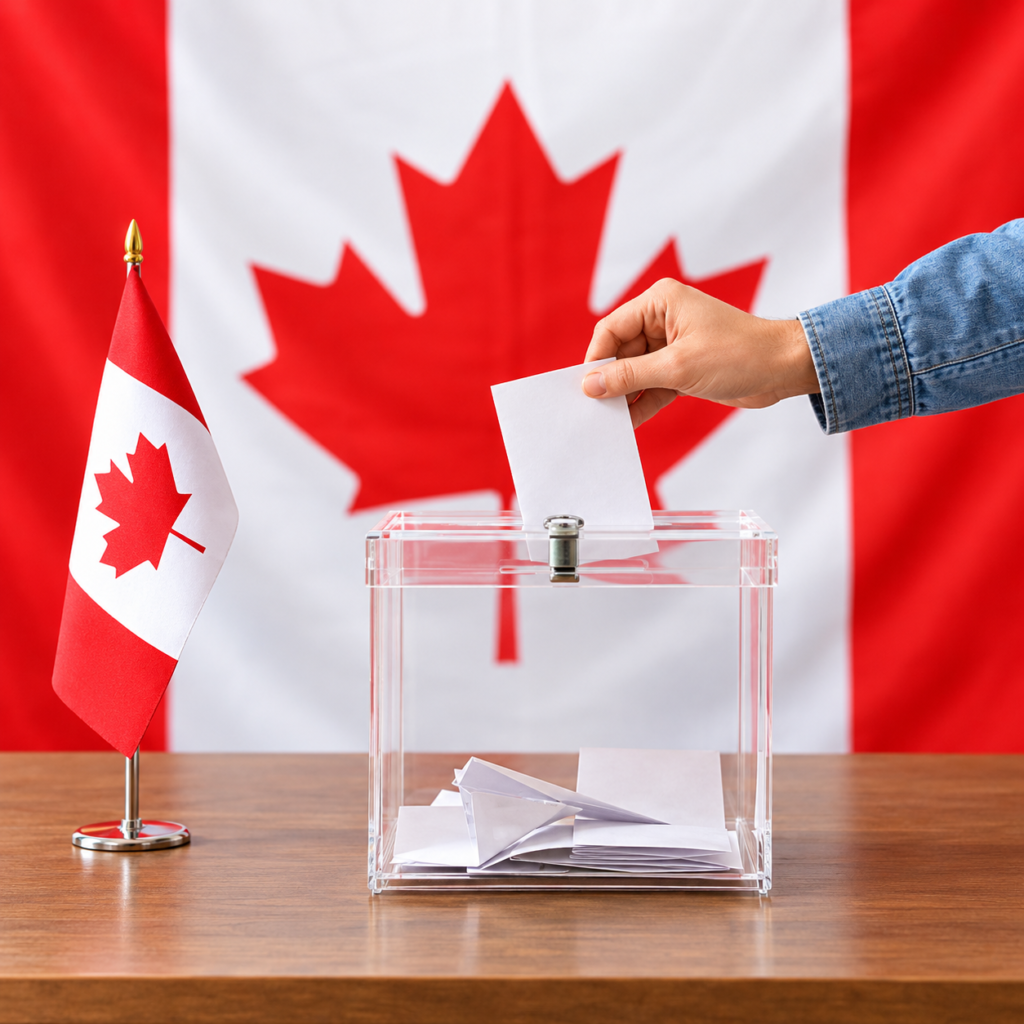
Election-related developments in 2026 include new federal measures designed to protect elections from foreign interference, deepfakes, disinformation and privacy risks. Bill C-25, the Strong and Free Elections Act, received Royal Assent in June 2026 and introduced several changes to the Canada Elections Act.
How does Canada’s federal election system work?
Canada uses a parliamentary electoral system in which voters elect Members of Parliament to represent individual electoral districts. The candidate who receives the most votes in a riding normally wins that seat. The political party that can command the confidence of the House of Commons forms the government.
What are the rules for voting in Canadian elections?
To vote in a federal election, a person must generally be a Canadian citizen and at least 18 years old on election day. Voters must also establish their identity and address. Elections Canada provides several identification options, including government-issued photo identification or combinations of accepted documents.
How does Elections Canada administer federal elections?
Elections Canada is an independent, non-partisan agency responsible for administering federal elections. It manages voter registration, polling, election workers, ballots and the reporting of results. The Chief Electoral Officer has authority over the administration of the federal electoral process.
What changes are being proposed to Canada’s election laws?
Important 2026 changes are no longer merely proposals for Bill C-25 because the Strong and Free Elections Act received Royal Assent on June 18, 2026. The legislation strengthened protections against foreign influence, realistic electoral deepfakes, certain disinformation, foreign funding and misuse of electoral systems. It also introduced additional privacy requirements for federal political parties.
How is Canada addressing foreign interference in elections?
Canada is strengthening election laws, enforcement powers and protections against foreign influence. The 2026 legislation extends certain protections beyond election periods and strengthens rules surrounding foreign funding and political contests. These measures respond partly to recommendations from the Public Inquiry into Foreign Interference in Federal Electoral Processes and Democratic Institutions.
How could artificial intelligence and deepfakes affect Canadian elections?
AI can make it easier to create realistic fake videos, audio recordings and images of political candidates or electoral officials. Such material can potentially mislead voters or damage public trust. Canada’s 2026 election legislation specifically prohibits sophisticated deepfakes of electoral actors when they are intended to mislead Canadians.
What should Canadian voters know about election security and voting information?
Voters should rely on Elections Canada and other trusted official sources for information about registration, voting dates, identification and election procedures. Canadians should be cautious about political content that appears manipulated or comes from unknown sources. The new election safeguards specifically address false information about voting activities and electoral processes.
Parliament Updates
What are the latest developments in the Parliament of Canada?
Parliament in 2026 is dealing with legislation and spending related to the economy, housing, national security, Indigenous affairs, privacy and other government priorities. The government’s spending plans require parliamentary scrutiny and approval. Supplementary Estimates A represent one important part of this process.
What major bills are being debated in the House of Commons?
Important legislation in 2026 has included measures concerning elections, economic policy, privacy and consumer data, among other areas. Bill C-25 strengthened federal election protections, while Bill C-36 proposed modernization of Canada’s private-sector privacy framework.
What issues are parliamentary committees examining?
Parliamentary committees examine detailed policy issues, government spending and proposed legislation. Topics in 2026 include foreign affairs, national security, economic policy, Indigenous affairs, privacy, immigration and government programs. Committees can hear testimony from ministers, officials, experts, organizations and members of the public.
What are the government’s legislative priorities for the parliamentary session?
Major priorities include strengthening Canada’s economy, increasing housing supply, supporting national security, improving competitiveness and responding to international trade pressures. The government is also advancing election-security and privacy reforms. The precise legislative agenda can change as Parliament considers new bills.
How does the House of Commons debate and pass legislation?
A bill generally goes through several stages, including introduction, debate, committee study and further consideration before final approval. The Senate then considers the legislation. A bill becomes law after it has passed both chambers and receives Royal Assent. The process allows MPs and senators to examine and potentially amend legislation.
What role does the Senate play in Canada’s parliamentary system?
The Senate is Canada’s upper chamber and reviews legislation passed by the House of Commons. Senators study bills in detail, conduct committee investigations and can propose amendments. The Senate is intended to provide additional regional and legislative scrutiny within Canada’s parliamentary system.
What government spending requires parliamentary approval?
Voted expenditures generally require parliamentary approval through appropriation legislation, while statutory spending is authorized through existing legislation. For 2026 27, Supplementary Estimates A sought approximately $11.1 billion in additional voted budgetary spending. Major allocations included Indigenous claims, housing and infrastructure and national security-related priorities.
What are the major parliamentary issues Canadians should follow?
Canadians should watch debates over affordability, housing, trade, healthcare, immigration, defence, Indigenous reconciliation and government spending. Election security and privacy are also increasingly important as technology changes political communication. Parliamentary decisions can have direct effects on taxes, services, employment, housing and household finances.
Political Parties
What are the major political parties in Canada?
Canada’s major federal political parties include the Liberal Party, Conservative Party, New Democratic Party (NDP), Bloc Québécois and Green Party. These parties have different approaches to taxation, spending, housing, immigration, climate policy and the role of government. Provincial party systems can differ significantly from the federal landscape.
What are the main policy priorities of Canada’s federal political parties?
The major parties generally compete over economic growth, affordability, housing, healthcare, immigration, taxation, climate policy and national security. Their proposed solutions can differ substantially. Government policy is ultimately determined through legislation, budgets and parliamentary confidence rather than campaign promises alone.
How do the major parties differ on economic policies?
Parties differ over taxation, government spending, regulation, business policy, social programs and the role of government investment. Conservatives generally emphasize lower taxes, economic growth and private-sector activity, while Liberals emphasize public investment alongside economic growth and social programs. The NDP generally advocates stronger social spending and worker protections, while the Bloc focuses particularly on Quebec’s interests.
What are the parties’ positions on immigration and housing?
Immigration and housing are major political issues because population growth affects housing demand, infrastructure and labour markets. Parties differ over immigration levels, temporary residents, permanent-residence selection and housing construction. Housing policies also vary regarding federal funding, zoning, affordability programs and the role of private development.
How do federal parties approach healthcare and climate policy?
The parties generally agree that Canadians need accessible healthcare but differ over funding models, federal involvement and provincial flexibility. Climate policies also vary, particularly regarding carbon pricing, energy development, emissions reduction and clean technology. These differences often become important during parliamentary debates and elections.
What issues are shaping competition among Canada’s political parties?
Affordability, housing, taxes, healthcare, immigration, crime and public safety, trade, energy and climate policy are key areas of political competition. Relations with the United States and national defence have become increasingly important because of trade and geopolitical uncertainty. Voters’ concerns can vary considerably by region.
How do political parties develop their election platforms?
Political parties develop platforms by combining policy research, consultations, economic analysis, political priorities and feedback from members and voters. Platforms typically outline proposed actions on major issues such as taxation, housing, healthcare and the economy. Once an election campaign begins, parties use these platforms to explain their proposed direction to voters.
What role do opposition parties play in the Canadian Parliament?
Opposition parties scrutinize government decisions, question ministers, debate legislation and propose alternative policies. They can use parliamentary committees and Question Period to hold the government accountable. Opposition parties also play an important role in public debate by presenting different approaches to major national issues.
Indigenous Affairs
What are the major Indigenous affairs developments in Canada?
Indigenous affairs in 2026 continue to focus on reconciliation, treaty obligations, land claims, self-government, economic development and improving services. The federal government is continuing to resolve historical claims and provide funding for Indigenous communities. For example, two Treaty 4 and Treaty 6 First Nations reached agricultural-benefits settlements worth more than $209.5 million in August 2026.
What are the federal government’s current priorities regarding Indigenous communities?
Federal priorities include resolving outstanding claims, supporting Indigenous self-determination, improving infrastructure and services, advancing reconciliation and strengthening partnerships with First Nations, Inuit and Métis communities. The 2026–27 spending plans include billions for specific claims and comprehensive land-claim and self-government agreements.
How are treaty rights being addressed in Canada?
Treaty rights are addressed through negotiations, court decisions, settlements, self-government agreements and federal programs. Specific-claim settlements can provide financial compensation where historical obligations were not fulfilled. The government describes these settlements as part of efforts to address past harms and renew relationships with Indigenous communities.
What progress is being made on reconciliation?
Reconciliation involves addressing historical injustices while building stronger relationships between Indigenous Peoples and governments. Progress includes treaty and claims settlements, Indigenous-led programs, cultural initiatives and greater Indigenous participation in decision-making. However, reconciliation remains a long-term process with significant outstanding issues.
What are the major issues facing First Nations, Inuit and Métis communities?
Important issues include housing, infrastructure, healthcare, education, economic development, clean water, food security, land rights and access to services. Conditions vary significantly among communities. Northern and remote communities often face additional challenges because of transportation costs, climate conditions and limited infrastructure.
How are Indigenous communities involved in major economic and infrastructure projects?
Indigenous communities increasingly participate through ownership, partnerships, consultation, impact agreements and economic-development initiatives. Resource and infrastructure projects can create employment and investment opportunities while also raising questions about land rights, environmental impacts and consent. Meaningful Indigenous participation is therefore an important part of many major projects.
What role do Indigenous governments play in Canada’s political system?
Indigenous governments and organizations represent the interests of their communities and increasingly exercise authority through self-government agreements and other governance arrangements. Their roles differ depending on the community and legal framework. Federal, provincial, territorial and Indigenous governments often work together on issues involving lands, services, infrastructure and economic development.
How are Indigenous land rights and resource development being addressed?
Land rights are addressed through treaties, modern land-claim agreements, court decisions, negotiations and consultation processes. Resource projects can involve Indigenous governments in consultation, environmental assessment, partnerships and benefit-sharing. Canada’s 2026 spending plans include funding for comprehensive land claims, self-government agreements and Section 35 rights.
Foreign Policy
What are Canada’s major foreign-policy priorities in 2026?
Canada’s 2026 foreign-policy approach emphasizes strategic autonomy, stronger economic and security partnerships, trade diversification and national sovereignty. The government is strengthening relationships with the United States, Europe and Indo-Pacific partners while maintaining active participation in NATO and multilateral institutions.
How is Canada managing its relationship with the United States?
The United States remains Canada’s most important economic partner, but tariffs and trade uncertainty have created significant pressure. Canada is seeking a stronger and more resilient economic and security relationship while negotiating trade issues and supporting affected Canadian businesses. At the same time, Canada is expanding markets outside the United States to reduce economic vulnerability.
How is Canada strengthening its relationships with European countries?
Canada is strengthening economic, defence and diplomatic relationships with European allies. Cooperation includes NATO, trade, energy security, defence industries and support for Ukraine. Canada also continues to work closely with European partners on international security and the rules-based international order.
What is Canada’s current approach to the Indo-Pacific region?
Canada is increasing its diplomatic, economic and security engagement across the Indo Pacific. Priorities include trade diversification, investment, supply-chain resilience, regional security and stronger partnerships. Canada also adopted a 2026 2030 action plan with ASEAN covering trade, investment, security and economic cooperation.
What role is Canada playing in NATO and international security?
Canada remains a NATO member and continues to support collective defence and transatlantic security. It is increasing defence cooperation with allies and supporting Ukraine in response to Russia’s aggression. Arctic security is also becoming increasingly important to Canada’s defence and foreign policy agenda.
How is Canada responding to major global conflicts and crises?
Canada continues to provide diplomatic, humanitarian, security and stabilization support in response to major international crises. Its 2026 foreign-policy plans include continued support for Ukraine and humanitarian and reconstruction efforts related to the Middle East. Canada is also using diplomatic partnerships and international institutions to address broader security challenges.
How is Canada expanding international trade and diplomatic partnerships?
Canada is pursuing trade diversification by strengthening existing agreements and negotiating new partnerships. Priorities include the Indo-Pacific, Europe, Latin America and other emerging markets. Global Affairs Canada has set a goal of doubling non-U.S. exports over the next decade while also pursuing new trade and investment agreements.
What international issues could have the biggest impact on Canada?
U.S. trade policy, global tariffs, geopolitical conflicts, Arctic security, energy markets, China-related economic and security issues and supply-chain disruptions could significantly affect Canada. Climate change and global migration also have international implications. Canada’s response will increasingly depend on economic diversification, strong alliances and greater strategic resilience.
Final Verdict
Canada’s political landscape in 2026 is being shaped by affordability, economic uncertainty, housing, healthcare, trade, national security and changing international relationships. Federal, provincial and municipal governments each have different responsibilities, but their decisions increasingly overlap on issues such as housing, infrastructure and economic development. Indigenous reconciliation, election security and foreign policy are also becoming increasingly important. Overall, Canadians should continue to follow parliamentary debates, government policies and election developments because decisions at every level can have a direct impact on the economy, public services and everyday life.
Table of Contents

Leave a Reply