
Canada Housing & Real Estate
Introduction
Canada’s housing and real estate market in 2026 continues to face major challenges involving home prices, rental affordability, mortgage costs and housing supply. While some regions are becoming more accessible to buyers, expensive cities continue to create difficulties for first-time homeowners and renters. Government initiatives, new residential developments and changing mortgage conditions are shaping the future of the market. This guide explores the latest housing trends, first-time buyer programs, rental challenges, mortgage rates, new developments and affordable housing policies across Canada.

Market Updates
What is the current state of Canada’s housing market?
Canada’s housing market remains uneven, with conditions varying considerably by city and province. Recent market trends show softer home sales and declining benchmark prices in several major markets, while some more affordable regions remain comparatively resilient. Housing affordability, borrowing costs and economic uncertainty continue to influence buyer decisions. The balance between available homes and buyer demand remains an important factor shaping the market.
How are home prices changing across Canada?
Home prices are following different trends across Canadian regions. Recent national data showed the MLS Home Price Index declining approximately 3% year over year, while the national average sale price was about $668,219 in August 2026. Toronto and Vancouver have experienced notable price pressure, while some Prairie markets have shown greater resilience. Local supply, demand and affordability all influence price changes.
Which Canadian cities have the strongest and weakest housing markets?
Markets in Edmonton, Calgary and Regina have attracted attention because of their relative affordability and population growth. Toronto and Vancouver continue to face significant affordability challenges, and prices in these markets have experienced downward pressure. However, a city’s performance can differ depending on whether the comparison involves detached houses, condominiums, rental properties or overall sales activity.
How are home sales and housing inventory changing across Canada?
In August 2026, national home sales declined by approximately 0.7% month over month and were 6.9% below August 2025. New listings increased by around 3.3% compared with the previous month, giving buyers more choice in many markets. National inventory stood at approximately 4.8 months of supply, suggesting a more balanced market overall than in periods of extreme scarcity.
What is happening to housing supply and demand in Canada?
Canada continues to face a long-term housing supply challenge, particularly in high-demand urban areas. Construction costs, financing conditions, labour availability and planning processes influence how quickly new homes can be delivered. Demand is also affected by population growth, household formation, employment and mortgage affordability. Increasing the supply of suitable homes remains central to improving affordability over time.
How affordable is housing for Canadian homebuyers?
Housing affordability remains a major challenge, especially in Toronto, Vancouver and other expensive urban markets. High property prices, mortgage qualification requirements, down payments, property taxes and maintenance expenses can make ownership difficult. More affordable cities may offer better entry points, but buyers still need to assess local employment opportunities, transportation and ongoing housing costs.
What factors are driving changes in Canada’s real estate market?
Important factors include mortgage rates, household incomes, population growth, employment, housing construction and consumer confidence. Government policies and regional economic conditions also influence demand. Buyers and sellers are paying close attention to borrowing costs and market inventory, while developers must consider construction expenses and whether new projects are financially viable.
What are the major housing market trends to watch in Canada?
Important trends include home-price changes, rental costs, mortgage renewals, new construction and the availability of affordable housing. The performance of Toronto and Vancouver will remain significant, while population growth and housing development in Prairie cities will also matter. Future interest-rate decisions, employment conditions and government housing policies could influence market activity.
First-Time Buyers
What should first-time homebuyers in Canada know before purchasing a home?
First-time buyers should understand their budget, mortgage eligibility, down payment requirements and the additional costs of homeownership. It is important to compare lenders, review credit history and obtain mortgage pre-approval before making an offer. Buyers should also consider property taxes, insurance, maintenance and closing costs. Government programs such as the First Home Savings Account can help eligible buyers prepare financially.

How much down payment is required to buy a home in Canada?
For eligible homes priced at $500,000 or less, the minimum down payment is generally 5%. For homes priced between $500,000 and $1.5 million, buyers generally need 5% on the first $500,000 and 10% on the remaining amount. Homes priced at $1.5 million or more generally require a 20% down payment. Buyers who make a smaller down payment usually need mortgage default insurance.
How does the First Home Savings Account (FHSA) help Canadian buyers?
The First Home Savings Account allows eligible first-time homebuyers to save for a qualifying home purchase with tax advantages. Contributions are generally tax-deductible, and qualifying withdrawals are tax-free. The annual contribution limit is $8,000, with a lifetime contribution limit of $40,000. Buyers should check eligibility and account rules before making withdrawals.
How does the Home Buyers’ Plan (HBP) help first-time homebuyers?
The Home Buyers’ Plan allows eligible individuals to withdraw money from their Registered Retirement Savings Plan (RRSP) to purchase or build a qualifying home. The withdrawal limit is currently $60,000 per eligible individual, subject to program conditions. Withdrawals generally need to be repaid to the RRSP over the applicable repayment period. Eligible buyers may use the HBP alongside an FHSA for the same home purchase.
What government incentives are available to first-time buyers in Canada?
Federal support includes the FHSA, the Home Buyers’ Plan and certain tax credits for eligible home purchases. Eligible buyers purchasing qualifying newly built or substantially renovated homes may also benefit from the first-time homebuyer GST/HST rebate, subject to its conditions and price limits. Provincial and municipal programs may provide additional assistance, so buyers should check the rules in their location.
How much income is needed to qualify for a mortgage in Canada?
The income required depends on the home’s price, down payment, mortgage rate, debts and other household expenses. Lenders generally assess gross income, debt-service ratios, credit history and the mortgage stress test. There is no single income threshold that applies to every buyer. A mortgage calculator or lender pre-approval can help estimate an affordable purchase price.
What additional costs should first-time homebuyers budget for?
Buyers should budget for legal fees, home inspections, property taxes, title-related costs and moving expenses. Depending on the property and location, they may also face land transfer taxes, GST/HST on certain new homes, condo fees and mortgage default insurance. After purchasing, maintenance, utilities and home insurance add to ongoing costs. Planning for these expenses helps prevent financial strain.
What are the biggest challenges facing first-time homebuyers in Canada?
High property prices, saving for a down payment and qualifying for a mortgage are major challenges. Rent and everyday living expenses can make it difficult for younger households to save. Buyers must also manage closing costs and potential mortgage renewals. More affordable locations and available government programs can help, but eligibility and local market conditions matter.
Rental Crisis
What is the current state of Canada’s rental market?
Canada’s rental market has shown signs of easing in some cities, although affordability remains a concern for many households. According to the August 2026 asking-rent data, the national average asking rent across property types was approximately $2,035, down 4.8% year over year. However, asking rents vary by city, property type and size, and lower advertised rents do not necessarily mean existing tenants are paying less.
Why are rental prices high in many Canadian cities?
Rental prices are influenced by housing supply, population growth, construction costs, employment opportunities and demand for homes near major urban centres. When rental housing does not expand quickly enough to meet demand, competition can push prices higher. Even where asking rents are declining, many households continue to face affordability problems because rents remain high relative to their incomes.
Which Canadian cities have the most expensive rental markets?
Vancouver and Toronto remain among Canada’s most expensive major rental markets. August 2026 asking-rent figures placed average rents at approximately $2,704 in Vancouver and $2,570 in Toronto. Montreal and Ottawa were also relatively expensive, while Edmonton offered lower average asking rents at around $1,520. Actual costs vary according to neighbourhood, property size and type.
How serious is the shortage of affordable rental housing in Canada?
The shortage remains a major challenge, especially for low-income households and people living in high-demand cities. Some renters spend a large share of their income on housing or struggle to find homes suited to their family size and needs. Increasing purpose-built rental housing, non-market housing and affordable units is important to improving access.
What is causing Canada’s rental housing shortage?
The shortage reflects a combination of housing demand, insufficient supply in certain markets, high construction costs and challenges financing new developments. Population growth and household formation can increase demand, while planning approvals and infrastructure constraints can slow construction. A shortage of affordable and non-market homes also limits options for people on lower incomes.
How are newcomers and low-income renters affected by rising rents?
Newcomers may face additional barriers, including limited Canadian rental history, unfamiliarity with local rules and difficulty meeting landlords’ income or credit requirements. Low-income renters can be forced to reduce spending on food, transportation or other necessities to cover housing costs. Community housing organizations, settlement services and eligible rent-support programs can provide assistance.
How do rent-control rules differ across Canadian provinces?
Rent-control rules vary by province and territory. Some jurisdictions limit annual rent increases for covered properties, while others exempt certain newer buildings or property types. Rules may also differ for above-guideline increases, lease renewals and rent increases between tenants. Renters should consult the official housing authority in their province before making decisions or disputing an increase.
What measures are governments taking to address Canada’s rental crisis?
Governments are supporting housing construction, affordable rental developments and programs intended to protect existing rental homes. Federal initiatives include the Build Canada Homes program and the Canada Rental Protection Fund, which aims to help preserve at-risk rental housing. Provinces and municipalities also use housing subsidies, planning reforms and development incentives to increase supply.
Mortgage & Rates
What is happening to mortgage rates in Canada?
Canadian mortgage rates vary by lender, mortgage term, credit profile and whether the rate is fixed or variable. The Bank of Canada’s policy rate influences variable mortgage rates and broader borrowing conditions, while fixed rates are also affected by bond-market yields. Homebuyers should compare current offers rather than assume every mortgage rate changes by the same amount.

How do Bank of Canada interest-rate decisions affect Canadian mortgages?
The Bank of Canada’s policy rate influences the prime rates used by many lenders, affecting variable-rate mortgages and certain lines of credit. Fixed mortgage rates are more closely linked to bond yields and lenders’ funding costs. A policy-rate reduction may ease some borrowing costs, but fixed mortgage rates can move differently depending on market expectations.
What is the difference between fixed and variable mortgage rates?
A fixed-rate mortgage generally keeps its interest rate unchanged for the agreed term, making payments more predictable. A variable-rate mortgage has an interest rate linked to a benchmark that can change as market conditions change. Depending on the mortgage contract, rate changes may affect payments or the proportion of each payment going toward principal. Buyers should consider risk tolerance, flexibility and renewal terms.
How are mortgage rates affecting home affordability in Canada?
Mortgage rates influence the monthly payments buyers must make and the amount they can qualify to borrow. Higher rates can reduce purchasing power, while lower rates may improve affordability for eligible borrowers. However, home prices, down payments, property taxes, insurance and household income also play major roles in determining whether a home is affordable.
What is the mortgage stress test, and who must pass it?
Canada’s mortgage stress test checks whether borrowers could afford payments at a higher qualifying rate than their actual mortgage rate. For many federally regulated lenders, the qualifying rate is the greater of the contract rate plus two percentage points or 5.25%. It generally applies to new mortgage borrowers, with specific rules and exceptions depending on the transaction and lender.
How are Canadian homeowners affected when their mortgages come up for renewal?
At renewal, homeowners may face a different interest rate and monthly payment than they had under their previous mortgage. Those who secured very low rates in earlier years may experience higher payments if current offers are more expensive. Homeowners should review their budget early, compare lenders and assess whether changing the amortization or mortgage structure is appropriate.
What factors should Canadians consider when choosing a mortgage?
Important factors include the interest rate, fixed or variable structure, term length, amortization, payment frequency and prepayment privileges. Borrowers should also review penalties for breaking the mortgage, portability rules and renewal conditions. Choosing the lowest advertised rate is not always best if the mortgage has restrictive terms or costly penalties.
How can homebuyers compare mortgage offers from Canadian lenders?
Buyers should compare the annual percentage rate where available, total borrowing costs, payment amounts, fees and mortgage features. It is useful to request written offers from multiple banks, credit unions or licensed mortgage brokers. Buyers should also check prepayment options, penalties and eligibility requirements before signing an agreement.
New Developments
What are the major housing developments underway across Canada?
Canada continues to pursue new housing developments, including condominiums, purpose-built rental buildings, townhouses and lower-density homes. Projects are concentrated in growing metropolitan areas and communities where demand supports new construction. Federal, provincial and municipal programs are also encouraging development through financing, infrastructure investment and planning changes.
Where is Canada building the most new homes?
Major metropolitan areas such as Toronto, Montreal, Vancouver, Calgary, Edmonton and Ottawa account for significant residential development activity. However, the number and type of homes being built differ by region. Some markets are expanding purpose-built rental construction, while others face weaker condominium demand or financing difficulties.
How is new construction affecting Canada’s housing supply?
New construction adds homes to the market and can gradually reduce pressure caused by shortages. However, the effect on affordability depends on the number, type, location and price of the units delivered. A large number of new homes may still leave a shortage of affordable units if construction does not match household needs.
Which Canadian cities are seeing growth in residential development?
Calgary and Edmonton have attracted attention for population growth and housing opportunities, while Toronto, Montreal and Vancouver continue to have major development pipelines. Ottawa and other growing urban centres are also pursuing residential projects. Development activity depends on land availability, infrastructure, construction costs, financing and local demand.
How many new homes does Canada need to address its housing shortage?
The required number depends on population growth, household formation, replacement of existing homes and the affordability goal being used. CMHC’s fall 2026 housing-supply analysis estimated that Canada would need roughly 417,000 to 469,000 housing starts annually to restore pre-pandemic affordability by 2036. Its business-as-usual scenario projected about 231,000 annual starts, leaving a substantial gap.
What role do condominiums and purpose-built rental projects play in housing supply?
Condominiums provide ownership options, particularly in dense urban areas, while purpose-built rental buildings expand the supply of long-term rental homes. Purpose-built rentals have become a much larger share of new construction than they were a decade ago. Weak condominium construction, however, can create a longer-term challenge for ownership affordability and overall housing supply.
How are infrastructure projects supporting residential development in Canada?
Roads, public transit, water systems, wastewater facilities and electricity infrastructure help make new residential development possible. Investment in transit can also connect residents to jobs and services, allowing more housing to be built in accessible locations. Infrastructure funding and housing approvals need to be coordinated so that communities can accommodate growth.
What challenges are slowing down housing construction across Canada?
Construction is affected by high material and labour costs, financing conditions, labour availability, permitting timelines and infrastructure constraints. Weak presale demand can make condominium projects harder to finance, while high borrowing costs can delay rental developments. Improving productivity, approvals and access to construction financing could help accelerate housing delivery.
Affordable Housing Policy
What are Canada’s major affordable housing policies?
Canada’s housing policies aim to increase supply, support renters, preserve existing affordable homes and help eligible households access ownership. Federal initiatives work alongside provincial and municipal programs. Their effectiveness depends on funding, construction capacity, local housing needs and the speed at which planned homes become available.
What federal programs aim to increase affordable housing supply?
Federal initiatives include Build Canada Homes, the Affordable Housing Fund and programs supporting rental construction and community housing. Build Canada Homes was launched with an initial commitment of $13 billion over five years. The federal government has also introduced measures intended to support affordable, transitional and supportive housing.
How are provincial and municipal governments addressing housing shortages?
Provincial and municipal governments influence housing through zoning, building approvals, rental rules, infrastructure and local housing programs. Some jurisdictions are encouraging higher-density development and reducing barriers to building homes near transit. Local governments may also provide incentives or land for affordable housing projects.
What programs support low-income renters and families in Canada?
Support may include provincial rent assistance, housing benefits, subsidized housing and community-based programs. Eligibility depends on income, household circumstances and local availability. Because demand for subsidized housing can exceed supply, applicants may face waiting lists and should check the programs offered in their province or municipality.
How is Canada addressing homelessness and supportive housing needs?
Governments and community organizations support emergency shelters, transitional housing, permanent supportive housing and homelessness-prevention services. Supportive housing combines accommodation with services for people who need additional assistance. Continued investment in housing, mental-health support, addiction services and community programs is important to addressing the underlying causes of homelessness.
What role does social housing play in Canada’s housing system?
Social housing provides affordable accommodation for eligible households whose incomes may not support market rents. It can be operated by governments, non-profit organizations or housing providers. Social housing is especially important for vulnerable residents, but limited availability and aging buildings remain challenges in many communities.
How are housing policies affecting renters and first-time buyers?
Policies that increase housing supply can create more options over time, while rental assistance can provide more immediate support to eligible households. First-time buyers may benefit from savings programs, tax measures and incentives for eligible newly built homes. However, outcomes depend on program eligibility, housing prices, construction levels and implementation.
Are Canada’s current housing policies sufficient to improve affordability?
Canada’s housing policies address several important issues, but affordability remains difficult in many markets. New construction takes time, and the number of homes being delivered must keep pace with household growth and local needs. Long-term progress will require coordinated action on supply, infrastructure, affordable rentals, financing and planning reform.
Airbnb & Short-Term Rentals
What are the current rules for Airbnb and short-term rentals in Canada?
Short-term rental rules vary across provinces and municipalities, so there is no single national rule for every host. Cities may require a business licence, registration, principal-residence status or compliance with zoning and building requirements. Hosts should check local rules and federal tax obligations before listing a property.
How do short-term rental regulations differ between Canadian cities?
Toronto generally limits short-term rentals to a host’s principal residence, with specific rules for entire-home rentals and additional bedrooms. Vancouver also generally requires a principal residence and a city licence, alongside applicable provincial registration requirements. Other Canadian cities have different restrictions, so hosts must confirm the regulations that apply to their property.
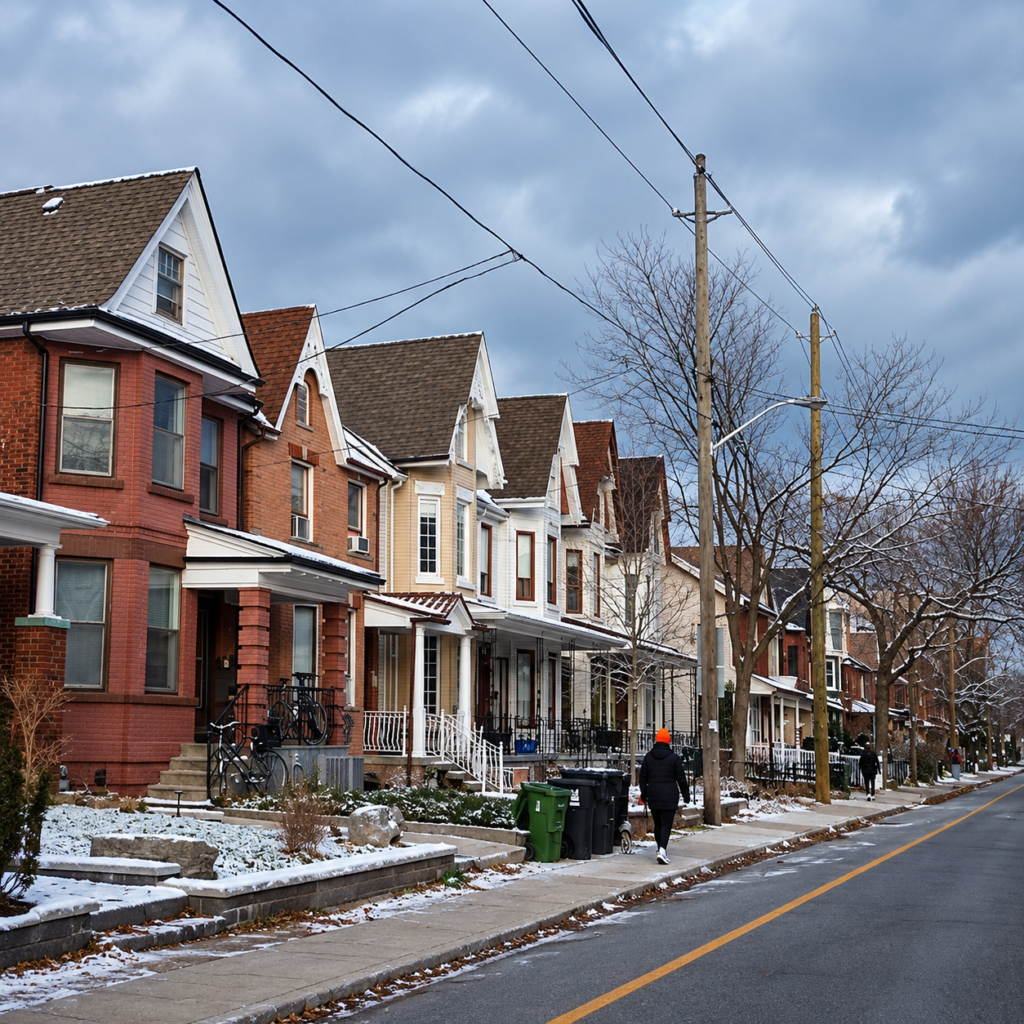
What are Toronto’s rules for Airbnb and short-term rentals?
Toronto generally defines short-term rentals as stays of less than 28 consecutive days. Hosts must register with the city and rent their principal residence, subject to the city’s detailed rules. Entire-home rentals are generally limited to 180 nights per calendar year, while permitted rentals of up to three bedrooms may be subject to different night limits. Hosts should confirm current requirements before listing.
What are Vancouver’s rules for Airbnb and short-term rentals?
Vancouver generally restricts short-term rentals to a host’s principal residence and requires a city business licence. Hosts must display the applicable licence number and comply with relevant provincial registration rules. Strata bylaws, lease terms and landlord restrictions may also apply. Licence fees and requirements can change, so hosts should check the City of Vancouver’s current guidance.
How do short-term rental regulations affect Canada’s long-term rental supply?
Restrictions can encourage some properties to remain available for long-term tenants rather than being used exclusively for short stays. This is particularly important in cities where rental supply is limited and housing costs are high. The actual effect depends on enforcement, tourism demand, the number of affected properties and the availability of alternative accommodation.
What licences and registration requirements apply to Canadian short-term rental hosts?
Requirements depend on the city and province. Hosts may need municipal registration, a business licence, provincial short-term rental registration and, where applicable, approval from a landlord or condominium corporation. Platforms may also have to verify registration information in certain jurisdictions. Hosts should verify all applicable requirements before accepting bookings.
What taxes should Canadian Airbnb hosts know about?
Short-term rental income generally needs to be reported to the Canada Revenue Agency, and eligible expenses may be deductible under the applicable rules. GST/HST obligations can depend on the type and scale of the activity, registration status and other circumstances. Since 2024, expenses related to non-compliant short-term rentals may be denied for income-tax purposes under federal rules. Hosts should review CRA guidance or consult a qualified tax professional.
Why are Canadian cities introducing stricter short-term rental regulations?
Cities are seeking to address housing shortages, protect long-term rental availability and manage the effects of tourism on residential neighbourhoods. Regulations can also help ensure compliance with safety, tax and licensing requirements. Policymakers must balance housing needs with tourism, property rights and the economic benefits that short-term rentals can provide.
Final Verdict
Canada’s housing market in 2026 reflects a growing need for affordable homes, accessible rentals and sustainable residential development. Although new construction, government programs and changing market conditions may create opportunities, affordability remains a major concern for many Canadians. Long-term progress will depend on increasing housing supply, supporting renters and first-time buyers, and improving coordination between federal, provincial and municipal governments.
Table of Contents

Leave a Reply