Canada Government 2026
Introduction
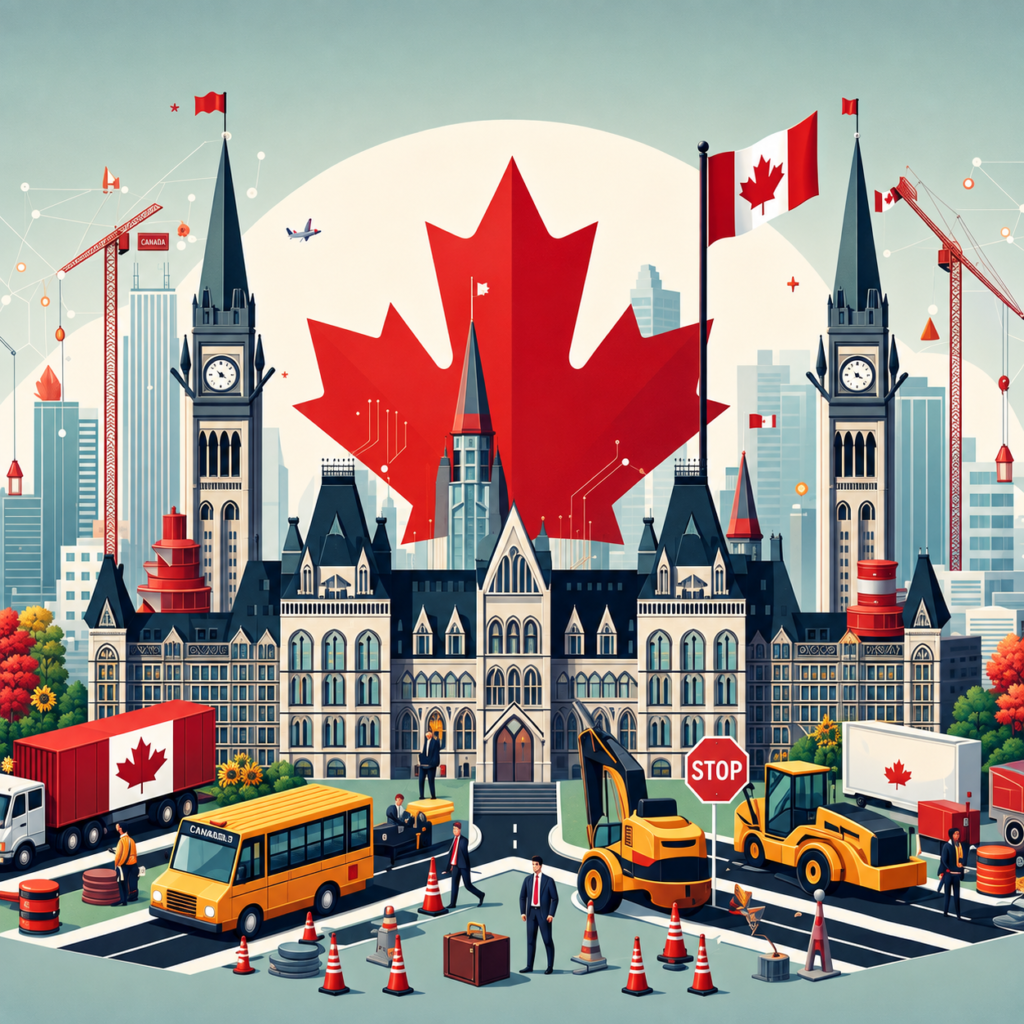
Canada’s political system shapes decisions that affect housing, healthcare, immigration, taxation, education, public transportation, Indigenous rights, and international relations. Federal, provincial, territorial, and municipal governments each have different responsibilities, while Parliament and elected representatives debate laws, examine public spending, and hold governments accountable.
This guide explores eight major areas of Canadian politics: Federal Politics, Provincial Politics, Municipal and Local Government, Elections and Voting, Parliament Updates, Political Parties, Indigenous Affairs, and Foreign Policy. It explains how these institutions work, what issues they address, and how Canadians can follow political developments through reliable official sources.
Federal Politics
What are the major developments shaping federal politics in Canada?
Major federal political issues include the cost of living, housing affordability, immigration levels, healthcare access, economic growth, public finances, and Canada’s trade relationship with the United States. Climate policy, energy development, national defence, and relations with Indigenous Peoples also influence parliamentary debate.
The importance of each issue can change as economic conditions, international events, and public priorities evolve. To follow developments accurately, readers should distinguish between government announcements, proposed legislation, parliamentary decisions, and policies that have already taken effect.
What are the main priorities of the Canadian federal government?
Federal priorities are reflected in the government’s budget, mandate commitments, legislation, and immigration and economic plans. Common areas of federal responsibility include national defence, border and immigration policy, federal taxation, international trade, Indigenous relations, and funding arrangements with provinces and territories.
The government also influences housing, healthcare, and infrastructure through funding programs and agreements, although provinces and territories deliver many related services. Priorities can change as Parliament debates legislation and the government responds to economic or international developments.
How are federal policies affecting the cost of living for Canadians?
Federal policies can affect household budgets through taxes, benefits, housing programs, competition policy, immigration settings, and energy or climate measures. Changes to income supports and tax credits can affect the money households have available, while federal housing initiatives may influence construction and affordability over time.
However, the cost of living is not determined by federal decisions alone. Provincial taxes, municipal property taxes, interest rates, global prices, local housing supply, and business costs also contribute. The impact of any policy depends on the household, location, and timeframe being considered.
What role does the Prime Minister play in Canada’s political system?
The Prime Minister is Canada’s head of government and leads the federal Cabinet. The Prime Minister helps set government priorities, coordinates ministers, represents Canada internationally, and advises the Governor General on matters such as appointments and the summoning or dissolution of Parliament under constitutional conventions and applicable law.
Canada is a constitutional monarchy, so the Prime Minister is not the head of state. The government must maintain the confidence of the House of Commons to remain in office. Parliament, the courts, constitutional rules, and other institutions place limits on how federal power is exercised.
How are federal spending and taxation decisions affecting Canada’s economy?
Federal budgets determine how the government collects revenue and allocates funds to public services, transfers, infrastructure, defence, and other priorities. Spending can support demand and public investment, while taxation influences household disposable income, business decisions, and government revenue.
The economic effects depend on the design and timing of each measure, the condition of the economy, and the government’s fiscal position. Deficits and public debt are important considerations, but so are long-term investment, productivity, and the services financed through public spending. Budget documents and Parliamentary Budget Officer reports provide ways to examine these trade-offs.
How is the Canadian government responding to trade tensions and international economic pressures?
Canada responds to international economic pressures through diplomacy, trade negotiations, domestic support measures, and engagement with international partners. Its relationship with the United States is especially important because of integrated supply chains in sectors such as manufacturing, energy, agriculture, and automotive production.
Government responses may include consultations with businesses and provinces, efforts to diversify export markets, and measures addressing tariffs or trade restrictions. The specific response depends on the dispute and the legal framework involved. Readers should check official government announcements and published trade measures to distinguish proposed responses from measures already in force.
What are the main challenges facing the federal government in Canada?
The federal government must balance competing demands involving affordability, economic growth, public services, fiscal sustainability, immigration, climate policy, and national security. It must also coordinate with provinces and territories, whose responsibilities and political priorities may differ.
International uncertainty, productivity challenges, infrastructure needs, and regional economic differences can complicate decisions. In Parliament, the government may face scrutiny from opposition parties, committees, the Senate, auditors, and independent fiscal institutions. These processes can influence the design, timing, and implementation of policy.
How are federal government decisions affecting housing, immigration and healthcare policies?
Federal decisions affect housing through funding, financing measures, taxation, federal land, and agreements with other levels of government. Immigration policy determines many entry and admission rules, while healthcare policy involves federal funding, national legislation, and agreements with provinces and territories.
Provinces and territories generally organize and deliver healthcare, while municipalities have important roles in local planning and permitting. As a result, progress in housing, immigration, and healthcare depends on coordination across governments, not federal decisions alone. The effect of a policy should be assessed by examining its specific rules, funding, implementation, and outcomes.
Provincial Politics
What are the major political developments across Canadian provinces and territories?
Provincial and territorial politics often focus on healthcare, housing, education, resource development, transportation, taxation, and relations with the federal government. Each jurisdiction has its own legislature, political leadership, budget priorities, and regional concerns.
For example, provinces with significant natural-resource industries may focus on energy, mining, and environmental regulation, while rapidly growing urban regions may emphasize housing supply, transit, and public services. The Council of the Federation provides a forum where Canada’s premiers discuss shared priorities and intergovernmental cooperation.
What are the main priorities of provincial governments in Canada?
Provincial priorities commonly include operating hospitals, funding schools, regulating many professions, maintaining provincial highways, managing natural resources, and delivering social assistance. Provinces also establish many rules affecting landlords, tenants, businesses, workers, and local governments.
Priorities vary according to local conditions and the policies of the governing party. A province facing rapid population growth may prioritize housing and infrastructure, while another may emphasize rural healthcare, resource development, or balancing its budget.
How are provincial governments addressing healthcare access and doctor shortages?
Provincial governments use different approaches to expand healthcare access, including recruiting doctors and nurses, increasing training capacity, improving the use of nurse practitioners and other healthcare professionals, and expanding virtual-care services where appropriate.
Some provinces also introduce incentives for professionals to work in rural or underserved communities. Results depend on workforce availability, funding, working conditions, and the capacity of hospitals and clinics. Since healthcare delivery is largely a provincial responsibility, policies and access to services differ across Canada.
What policies are provinces introducing to improve housing affordability?
Provincial housing policies may include funding affordable and supportive housing, changing planning rules, setting rental regulations, encouraging higher-density construction, and coordinating infrastructure investment. Some provinces also regulate aspects of short-term rentals or offer financial assistance to eligible homebuyers and renters.
The impact depends on whether policies increase housing supply, protect vulnerable tenants, and respond to local demand. Municipalities are responsible for many planning and permitting decisions, so provincial reforms often require cooperation with city governments and housing providers.
How are provincial leaders responding to rising living costs?
Provincial governments may respond to affordability pressures through tax credits, targeted rebates, utility bill assistance, public transit subsidies, childcare programs, and increases to certain social benefits. They may also change taxes or fees affecting households and businesses.
The measures differ by province, and not all residents qualify for every program. To understand the real effect, residents should check eligibility rules, payment dates, income thresholds, and whether assistance is temporary or ongoing.
What role do premiers play in Canada’s political system?
A premier is the head of government of a province or territory. Premiers lead their cabinets, set policy priorities, present budgets, and work with their legislatures to pass laws within their jurisdiction.
They also negotiate with the federal government on matters such as healthcare funding, infrastructure, immigration, and economic development. Premiers are accountable to their respective legislatures and political systems, not to the federal Prime Minister. Their governments must retain the confidence of the relevant elected chamber under the applicable parliamentary conventions.
How do provincial governments influence education, transportation and infrastructure?
Provincial governments have major responsibilities for education, including curriculum frameworks, school funding, teacher regulation, and the structure of provincial education systems. They also oversee many highways, provincial transportation networks, and infrastructure programs.
Transportation responsibilities can overlap with municipalities and the federal government, especially for public transit, ports, bridges, and major projects. Funding agreements and regulatory approvals often determine how projects are planned and delivered.
How are economic pressures affecting provincial budgets and policy decisions?
Provincial budgets are influenced by employment, household income, economic growth, interest costs, and revenues from sources such as income taxes, sales taxes, and natural resources. Rising healthcare and education costs can also place pressure on spending.
When revenue weakens or costs increase, governments may review spending plans, postpone projects, adjust taxes, or borrow to finance deficits. Resource-dependent provinces may face additional uncertainty when commodity prices change. Budget documents and provincial auditor reports help residents assess spending decisions and financial risks.
Municipal & Local
What are the biggest political issues facing Canadian municipalities?
Municipal governments commonly deal with housing supply, homelessness, road maintenance, public transit, policing, emergency services, waste management, and local infrastructure. Population growth can increase demand for services while making it more difficult to fund new facilities and maintain existing ones.
Municipal priorities differ between large cities, small towns, and rural communities. Local councils must often balance the needs of residents, businesses, developers, community organizations, and taxpayers within their legal authority and available budgets.
How are city governments addressing housing affordability and homelessness?
Cities may encourage housing construction by changing zoning, reviewing development applications, allowing additional housing types, and coordinating utilities and roads. They may also fund shelters, supportive housing, outreach teams, and services for people experiencing homelessness.
Municipalities generally cannot solve housing affordability alone. Provincial laws and funding, federal housing programs, private construction, nonprofit providers, and local land availability all influence outcomes. Effective assessment requires looking at housing completions, rental availability, shelter capacity, and the needs of vulnerable residents.
What are Canadian municipalities doing to improve public transportation?
Municipalities and regional transit authorities operate or coordinate buses, light rail, subways, streetcars, and other local services. Common initiatives include expanding transit routes, increasing service frequency, improving accessibility, introducing fare programs, and building dedicated bus or rail infrastructure.
Large projects often require funding and approvals from provincial and federal governments. Decisions about transit expansion depend on ridership, population density, construction costs, operating budgets, and long-term maintenance needs.
How do municipal property taxes affect homeowners and local businesses?
Property taxes are a major source of revenue for many municipalities. They help fund local services such as roads, fire protection, libraries, parks, waste collection, and community facilities.
The amount paid generally depends on the property’s assessed value and the applicable municipal tax rate, although systems vary by province. A higher property assessment does not necessarily mean the tax bill rises by the same percentage, because the rate and the municipality’s total revenue requirements also matter. Businesses may also pay commercial property taxes, which can influence operating costs and lease arrangements.
How are local governments responding to population growth and infrastructure demands?
Growing municipalities need additional housing, roads, transit, water and wastewater capacity, schools, recreation facilities, and emergency services. Local governments may use development charges where permitted, infrastructure budgets, borrowing, grants, and partnerships to finance expansion.
Growth can bring economic opportunities but may also create congestion and put pressure on existing services. Planning decisions must consider not only the cost of building infrastructure but also the long-term expense of operating and maintaining it.
What role do mayors and city councils play in local decision-making?
Mayors and councils provide political leadership for municipalities, approve budgets, set local priorities, and make decisions on matters within municipal authority. Councils commonly consider zoning, development applications, local taxes, roads, parks, and municipal services.
The precise powers of a mayor vary by province and municipal legislation. In many municipalities, the council makes decisions collectively, while the mayor leads meetings, represents the city, and performs other duties established by law. Public meetings, consultations, and local elections provide ways for residents to participate.
How are municipalities preparing for climate change and extreme weather?
Municipalities may improve stormwater systems, update flood maps, maintain cooling centres, plant trees, reduce urban heat, strengthen emergency plans, and protect vulnerable infrastructure. Coastal communities may also consider sea-level rise and erosion, while wildfire-prone areas may focus on emergency access and vegetation management.
Climate adaptation requires cooperation with provincial and federal agencies, utilities, property owners, and Indigenous communities where relevant. Local climate plans should consider the risks specific to each area and identify how projects will be funded and maintained.
What local government policies are affecting daily life in Canadian communities?
Local policies can affect parking, transit fares, waste collection, building permits, property taxes, business licensing, noise rules, parks, and public spaces. Zoning and development decisions can influence where people live, how far they travel, and what services are available nearby.
Municipal bylaws differ from one city to another. Residents can stay informed by reviewing council agendas, public consultations, budget documents, and official bylaw notices. Before relying on a social media post about a local rule, check the municipality’s official website.
Elections & Voting
How does Canada’s federal electoral system work?
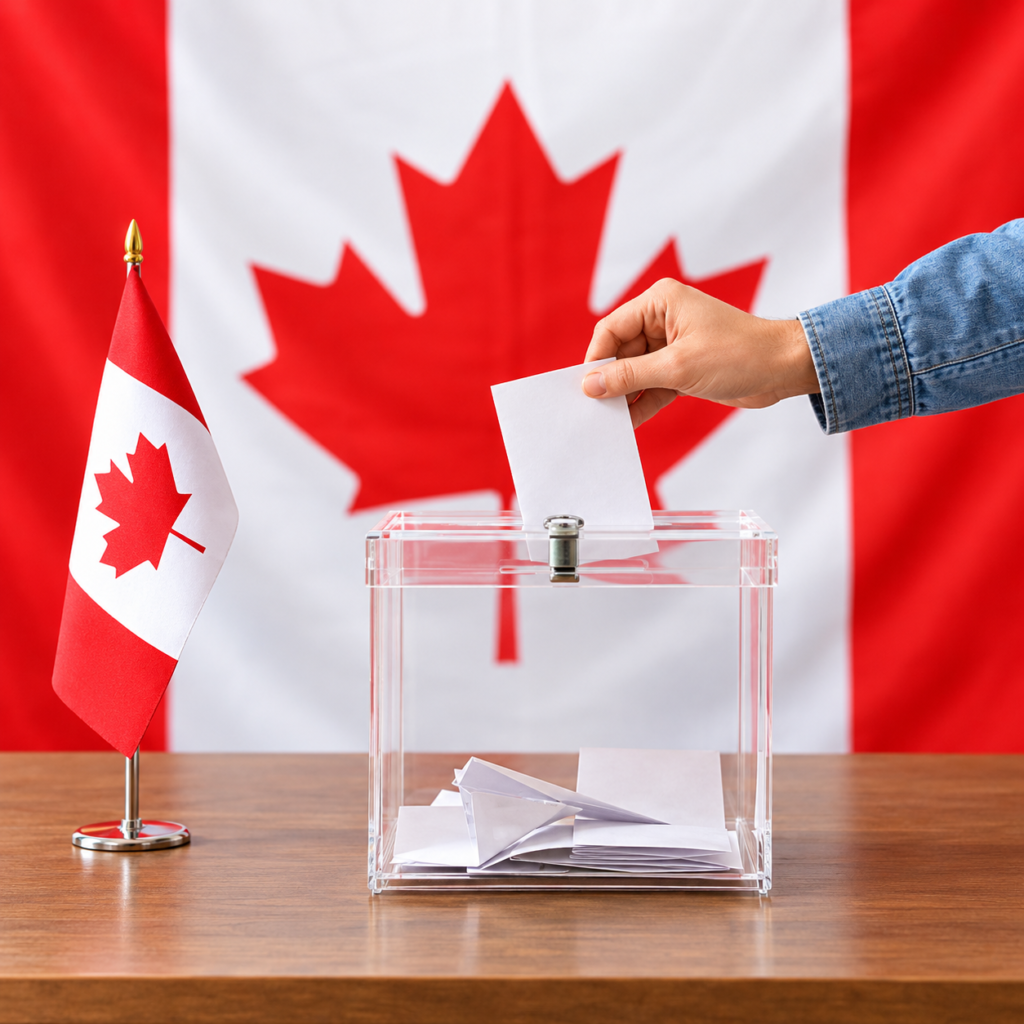
Canada uses a single-member plurality system, commonly called first-past-the-post, for elections to the House of Commons. The country is divided into electoral districts, also known as ridings, and voters choose one candidate in their riding.
The candidate who receives the most votes wins the seat, even if they do not receive more than half of all votes cast. The party that can command the confidence of the House of Commons forms the government, and the number of seats won by a party does not have to match its share of the national popular vote.
Who is eligible to vote in Canadian federal elections?
To vote in a Canadian federal election, a person must be a Canadian citizen, be at least 18 years old on election day, and meet the applicable registration and identification requirements. Canadian citizens living abroad may also be eligible under the rules for overseas voting.
Permanent residents who are not Canadian citizens cannot vote in federal elections. Voters must prove their identity and address through an accepted identification method. Elections Canada publishes the current requirements and options for registering and voting.
How does Elections Canada manage federal elections?
Elections Canada is the independent, non-partisan agency responsible for administering federal elections and referendums. Its duties include maintaining the National Register of Electors, organizing polling places, hiring and training election workers, providing voter information, and administering relevant election rules.
It also oversees aspects of political financing and candidate registration under the Canada Elections Act. During an election, voters can use official Elections Canada resources to confirm their registration, locate their polling station, understand identification requirements, and obtain information about voting options.
What are the main differences between federal, provincial and municipal elections?
Federal elections select Members of Parliament to represent ridings in the House of Commons. Provincial elections choose representatives to provincial legislatures, which deal with matters such as healthcare, education, and many natural resources.
Municipal elections choose local representatives, such as mayors and councillors, to make decisions about services and policies within municipal jurisdiction. Voting eligibility, election dates, electoral systems, and campaign rules can differ by jurisdiction. Municipal voting eligibility is governed by the applicable provincial or territorial legislation.
How are Canadian election laws designed to support fair voting?
Election laws establish rules for voter eligibility, candidate nomination, campaign financing, advertising, voting procedures, and the counting of ballots. They also provide requirements for political parties and candidates, along with mechanisms for addressing certain complaints and violations.
Election administration is designed to protect ballot secrecy and provide consistent procedures across polling locations. Independent oversight, public information, election workers, legal safeguards, and established counting procedures all contribute to electoral integrity. Specific rules should be checked in the legislation and guidance applicable to the election.
What measures are in place to protect Canadian elections from foreign interference?
Canada uses legal restrictions, security assessments, intelligence-sharing arrangements, public awareness initiatives, and election-administration safeguards to address foreign interference risks. Foreign interference can involve covert funding, intimidation, cyber activity, or attempts to manipulate public discussion.
Elections Canada explains the rules governing participation in federal elections, while relevant security agencies assess threats and provide advice to government and election stakeholders. Voters can help by checking the source of political claims, confirming information with credible outlets, and reporting suspicious activity through appropriate official channels.
How could artificial intelligence and deepfakes affect election campaigns in Canada?
Artificial intelligence can help campaigns analyze public information, create content, and communicate with voters, but it can also be misused to generate fake audio, altered video, fabricated images, and misleading political messages. Deepfakes may make it harder for voters to determine whether a public figure actually said or did something.
The risk is particularly serious when fabricated content is shared shortly before voting. Canadians should verify the original source, check whether reputable outlets have independently confirmed the material, and look for official statements. Election rules and other laws may apply to deceptive communications, impersonation, privacy violations, or unauthorized use of campaign material, depending on the circumstances.
How can Canadians register to vote and find reliable information about candidates and parties?
Eligible voters can use Elections Canada’s official website to check registration, update their address, review identification requirements, and learn where and how to vote. Registration may also be possible during the voting process if the voter meets the requirements and provides the necessary information.
For information about candidates and parties, voters can consult official party platforms, candidate statements, election authority resources, parliamentary records, and reputable news reporting. Comparing specific policy proposals and checking the source and date of claims can help voters make informed decisions without relying solely on campaign advertisements or viral posts.
What are the major developments in Canada’s Parliament?
Major parliamentary developments include government legislation, opposition proposals, budget debates, committee investigations, and votes on matters of public policy. Topics such as affordability, defence, immigration, housing, healthcare, and economic competitiveness can feature prominently in parliamentary business.
Parliamentary activity changes as bills advance, committees publish reports, and members debate government decisions. For current developments, readers should consult the official Parliament of Canada website and its legislative tracking service, LEGISinfo, rather than relying on headlines alone.
Which bills and proposed laws are being debated in the House of Commons?
Bills are proposed laws introduced by the government or individual parliamentarians. They may deal with taxation, criminal law, public administration, economic policy, immigration, environmental regulation, or other areas within federal jurisdiction.
The specific bills under debate change throughout a parliamentary session. LEGISinfo allows users to search bills, read their summaries, and follow their progress through the House of Commons and Senate. A bill that has been introduced or debated is not necessarily law; it must complete the required legislative stages and receive Royal Assent.
What legislative priorities are shaping parliamentary discussions in Canada?
Legislative priorities can include measures intended to support economic growth, address affordability, manage immigration, improve public services, strengthen national security, or implement government commitments. Opposition parties may introduce proposals or seek amendments that reflect different policy approaches.
The government’s agenda is influenced by its priorities, parliamentary arithmetic, public concerns, and events at home and abroad. The status of each initiative matters: a policy announcement, a bill introduced in Parliament, a bill passed by one chamber, and an enacted law are distinct stages.
How do parliamentary committees examine government policies and proposed laws?
Parliamentary committees examine bills, government programs, spending, and policy questions in greater detail than is usually possible during chamber debates. Committees can hear from ministers, officials, experts, organizations, and members of the public, depending on the study and procedures.
They may publish reports and recommendations or propose amendments to legislation. Committee reports can inform public debate and government decisions, but recommendations do not automatically become law. Canadians can follow committee schedules, witness testimony, meeting records, and published reports through Parliament’s official website.
What is the role of the Senate in Canada’s legislative process?
The Senate is Parliament’s upper chamber. Senators review and debate proposed legislation, study public policy, and may propose amendments to bills passed by the House of Commons.
A bill generally needs to be approved in the same form by both the House of Commons and the Senate before it proceeds to Royal Assent. The Senate also conducts committee studies and examines issues affecting different regions and communities. Its role is part of Canada’s bicameral parliamentary system.
How does Parliament hold the federal government accountable?
Parliament holds the government accountable through Question Period, debates, committee hearings, votes, review of government spending, and scrutiny of legislation. Members of Parliament can question ministers about policy decisions, implementation, and public administration.
Independent institutions, including the Auditor General and Parliamentary Budget Officer, provide additional analysis of government spending and performance. The government must maintain the confidence of the House of Commons to remain in office. These mechanisms allow parliamentarians to examine government actions and raise concerns on behalf of the public.
How do parliamentary debates influence decisions on housing, immigration and healthcare?
Parliamentary debates can shape federal legislation, funding allocations, immigration policy, and agreements with provinces and territories. Members may raise local concerns, propose amendments, question ministers, or seek further scrutiny through committees.
However, federal influence differs by policy area. Immigration involves significant federal authority, while healthcare delivery and municipal planning are largely managed by provinces, territories, and local governments. Outcomes depend on enacted legislation, funding, administrative implementation, and cooperation between governments not debate alone.
How can Canadians follow parliamentary proceedings and track proposed legislation?
Canadians can use Parliament’s official website to watch proceedings, review House of Commons and Senate debates, find committee meetings, and access parliamentary documents. LEGISinfo provides bill summaries, current status, amendments, and legislative history.
Readers should check the date and stage of a bill before describing it as a new law. Government announcements and news coverage can provide context, while official parliamentary records help confirm what was actually introduced, debated, amended, or passed.
Political Parties
Which political parties are represented in Canada’s federal Parliament?
Canada’s federal political landscape includes the Liberal Party, Conservative Party, Bloc Québécois, New Democratic Party (NDP), and Green Party, among other parties and independent parliamentarians. Their representation in the House of Commons can change following elections, by-elections, changes in party affiliation, or vacancies.
The number of seats held by each party affects parliamentary debate and the government’s ability to pass legislation. For current seat totals and the names of elected representatives, readers should consult the official House of Commons member directory and parliamentary party standings.
What are the main policy differences among Canada’s major federal political parties?
Federal parties differ in their approaches to taxation, public spending, healthcare funding, housing, immigration, climate policy, energy development, and the role of government in the economy. Parties also differ in how they propose to manage public debt, support businesses, regulate markets, and deliver social programs.
Policy positions can evolve between elections and during leadership changes. To compare parties accurately, readers should review their published platforms, voting records, legislative proposals, and official statements. Broad labels alone may not explain the details of a particular policy.
How do Canadian political parties approach economic growth and affordability?
Parties may propose different combinations of tax measures, housing investment, infrastructure spending, business incentives, workforce training, competition reforms, and social benefits to address economic challenges. Some proposals emphasize reducing taxes or regulatory costs, while others emphasize public investment and expanded services.
The effects depend on the details, costs, funding arrangements, and implementation of each proposal. A useful comparison examines how each party expects a policy to affect households, employers, government revenue, and long-term productivity rather than relying only on campaign slogans.
What positions do major parties take on immigration and housing policy?
Parties may differ on immigration targets, temporary resident programs, pathways to permanent residence, settlement services, and the role of immigration in meeting labour market needs. Housing proposals may include changes to construction incentives, federal funding, zoning agreements, rental rules, or support for first-time buyers.
These policies interact: population growth can influence housing demand, while construction capacity, labour supply, financing costs, and local planning affect the rate at which homes are built. Readers should compare current party platforms and distinguish proposed measures from policies already in effect.
How do political parties differ in their approaches to healthcare and social programs?
Parties may disagree about federal healthcare transfers, public service funding, prescription drug coverage, mental health services, childcare, disability supports, and income assistance. Their proposals can differ in eligibility, funding levels, delivery methods, and the balance between federal and provincial responsibilities.
Healthcare is largely delivered by provinces and territories, while the federal government contributes funding and establishes national frameworks through legislation and agreements. To assess proposals, voters can examine their intended beneficiaries, projected costs, timelines, and how implementation would work across jurisdictions.
What are the major differences among party platforms on climate and energy policy?
Parties may differ on emissions reduction targets, industrial carbon pricing, clean electricity, oil and gas development, renewable energy, nuclear power, pipelines, and support for clean technology. Some place greater emphasis on emissions regulations and transition investment, while others emphasize energy affordability, resource development, or alternative regulatory approaches.
A meaningful comparison should examine specific targets, timelines, costs, and proposed legislation. Climate and energy decisions can affect household bills, industrial competitiveness, employment, regional economies, and Canada’s international commitments, with impacts that vary by sector and region.
What roles do opposition parties and party leaders play in Canadian politics?
Opposition parties scrutinize government proposals, question ministers, debate legislation, propose alternatives, and participate in parliamentary committees. Their leaders help set party priorities, communicate policy positions, and coordinate responses to government decisions.
The official opposition is generally the largest opposition party in the House of Commons. Other opposition parties also participate in debate and scrutiny. Their influence depends on parliamentary representation, committee roles, voting patterns, and the political circumstances of the session.
How do political parties develop their platforms and communicate with Canadian voters?
Parties typically develop platforms through internal policy processes, consultations, research, leadership direction, and discussions with members and stakeholders. Platforms describe the measures a party proposes to pursue if it forms or supports a government.
Parties communicate through public announcements, debates, campaign events, websites, interviews, social media, and direct outreach. Voters can evaluate these messages by checking the full proposal, identifying how it would be funded, and comparing it with the party’s previous record. Campaign commitments are proposals, not guarantees of implementation.
Indigenous Affairs
What are the major Indigenous affairs issues in Canada?
Major Indigenous affairs issues include treaty and land rights, self-government, reconciliation, housing, access to safe drinking water, education, healthcare, child and family services, and economic development. First Nations, Inuit, and Métis communities have distinct histories, rights, priorities, and relationships with federal and provincial governments.
Indigenous affairs cannot be understood as a single uniform policy area. The circumstances of an individual community depend on its legal status, agreements, location, infrastructure, governance arrangements, and the priorities identified by its members and leadership.
How are Canadian governments working toward reconciliation with Indigenous Peoples?
Reconciliation efforts include implementing treaties and agreements, supporting Indigenous self-determination, addressing the legacy of residential schools, improving community infrastructure, and advancing initiatives connected to the rights of Indigenous Peoples. Governments also engage with Indigenous partners on land management, resource development, education, and public services.
Progress is assessed through concrete actions, funding, agreements, and outcomes, not only public statements. Canada’s 2025–26 reporting describes continued work on self-determination, modern treaties, self-government agreements, and reconciliation with Indigenous partners.
What is the significance of treaties and treaty rights in Canada?
Treaties are agreements between Indigenous Peoples and the Crown that establish rights, obligations, and relationships. Historic and modern treaties may address land, harvesting, resource management, governance, payments, and other matters, depending on the agreement.
Section 35 of the Constitution Act, 1982 recognizes and affirms existing Aboriginal and treaty rights. Treaty interpretation and implementation can have significant implications for governments, Indigenous communities, and resource projects. The rights and obligations involved vary by treaty, region, and legal context, so specific agreements should be examined directly.
How do federal, provincial and Indigenous governments work together?
Cooperation may involve treaty negotiations, service agreements, infrastructure investment, healthcare and education arrangements, environmental assessment, and economic development projects. Indigenous governments and organizations may also negotiate directly with federal or provincial authorities on issues affecting their communities.
The division of responsibilities is complex and differs across legal and historical contexts. Successful cooperation requires attention to jurisdiction, treaty obligations, consultation, Indigenous decision-making authority, and the specific needs identified by the affected communities.
What are the main political priorities of First Nations, Inuit and Métis communities?
Priorities vary between and within First Nations, Inuit, and Métis communities. They may include self-government, treaty implementation, housing, healthcare, education, language revitalization, economic opportunity, environmental protection, cultural preservation, and access to essential services.
Northern and remote communities may face distinct transportation and infrastructure challenges, while communities affected by resource development may focus on land rights, environmental impacts, and participation in economic benefits. Indigenous leaders and governments identify their own priorities, and these should not be assumed to be identical across all communities.
How do resource development projects affect Indigenous land rights and consultation?
Projects involving mining, pipelines, forestry, energy, and other land uses can raise questions about treaty rights, environmental impacts, consultation, and Indigenous participation in economic benefits. Depending on the project and legal circumstances, governments may have a duty to consult Indigenous groups and, where appropriate, accommodate concerns.
Consultation is a legal process, not simply a one-time public meeting. The requirements depend on the potential effect on asserted or established rights and the relevant legal framework. Agreements, environmental reviews, court decisions, and community positions can all influence project decisions.
What progress is being made on Indigenous housing, education, healthcare and clean drinking water?
Governments and Indigenous partners have funded housing construction, infrastructure repairs, education initiatives, healthcare services, and drinking-water projects. Indigenous Services Canada reported that, as of March 31, 2026, 3,867 housing-related infrastructure projects had been completed and 3,768 were ongoing, with 612 First Nations communities benefiting from the reported investments.
Progress remains uneven, and the number of projects does not by itself establish whether all needs have been met. Ongoing concerns include overcrowded housing, infrastructure maintenance, access to services, and reliable drinking water. Evaluating progress requires current data on service quality, completed infrastructure, and the needs of individual communities.
How are Indigenous leaders influencing public policy and political decisions in Canada?
Indigenous leaders influence public policy through elected and traditional governance structures, negotiations with governments, parliamentary testimony, legal proceedings, public advocacy, and participation in project and policy consultations. National and regional organizations also represent particular interests and provide policy proposals.
Their influence can shape treaties, land-use decisions, resource agreements, environmental reviews, and the design of community programs. Indigenous governments and communities are not politically uniform, so their views should be represented accurately and attributed to the relevant leaders or organizations.
Foreign Policy
What are the main priorities of Canada’s foreign policy?
Canada’s foreign policy focuses on national security, economic prosperity, diplomatic relationships, international cooperation, human rights, and the protection of Canadians abroad. Current priorities also include strengthening strategic autonomy, diversifying trade, supporting allies, and responding to global security challenges.
Global Affairs Canada’s 2026–2027 departmental plan emphasizes stronger economic and security partnerships, expanded trade beyond the United States, cooperation with trusted allies, and a more active role in Arctic security. These priorities are pursued through diplomacy, international agreements, trade negotiations, and multilateral institutions.
How are Canada’s relations with the United States affecting trade and diplomacy?
The United States is a major trading partner for Canada, and the two countries have closely connected manufacturing, energy, agriculture, transportation, and supply chains. Trade disputes and tariffs can therefore affect businesses, workers, investment decisions, and consumer prices on both sides of the border.
In October 2026, trade tensions remained an important diplomatic issue, with discussions continuing amid differences over trade policy. Canada has also emphasized diversifying its export markets while maintaining an important relationship with the United States. The effects of specific tariffs depend on the products involved, exemptions, and any subsequent negotiations or policy changes.
What role does Canada play in NATO and international security cooperation?
Canada is a founding member of NATO, the alliance that links North American and European members through collective defence commitments. Canada participates in joint exercises, defence planning, intelligence cooperation, and activities intended to strengthen the security of alliance members.
Canada also works with allies on Arctic security, military readiness, cyber threats, and support for Ukraine. Its contributions depend on government decisions, defence funding, military capabilities, and alliance commitments. NATO cooperation is one part of Canada’s wider approach to national and international security.
How is Canada strengthening diplomatic and economic relations with the Indo-Pacific region?
Canada’s Indo-Pacific Strategy aims to strengthen trade, investment, security cooperation, diplomatic engagement, and people-to-people ties across the region. The strategy involves engagement with countries and organizations including Japan, South Korea, India, Australia, and the Association of Southeast Asian Nations (ASEAN).
Canada’s 2026–2027 plans emphasize trade diversification, supply-chain resilience, regional security, and stronger commercial relationships. These efforts can create opportunities for Canadian exporters and investors while supporting cooperation on regional stability. The results depend on negotiations, bilateral relationships, and developments in international trade.
How does Canada work with European countries and the European Union?
Canada cooperates with European countries and the European Union on trade, investment, defence, energy, climate policy, scientific research, and international diplomacy. The Canada–European Union Comprehensive Economic and Trade Agreement (CETA) provides a framework for trade and economic cooperation.
Canada and European partners are also expanding security and defence cooperation. In February 2026, Canada formally joined the European Union’s Security Action for Europe (SAFE) instrument, creating opportunities for Canadian defence businesses under the agreement’s rules. Cooperation with Europe also helps Canada diversify trade and strengthen relationships with like-minded partners.
What is Canada’s position on major international conflicts and humanitarian crises?
Canada’s responses vary according to the conflict and may involve diplomatic negotiations, humanitarian assistance, sanctions, development funding, support for international law, and cooperation with allies. Government positions can differ between conflicts and may evolve as conditions change.
Global Affairs Canada’s 2026–2027 plan identifies continued support for Ukraine’s territorial integrity and a two-state solution to the Israeli-Palestinian conflict, alongside humanitarian, stabilization, and reconstruction efforts. These are stated policy commitments; developments on the ground and subsequent government decisions affect how they are implemented.
How is Canada expanding international trade partnerships beyond its traditional markets?
Canada is pursuing trade diversification by strengthening relationships in the Indo-Pacific, Europe, the Gulf, Latin America, and other regions. Its stated objective is to double non-U.S. exports over the next decade, helping Canadian businesses access additional markets and reducing reliance on a single trading partner.
The government has identified opportunities involving critical minerals, energy, agriculture, advanced manufacturing, technology, and defence-related industries. Achieving diversification requires competitive Canadian businesses, market access, reliable transport links, and agreements that can be implemented effectively.
How do global political developments affect Canada’s economy, national security and international relationships?
Global conflicts, tariffs, sanctions, supply-chain disruptions, energy-market changes, and technological competition can affect Canadian exports, investment, inflation, and employment. Security developments may also influence defence spending, border measures, cybersecurity, and cooperation with international partners.
Canada’s economic and security interests are closely connected to its relationships with the United States, Europe, the Indo-Pacific, and multilateral organizations. Diversifying trade and strengthening alliances may reduce some vulnerabilities, but they cannot eliminate exposure to global shocks. The effects of any event depend on its duration, the industries involved, and the responses taken by governments and businesses.
Final Verdict
Canadian politics involves multiple levels of government, each with distinct responsibilities and powers. Federal decisions influence national taxation, immigration, trade, defence, and funding arrangements; provincial governments manage many healthcare, education, and resource matters; and municipalities deliver important local services and make decisions affecting housing, transportation, and neighbourhood development.
Parliament, political parties, elections, and public consultations provide mechanisms for debate, representation, and accountability. Indigenous rights and treaty obligations are also fundamental to Canada’s constitutional and political landscape, while foreign policy connects domestic economic and security priorities to international developments.
For readers following Parliament and Politics in Canada in 2026, the most useful approach is to verify announcements against official records, distinguish proposed legislation from laws already in force, and compare policy positions using specific evidence. Understanding which government is responsible for a decision makes it easier to assess how that decision may affect Canadians.
Table of Contents

Leave a Reply