Canada Economy
Introduction
Canada’s economy has shown signs of improvement after a weak start to 2026, but the recovery remains uneven. Real GDP increased by 0.8% in the second quarter, supported by stronger exports, household spending and business investment. At the same time, Canadians continue to face elevated inflation, higher energy costs, changing interest rates and a softer labour market.
Trade uncertainty has also become an important part of Canada’s economic outlook. New U.S. tariffs and Canada’s counter-tariffs are creating additional pressure for businesses, consumers and industries connected to North American supply chains. With inflation still above the Bank of Canada’s 2% target and several global risks affecting the economy, the latest data provide a mixed picture of growth, prices, jobs and the cost of living.
This guide examines the latest developments in Canada’s economy, including GDP growth, inflation, interest rates, employment, tariffs, trade, housing, consumer prices and the main risks facing the economic outlook.
What Happened to Canada’s Economy Recently?
Canada’s economy showed signs of recovery after a weak start to 2026. Real GDP increased 0.8% in Q2 2026, following a 0.1% increase in Q1. However, trade uncertainty, tariffs, elevated inflation and geopolitical risks continued to create pressure.
How Did Economic Growth Perform?
Economic growth improved during the second quarter. Real GDP increased 0.8% quarter over quarter, supported by exports, household spending and business investment.
What Did the Latest GDP Data Show?
The latest quarterly GDP data showed 0.8% real GDP growth in Q2 2026. Exports increased 3.6%, while household consumption rose 0.8%.
How Strong Was Economic Activity?
Economic activity improved, but the recovery remained uneven. Manufacturing, exports and consumer spending provided support, while trade uncertainty and excess economic capacity continued to weigh on the outlook.
What Was the Inflation Rate in Canada?
The Consumer Price Index increased 3.0% year over year in August 2026, unchanged from July. This was above the Bank of Canada’s 2% inflation target.
Why Did Prices Remain High?
Higher energy-related costs, transportation prices, shelter costs and other supply-chain pressures contributed to elevated inflation. The Bank of Canada also identified geopolitical developments and energy prices as important inflation risks.
How Did Food Prices Change?
Food purchased from stores increased 2.8% year over year in August, down from 3.1% in July. Grocery-price growth was therefore below overall CPI growth for the first time since July 2024.
How Did Gasoline Prices Affect Canadians?
Gasoline remained an important contributor to transportation costs. In August, gasoline prices were 22.8% higher than a year earlier, although their annual growth slowed compared with July and therefore put downward pressure on headline CPI.
What Is the Bank of Canada Interest Rate?
The Bank of Canada’s target overnight policy rate is 2.25%. The Bank maintained this rate at its September 2, 2026 decision.
Why Did the Bank of Canada Hold Interest Rates?
The Bank said the economy and inflation were broadly evolving as expected, but uncertainty had increased. Inflation had remained above the 2% target, while trade developments and geopolitical conditions created competing risks for growth and prices.
How Did Interest Rates Affect Canadians?
Interest rates continued to influence mortgage costs, borrowing, consumer spending and business investment. Lower rates than the earlier tightening period have reduced some borrowing pressure, but households with mortgages and other debt remain sensitive to financing costs.
What Is the Current Unemployment Rate?
The latest available unemployment rate was 6.4% in August 2026, unchanged from July. September’s Labour Force Survey had not yet been released as of September 30.
How Did the Job Market Perform?
The labour market softened in August. Employment declined by 42,000 jobs, or 0.2%, while the employment rate fell 0.1 percentage point to 60.8%.
Which Industries Gained or Lost Jobs?
Manufacturing employment increased by 22,000 jobs. Employment declined in business, building and other support services, public administration, natural resources and utilities.
How Did Canadian Businesses Perform?
Business performance was mixed. Manufacturing sales fell 0.4% to $78.7 billion in July, but remained 10.9% higher than a year earlier. Businesses were also adapting to changing trade conditions and higher costs.
What are the Biggest Economic Challenges?
Major challenges include elevated inflation, trade uncertainty with the United States, tariffs, weaker labour-market conditions, geopolitical risks, energy-price volatility and relatively weak productivity and economic capacity growth.
What are the Latest Tariff Developments?
Canada introduced new targeted counter-tariffs on certain U.S. products effective September 8, 2026, following new U.S. tariffs on Canadian goods.
What Special or Counter-Tariffs Were Introduced?
Canada introduced counter-tariffs of 15%, 25% and 50%, with the applicable rate generally matching the corresponding U.S. tariff for targeted goods.
Why Did Canada Introduce New Counter-Tariffs?
The Canadian government said the measures were a response to U.S. tariffs affecting Canadian exports. The countermeasures were designed to respond to the U.S. tariff actions and support industries affected by the trade dispute.
Which U.S. Products Faced New Tariffs?
The measures targeted products in sectors including steel and aluminum, dairy, appliances, agricultural equipment, pulp and paper, plastics and electronics.
What Tariff Rates Apply to U.S. Goods?
The new targeted counter-tariff rates are 15%, 25% and 50%, depending on the product and the corresponding U.S. tariff measure. They apply to approximately $27.6 billion of U.S. imports.
How Did Tariffs Affect Canadian Consumers?
Tariffs can increase the cost of imported goods when businesses pass some or all of the additional costs through supply chains. The actual effect varies by product, supplier, exchange rates and how businesses respond.
How Did Tariffs Affect Canadian Businesses?
Businesses exposed to U.S. trade can face higher input costs, weaker demand, supply-chain adjustments and greater uncertainty. At the same time, some Canadian producers may benefit from reduced competition from tariffed imports. Statistics Canada has reported continued uncertainty for industries dependent on U.S. export demand.
Did Tariffs Put More Pressure on Prices?
Tariffs can create additional cost pressure, but they were not the only factor affecting Canadian inflation. Energy prices, transportation costs and other supply-side developments also influenced prices. The Bank of Canada has specifically identified trade policy and geopolitical developments as important inflation risks.
How Did the Canada or U.S. Trade Dispute Affect Canada?
The dispute increased uncertainty for Canadian exporters and businesses integrated into North American supply chains. Companies have been adjusting their operations and trade strategies while the broader economic effects continue to develop.
How Did Canadian Exporters Respond to Trade Pressure?
Canadian exporters have been adapting to the changing trade environment by adjusting markets, production and supply chains. Canada’s Q2 exports increased 3.6%, while July merchandise exports to the world declined 2.3% month over month.
How Did the Housing Market Perform?
Housing activity remained relatively subdued. CREA reported that Canadian home sales decreased 0.7% month over month in August 2026, while sales and price trends had remained largely unchanged since May.
How Did the Cost of Living Change?
The overall consumer price index increased 3.0% year over year in August. Food purchased from stores increased 2.8%, shelter increased 1.5%, and transportation increased 7.5%.
What are the Main Economic Risks?
The major risks include further Canada–U.S. trade disruptions, tariff-related costs, geopolitical conflicts, energy-price volatility, persistent inflation and weaker-than-expected domestic demand. The Bank of Canada has highlighted the trade relationship with the United States and the Middle East conflict as particularly important risks.
What Does the Latest Data Tell Us About Canada’s Economic Outlook?
The latest data show an economy that rebounded in Q2 but still faces significant uncertainty. The Bank of Canada’s July projection expected real GDP growth of 0.7% for 2026 and 1.8% for 2027, with inflation expected to move back toward 2% as temporary cost pressures ease. These are projections rather than guaranteed outcomes, and subsequent trade and energy developments could change the outlook.
Key Canada Economy Numbers
| Indicator | Latest available figure |
| Real GDP growth, Q2 2026 | 0.8% |
| CPI inflation, August 2026 | 3.0% |
| Food purchased from stores | 2.8% |
| Unemployment rate, August 2026 | 6.4% |
| Bank of Canada policy rate | 2.25% |
| Manufacturing sales, July 2026 | $78.7B |
| New counter-tariffs | 15%, 25%, 50% |
| U.S. imports covered | $27.6B |
What Is Happening to Canada’s Economy?
Canada’s economy has shown signs of improvement after a weak start to 2026. Real GDP increased 0.8% in the second quarter of 2026, following growth of 0.1% in the first quarter. Higher exports, household spending and business investment helped support the recovery. However, trade uncertainty, tariffs, inflation and geopolitical risks continue to affect the economic outlook.
How Is Economic Growth Performing?
Economic growth has strengthened compared with the beginning of the year. Real GDP grew 0.8% quarter over quarter in Q2 2026, while the Bank of Canada’s July projection expected annual GDP growth of 0.7% in 2026 and 1.8% in 2027.
What Does the Latest GDP Data Show?
The latest official GDP data show that real GDP increased 0.8% in Q2 2026. Exports were a major contributor, while household consumption and business investment also supported growth.
How Strong Is Economic Activity?
Economic activity has improved, but the recovery remains uneven. Q2 growth was supported by exports and domestic spending, while economic slack and uncertainty surrounding trade policy remain important factors. The Bank of Canada said growth had picked up after a period of weaker activity.
What Is the Inflation Rate in Canada?
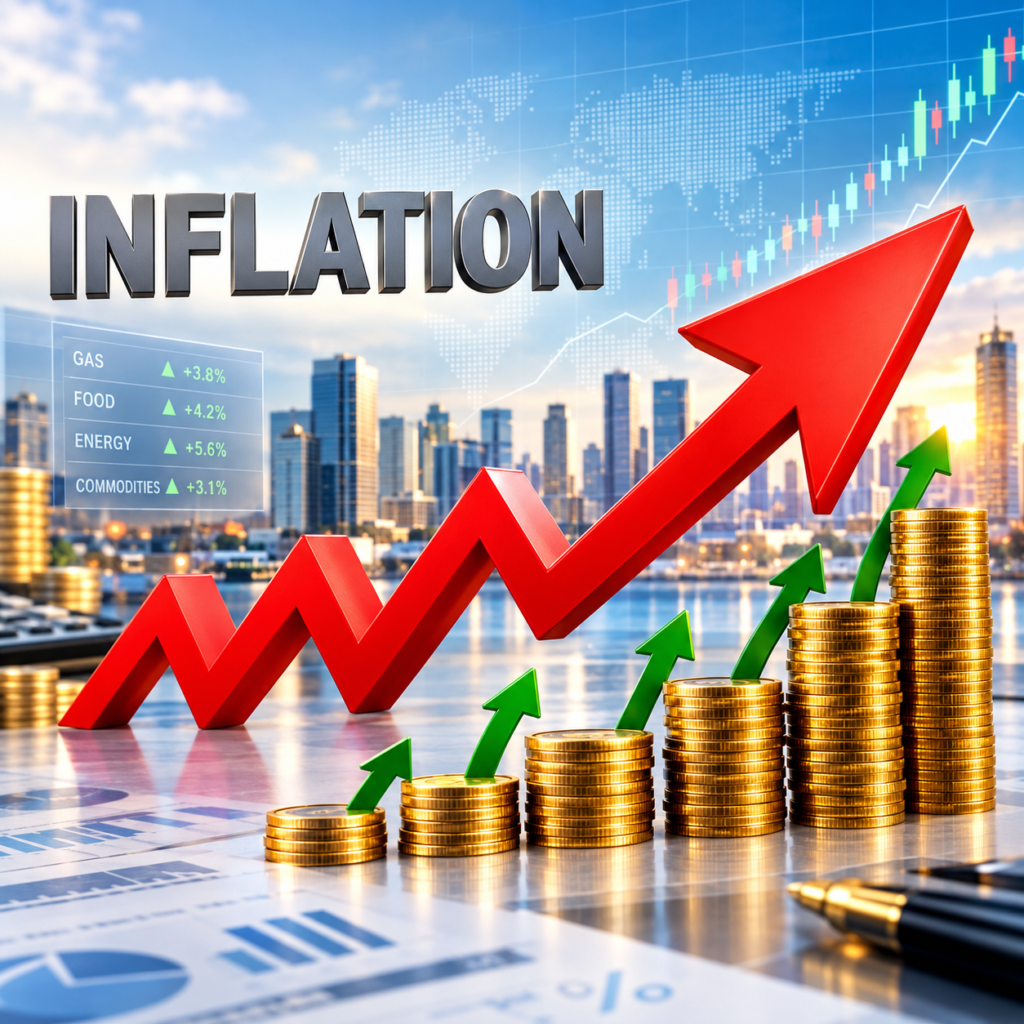
Canada’s annual inflation rate was 3.0% in August 2026, unchanged from July. This was above the Bank of Canada’s 2% inflation target. Excluding gasoline, CPI increased 2.4%.
Why are Prices Still High?
Energy costs, particularly gasoline, have been an important reason inflation remains elevated. The Bank of Canada has also warned that higher oil prices, geopolitical developments and tariffs could create additional cost pressures for businesses and consumers.
How are Food Prices Changing?
Food purchased from stores was 2.8% more expensive in August 2026 than a year earlier. This was slower than overall CPI growth of 3.0%.
How are Gasoline Prices Affecting Canadians?
Gasoline prices remained an important source of inflation pressure. Statistics Canada reported that gasoline prices were still significantly higher than a year earlier, although the annual increase slowed in August. The Bank of Canada said gasoline prices were a major reason headline inflation remained around 3%.
What Is the Bank of Canada Interest Rate?
The Bank of Canada’s target for the overnight interest rate is 2.25%. The Bank kept the rate unchanged at its September 2, 2026 decision. The Bank Rate is 2.50%, while the deposit rate is 2.20%.
What Could Happen to Interest Rates?
The future path of interest rates will depend mainly on inflation, economic growth, energy prices and trade developments. The Bank has not committed to a specific future rate path. Its next scheduled rate decision after September is October 28, 2026, when a new Monetary Policy Report is also scheduled.
How are Interest Rates Affecting Canadians?
Interest rates influence mortgage payments, borrowing costs, consumer spending and business investment. With the policy rate at 2.25%, borrowing conditions are easier than during the earlier period of much higher rates, but households renewing mortgages or carrying variable-rate debt can still face significant financing costs.
What Is the Current Unemployment Rate?
The latest available unemployment rate is 6.4% for August 2026. It was unchanged from July. The September Labour Force Survey had not yet been released by September 30.
How Is the Canadian Job Market Performing?
The labour market weakened somewhat in August. Employment declined by 42,000 jobs, or 0.2%, while the employment rate fell 0.1 percentage point to 60.8%. The unemployment rate remained at 6.4%.
Which Industries are Gaining or Losing Jobs?
Manufacturing employment increased by 22,000 jobs in August. Employment declined in business, building and other support services, public administration, natural resources and utilities.
How are Canadian Businesses Performing?
Business conditions are mixed. Some sectors are benefiting from stronger exports and domestic activity, while businesses exposed to U.S. trade face additional uncertainty from tariffs. The Bank of Canada has noted that businesses are adapting to the changing trade environment.
What are the Biggest Economic Challenges?
The main challenges include elevated inflation, U.S. tariffs and counter-tariffs, trade uncertainty, weaker labour-market conditions, energy-price volatility and geopolitical risks. The Bank of Canada has specifically highlighted the effects of new tariffs and the Middle East conflict.
What are the Latest Tariff Developments?
Canada introduced new targeted counter-tariffs on certain U.S. imports effective September 8, 2026. The measures followed new U.S. tariffs on Canadian goods and cover approximately $27.6 billion of imports from the United States.
What Counter-Tariffs has Canada Introduced?
Canada introduced counter-tariffs of 15%, 25% and 50% on specified U.S. products. The rate for an individual product corresponds to the applicable U.S. tariff rate under the measures covered by Canada’s response.
Why Did Canada Introduce Counter-Tariffs?
Canada introduced the counter-tariffs in response to U.S. tariff measures affecting Canadian exports. The government said the measures were intended to respond to the U.S. tariffs and support Canadian industries affected by the trade dispute.
Which U.S. Products are Facing New Tariffs?
The targeted products include goods from sectors such as steel and aluminum, dairy, appliances, agricultural equipment, pulp and paper, plastics and electronics.
What Tariff Rates Apply to the U.S. Goods?
The applicable counter-tariff rates are 15%, 25% or 50%, depending on the product. The measures cover approximately $27.6 billion in U.S. imports.
How are Tariffs Affecting Canadian Consumers?
Tariffs can increase the cost of imported products when businesses pass some of the additional costs through to customers. The actual effect varies by product and supply chain. Tariffs can also encourage businesses and consumers to look for Canadian or non-U.S. alternatives.
How are Tariffs Affecting Canadian Businesses?
Canadian businesses exposed to U.S. trade may face higher input costs, changing demand and greater uncertainty. Exporters can also face difficulties when their products become more expensive in the U.S. market. Industries dependent on U.S. demand were already facing an uncertain environment in August.
are Tariffs Putting More Pressure on Prices?
Tariffs can add to costs, but they are only one source of inflation. The Bank of Canada has said new U.S. tariffs and Canadian counter-tariffs could raise business costs and eventually feed into consumer prices. Energy prices remain another major inflation factor.
Demand
Supply
World price
Price with tariff
Tariff revenue
Deadweight loss
2468101214161820246QuantityPrice
Tariff 0.5: price rises, imports are 10, revenue is 5; consumers lose, producers gain
Tariff
per unit
Tariff
Give feedback
How Is the Canada–U.S. Trade Dispute Affecting Canada?
The dispute has increased uncertainty for Canadian exporters and businesses connected to North American supply chains. It is also affecting business decisions about production, investment and trade markets. Statistics Canada reported that industries dependent on U.S. export demand continued to face an uncertain economic environment.
How are Canadian Exporters Responding to Trade Pressure?
Canadian exporters are adapting to changing trade conditions and seeking ways to manage U.S. tariff exposure. Canada’s exports also showed resilience in Q2, with higher exports making a significant contribution to GDP growth.
How Is the Housing Market Performing?
The Canadian housing market remained relatively subdued in August. Home sales through Canadian MLS® systems declined 0.7% month over month, while CREA reported that sales and price trends had remained largely unchanged since May.
How Is the Cost of Living Changing?
The cost of living continues to rise. Overall CPI increased 3.0% year over year in August. Food purchased from stores rose 2.8%, shelter increased 1.5%, and transportation increased 7.5%.
What are the Main Economic Risks?
Key risks include further changes in U.S. trade policy, tariff-related costs, higher energy prices, geopolitical developments and persistent inflation. The Bank of Canada has warned that prolonged high oil prices could create broader inflationary pressure.
What Does the Latest Data Tell Us About Canada’s Economic Outlook?
The latest data show that Canada’s economy rebounded in Q2 2026 but continues to face significant uncertainty. The Bank of Canada’s July outlook projected GDP growth of 0.7% in 2026 and 1.8% in 2027, with inflation expected to move toward 2% in early 2027. These projections can change as trade, energy prices and geopolitical conditions develop.
Latest Canada Economy Numbers
| Indicator | Latest available figure |
| Real GDP growth — Q2 2026 | 0.8% |
| Inflation — August 2026 | 3.0% |
| Food inflation — August 2026 | 2.8% |
| Unemployment — August 2026 | 6.4% |
| Bank of Canada rate | 2.25% |
| Employment change — August | −42,000 |
| Housing sales — August | −0.7% m/m |
| New counter-tariffs | 15%, 25%, 50% |
| U.S. imports covered | $27.6 billion |
| Bank GDP projection — 2026 | 0.7% |
| Bank GDP projection — 2027 | 1.8% |
Final Verdict
Canada’s economy has shown a measurable rebound, with real GDP growing 0.8% in Q2 2026 after a weak start to the year. However, the recovery remains uneven. Inflation was still 3.0% in August, unemployment stood at 6.4%, and employment declined during the month.
Trade uncertainty is another major factor shaping the outlook. U.S. tariffs and Canada’s counter-tariffs are increasing uncertainty for businesses and may add to costs across some supply chains. At the same time, energy prices, geopolitical developments and domestic demand remain important economic factors.
Overall, the latest figures show an economy that has regained some momentum but continues to face significant pressures. The Bank of Canada’s projection of 0.7% GDP growth for 2026 and 1.8% for 2027 provides the current baseline, although future trade, inflation and geopolitical developments could change the outlook.
Table of Contents

Leave a Reply