Climate & Environment
Introduction
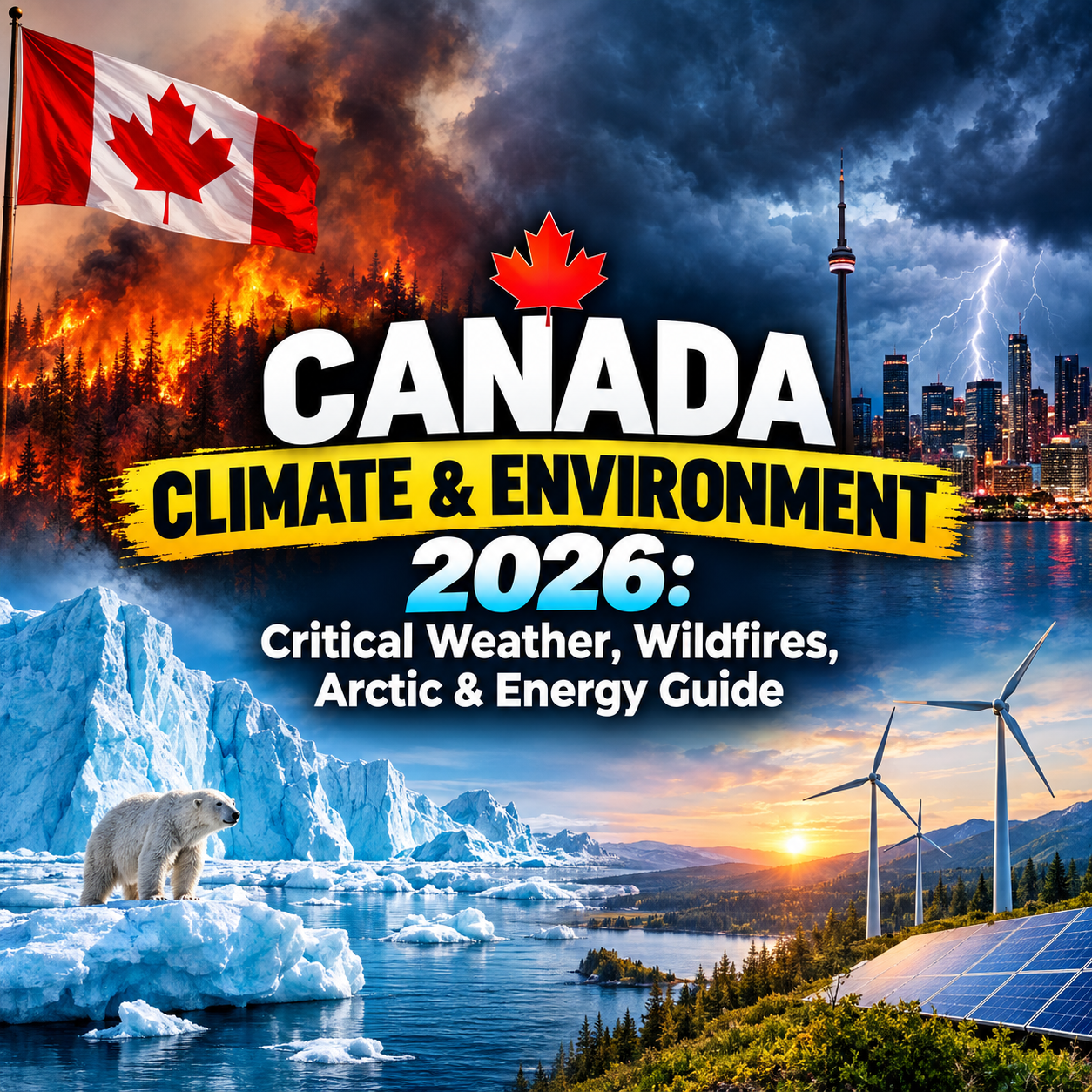
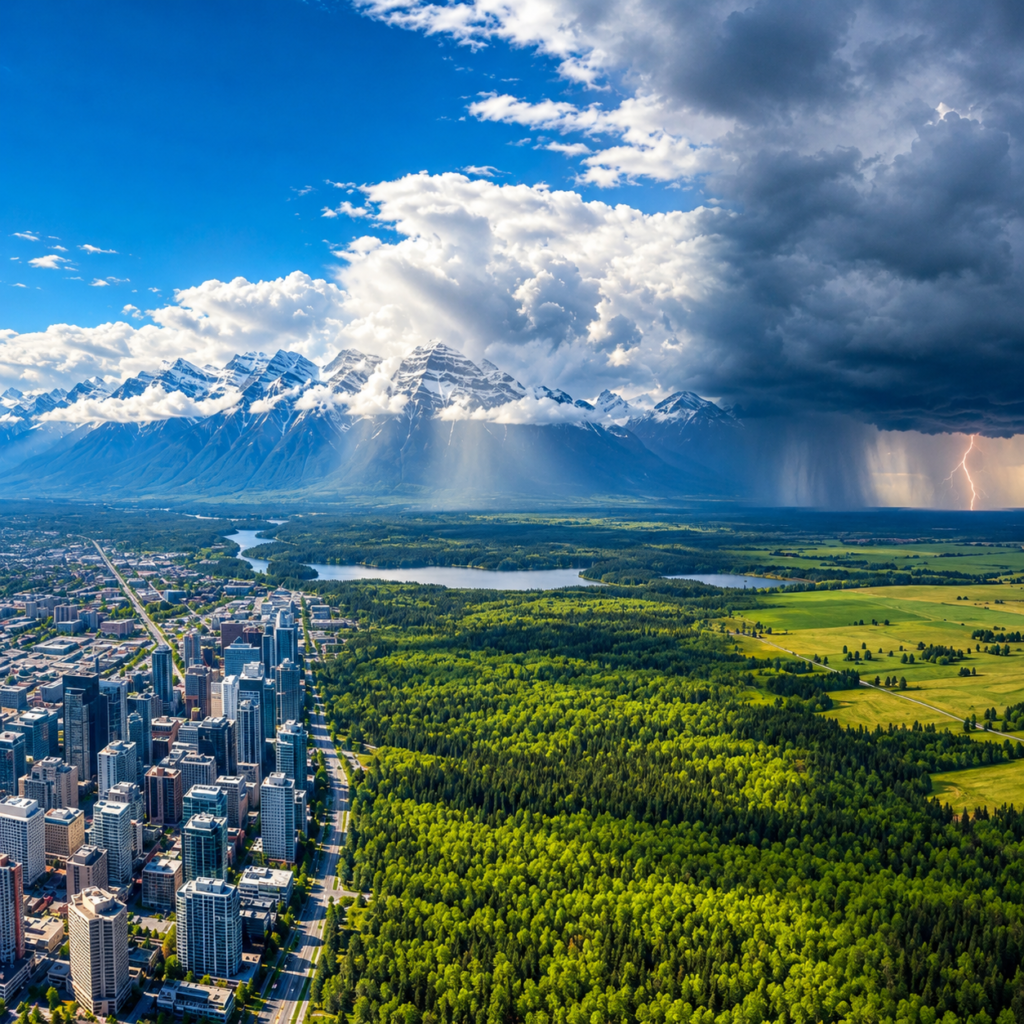
Canada Climate & Environment is known for its vast natural landscapes, diverse climate, forests, lakes, Arctic regions and rich wildlife. From the mild Pacific coast of British Columbia to the extremely cold Arctic climate of Nunavut, the country experiences a wide range of environmental and weather conditions. Canada Climate & Environment is also facing important environmental issues such as climate change, wildfires, flooding, air pollution, water pollution and changing Arctic conditions.
This guide explains Canada’s climate and environment in 2026, including carbon pricing, climate policies, wildfires, extreme weather, the Arctic, renewable energy, electric vehicles, national parks, wildlife conservation, water quality, pollution and Canada’s different provincial and territorial climates. It also explains how Canadians prepare for extreme cold, winter storms and other environmental challenges.
What is Canada’s carbon pricing policy?
Canada’s carbon pricing policy is a system designed to put a cost on greenhouse gas emissions and encourage businesses and industries to reduce pollution. However, Canada’s federal consumer fuel charge was set to zero effective April 1, 2025, so the federal consumer carbon price is no longer charged on fuels.
Carbon pricing continues to apply to large industrial emitters through provincial, territorial and federal industrial systems. These systems are designed to reduce emissions while considering competitiveness and the risk of businesses moving production to jurisdictions with weaker climate rules.
How does carbon pricing work?
Carbon pricing generally makes greenhouse-gas emissions more costly, creating an economic incentive to use less fossil fuel, improve energy efficiency and invest in cleaner technologies.
In Canada, industrial carbon pricing can operate through different systems, including output-based pricing, carbon levies and cap-and-trade. Provinces and territories can operate their own systems if they meet federal minimum standards.
What are the federal and provincial climate policies in Canada?
Climate policy in Canada is shared between the federal government and provincial and territorial governments. The federal government establishes national frameworks and targets, while provinces and territories can develop policies suited to their economies and energy systems.
For industrial carbon pricing, every province and territory has a system that meets national minimum standards, although the specific system differs. For example, Quebec uses cap-and-trade, while many other jurisdictions use output-based systems or other provincial approaches.
What is the effect of carbon pricing on fuel prices?
The federal consumer fuel charge no longer increases gasoline or heating-fuel prices because its rates were set to zero on April 1, 2025. Therefore, it is important not to use the former federal consumer carbon-price rates when explaining fuel prices in 2026.
Fuel prices can still change because of factors such as crude-oil prices, refining costs, transportation, taxes, exchange rates and regional market conditions. Industrial carbon pricing can also affect businesses that use significant amounts of energy, but it operates differently from the former consumer fuel charge.
What is the effect of carbon pricing on businesses?
Industrial carbon pricing affects large facilities that produce significant greenhouse-gas emissions. The objective is to encourage companies to reduce emissions through energy efficiency, cleaner production and low-carbon technologies.
Industrial systems are generally designed around emissions performance standards so that companies are not simply charged the same amount for every tonne of emissions. The federal government says these systems are also intended to reduce competitiveness risks and carbon leakage while encouraging investment in cleaner technologies.
What are carbon rebates in Canada?
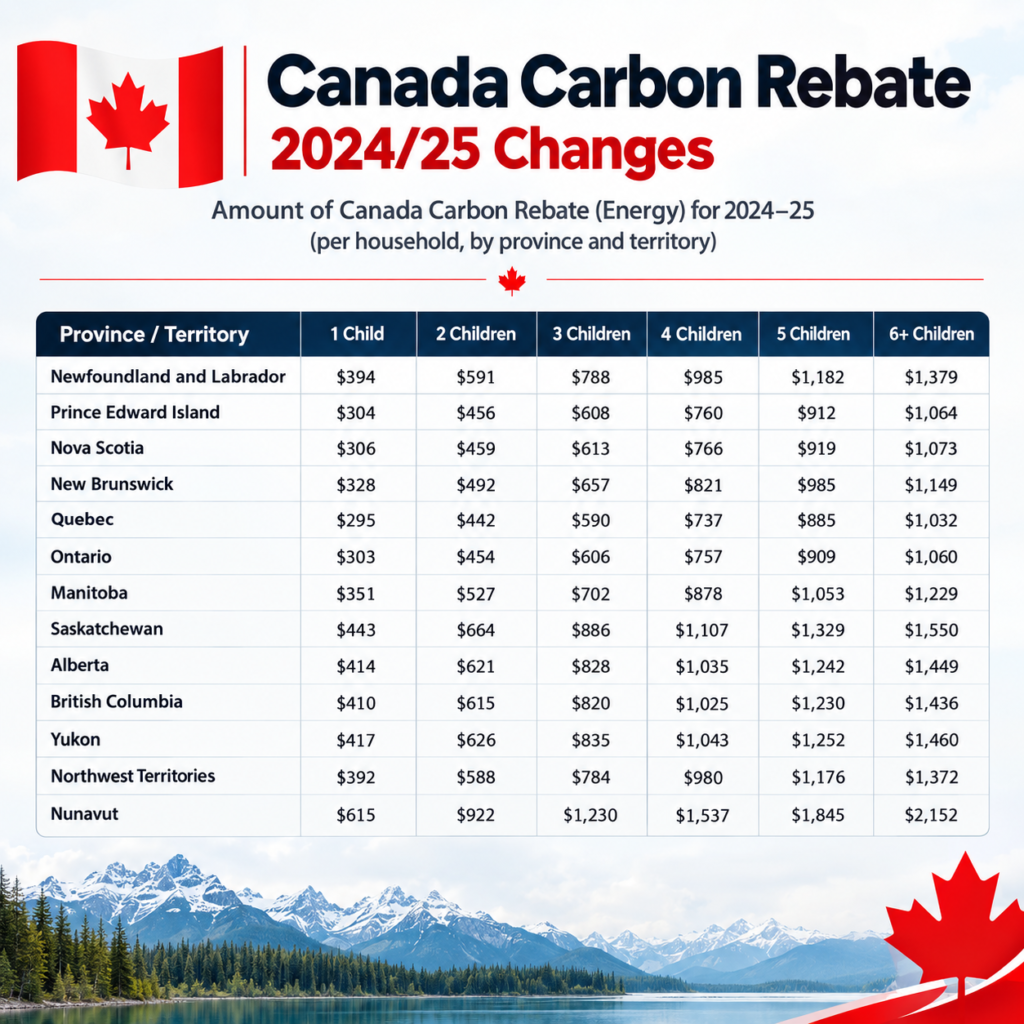
The Canada Carbon Rebate (CCR) was a federal payment designed to return part of the proceeds from the consumer fuel charge to eligible individuals and families. However, the federal fuel charge was ended effective April 1, 2025, and the individual Canada Carbon Rebate was consequently wound down.
The CRA states that the final CCR payments were connected to the 2024 tax year, with final payments issued during 2025 for eligible recipients. The former small-business carbon rebate is also being wound down.
What is industrial carbon pricing in Canada?
Industrial carbon pricing applies to large industrial facilities and is intended to reduce greenhouse-gas emissions while protecting against competitiveness and carbon-leakage risks.
Canada recognizes three main types of industrial carbon-pricing systems: output-based pricing systems, carbon levies and cap-and-trade systems. The federal Output-Based Pricing System applies where a province or territory does not have an industrial system that meets the federal benchmark.
As of May 15, 2026, Canada updated the headline industrial carbon-price trajectory to $95 per tonne in 2026, rising to $115 in 2030 and $130 in 2035, with further inflation-based increases planned toward 2040.
What are Canada’s emissions targets?
Canada’s current national target is to reduce greenhouse-gas emissions by 40% to 45% below 2005 levels by 2030. Canada also has an interim objective of 20% below 2005 levels by 2026 and has presented a 2035 target of 45% to 50% below 2005 levels.
According to Canada’s 2025 progress report, emissions were about 14% below 2005 levels in 2023. The government’s current projections estimate a reduction of about 21% below 2005 levels by 2030 under the “With Measures” scenario, and about 28% under the “With Additional Measures” scenario.
What are the recent changes to Canada’s climate policy?
One of the biggest recent changes was the removal of the federal consumer fuel charge on April 1, 2025. The federal government also shifted its carbon-pricing focus toward industrial emissions rather than a consumer-facing fuel charge.
In May 2026, Canada also updated the industrial carbon-price trajectory through 2040. The government said the longer-term trajectory is intended to provide greater certainty for major industrial decarbonization projects and investment.
What is Canada’s net-zero strategy?
Canada’s long-term goal is to achieve net-zero greenhouse-gas emissions by 2050. The Canadian Net-Zero Emissions Accountability Act, which became law in 2021, established a legal framework for setting five-year emissions targets and developing plans to reach them.
Canada’s strategy includes industrial carbon pricing, emissions regulations, clean electricity measures, zero-emission transportation, energy efficiency, nature-based solutions and investment in clean technologies. The 2030 Emissions Reduction Plan provides a roadmap toward the 2030 target, while the net-zero framework extends the country’s planning toward 2050.
Why do wildfires happen in Canada?
Wildfires in Canada can start naturally, especially from lightning, or from human activities such as campfires, machinery, vehicles and other sources of ignition. Once a fire starts, hot temperatures, dry vegetation, low humidity and strong winds can allow it to spread quickly.
In 2026, prolonged heat, dry conditions and low precipitation contributed to significant wildfire activity in parts of British Columbia and Northwestern Ontario.
What are the current wildfire updates in Canada?
Canada experienced significant wildfire activity during the 2026 wildfire season. As of August 18, 2026, the Government of Canada reported 4,793 wildfires and about 4.1 million hectares burned, with 582 active fires and 31 classified as out of control at that time.
The federal government reported that wildfire danger could remain elevated into September in several regions because of continued dryness and above-average temperatures. For the latest situation, Canadians should check official wildfire information from their province or territory and the Canadian Wildland Fire Information System.
When is wildfire season in Canada?
Canada’s wildfire season generally occurs during the spring, summer and early fall, although the exact timing varies by region and weather conditions. Northern and western areas can experience different fire seasons from southern regions.
Wildfire risk is usually higher when temperatures are elevated, vegetation is dry and there is little rainfall. In 2026, federal forecasts indicated that some areas could continue experiencing higher-than-normal fire danger into September.
How does wildfire smoke affect air quality?
Wildfire smoke contains fine particles and other pollutants that can affect breathing and overall health. Smoke can travel hundreds or even thousands of kilometres, meaning communities far from an active fire can experience poor air quality.
Canada uses the Air Quality Health Index (AQHI) to communicate health risks. The scale ranges from 1 to 10, with higher values indicating greater health risk. During heavy smoke, people can reduce exposure by staying indoors, keeping windows and doors closed and following local air-quality advice.
What are wildfire evacuation alerts in Canada?
An evacuation alert means residents should be prepared to leave because conditions could require an evacuation. An evacuation order means people in the affected area are required to leave according to local emergency instructions.
When an evacuation order is issued, residents should leave immediately, take their emergency kit and follow the designated evacuation route or instructions from local authorities. People should not return until officials confirm that it is safe.
What causes flooding and heavy rainfall in Canada?
Flooding can occur when heavy or prolonged rainfall overwhelms drainage systems, rivers and waterways. Rapid snowmelt, ice jams, storms and coastal conditions can also contribute to flooding.
Heavy rainfall can cause flash flooding, road closures, property damage and interruptions to essential services. Canadians living in flood-prone areas should monitor local weather alerts and know their evacuation routes.
What are heat waves in Canada?
A heat wave is a period of unusually hot weather that can last for several days or longer. Extreme heat can create health risks, particularly for older adults, young children, people with certain health conditions and people who work outdoors.
During extreme heat, Canadians should stay hydrated, spend time in a cool place, reduce strenuous outdoor activity and check on people who may be more vulnerable. Heat can also increase wildfire danger when it occurs together with dry conditions. Canada’s 2026 wildfire season was affected by prolonged periods of heat and dryness in several regions.
How can Canadians prepare for winter storms and extreme cold?
Winter storms can bring heavy snow, freezing rain, strong winds and extremely cold temperatures. These conditions can cause dangerous roads, power outages, transportation disruptions and health risks.
Canadians should keep an emergency kit with food, water, medications, flashlights, batteries and other essential supplies. During extreme cold, people should limit unnecessary outdoor exposure and follow official weather warnings.
What should Canadians know about tornadoes and severe weather?
Tornadoes can occur in several parts of Canada, particularly during the warmer months. Severe thunderstorms can also produce damaging winds, large hail, lightning and heavy rainfall.
When a tornado warning is issued, people should move to a safe indoor location, preferably a basement or a small interior room away from windows. Canadians should monitor official weather alerts and follow instructions from local authorities.
How can people stay safe during natural disasters in Canada?
Emergency preparedness is important because disasters can develop quickly. Canadians should have an emergency plan, an emergency kit, important documents, medications, food and water, and a way to receive official alerts.
Canada uses a shared emergency-management system. Local authorities normally respond first, provinces and territories provide additional support when needed, and the federal government can coordinate assistance when an emergency exceeds local or provincial/territorial capacity. During an emergency, follow official evacuation orders, weather warnings and instructions from local authorities.
What is the Canadian Arctic?
The Canadian Arctic is the northern part of Canada that includes the Arctic islands, northern mainland areas and surrounding Arctic waters. Canada’s Arctic makes up about 40% of Canada’s territory and more than 70% of its coastline. It includes communities across the territories and northern parts of several provinces.
The region is important for Canada’s environment, economy, Indigenous cultures, transportation, national security and sovereignty. The Arctic is also home to many Indigenous Peoples and northern communities that have lived in the region for thousands of years.
How is climate change affecting the Arctic?
Climate change is causing major changes across Canada’s Arctic. Rising temperatures are affecting sea ice, glaciers, permafrost, ecosystems and the conditions in which northern communities live and travel.
Canada’s 2026 climate assessment reports widespread changes in the country’s frozen environment and says these changes are expected to become stronger as global temperatures rise. Limiting global warming can reduce the scale of these changes.
Are temperatures changing in Northern Canada?
Yes. Northern Canada has experienced significant warming, and higher temperatures are contributing to changes in snow, ice and permafrost. Temperature changes also affect wildlife, transportation routes, buildings and traditional activities.
The effects are not identical everywhere. Local geography, ocean conditions, elevation and seasonal weather can cause different communities to experience different patterns of warming and climate impacts.
What is happening to sea ice in the Canadian Arctic?
Canadian Arctic sea ice is changing in both its amount and characteristics. Sea ice is important for Arctic ecosystems, wildlife, transportation and traditional activities.
Government of Canada data show that the 2024 summer sea-ice area in Northern Canadian Waters was about 0.74 million km², equal to about 19.6% of the assessed 3.76 million km² area. The lowest summer sea-ice area in the Canadian record from 1968 to 2024 occurred in 2012.
What is permafrost thawing in Northern Canada?
Permafrost is ground that remains at or below 0°C for at least two consecutive years. It covers a large part of Canada’s northern landscape.
Government of Canada research shows that monitored permafrost locations in northern Canada have warmed and thawed since the 1980s. In areas with ice-rich ground, thawing can change the landscape and affect buildings, roads, infrastructure and ecosystems. Further warming is expected to increase these changes.
What are Arctic communities like in Canada?
Arctic communities are spread across a very large and remote area, with many communities separated by long distances and limited road connections. Transportation, housing, food security, healthcare, communications and infrastructure can therefore present different challenges from those in southern Canada.
Northern communities also have important opportunities in areas such as renewable energy, research, tourism, natural resources and local economic development. Government Arctic programs increasingly emphasize climate resilience, Indigenous knowledge and sustainable development.
What is the role of Indigenous communities in Northern Canada?
Indigenous Peoples are central to Canada’s Arctic and northern regions. Inuit, First Nations and Métis communities have longstanding cultural, economic and environmental relationships with northern lands, waters and ice.
Canada’s Arctic policies have increasingly been developed with Indigenous governments and organizations. The Arctic and Northern Policy Framework, launched in 2019, was co-developed with Indigenous, territorial and provincial partners, while Canada’s 2024 Arctic Foreign Policy emphasizes Indigenous self-determination, rights, knowledge and participation in Arctic decision-making.
What wildlife lives in Canada’s Arctic?
Canada’s Arctic supports wildlife adapted to extreme cold and seasonal changes. Species include polar bears, Arctic foxes, caribou, muskoxen, Arctic hares, seals, walruses and many migratory birds.
Climate change is affecting Arctic habitats and food webs. Changes in sea ice are particularly important for marine species that depend on ice, while changing snow, vegetation and weather conditions can affect land animals. Canada’s Arctic science programs monitor wildlife health and ecosystems to better understand these changes.
What is the Northwest Passage?
The Northwest Passage is a group of waterways through the Canadian Arctic Archipelago connecting the Atlantic and Pacific Oceans. Its changing ice conditions have increased interest in Arctic shipping and navigation.
Canada considers the waters of the Arctic archipelago, including the Northwest Passage, to be internal waters of Canada based on historic title. The United States has maintained a different legal position, considering the passage a strait used for international navigation. Canada continues to address Arctic maritime issues through diplomacy, international law and Arctic partnerships.
What is Canada’s Arctic policy and sovereignty strategy?
Canada’s Arctic policy focuses on sovereignty, security, environmental protection, economic development, Indigenous partnerships and resilient northern communities. The Arctic and Northern Policy Framework provides a long-term domestic framework, while Canada’s 2024 Arctic Foreign Policy sets out its international approach.
Canada also maintains a military and surveillance presence in the North. The Canadian Armed Forces conduct sovereignty operations and work with organizations such as NORAD to monitor Canada’s territory and air and maritime approaches. Canada says its Arctic sovereignty includes its land, waters and ice, while working with Indigenous partners in the stewardship and governance of the region.
What is renewable energy in Canada?
Renewable energy comes from sources that are naturally replenished, such as hydroelectricity, wind, solar, biomass and geothermal energy. Canada has a large renewable-energy sector, with hydroelectricity providing the largest share of renewable electricity.
In 2024, renewable sources produced about 65% of Canada’s electricity, while about 78% came from non-greenhouse-gas-emitting sources when nuclear power is included. Wind and solar are among Canada’s fastest-growing electricity sources.
What is hydroelectric power in Canada?
Hydroelectric power uses moving water to turn turbines and generate electricity. Canada has extensive rivers and lakes, making hydropower an important part of its electricity system.
Canada was the world’s third-largest producer of hydroelectricity, and hydro provided about 55% of Canada’s electricity in 2024. Quebec, British Columbia, Manitoba, Newfoundland and Labrador, and Ontario are among the major provinces using hydropower.
What is solar energy in Canada?
Solar energy uses sunlight to produce electricity through photovoltaic panels. Solar power has been expanding in Canada as the cost and availability of solar technology improve.
Solar projects can be used for homes, businesses, farms and large utility-scale electricity generation. Although solar currently provides a smaller share of Canada’s electricity than hydro, its generation capacity has been growing and it is one of the country’s faster-growing renewable sources.
What is wind energy in Canada?
Wind energy produces electricity when wind turns the blades of turbines connected to generators. Canada’s large land area and coastal regions provide many locations suitable for wind development.
Wind power is one of Canada’s fastest-growing electricity sources. New wind projects can help increase electricity supply, diversify provincial energy systems and support the expansion of clean electricity.
What is nuclear energy in Canada?
Nuclear energy is not renewable, but it is considered a non-emitting source of electricity during operation. Canada has a long-established nuclear industry based largely on CANDU reactor technology.
Nuclear power generated about 13% of Canada’s electricity in 2024. In June 2026, Canada released a national Nuclear Energy Strategy focused on new nuclear construction, uranium and fuel opportunities, nuclear innovation and the development of the sector.
What is clean electricity in Canada?
Clean electricity generally refers to electricity produced with very low or no greenhouse-gas emissions, including hydro, nuclear, wind and solar power. Canada’s electricity system is already largely based on these sources.
The federal government is working to expand and modernize Canada’s electricity grid as demand increases from electric vehicles, building electrification, industry and other technologies. The government says clean electricity will be important for Canada’s future energy security and economic development.
What are electric vehicles (EVs) in Canada?
Electric vehicles use electricity rather than a conventional gasoline or diesel engine as their main source of propulsion. They include battery-electric vehicles and plug-in hybrid vehicles.
EV adoption has been increasing in Canada. In 2025, about 177,000 new EVs were registered, representing approximately 9.5% of all new motor-vehicle registrations. EVs can reduce gasoline or diesel consumption and can have lower operating emissions when charged with Canada’s relatively clean electricity supply.
What is EV charging infrastructure in Canada?
EV charging infrastructure includes public charging stations, workplace chargers, residential chargers and fast-charging networks. A larger charging network is important as more Canadians switch to electric vehicles.
Canada is expanding charging infrastructure to make longer-distance EV travel easier and to support charging in homes, workplaces and public locations. Grid expansion and reliable electricity supply will also become increasingly important as EV ownership grows.
What are Canada’s clean-energy investments?
Canada is investing in electricity generation, transmission, clean technology, energy innovation and infrastructure. These investments cover areas such as renewable power, nuclear energy, energy storage, grids and clean fuels.
For example, in August 2026, the federal government announced up to $10 billion in federal financial support and investments connected to major clean-electricity and transmission projects in Labrador, including upgrades to Churchill Falls and the proposed Gull Island hydroelectric project.
Canada also announced $28.9 million for 12 clean-energy innovation projects in March 2026, supporting technologies related to renewable energy, carbon capture and Canada’s electricity system.
What is green hydrogen in Canada?
Green hydrogen is hydrogen produced using electricity from renewable sources, with water split into hydrogen and oxygen through electrolysis. When renewable electricity is used, the production process can have very low greenhouse-gas emissions.
Canada has significant potential for hydrogen production because of its renewable electricity resources, natural resources, existing energy infrastructure and industrial expertise. Hydrogen can potentially be used in heavy transportation, industrial processes, energy storage and other applications.
What are battery manufacturing and critical minerals in Canada?
Critical minerals such as lithium, nickel, cobalt, graphite and copper are important for batteries, electric vehicles, electricity storage, renewable-energy technologies and other advanced technologies. Canada is developing domestic supply chains covering mining, processing, manufacturing and recycling.
In 2026, Canada announced more than $3.6 billion in new programs and investments to strengthen its critical-minerals sector. The government also launched the Canada Critical Minerals Accelerator and continued investments in battery-material and battery-manufacturing projects.
Battery manufacturing is becoming an important part of Canada’s clean-technology and automotive industries. In April 2026, the federal government announced more than $11 million for three battery-innovation projects in Quebec, including projects involving lithium and lithium-ion battery technology.
What are Canada’s national parks?
Canada’s national parks protect important landscapes, ecosystems and wildlife habitats across the country. They include mountains, forests, grasslands, lakes, glaciers, wetlands and Arctic tundra.
Parks Canada currently lists 37 national parks and 11 national park reserves, covering about 343,377 square kilometres of land. National park reserves are managed like national parks while certain Indigenous land claims are being addressed.
What are endangered species in Canada?
Canada has many species that are considered at risk because of habitat loss, climate change, pollution, disease, invasive species, hunting pressures or other threats. Species can have different conservation classifications, including endangered, threatened and special concern.
The federal Species at Risk Act (SARA) provides legal protection for listed species and their critical habitat and establishes requirements for recovery planning. COSEWIC, an independent committee of experts, assesses the conservation status of species in Canada.
What is the status of polar bears in Canada?
Canada is home to approximately 16,000 polar bears, representing a large share of the world’s polar bear population. Polar bears depend heavily on sea ice for travelling, hunting and other parts of their life cycle.
Under Canada’s federal Species at Risk Act, the polar bear has been classified as Special Concern since 2011. Canada works with provinces, territories, Indigenous Peoples, wildlife management boards and other partners to monitor populations and manage their habitat. A proposed federal management plan was published in 2025, and a progress report was updated in August 2026.
What is the status of caribou in Canada?
Caribou are an important part of Canada’s northern and boreal ecosystems and are also culturally significant to many Indigenous communities. Different caribou populations face different levels of risk.
Threats can include habitat disturbance and fragmentation, changes in vegetation, predators, climate change and industrial development. Conservation measures include habitat protection, population monitoring, recovery strategies and collaboration with Indigenous and provincial or territorial partners.
What whales and marine wildlife live in Canada?
Canada’s Atlantic, Pacific, Arctic and inland waters support many marine species, including whales, dolphins, seals, sea lions, walruses and sea turtles. Marine ecosystems also support large numbers of fish, seabirds and other wildlife.
Some marine species require particularly strong protection. For example, the North Atlantic right whale is one of the world’s most endangered large whale species. Its population was estimated at roughly 380 animals in 2026, with fishing-gear entanglement and vessel strikes among the major threats. Canada implemented specific fishery and vessel measures for the 2026 season.
What wildlife protection laws exist in Canada?
Canada uses several federal laws to protect wildlife and habitats. The Species at Risk Act is one of the main federal laws for preventing the extinction of Canadian wildlife species and supporting their recovery.
Other legislation and regulations protect migratory birds, wildlife habitats and marine species. Provinces and territories also have their own wildlife and conservation laws, so specific protections can vary depending on the species and location.
What conservation programs are available in Canada?
Canada supports conservation through national parks, protected areas, species-recovery programs, habitat projects, marine conservation and wildlife monitoring.
Programs such as the Habitat Stewardship Program for Species at Risk support projects that protect species and their habitats. The Aboriginal Fund for Species at Risk also supports Indigenous participation in conservation and implementation of species-at-risk activities.
What is Indigenous conservation in Canada?
Indigenous Peoples play an important role in protecting Canada’s lands, waters and wildlife. Indigenous knowledge, traditional practices and community-led stewardship can contribute to wildlife monitoring, habitat protection and conservation planning.
Canada increasingly works with Indigenous governments and organizations on protected areas and co-management. Parks Canada says new protected areas are developed through collaboration with Indigenous partners, including co-management arrangements where appropriate.
What are protected areas in Canada?
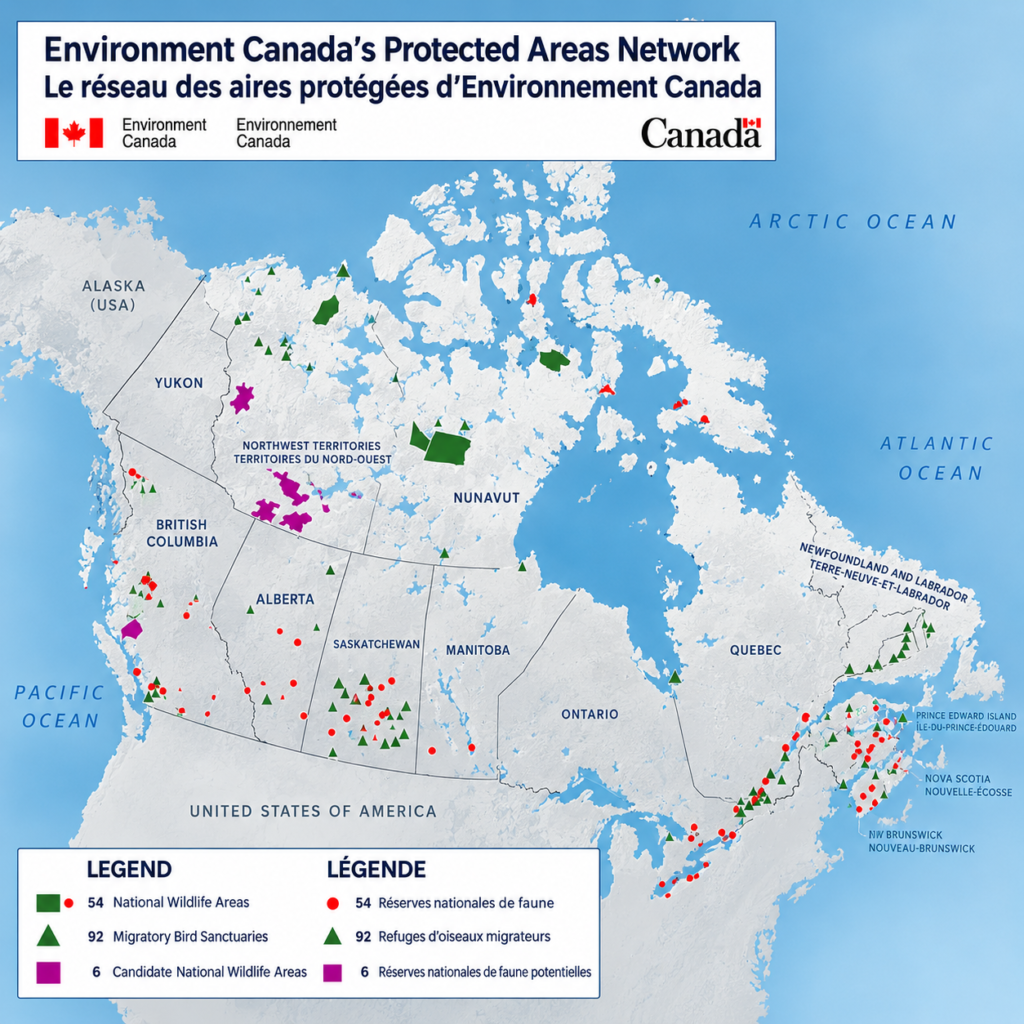
Protected areas are places where land or water is managed to conserve biodiversity, ecosystems, wildlife or important habitats. They include national parks, national marine conservation areas, national wildlife areas, provincial parks and other forms of conservation areas.
Canada has a national goal of conserving 30% of its lands and waters by 2030. Parks Canada is working to expand the network of protected areas, including national parks and marine conservation areas, in collaboration with Indigenous and other partners.
What are National Wildlife Areas in Canada?
National Wildlife Areas (NWAs) are protected areas created primarily to conserve wildlife and their habitats. They can protect important wetlands, forests, coastal areas, Arctic habitats and marine environments.
Canada currently has 64 National Wildlife Areas, protecting more than 3.5 million hectares of habitat, with almost half of that area consisting of marine habitat. NWAs are managed under the Canada Wildlife Act and Wildlife Area Regulations.
How does Canada protect its forests?
Forest conservation involves protecting important habitats, managing forests sustainably, reducing the impacts of development and wildfire, restoring damaged ecosystems and maintaining biodiversity.
Canada’s forests cover a large portion of the country’s land and provide habitat for wildlife while also supporting communities and the economy. Conservation can involve national and provincial parks, protected areas, Indigenous-led stewardship, ecological corridors and sustainable forest management. Parks Canada also identifies landscape connectivity and biodiversity as important considerations when developing new protected areas.
What is air pollution in Canada?
Air pollution occurs when harmful substances such as fine particulate matter, nitrogen oxides, sulphur oxides, carbon monoxide and other pollutants enter the atmosphere. Major sources include transportation, industrial activities, heating and energy production.
Canada has made progress in reducing several major air pollutants. In 2024, emissions of sulphur oxides were 81% lower than in 1990, nitrogen oxides were 46% lower, carbon monoxide was 65% lower and PM2.5 was 22% lower. However, air pollution remains a health and environmental concern, particularly during wildfire-smoke events.
What is water pollution in Canada?
Water pollution occurs when substances such as industrial chemicals, agricultural nutrients, sewage, plastics or other contaminants enter rivers, lakes, groundwater or coastal waters.
Canada monitors water quality through federal, provincial, territorial and local programs. For the 2022–2024 period, water quality in Canadian rivers was rated fair to excellent at 77% of monitored sites, while 23% were rated marginal or poor.
How safe is drinking water in Canada?
Drinking water quality is generally monitored and managed through provincial, territorial and municipal systems, with drinking-water guidelines developed nationally. Water treatment helps remove or control bacteria, viruses, chemicals and other contaminants.
Access to safe drinking water remains an important issue in some First Nations communities. By 2023–24, 97.5% of Indigenous Services Canada-funded First Nations public drinking-water systems met prescribed bacteriological standards. However, some communities continue to face infrastructure and water-advisory challenges.
What is plastic pollution in Canada?
Plastic pollution occurs when plastic products and materials are discarded, lost or abandoned in the environment. Large plastic waste can break down into smaller particles known as microplastics, which can enter waterways and ecosystems.
Canada uses measures such as plastic-product regulations, recycling initiatives, waste-reduction programs and pollution-prevention policies to address the problem. The federal government has also continued work on regulations and policies concerning single-use plastics and plastic pollution.
What is industrial pollution in Canada?
Industrial pollution can include emissions to air, releases to water, contaminated land, hazardous waste and other environmental impacts from industrial activities.
The federal government tracks releases of harmful substances through environmental indicators and reporting systems. In September 2026, Canada’s environmental indicators included updated information on harmful-substance emissions to air and releases to water, helping monitor industrial and other pollution sources.
How does wildfire smoke affect pollution and air quality?
Wildfire smoke can contain fine particles and other pollutants that reduce air quality. Smoke can travel long distances, so communities far from a wildfire may also experience poor air quality.
During wildfire-smoke events, Canadians can check the Air Quality Health Index (AQHI) and local smoke advisories. People can reduce exposure by spending less time outdoors when air quality is poor, keeping indoor air cleaner and following public-health recommendations.
How does Canada protect lakes and rivers?
Canada protects freshwater through water-quality monitoring, pollution controls, watershed programs, habitat conservation and cooperation between federal, provincial, territorial, municipal and Indigenous governments.
The Great Lakes, St. Lawrence River, Lake Winnipeg and other major watersheds receive specific conservation attention. In September 2026, the Canada Water Agency launched public engagement for Canada’s first National Water Security Strategy and announced $6.6 million for 31 projects addressing environmental challenges in the Great Lakes.
How does waste management work in Canada?
Waste management includes collection, recycling, composting, reuse, landfill disposal and waste reduction. Municipalities and provinces/territories play major roles, while the federal government regulates certain substances and products and supports broader environmental policies.
Canada tracks waste diversion and disposal as part of its environmental indicators. The federal government is also promoting a more circular economy, in which materials are kept in use for longer through reuse, recycling and recovery rather than being discarded.
What clean drinking water projects are happening in Canada?
Canada supports water and wastewater infrastructure projects in communities across the country, including First Nations communities. These projects can involve new treatment plants, upgrades to existing systems, water distribution infrastructure and wastewater facilities.
In 2026, several First Nations communities announced major water-infrastructure milestones. In Manitoba, five First Nations projects received more than $122.2 million in federal support and were expected to improve water services for approximately 9,525 community members.
In June 2026, the federal government also introduced Bill C-37, the proposed First Nations Clean Water Act, alongside a proposed $4.6 billion commitment for water and wastewater infrastructure in First Nations communities.
What is wastewater treatment in Canada?
Wastewater treatment removes contaminants from sewage and other used water before the treated water is released back into the environment. Treatment can include physical, biological and chemical processes.
Municipal wastewater systems are important for protecting rivers, lakes and coastal environments. Canada monitors wastewater treatment through environmental indicators, while First Nations wastewater systems are also subject to infrastructure and effluent-quality improvement programs.
Are water shortages and drought a problem in Canada?
Although Canada has abundant freshwater resources, water availability varies considerably by region and season. Some areas can experience drought, low river flows and water shortages even while other parts of the country have sufficient or excessive water.
Canada’s 2026 Changing Climate Report projects that summer droughts will become longer, more frequent and more intense across central and southern Canada as warming increases. In 2023, water quantity was lower than normal at 29% of monitored river stations, normal at 61% and higher than normal at 10%.
What Is the Climate Like in Canada’s 10 Provinces and 3 Territories?
Canada has several major climate regions. British Columbia’s Pacific coast generally has milder and wetter weather, while the Prairie provinces have larger temperature changes between summer and winter. Ontario and Quebec experience warm summers and cold winters, while the Atlantic provinces have a stronger maritime influence.
The three territories—Yukon, Northwest Territories and Nunavut—generally have much colder climates. Northern Canada has long, cold winters and short summers, although conditions vary significantly between communities and regions.
Why Is the Weather So Different Between Canadian Provinces?
Canada is extremely large, so geography has a major influence on its weather. Mountains, oceans, lakes, latitude, elevation and distance from the coast all affect temperature and precipitation.
Coastal areas are strongly influenced by nearby oceans, which can moderate temperatures. Inland areas are generally more exposed to extreme seasonal temperature changes. Northern areas receive less solar energy, especially during winter, making them much colder than southern Canada.
What Is Ontario’s Climate Like?
Ontario has a varied climate because the province is very large. Southern Ontario generally has warm to hot summers and cold winters. Areas near the Great Lakes can experience lake-effect snowfall, especially during winter.
Northern Ontario has colder and longer winters and shorter summers than the south. Ontario can also experience thunderstorms, heavy rainfall, snowstorms, freezing rain and heat waves.
What Is Quebec’s Climate Like?
Quebec generally has warm summers and cold winters, but conditions vary considerably from southern to northern Quebec. Southern areas around the St. Lawrence River have a more moderate climate than the far north.
Winter can bring significant snowfall, freezing temperatures and strong winds. Northern Quebec has a much colder climate and longer periods of snow and ice.
What Is British Columbia’s Climate Like?
British Columbia has some of Canada’s most varied climates. The Pacific coast, including the Vancouver region, generally has relatively mild winters and wetter conditions compared with much of the Canadian interior.
The province’s interior can have hotter summers and colder winters. Mountainous areas also receive substantial snowfall, while the northern and northeastern parts of the province have colder conditions.
What Is Alberta’s Climate Like?
Alberta has a predominantly continental climate, meaning temperatures can change significantly between seasons. Winters can be very cold, while summers can become warm or hot.
The Rocky Mountains influence weather in western Alberta. Alberta can experience snowstorms, extreme cold, thunderstorms, hail and periods of drought. The province can also experience rapid weather changes.
Why Are Winters So Severe in Manitoba and Saskatchewan?
Manitoba and Saskatchewan are inland Prairie provinces and are far from the moderating influence of oceans. Their location contributes to large seasonal temperature differences.
Winter can bring very cold temperatures, strong winds, snow and blowing snow. Summers, however, can become quite warm or hot. The wide-open geography also allows large air masses to move across the Prairies with relatively few geographic barriers.
What Is the Maritime Climate of the Atlantic Provinces?
The Atlantic provinces are Newfoundland and Labrador, Prince Edward Island, Nova Scotia and New Brunswick. Their proximity to the Atlantic Ocean strongly influences their climate.
Ocean temperatures help moderate some temperature extremes, but the region can also experience high humidity, rain, snow, freezing rain, strong winds and coastal storms. Weather can change quickly because of interactions between ocean systems and atmospheric conditions.
What Is the Subarctic Climate Like in Yukon and the Northwest Territories?
Large parts of Yukon and the Northwest Territories have subarctic conditions. Winters are generally long and cold, while summers are short but can still become surprisingly warm in some inland areas.
The northern latitude also produces major differences in daylight throughout the year. Snow and ice remain important parts of the climate, although warming is changing the timing and duration of snow and ice seasons.
What Is the Arctic Climate Like in Nunavut?
Nunavut has Canada’s most extensive Arctic environment. Winters are generally long, extremely cold and dark, while summers are short and cool compared with southern Canada.
Many areas have tundra landscapes, permafrost and extensive sea ice. Climate conditions vary between communities, but northern Nunavut is strongly influenced by Arctic conditions and its high latitude.
What Is the Difference Between Coastal and Inland Weather in Canada?
Coastal areas are influenced by nearby oceans. Water changes temperature more slowly than land, so coastal regions often have smaller temperature differences between seasons than inland regions.
Inland Canada is generally more continental. Without the same ocean influence, inland locations can experience much colder winters and hotter summers. This is one reason why the weather in the Prairies can be very different from the weather on Canada’s Pacific and Atlantic coasts.
Why Is There Such a Large Difference Between Summer and Winter Temperatures in Canada?
Canada covers a very large area and extends far north into the Arctic. The amount of sunlight received changes dramatically between summer and winter, particularly at higher latitudes.
In winter, northern Canada receives very little sunlight and some areas experience prolonged darkness. In summer, the same northern areas can receive very long periods of daylight. Inland areas also lack the temperature-moderating influence of oceans, which increases seasonal temperature differences.
Which Regions of Canada Receive the Most Snowfall?
Snowfall varies greatly across Canada. Mountainous areas of British Columbia and Alberta can receive heavy snowfall, while areas affected by lake-effect snow around the Great Lakes can also receive substantial amounts.
Parts of Quebec, Ontario and Atlantic Canada can experience major winter snow events. Northern Canada has extensive snow and ice, although the amount of snowfall is not necessarily highest everywhere in the North.
Climate change is also affecting snowfall patterns. Canada is experiencing more precipitation falling as rain rather than snow in many areas, and future snowfall is projected to increase in northern Canada while decreasing in southernmost regions.
What Are Polar Day and Polar Night in Northern Canada?
Polar day and polar night occur because of Earth’s tilt and the high latitude of the Arctic.
During polar day, the sun can remain above the horizon for an extended period, meaning some northern communities can experience very long periods of daylight. During polar night, the sun remains below the horizon for an extended period, producing very long periods of darkness.
The length of these periods depends on how far north a location is. The closer a location is to the North Pole, the more extreme the difference between summer daylight and winter darkness.
How Is Climate Change Affecting Weather in Canada’s Provinces and Territories?
Climate change is affecting every region of Canada, although the impacts are not identical everywhere. Canada’s average temperature increased by about 2.0°C between 1948 and 2023, while Canada’s North warmed by about 2.6°C during the same period. Northern Canada has experienced particularly strong warming.
How Do People in Canada Survive During Extremely Cold Winters?
People in Canada prepare for winter before temperatures become extremely low. They monitor weather alerts, keep emergency supplies at home, dress in layers and limit outdoor exposure during dangerous cold. Environment and Climate Change Canada issues cold-weather alerts when temperatures or wind chills may create health risks.
Homes, vehicles and daily routines are also prepared for winter. People may keep extra food, water, blankets, flashlights and other emergency supplies available in case a winter storm causes power outages or travel problems.
Extreme cold can cause frostbite and hypothermia. Wind chill is especially important because strong winds can make exposed skin lose heat much faster.
How Do Canadians Keep Their Homes Warm During Freezing Temperatures?
Canadian homes are generally designed or adapted to retain heat during winter. Insulation in walls and attics, sealed windows and doors, weather-stripping and properly maintained heating systems help prevent heat from escaping.
Homes may use different heating systems, including furnaces, electric heating, boilers, heat pumps, fireplaces or wood stoves, depending on the location and type of home. In very cold areas, reliable heating is particularly important.
During severe winter weather or a power outage, households may use an appropriate backup heating source. Fuel-burning generators must never be operated inside a home, garage or other enclosed space because of the risk of carbon monoxide poisoning.
What Clothes Do People Wear to Protect Themselves From Extreme Cold in Canada?
Canadians commonly dress in several layers rather than relying on one very heavy piece of clothing. Layers help trap warm air and allow people to add or remove clothing as conditions change.
Typical winter clothing includes an insulated winter jacket, warm base and middle layers, waterproof winter boots, thick socks, gloves or mittens, a toque, and a scarf or face covering. In severe cold, covering exposed skin is particularly important.
Wool and suitable synthetic materials can provide good insulation. If clothing becomes wet, it should be changed because the body loses heat more quickly when it is wet.
How Do People Travel Safely During Heavy Snow and Extreme Winter Weather?
Winter travel requires extra preparation because snow and ice can reduce tire traction and heavy or blowing snow can make visibility very poor. Canadians check weather forecasts and road conditions before travelling and may delay unnecessary trips during severe storms.
Vehicles should be properly prepared for winter. Emergency supplies can include blankets, warm clothing, a flashlight, food, water and jumper cables. Winter tires are recommended, and they are legally required in some Canadian provinces and territories.
During a blizzard or major snowstorm, staying indoors is generally safer when travel is not essential. Whiteout conditions can make even short outdoor journeys dangerous because visibility can become extremely limited.
How Do People in Northern Canada Cope With Extremely Cold Temperatures?
Northern communities face some of Canada’s most demanding winter conditions. Homes and infrastructure need to withstand deep freezes, snow, changing weather and, in many areas, permafrost-related conditions. Northern housing also faces challenges such as high transportation and heating costs, limited construction seasons and remote locations.
People prepare through well-insulated housing, reliable heating, suitable winter clothing, carefully planned travel and emergency supplies. In remote communities, planning is especially important because transportation and access to supplies can be more difficult during severe weather.
Northern housing is also being adapted to changing Arctic conditions. Research and retrofit projects are examining better insulation, ventilation, energy efficiency and building designs that can withstand extreme cold and changing permafrost conditions.
Final Verdict
Canada’s climate and environment are highly diverse, ranging from relatively mild coastal regions to the extremely cold Arctic. The country faces a wide range of environmental challenges, including climate change, wildfires, extreme weather, pollution, changing sea ice and permafrost, while also expanding renewable energy, conservation and clean-technology initiatives.
Understanding these issues is important for anyone living in Canada, visiting the country or researching its environment. From provincial weather differences and winter preparedness to Arctic ecosystems, clean electricity, wildlife protection and water quality, Canada’s environment continues to influence everyday life and the country’s long-term development.
Table of Contents

Leave a Reply