
Canada Arts
Introduction
Canada’s arts and entertainment sector is a diverse and important part of the country’s cultural life, bringing together music, film and television, literature, visual arts, theatre, dance, comedy and other forms of live performance. From internationally recognized musicians and filmmakers to Indigenous artists, authors and emerging performers, Canada’s creative industries provide opportunities for artists to share stories, build audiences and connect with communities across the country.
In 2026, Canada’s cultural landscape continues to evolve as streaming platforms, digital distribution, new technologies, festivals and public funding reshape how creative work is produced, promoted and experienced. The music industry is adapting to the growing importance of streaming, while film and television are responding to changing viewing habits and updated broadcasting frameworks. At the same time, Canadian publishing, galleries, museums, theatre companies and performing-arts organizations continue to support Canadian and Indigenous voices.
This guide explores the Canadian arts and entertainment industry, including major musicians, movies, TV shows, books, authors, galleries, museums, theatre, festivals, awards and the latest cultural developments. Whether you want to understand Canada’s creative economy, discover its cultural institutions or follow the latest entertainment trends, this overview provides a broad look at how Canada’s arts and entertainment scene is developing in 2026.
Music :
What Is the Canadian Music Industry Like?
Canada has a large and diverse music industry covering recording, streaming, concerts, festivals, radio, publishing and music production. The recorded music market reached about C$957.9 million in 2025, growing 5.6% from the previous year. Streaming remains the main source of recorded-music revenue in Canada. The industry also supports artists, producers, labels, publishers, managers and live-event businesses. Government programs such as the Canada Music Fund also support Canadian music creation and promotion.

Who are the Major Canadian Musicians and Artists?
Canada has produced internationally recognized artists across pop, rock, hip-hop, country, R&B, electronic and Indigenous music. Canadian musicians can build audiences through domestic concerts, radio, festivals and global streaming platforms. Both established performers and emerging independent artists contribute to the country’s music scene. Government-supported programs also help Canadian artists develop careers, release music and reach international audiences.
What are the Major Music Festivals in Canada?
Canada hosts music festivals throughout the year in cities and communities across the country. Major events cover different genres, including pop, rock, electronic, jazz, country, hip-hop and Indigenous music. Festivals also provide opportunities for Canadian artists to perform in front of large audiences and attract visitors to local communities. Events such as Montréal’s MUTEK demonstrate Canada’s growing connection between music, technology and digital arts.
What are the Major Canadian Music Awards?
Canadian music awards recognize artists, songwriters, producers and other professionals working in the country’s music industry. The JUNO Awards are among the country’s best-known national music awards and cover numerous musical genres. Award events also provide opportunities for emerging Canadian artists to gain wider attention. Government music programs can support award shows, conferences, showcases and other industry activities.
What New Music Is Being Released in Canada?
New Canadian music is released throughout the year by major-label artists, independent musicians and emerging performers. Releases include singles, EPs and full albums across many genres and languages. Streaming platforms have made it easier for Canadian artists to reach listeners in Canada and international markets. The growth of digital distribution has also changed how new music is promoted, discovered and consumed.
Where Can You Find Concerts and Live Music in Canada?
Live music can be found in concert halls, arenas, clubs, theatres, festivals and outdoor venues across Canada. Toronto, Montréal, Vancouver, Calgary and other cities have active live-music scenes throughout the year. Concerts range from performances by major international stars to shows by local and independent Canadian musicians. Live performances are also an important part of artist development, touring and audience building.
What are the Latest Canadian Music Charts?
Canadian music charts track the popularity of songs and albums based on measures such as streaming, sales and other forms of music consumption. They help show which artists and releases are attracting Canadian audiences at a particular time. Streaming has become increasingly important because Canadians consume large amounts of music through digital platforms. Chart performance can also help emerging Canadian artists gain visibility and reach new listeners.
What Is Indigenous Music in Canada?
Indigenous music is an important part of Canada’s cultural and musical landscape. It includes traditional and contemporary music created by First Nations, Inuit and Métis artists. Indigenous musicians work across many styles, including traditional songs, folk, country, rock, hip-hop and contemporary music. Canadian cultural programs also identify Indigenous storytelling and creators as areas receiving support within the broader cultural sector.
How Is Music Streaming Changing Canada’s Music Industry?
Streaming has become the central part of Canada’s recorded-music market. In 2025, Canadian streaming revenue reached about C$747 million, representing the clear majority of recorded music revenues. Subscription streaming generated about C598.5million,whileadvertising-supported streaming generated about C148.3 million. Streaming also allows Canadian artists to reach listeners outside Canada and has become an important source of royalties.
What are the Latest Music Events and News in Canada?
Canadian music news includes new releases, artist announcements, concerts, festivals, awards, streaming developments and industry policy changes. In 2026, the government announced C$600 million per year in support for Canada’s audio and audiovisual sectors while reviewing aspects of the streaming regulatory framework. The music industry is also dealing with issues such as copyright, royalties, piracy and digital platforms. These developments can significantly affect Canadian artists, music companies and listeners.
Film & TV
What Is the Canadian Film Industry Like?
Canada has a major film and television production industry that includes Canadian productions, international productions, television, feature films and digital content. In 2024–25, total film and television production volume reached about C$10.17 billion, according to the latest industry report. Foreign location and service production represented a significant part of this activity. Government programs, tax credits and organizations such as Telefilm Canada and the Canada Media Fund also support the sector.

What are Canadian Movies?
Canadian movies include productions made by Canadian filmmakers, production companies and creative teams across many genres. Canadian cinema covers drama, comedy, documentary, animation, horror, thriller and other forms of storytelling. The National Film Board of Canada has also played an important role in producing and distributing Canadian documentary and animated films. In 2026, 44 NFB titles became available through a dedicated collection on Crave, expanding access to Canadian films.
What are the Most Popular Canadian TV Shows?
Canadian television includes scripted dramas, comedies, reality programs, documentaries, children’s programming and news. Canadian productions are shown through traditional broadcasters as well as streaming platforms and digital services. Recent Canadian Screen Awards recognition included shows such as Heated Rivalry and North of North, demonstrating the range of Canadian television productions. The Canadian television sector also produces programs for audiences in both Canada and international markets.
What New Movies Are Being Released in Canada?
New movies are released in Canada throughout the year through cinemas, streaming services and other distribution platforms. Releases can include Canadian productions as well as international films distributed to Canadian audiences. Canadian filmmakers can benefit from production financing, tax credits, distribution support and audiovisual programs. The availability of films is increasingly spread across theatres and digital platforms, giving audiences more ways to watch new releases.
How Is Streaming Changing Film and TV in Canada?
Streaming has changed how Canadians discover, watch and access films and television programs. Services such as Crave and other online platforms now provide Canadian and international content alongside traditional television services. In 2026, the CRTC introduced updated rules concerning contributions and the discoverability of Canadian and Indigenous content on broadcasting and online platforms. These changes are intended to support the creation and visibility of Canadian programming.
Who are the Major Canadian Actors and Directors?
Canada has a large community of actors, directors, writers, producers and other screen professionals working in film and television. Canadian talent works in domestic productions as well as major international movies and television series. Canadian Screen Awards recognize performers, directors and other professionals across film, television and digital media. The 2026 awards, for example, recognized performers including Hudson Williams, Anna Lambe and Grace Glowicki.
What are the Major Film Festivals in Canada?
Canada hosts film festivals that showcase Canadian, Indigenous and international films throughout the year. These events provide opportunities for filmmakers to premiere productions, meet audiences and connect with industry professionals. Film festivals can also support emerging directors, independent productions and documentary filmmakers. Canada’s wider audiovisual sector is supported through public programs, cultural organizations and production initiatives that help Canadian stories reach audiences.
What are the Canadian Screen Awards?
The Canadian Screen Awards recognize achievements in Canadian film, television and digital media. The 2026 awards were held in Toronto from May 27 to May 31, with the main ceremony taking place on May 31. The awards recognized excellence across 146 film, television and digital media categories. In 2026, Heated Rivalry set a record with 16 Canadian Screen Award wins, while North of North received nine.
What are the Latest TV Ratings and Trends in Canada?
TV viewing in Canada is changing as audiences increasingly use streaming platforms alongside traditional television. Broadcasters are adapting to changes in audience behaviour, digital competition and the growing importance of on-demand viewing. Canadian programming remains an important part of the broadcasting system, with regulators focusing on both its creation and discoverability. The CRTC’s 2026 framework specifically addresses how Canadian and Indigenous content can remain visible to audiences across traditional and online services.
. What are the Latest Film and TV News in Canada?
Canadian film and television news includes new productions, streaming developments, awards, festivals, industry funding and broadcasting policy changes. In 2026, the federal government announced C$600 million per year in support for Canada’s audio and audiovisual sectors. The CRTC also introduced updated requirements affecting Canadian and Indigenous programming on broadcasters and online services. Meanwhile, the NFB expanded access to Canadian films through its Crave collection, showing how distribution is evolving.
Who are the Major Canadian Authors?
Canada has a long literary tradition featuring authors who write fiction, nonfiction, poetry, children’s literature, drama and other forms of writing. Canadian writers publish through both Canadian-owned and international publishing companies. Their books can reach readers through bookstores, libraries, ebooks and audiobooks. In 2025, books by Canadian authors represented 14% of print book sales in Canada, up from 12% in 2024.
What are Canadian Books?
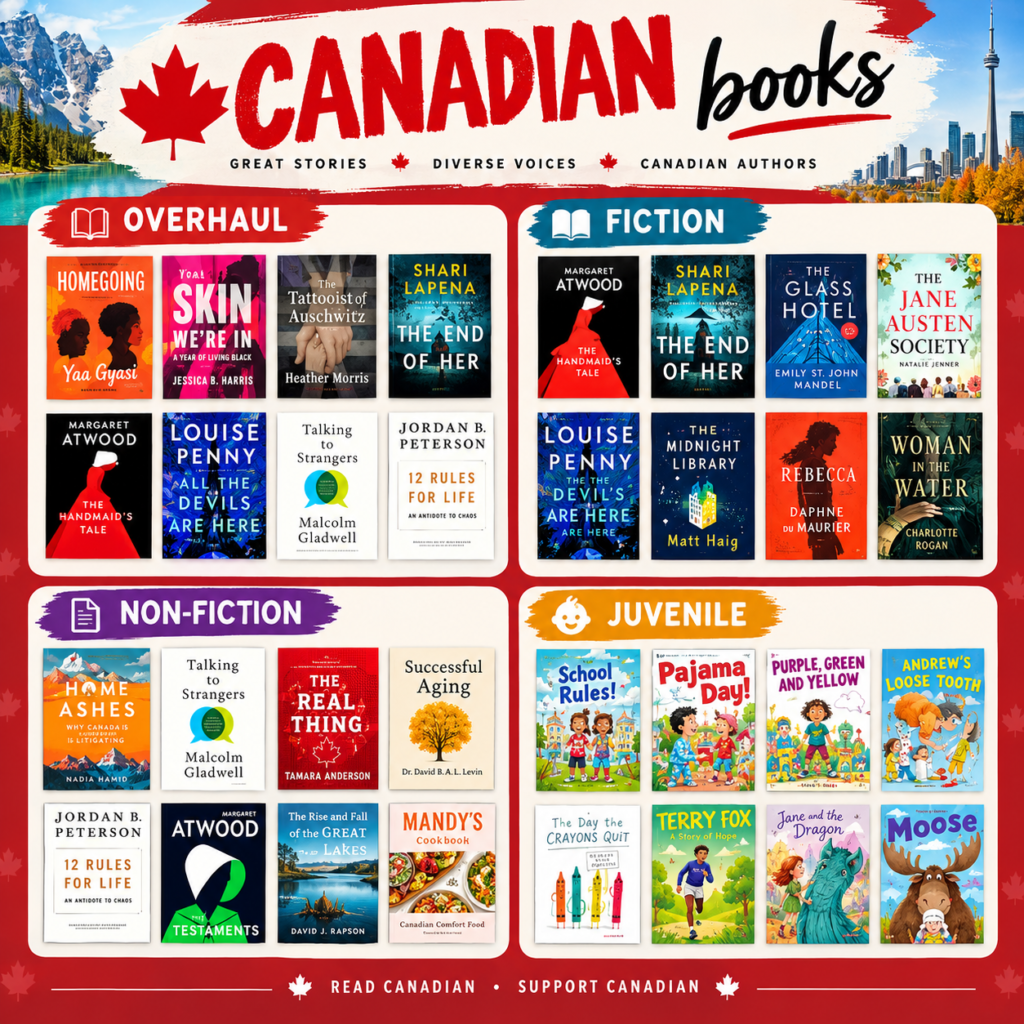
Canadian books cover a wide range of subjects, genres, languages and cultural experiences. They include novels, biographies, poetry, children’s books, nonfiction, academic works and graphic literature. Canadian publishing takes place in both English and French, while Indigenous and other cultural voices add further diversity. In 2025, more than 47.9 million physical books were sold in the Canadian market across almost 884,000 tracked ISBNs.
What New Books are Being Released in Canada?
New books are released throughout the year by Canadian and international authors through publishers, independent presses and self-publishing platforms. Readers can find new fiction, nonfiction, children’s books, poetry and other genres in bookstores, libraries and online retailers. Canadian book-market data tracks new titles, sales and consumer behaviour across many categories. BookNet Canada also conducts research on Canadian book buyers and reading habits to identify changing trends.
What Is Canadian Literature?
Canadian literature includes written works created by Canadian authors and writers connected to Canada’s cultural and literary traditions. It covers fiction, poetry, drama, nonfiction, children’s literature and translated works in both English and French. Canadian literature also reflects the country’s different regions, communities and historical experiences. Major national recognition includes the Governor General’s Literary Awards, which recognize notable Canadian books across seven categories and both official languages.
What Is Indigenous Literature in Canada?
Indigenous literature represents the writing and storytelling traditions of First Nations, Inuit and Métis peoples in Canada. It includes novels, poetry, memoirs, children’s books, essays and other forms of contemporary and traditional storytelling. Indigenous authors have an important place within Canada’s wider literary community and publishing industry. Canadian book organizations also provide resources and initiatives focused on supporting Indigenous voices and publishing.
What are the Bestselling Books in Canada?
Bestselling books in Canada change throughout the year and can differ between fiction, nonfiction, children’s and young-adult categories. BookNet Canada’s 2025 market data showed that Juvenile and Young Adult books accounted for 39% of the Canadian print market, followed by nonfiction at 30% and fiction at 29%. Among Canadian authors, Greta Podleski’s Every Salad Ever was the top-selling Canadian-authored book in 2025.
What are the Major Canadian Book Awards?
Canada has several awards that recognize authors, translators, illustrators and publishers. The Governor General’s Literary Awards are among the country’s major national literary prizes, covering fiction, nonfiction, poetry, drama, young people’s literature and translation. The awards provide 14 prizes of $25,000 for winning books, along with publisher grants. The 2026 finalists are scheduled to be announced in late October, with winners expected in mid-November.
How are Libraries and Reading Changing in Canada?
Canadian libraries remain important places for readers to borrow books, access information and discover Canadian authors. In 2025, juvenile books represented 51% of library book circulation tracked in BookNet Canada’s market research. The Grey Wolf by Louise Penny was the most-loaned book by a Canadian author in that year’s data. Canada’s Public Lending Right program also provides payments to more than 18,000 Canadian creators whose works are available in public libraries.
What are the Major Book Festivals in Canada?
Book festivals across Canada bring authors, readers, publishers and literary organizations together through readings, discussions, workshops and book launches. These events can highlight Canadian, international, French-language and Indigenous writers. Some festivals focus on particular communities or literary traditions, while others cover many genres. Government support through programs such as the Canada Book Fund also helps organizations promote Canadian-authored books and strengthen access to Canadian literature.
What Is the Publishing Industry Like in Canada?
Canada’s publishing industry includes publishers, booksellers, distributors, literary agents, libraries and other organizations that bring books to readers. Canadian-owned publishers represented 6.2% of the Canadian print-book market in 2025, compared with 5.6% in 2024. The industry is also adapting to ebooks, audiobooks, digital distribution and artificial intelligence. In September 2026, BookNet Canada published new research examining AI use across the North American book industry and its changing role in publishing.
Who are the Major Canadian Artists?
Canada has a diverse visual arts community working in painting, sculpture, installation, photography, digital art, textiles and mixed media. Artists come from communities across the country and work in both traditional and contemporary forms. The 2026 Governor General’s Awards in Visual and Media Arts recognized eight artists for their contributions to visual arts, media arts and fine crafts. The winners included Faye HeavyShield, Zacharias Kunuk, Skawennati and Marie-Jeanne Musiol.
What are the Major Canadian Art Galleries?
Canadian art galleries provide spaces where audiences can view Canadian, Indigenous and international artwork. They support artists through exhibitions, education programs, collections and public events. The Canada Council Art Bank is one major national collection, holding more than 17,000 contemporary works by over 3,000 Canadian artists. Galleries across Canada also play an important role in supporting regional artists and making art accessible to local communities.
What are the Major Canadian Museums?
Canadian museums preserve and present important collections covering art, history, culture and Indigenous heritage. They also organize exhibitions, educational programs and public events for visitors. Government data shows that museums produced just over half of all new exhibitions recorded among Canadian heritage institutions in 2023. More than 5.1 million people attended in-person museum programs that year, while museums also expanded their online exhibitions and digital access.
What Is Contemporary Art in Canada?
Contemporary Canadian art includes paintings, sculpture, photography, installations, digital works, textiles, video and other experimental forms. Artists often explore subjects such as identity, environment, community, technology and social change. The Canada Council Art Bank maintains one of Canada’s largest contemporary art collections, with more than 17,000 works. Current exhibitions such as Edge Conditions | Inawendiwin also examine relationships between people, ecosystems and the environment.
What Is Indigenous Art in Canada?
Indigenous art includes the creative work of First Nations, Inuit and Métis artists across traditional and contemporary forms. It can include painting, carving, textiles, photography, sculpture, installation, digital art and other practices. The Canada Council supports Indigenous artists through its Creating, Knowing and Sharing program, which recognizes Indigenous cultural sovereignty and self-determination. In 2026, the Canada Council also renewed partnerships supporting Indigenous and Inuit artists across northern Canada.
What Is Photography Like in Canada?
Photography is an important part of Canada’s visual arts community, ranging from documentary and landscape photography to contemporary and experimental practices. Canadian photographers work through galleries, museums, festivals, publications and digital platforms. Photography can also form part of broader contemporary art exhibitions and national collections. The 2026 Governor General’s Awards included photography-based artist Marie-Jeanne Musiol among its Artistic Achievement Award recipients.
What are the Major Art Exhibitions in Canada?
Art exhibitions take place throughout Canada in museums, galleries, cultural centres and public spaces. They can feature contemporary Canadian artists, historical collections, Indigenous art, photography and international works. The Canada Council’s Âjagemô Exhibition Space is currently presenting Edge Conditions | Inawendiwin from June 2026 through May 2027. Across Canada’s heritage institutions, more than 3,200 exhibitions were circulated nationwide in 2023.
What Is Public Art in Canada?
Public art brings artwork into streets, parks, plazas, government spaces and other places that people can access without visiting a traditional gallery. It can include murals, sculptures, installations and temporary outdoor exhibitions. Canadian Heritage supports and presents public art and temporary exhibitions in public spaces across the country. These projects can connect art with local communities, history, culture and the surrounding environment.
What are the Major Art Festivals in Canada?
Art festivals give artists opportunities to exhibit their work and allow audiences to experience visual arts, photography, media arts and other creative practices. Festivals can include exhibitions, workshops, artist talks, installations and cultural activities. Canada’s arts sector also receives support for initiatives that help artists exhibit work, develop professional opportunities and reach new audiences. These events contribute to Canada’s wider cultural life and help connect artists with communities across the country.
What Is the Canadian Art Market Like?
The Canadian art market includes galleries, collectors, museums, art dealers, auctions, public institutions and private buyers. Contemporary art represents an important part of the market, while established Canadian, Indigenous and international artists can attract collector interest. The Canada Council Art Bank also provides a national collection of more than 17,000 contemporary works by over 3,000 artists. Government and arts organizations continue to support artists, exhibitions and opportunities that help Canadian art reach audiences at home and internationally
What Is Canadian Theatre Like?
Canadian theatre includes professional productions, independent performances, musical theatre, experimental work and community-based productions. Theatre companies across the country present both Canadian stories and international works to audiences. Major theatre centres include Toronto, Montréal, Vancouver, Ottawa and Charlottetown, while smaller communities also have active theatre scenes. The sector includes actors, directors, writers, designers, technicians and many other creative professionals.
What are the Major Theatre Companies in Canada?
Canada has theatre companies ranging from large professional organizations to independent and community-based groups. Companies such as Canadian Stage, Soulpepper Theatre and Young People’s Theatre contribute to Canada’s professional theatre scene. Indigenous organizations such as Native Earth Performing Arts also develop and present Indigenous theatre and performance. In September 2026, the federal government announced support for several Toronto performing-arts organizations, including Native Earth and Young People’s Theatre.
What Broadway and Touring Shows Are Coming to Canada?
Canadian audiences can see touring musicals, Broadway productions, concerts and other large-scale performances in major cities. Toronto is an important destination for touring theatre, with venues hosting musicals, dramas, comedy and other productions. Touring productions allow audiences to experience internationally recognized shows without travelling outside Canada. At the same time, Canadian theatres continue presenting home-grown productions alongside touring performances.
What Is the Canadian Performing Arts Scene Like?
Canada’s performing arts sector includes theatre, dance, music, opera, comedy, circus, multidisciplinary performances and other live artistic forms. Organizations and festivals provide opportunities for professional artists to create and present their work to audiences. The Canada Arts Presentation Fund supports professional arts festivals and performing-arts series across Canadian communities. Funding can also support workshops, public discussions, demonstrations and other audience-engagement activities.
What are the Major Dance Performances in Canada?
Dance performances in Canada range from classical ballet and contemporary dance to Indigenous, multicultural and experimental forms. Professional dance companies and festivals present performances throughout the year in theatres and other venues. Canadian dance artists can also participate in touring productions, festivals and multidisciplinary performances. In Toronto, the CanAsian Dance Festival is among the organizations receiving federal support for programming that showcases Asian diasporic dance artists.
Where Can You Watch Comedy and Stand-Up in Canada?
Comedy and stand-up are important parts of Canada’s live entertainment scene, with performances taking place in comedy clubs, theatres, festivals and larger venues. Canadian comedians perform original stand-up, sketch comedy, improv and other forms of live comedy. Theatre festivals can also combine comedy with drama, music and other performing arts. Canada’s festival network includes events that provide platforms for both established performers and emerging artists.
What are the Major Performing Arts Festivals in Canada?
Canada hosts performing-arts festivals featuring theatre, dance, music, comedy and multidisciplinary performances. Examples include the Charlottetown Festival, SummerWorks and numerous Fringe festivals across the country. The 2026 SummerWorks Festival presented 11 days of theatre, dance, music and other live activities. The Canada Arts Presentation Fund also supports professional arts festivals and performing-arts series that connect artists with audiences.
What Types of Live Events Are Held in Canada?
Live events in Canada include theatre productions, concerts, dance performances, comedy shows, festivals, musicals and multidisciplinary arts events. They take place in theatres, concert halls, outdoor venues, community spaces and festival locations. Major cities host regular performances, while festivals bring live entertainment to communities across the country. In 2026, Canadian Heritage continued supporting organizations that present professional performances and community arts activities.
What are the Major Canadian Theatre Awards?
Canada has several awards recognizing achievements in theatre and the broader performing arts. The Governor General’s Performing Arts Awards are Canada’s highest distinction in the performing arts and recognize lifetime artistic achievement across areas including theatre, dance and music. The Canadian Theatre Critics Association also presents awards recognizing theatre criticism and distinguished contributions to Canadian theatre. These awards help highlight artists and professionals who have contributed to Canada’s cultural life.
What are the Latest Theatre and Performance News in Canada?
Canadian theatre and performance news includes new productions, festival announcements, funding, touring shows, artist development and cultural events. In September 2026, the federal government announced $583,200 for four Toronto performing-arts and festival organizations, including Native Earth Performing Arts and Young People’s Theatre. In August, SummerWorks received $208,000 in support for its 2026 and 2027 festivals. These developments show the continuing role of festivals and performing-arts organizations in Canada’s cultural sector.

Final Verdict
Canada’s arts and entertainment sector remains a diverse and evolving part of the country’s cultural landscape in 2026. Music, film and television, literature, visual arts, theatre and performing arts each provide important platforms for Canadian, Indigenous and international creators.
Digital streaming and changing audience habits are transforming how Canadians discover and experience creative content, while festivals, awards, cultural institutions and government-supported programs continue to provide opportunities for artists and organizations. From music streaming and new film productions to Canadian books, contemporary art and live performances, Canada’s creative industries continue to connect culture with audiences across the country and internationally.
Overall, the Canadian arts and entertainment scene in 2026 reflects a combination of cultural diversity, digital transformation, creative talent and institutional support, making it an important part of Canada’s broader cultural identity and creative economy.
Table of Contents

Leave a Reply