
Canada Culture & Society
Introduction
Canada is a country known for its cultural diversity, multicultural communities, rich Indigenous heritage, two official languages, and distinctive traditions. Canadian culture has developed through Indigenous, French, British, American, and immigrant influences, creating a society where different languages, customs, foods, arts, sports, and traditions exist together. From hockey and maple syrup to literature, music, festivals, national parks, and multicultural communities, Canadian identity reflects many different experiences and histories.
Understanding Canadian culture and society means looking beyond a single national tradition. Indigenous cultures, French and English heritage, immigration, multiculturalism, regional differences, food, sports, arts, media, and everyday social life all contribute to Canada’s identity. This diversity can be seen across major cities, provinces, rural communities, and northern regions, making Canadian culture broad, regional, and continuously evolving.
Canada: Life and Culture
Life in Canada refers to everyday living in the country, while Canadian culture includes the traditions, values, languages, arts, food, and activities shared by its people.
Life in Canada
- Canada is a multicultural and diverse country.
- Its two official languages are English and French.
- People have access to public education, healthcare, libraries, and community services.
- Many Canadians enjoy outdoor activities such as hiking, camping, skiing, skating, fishing, and canoeing.
- Winters are cold and snowy in many regions, while summers can be warm.
- Large cities offer many jobs, schools, restaurants, and cultural events, but housing can be expensive.
- Smaller towns and rural areas often provide a quieter lifestyle and closer communities.

Canadian Culture
- Canada includes the cultures of First Nations, Inuit, and Métis peoples, as well as French, British, and immigrant influences.
- Commonly valued qualities include politeness, equality, inclusion, freedom, and respect for diversity.
- Ice hockey is a very popular sport; lacrosse, curling, basketball, and skiing are also important.
- Popular foods include poutine, maple syrup, butter tarts, Nanaimo bars, and smoked meat.
- Canada is known for its music, literature, film, festivals, and natural landscapes.
- Important symbols include the maple leaf, the Canadian flag, and Canada Day on July 1.
What Is Canadian Food?
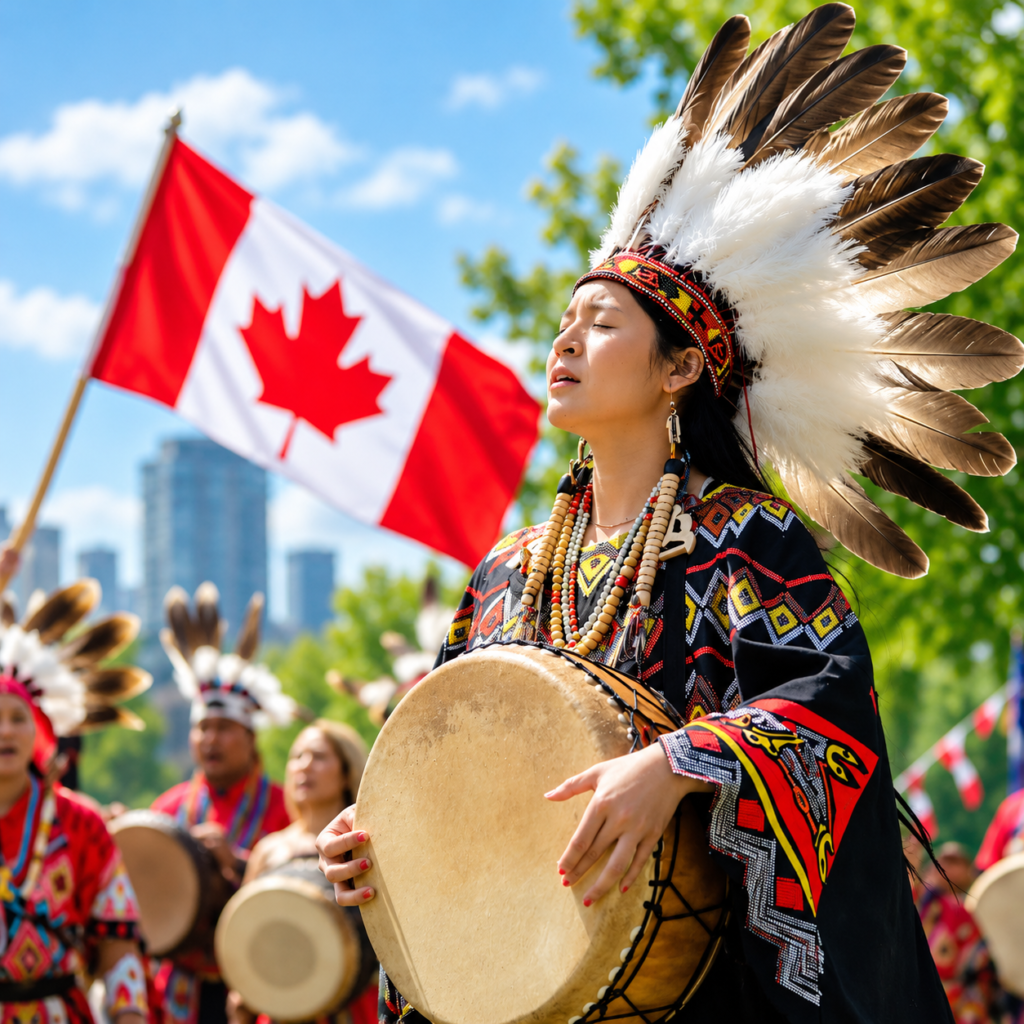
Canadian food is not one single cuisine. It includes traditional Indigenous foods, regional dishes, French-Canadian and British influences, and cuisines introduced by immigrant communities.
Some foods are strongly associated with Canada, including poutine, maple syrup, butter tarts, Nanaimo bars, tourtière, Montreal-style bagels, smoked meat, salmon and other regional seafood.
Canada’s food culture also reflects its geography. Coastal regions are known for seafood, Quebec has a strong French-Canadian culinary tradition, and the Prairies are important agricultural regions producing grains, livestock and other foods.
What Are Some Popular Canadian Foods?
Popular foods associated with Canada include poutine, maple syrup, butter tarts, Nanaimo bars, tourtière, Montreal-style bagels, Montreal smoked meat and peameal bacon.
Canada’s large geography also creates regional favourites. Atlantic Canada is known for seafood such as lobster, while British Columbia has strong salmon and Pacific seafood traditions. Quebec is known for dishes such as tourtière and poutine.
Canadian food also includes many international cuisines. Indian, Chinese, Italian, Filipino, Middle Eastern, Caribbean, Korean, Japanese and other cuisines are widely available in Canadian cities.
What Is Poutine?
Poutine is one of Canada’s best-known dishes. It traditionally consists of french fries topped with cheese curds and gravy.
The dish originated in Quebec and became popular across Canada. Today, restaurants may offer different versions using ingredients such as pulled pork, smoked meat, mushrooms, chicken or other toppings.
Although poutine is strongly associated with Quebec and Canadian food culture, it is now served in restaurants, fast-food locations, pubs and food festivals across the country.
Why Is Maple Syrup Important to Canadian Food Culture?
Maple syrup is one of Canada’s most recognizable food products. It is produced mainly from the sap of maple trees and is especially associated with Quebec, Ontario, New Brunswick and Nova Scotia.
Quebec is by far Canada’s largest maple syrup-producing province and is responsible for most of the country’s production. Maple products are used with pancakes, waffles, desserts and many other foods.
Maple syrup is also an important Canadian agricultural export. Canadian food labels can use claims such as “Product of Canada” when they meet the applicable Canadian-content requirements. A maple leaf symbol by itself does not necessarily mean that a food product is Canadian.
What Are Canadian Restaurants Like?
Canada has a large and diverse restaurant industry. Major cities such as Toronto, Vancouver, Montreal, Calgary and Ottawa offer restaurants representing cuisines from many different cultures.
Canadian restaurants range from independent family businesses and food trucks to fine-dining restaurants and international chains. Many restaurants also combine Canadian ingredients with international cooking styles.
Local restaurants can play an important role in communities by creating jobs, supporting food suppliers and introducing customers to regional and international cuisines.
What Are Some Major Food Festivals in Canada?
Food festivals are held throughout Canada and often celebrate local ingredients, regional dishes or particular cultural traditions.
Examples include Poutine Week, maple-themed events, seafood festivals, farmers’ markets, multicultural food festivals and community food celebrations. Cities and provinces also organize events around products such as lobster, salmon, wine, cheese and local produce.
Food festivals can support restaurants, farmers, producers and tourism. They also give visitors an opportunity to experience regional Canadian food traditions.
How Does Canadian Cuisine Differ by Province?
Canadian cuisine varies considerably from province to province because of geography, climate, agriculture and cultural history.
Ontario: Ontario has a highly diverse food scene, particularly in Toronto, and produces fruits, vegetables, grains, dairy products and other agricultural products.
British Columbia: Seafood, salmon, berries, fruit and Pacific Northwest ingredients are important to the province’s food culture.
Alberta and Saskatchewan: Beef, grains, pulses and other agricultural products are important parts of the Prairie food system.
Manitoba: The province has strong agricultural and freshwater-fishing traditions and a diverse multicultural food scene.
Atlantic Canada: Nova Scotia, New Brunswick, Prince Edward Island and Newfoundland and Labrador are strongly associated with seafood, including lobster, crab, mussels and fish.
What Are Indigenous Foods in Canada?
Indigenous food traditions are an important part of Canada’s food history and culture. Traditional foods vary between First Nations, Inuit and Métis communities and reflect local environments and generations of knowledge.
Traditional foods can include salmon, Arctic char, trout, whitefish, caribou, moose, deer, elk, hare, wild birds, shellfish and other locally harvested foods. Canada’s Dietary Guidelines recognize the cultural importance of traditional foods for Indigenous Peoples.
Indigenous food practices can involve fishing, hunting, harvesting, gathering and cultivating foods. These traditions are connected with culture, community, land and knowledge.
Why Is Multicultural Food Important in Canada?
Canada’s multicultural population has helped create one of the country’s most diverse food environments. Restaurants, grocery stores and food businesses offer products and dishes from communities around the world.
In large cities, people can find neighbourhoods and businesses specializing in cuisines such as Indian, Chinese, Korean, Japanese, Vietnamese, Filipino, Lebanese, Persian, Mexican, Caribbean and Italian food.
This diversity means Canadian food culture continues to change. New restaurants, ingredients and cooking styles are introduced while traditional Canadian and Indigenous foods remain part of the country’s culinary identity.
How Much Do Groceries and Food Cost in Canada in 2026?
Food costs remain an important issue for Canadian households. Canada’s Food Price Report 2026, produced by Dalhousie University and partner universities, forecasts that overall food prices could rise by 4% to 6% in 2026. It estimates that a family of four could spend about C$17,572 on food during the year, depending on household composition and spending patterns.
The report expects some categories to increase more than others. Meat was forecast to rise by approximately 5% to 7%, while restaurant food was forecast to increase by 4% to 6%. Fruits and seafood were expected to have smaller increases of around 1% to 3%.
Actual grocery prices can vary by province, city, store, product and season. Government information also notes that grocery price increases have been affected by factors such as global supply conditions and higher prices for specific products.
What Are the Major Canadian Food Trends?
Canadian food trends are influenced by health, affordability, convenience, culture and changing consumer preferences.
Interest in plant-based foods, high-protein foods, locally produced food, international cuisines, sustainable food choices and convenient meals continues to influence the market. Consumers are also paying attention to food labels, ingredients, nutrition and food prices.
Canada’s Food Guide recommends regularly eating vegetables, fruit, whole grains and protein foods, with plant-based protein foods encouraged more often. It also emphasizes water as the beverage of choice and the importance of cooking and food skills.
Affordability is another major trend. Higher food costs can influence what consumers buy, how often they eat at restaurants and whether they choose fresh, frozen, canned or other options.
What Are Canadian Food Businesses?
Canada has a broad food-business sector that includes farmers, food manufacturers, processors, grocery retailers, restaurants, bakeries, cafés, food trucks, catering companies and food-delivery businesses.
Small and medium-sized businesses are particularly important in local food communities. They can sell regional products, create employment and connect consumers with Canadian ingredients and cultural food traditions.
Canada also has large food companies and agricultural producers that supply domestic and international markets. The country’s food industry covers the entire supply chain, from farms and fisheries to processing, transportation, retail and restaurants.
What Are the Best Travel Destinations in Canada?
Canada has many popular travel destinations, and the right choice depends on the type of trip. Mountain destinations such as Banff, Jasper and Whistler are popular for outdoor activities, while cities such as Toronto, Vancouver, Montréal, Québec City and Halifax offer culture, food, history and entertainment.
Other important destinations include the Niagara region, the Canadian Rockies, Atlantic Canada, Vancouver Island, the Okanagan Valley, the Canadian Prairies and Northern Canada. Parks Canada also highlights destinations across Atlantic Canada, Quebec, Ontario, the Prairies, Western Canada and the North.
Travellers should consider the season, transportation, accommodation, budget and planned activities before choosing a destination. Some remote areas also require more advance planning because services and mobile coverage can be limited.
What Are the National Parks in Canada?
Canada has 37 national parks and 11 national park reserves, covering approximately 343,377 square kilometres. They represent many of Canada’s natural regions, including mountains, forests, plains, tundra, lakes and glaciers.
Some well-known national parks include Banff, Jasper, Yoho, Kootenay, Gros Morne, Cape Breton Highlands, Fundy, Pacific Rim, Riding Mountain, Prince Albert and Kluane. Each park offers different landscapes and activities.
Visitors can enjoy hiking, camping, wildlife viewing, scenic drives, beaches, paddling, skiing and stargazing. Park rules, permits, reservations and seasonal closures can vary, so travellers should check the official information before visiting.
Which Canadian Cities Are Worth Visiting?
Canadian cities provide a different travel experience from national parks and wilderness areas. Toronto is known for its multicultural population, major attractions and urban parks, while Vancouver combines city life with mountains, ocean and outdoor recreation.
Montréal and Québec City offer strong French-Canadian culture, historic areas, food and festivals. Ottawa is important for Canadian history and national institutions, while Calgary provides access to the Rocky Mountains. Halifax, Winnipeg, Edmonton and Victoria also offer their own cultural, historical and outdoor attractions.
Many national parks and historic sites are also located near major cities, making day trips possible from places such as Vancouver, Calgary, Toronto, Ottawa, Montréal and Halifax.
What Are the Best Road Trips in Canada?
Canada is well suited to road trips because of its large geographic size and scenic highways. Road trips can take travellers through mountains, forests, coastlines, lakes, farms and small communities.
Popular road-trip ideas include the Icefields Parkway in Alberta, the Sea-to-Sky Highway in British Columbia, the Cabot Trail in Nova Scotia, routes through the Canadian Rockies, and drives across the Prairies. The Cabot Trail is particularly known for its coastal scenery and mountain views in Cape Breton Highlands National Park.
Before a long road trip, travellers should check road conditions, weather forecasts, fuel availability, accommodation and vehicle condition. In remote regions, it is important to plan for longer distances between services.
Where Can You Go Hiking and Camping in Canada?
Canada offers hiking and camping opportunities ranging from easy family trails to challenging backcountry routes. Parks Canada provides trails with different difficulty levels, while campgrounds can range from basic sites to locations with more services and facilities.
Popular areas include the Rocky Mountains, British Columbia’s coastal and mountain regions, Ontario’s lakes and forests, Quebec’s parks, Atlantic Canada and Northern Canada. Travellers can choose day hikes, frontcountry camping or more demanding backcountry experiences.
Hikers should check trail conditions and weather before leaving, carry appropriate safety equipment and tell someone about their route. Parks Canada also recommends staying on designated trails and keeping a safe distance from wildlife.
Where Can You Find Lakes and Waterfalls in Canada?
Canada has an enormous variety of lakes, rivers and waterfalls. Lake Louise, Moraine Lake, Lake Superior, Lake Ontario, Lake Winnipeg and the Great Lakes region are among the country’s well-known water destinations.
Waterfalls can also be found across Canada. Parks Canada highlights places such as Takakkaw Falls and Wapta Falls in Yoho National Park, Cameron Falls in Waterton Lakes National Park, and Náįlįcho (Virginia Falls) in Nahanni National Park Reserve.
Visitors can enjoy sightseeing, photography, hiking, canoeing, kayaking and, where conditions are suitable, swimming. Water conditions can change quickly, so visitors should follow local safety instructions.
What Winter Activities Can You Do in Canada?
Canadian winters provide many opportunities for outdoor recreation. Popular activities include skiing, snowboarding, snowshoeing, cross-country skiing, skating, winter hiking, ice fishing and winter camping.
Parks Canada offers winter activities in different regions, including skiing, snowshoeing, skating, winter camping and stargazing.
Winter travel requires additional preparation. Travellers should check weather and trail conditions, dress in layers, carry suitable equipment and understand local hazards. Mountain areas can also have significant avalanche risks, particularly during backcountry activities.
What Are the Popular Ski Resorts in Canada?
Canada is internationally known for mountain skiing and snowboarding. Popular ski destinations include Whistler Blackcomb in British Columbia, Banff-area resorts in Alberta, Lake Louise, Sunshine Village, Mont Tremblant in Quebec and Big White in British Columbia.
The Canadian Rockies and British Columbia have many mountain resorts, while Quebec provides ski destinations closer to major eastern Canadian cities. Skiing can range from beginner slopes and family areas to advanced terrain and backcountry experiences.
Visitors should choose terrain that matches their experience and check weather, snow and mountain safety information. Backcountry skiing requires additional knowledge and equipment because of hazards such as avalanches.
Where Are the Best Beaches in Canada?
Canada has beaches on the Atlantic and Pacific coasts, along the Great Lakes and around many inland lakes. Popular examples include Long Beach in Pacific Rim National Park Reserve, Cavendish Beach in Prince Edward Island National Park, Ingonish Beach in Cape Breton Highlands National Park and Shallow Bay in Gros Morne National Park.
Ontario and the Prairie provinces also have freshwater beaches around large lakes. These locations can offer swimming, kayaking, paddleboarding, hiking, camping and relaxing by the water.
Beach conditions vary considerably by region and season. Visitors should check local swimming conditions, weather, currents and warnings before entering the water.
Where Can You See the Northern Lights in Canada?
The Northern Lights, or aurora borealis, are one of Canada’s most famous northern natural phenomena. They are particularly associated with northern regions where dark skies provide better opportunities to observe them.
Potential viewing areas include Yukon, Northwest Territories, Nunavut and northern parts of other provinces and territories. Parks Canada highlights northern destinations such as Kluane National Park and Reserve and Wood Buffalo National Park for dark-sky and Northern Lights experiences.
For the best chance of seeing the aurora, travellers should seek dark locations away from city lights and check local conditions. Clear skies and sufficient darkness are important, and sightings can never be guaranteed on a particular night.
What Outdoor Safety Tips Should Travellers Follow in Canada?
Outdoor safety is important because Canada’s natural environments can include rapidly changing weather, wildlife, difficult terrain, cold temperatures, water hazards and limited cell service. Parks Canada recommends checking weather and trail conditions, choosing activities that match your abilities and carrying appropriate safety equipment.
For hiking, travellers should carry water, food, a first-aid kit and navigation equipment when appropriate. They should tell someone about their plans and avoid relying entirely on a mobile phone in areas with limited coverage.
Wildlife should always be observed from a safe distance. Visitors should never feed or approach wild animals and should follow park-specific wildlife rules. Parks Canada recommends staying at least 100 metres from bears, bison, cougars and wolves and at least 30 metres from other large animals such as moose, elk, deer, sheep and goats.
What Are the Best Travel Guides by Province and Territory?
Travel planning becomes easier when Canada is divided by province and territory because each region has different landscapes, attractions and outdoor activities.
- British Columbia: Vancouver, Vancouver Island, Whistler, Pacific Rim and mountain destinations.
- Alberta: Calgary, Banff, Jasper, Lake Louise and the Canadian Rockies.
- Saskatchewan: prairie landscapes, lakes, Prince Albert National Park and Grasslands National Park.
- Manitoba: Winnipeg, Riding Mountain National Park, lakes and northern wilderness.
- Ontario: Toronto, Ottawa, Niagara, the Great Lakes and extensive forest and lake regions.
- Québec: Montréal, Québec City, Mont-Tremblant, La Mauricie and other outdoor destinations.
- New Brunswick: Fundy National Park, coastal areas and the Bay of Fundy.
- Nova Scotia: Halifax, Cape Breton Highlands, the Cabot Trail and Atlantic beaches.
- Prince Edward Island: beaches, coastal landscapes, cycling routes and PEI National Park.
- Newfoundland and Labrador: St. John’s, Gros Morne, coastal scenery and hiking.
- Yukon: Whitehorse, Kluane National Park and northern wilderness.
- Northwest Territories: Yellowknife, Wood Buffalo and opportunities to see the Northern Lights.
- Nunavut: Arctic landscapes, wildlife, Inuit culture and remote northern travel.
Parks Canada provides regional travel ideas and itineraries for Atlantic Canada, Quebec, Ontario, the Canadian Prairies, Western Canada and Northern Canada.
What Is Canada’s Education System?
Canada’s education system includes elementary school, secondary school and post-secondary education. Post-secondary education includes universities, colleges, institutes and other educational institutions.
Education is primarily the responsibility of Canada’s provinces and territories. Each jurisdiction manages its own education system, which means curriculum, school structures, graduation requirements and other rules can differ between provinces and territories.
Public education is generally funded through government revenue, while students and families may have to pay for private education and post-secondary programs. The exact rules and costs depend on the province, institution and program.
What Are Elementary and Secondary Schools in Canada?
Elementary and secondary schools provide education to children and teenagers before post-secondary studies. The exact grades included in elementary, middle and secondary school can vary between provinces and territories.
Public schools are generally available without a direct tuition fee for eligible children. Parents are responsible for enrolling their children and ensuring that they attend school according to local requirements. Education is generally compulsory for children within specified age ranges, although these rules vary by jurisdiction.
Schools may provide programs in English or French, and some communities offer additional language and specialized education options. Students may also have access to transportation, sports, libraries, technology, special education and other support services depending on the school system.
What Is the Difference Between Public and Private Schools?
Public schools are funded primarily through government sources and generally do not charge tuition to eligible students. They follow provincial or territorial education requirements and are part of the publicly funded school system.
Private schools are independently operated and normally charge tuition. Their admission requirements, curriculum, religious or cultural focus and other policies can differ from public schools.
Some families choose private schools because of particular educational programs, smaller school environments, religious education, specialized programs or other preferences. Regulations and funding arrangements for private schools vary across Canada.
What Are Universities in Canada?
Canadian universities provide undergraduate, graduate and professional education. They offer programs in areas such as business, engineering, science, medicine, law, education, technology, arts and social sciences.
Universities are located across Canada, including institutions in Ontario, Quebec, British Columbia, Alberta, Manitoba, Saskatchewan, Atlantic Canada and the northern territories. Programs and admission requirements vary between institutions.
University education can lead to bachelor’s degrees, master’s degrees, doctoral degrees and professional qualifications. Students should check each university’s admission requirements, tuition, program structure and application deadlines before applying.
What Are Colleges in Canada?
Canadian colleges generally provide practical, career-focused and technical education. Programs can include business, healthcare, information technology, skilled trades, hospitality, design, engineering technology and many other fields.
Depending on the institution and program, students can earn certificates, diplomas, advanced diplomas and, in some cases, degrees. Colleges can also provide pathways into employment or further education.
Colleges are different from universities, although the two sectors can work together through transfer agreements and pathway programs. Students should check whether a specific college credential can transfer to another institution if they plan to continue their education.
How Much Does Education Cost in Canada?
Education costs vary considerably depending on the level of education, institution, program, province and student’s status.
For Canadian citizens and permanent residents, Canada.ca states that post-secondary tuition can range from approximately C2,500toC11,400 per year, depending on the school and program. International students generally pay considerably higher tuition fees. Students also need to budget for housing, food, transportation, textbooks and other expenses.
Elementary and secondary public education is generally tuition-free for eligible students, while private schools charge tuition. International students attending Canadian schools can also face different fees depending on the institution and program.
What Scholarships and Financial Aid Are Available?
Canadian students can access different forms of financial assistance, including scholarships, grants, bursaries, student loans and other education-support programs.
Scholarships may be offered by universities, colleges, governments, foundations, charities and private organizations. Some are based on academic performance, while others consider financial need, leadership, community involvement, athletic achievements or a particular field of study.
The federal and provincial or territorial governments also provide financial-support programs. Students should check the requirements carefully because eligibility can depend on factors such as residency, income, program and academic status.
What Should International Students Know About Education in Canada?
International students can study at Canadian elementary and secondary schools, colleges and universities, subject to the applicable admission and immigration requirements.
Canada introduced an international student study-permit cap in 2024 and has continued to reduce planned student arrivals. For 2026, IRCC expects to issue up to 408,000 study permits, including 155,000 for newly arriving international students and 253,000 extensions for current and returning students.
From January 1, 2026, eligible master’s and doctoral students enrolling at public designated learning institutions are exempt from the provincial or territorial attestation letter requirement. Primary and secondary students are also among the groups exempt from the PAL/TAL requirement.
International students should also consider tuition, living expenses, health coverage, study-permit requirements, housing and the rules that apply to working while studying.
How Does Education Differ by Province and Territory?
Education differs across Canada because each province and territory manages its own education system.
Ontario: Has a large public education system and many universities, colleges and school boards.
Quebec: Has a distinct education structure, including CEGEPs between secondary school and university for many students.
British Columbia: Offers public and private schools, universities, colleges and specialized post-secondary institutions.
Alberta: Has public and separate school systems alongside independent schools and a large post-secondary sector.
Saskatchewan and Manitoba: Provide public education across urban, rural and northern communities, with universities, colleges and technical institutions.
Atlantic Canada: New Brunswick, Nova Scotia, Prince Edward Island and Newfoundland and Labrador each manage their own education systems.
Northern Canada: Yukon, Northwest Territories and Nunavut operate education systems adapted to smaller and more remote communities.
Because policies differ, students and parents should check their provincial or territorial education authority for current requirements.
What Is Student Life Like in Canada?
Student life in Canada includes more than classroom learning. Students can participate in sports, clubs, student associations, cultural activities, volunteering, research, campus events and community activities.
University and college campuses can have libraries, laboratories, recreation centres, student housing, career services and health or counselling services. The availability of these services differs between institutions.
International students may also participate in multicultural activities and student organizations. Student life can vary significantly depending on whether someone studies in a large city, a smaller community or a remote region.
Is Online Education Available in Canada?
Online education is an important part of Canada’s education system. Universities, colleges and other institutions offer online courses and programs, while some programs use a combination of online and in-person learning.
Online education can provide flexibility for students who work, live far from a campus or have other responsibilities. However, not every program can be completed fully online, particularly courses that require laboratories, clinical training, workshops or practical experience.
Students should check whether a program is fully online, hybrid or primarily in person before applying. They should also confirm accreditation, credential recognition, technology requirements and examination arrangements.
What Are the Latest Education Policies and Updates in Canada?
Canadian education policy continues to change at both the provincial and federal levels. Since education itself is mainly a provincial and territorial responsibility, school policies and curriculum decisions are generally made by the relevant provincial or territorial authorities.
International education has also seen major policy changes. For 2026, the federal government set a study-permit issuance target of up to 408,000, while introducing provincial and territorial allocations for applicants who require a PAL/TAL.
The federal government has also introduced measures intended to attract graduate students. Eligible master’s and doctoral students at public institutions became exempt from the PAL/TAL requirement in 2026, while eligible doctoral applications can receive priority processing under the International Talent Attraction Strategy.
Education policies can change during the academic year, so students and families should check the relevant provincial education authority, institution and official federal sources for the latest requirements.
Why Is Hockey Important in Canada?
Hockey is one of Canada’s most recognized sports and has a long connection with Canadian history and culture. It is played at professional, amateur, school, university and community levels across the country.
Canada has many local hockey associations, arenas and youth programs. The sport is especially popular during the winter, although indoor arenas allow hockey to be played throughout the year.
Hockey also provides pathways from grassroots participation to professional and international competition. Canadian players compete in leagues across North America and represent Canada in international tournaments.

What Is the NHL in Canada?
The National Hockey League (NHL) is the highest-profile professional hockey league in North America. Canadian NHL teams include the Toronto Maple Leafs, Montreal Canadiens, Ottawa Senators, Winnipeg Jets, Calgary Flames, Edmonton Oilers and Vancouver Canucks.
These teams represent major Canadian cities and have large fan bases. NHL hockey is also an important part of Canada’s professional sports industry, with games attracting spectators in arenas and viewers through television and digital platforms.
Canadian players also make up a significant part of the NHL’s history and player development system. Many professional players begin in minor hockey programs before reaching junior, university or professional competition.
What Is Canadian Football?
Canadian football is a distinct form of football played under Canadian rules. The professional Canadian Football League (CFL) is the country’s main professional football league.
The CFL has teams in communities across Canada and features the Grey Cup, one of the country’s major annual sporting events. Canadian football has its own field dimensions, number of players and rules that differ from American football.
Football is also played at amateur, university and youth levels. Canadian universities have football programs that can provide development opportunities for players pursuing higher-level competition.
How Popular Is Basketball in Canada?
Basketball has strong Canadian roots because the sport was invented in 1891 by Canadian James Naismith. It has since become a major sport at recreational, school, university and professional levels.
The Toronto Raptors are Canada’s NBA team and have helped increase the visibility of professional basketball in the country. Canadian players have also become increasingly visible in the NBA and other professional leagues.
Basketball is particularly popular among young people and is played in schools, community centres, recreation facilities and outdoor courts. In September 2026, the federal government announced C$76 million for a new Athletic and Community Recreation Hub at Humber Polytechnic, including six gymnasiums designed for provincial, national and international basketball competitions.
What Is the Role of Soccer in Canada?
Soccer is one of Canada’s major participation sports. Sport Canada identifies soccer as the most popular sport among Canadian children, reflecting its broad grassroots participation.
Canada has national men’s and women’s teams, professional clubs and extensive youth soccer programs. The sport is played in communities across the country, from recreational leagues to high-performance programs.
Canada’s role as a host of major international soccer events has also increased attention on the sport. Infrastructure projects, training centres and community facilities are being developed to support both elite athletes and grassroots participation.
How Is Baseball Played in Canada?
Baseball has a long history in Canada and is played at professional, amateur, youth and community levels.
The Toronto Blue Jays are Canada’s Major League Baseball team and play their home games at Rogers Centre in Toronto. Baseball is also widely played in Canadian communities, particularly during the warmer months.
Youth baseball programs provide opportunities for children to learn the sport, while university, collegiate and amateur leagues provide additional pathways for older players.
Why Is Curling Popular in Canada?
Curling is a major Canadian winter sport and is played recreationally and competitively across the country. It is particularly associated with Canadian winter culture and community curling clubs.
The sport involves teams sliding stones across a sheet of ice toward a target area. Players use strategy, precision and sweeping techniques to control the stones.
Canada has produced many internationally successful curlers and teams. Curling clubs also provide community spaces where people of different ages and experience levels can participate.
In 2026, federal funding included support for sport infrastructure, including C$4 million for the Mayflower Curling Club to help build a new modern and accessible facility.
Who Are Some Well-Known Canadian Athletes?
Canada has produced athletes across hockey, basketball, soccer, athletics, swimming, skiing, snowboarding, skating, curling, gymnastics and many other sports.
Well-known Canadian athletes include Wayne Gretzky, Sidney Crosby, Connor McDavid, Steve Nash, Christine Sinclair, Bianca Andreescu, Penny Oleksiak, Donovan Bailey and Clara Hughes, among many others.
Canadian athletes compete in professional leagues, Olympic and Paralympic Games, world championships and other international competitions. Their careers also show the different pathways available through community, school, university, club and national sport programs.
Canada’s sport system provides support for athletes at different stages, including programs designed to help high-performance athletes train and compete.
What Are the Major Sporting Events in Canada?
Canada hosts professional competitions, national championships, international tournaments and major multi-sport events.
Important events include the Grey Cup, NHL games, NBA games, MLB games, Canadian Grand Prix, Canadian Open golf tournaments, major curling championships, the Canada Games, Olympic and Paralympic events and international soccer competitions.
Canada is also preparing for major international sporting events and continues to invest in facilities that can serve both professional competitions and local communities. The 2026 Spring Economic Update proposed C$50 million over five years to support hosting world-class sporting events and create lasting benefits through related infrastructure and legacy projects.
What Sports Facilities Are Available in Canada?
Canada has a wide range of sports facilities, including arenas, hockey rinks, stadiums, swimming pools, curling clubs, soccer fields, basketball courts, athletics centres, ski facilities and community recreation centres.
Facilities range from small community spaces to large professional stadiums and high-performance training centres. However, access to suitable and affordable facilities varies between communities.
The 2026 Future of Sport in Canada Commission reported concerns about a shortage of adequate, safe and accessible sport facilities, particularly in some remote and Indigenous communities.
In 2026, federal investments included projects such as upgrades to the Olympic Oval in Calgary and new sport facilities in Ontario and Manitoba.
How Important Are Youth Sports in Canada?
Youth sports provide opportunities for children and teenagers to become physically active, develop skills and participate in their communities.
Children can participate in sports through schools, community centres, clubs, recreation programs and national sport organizations. Popular youth sports include soccer, hockey, basketball, swimming, baseball, gymnastics, skiing, skating and athletics.
Affordability, transportation, equipment and access to facilities can affect participation. Canada’s 2026 sport investments include funding intended to increase participation among children and youth and strengthen local sport organizations.
Creating safe and welcoming environments is also an important part of youth sport. The Future of Sport in Canada Commission released its final report in March 2026 with 98 Calls to Action focused on improving safe sport and strengthening Canada’s sport system.
What Is the Growth of Women’s Sports in Canada?
Women’s sports have an important and growing role in Canada’s sport system. Canadian women compete at professional, national, university, community and Olympic and Paralympic levels.
Canadian women’s sports include soccer, hockey, basketball, softball, baseball, curling, athletics, swimming, skiing, skating and many other disciplines. Athletes such as Christine Sinclair and other Canadian national-team and professional athletes have helped increase visibility for women’s sport.
Professional opportunities are also expanding. In 2026, federal infrastructure funding supported a new professional-grade soccer facility in Winnipeg connected with the Northern Super League, creating additional opportunities for women’s professional soccer and community participation.
Investment in women’s sport also includes facilities, coaching, athlete development and opportunities for girls to participate from a young age. These areas are part of the broader effort to make Canadian sport more accessible and inclusive.

What Is Canadian Identity?
Canadian identity refers to the shared sense of belonging, history, culture, values, traditions and experiences associated with Canada. It includes people from many different cultural, linguistic, religious and family backgrounds.
There is no single way to be Canadian. Canada’s identity has been shaped by Indigenous Peoples, French and British history, immigration and the development of a multicultural society. The Canadian Charter also protects fundamental freedoms, equality rights, democratic rights and language rights that are important parts of Canadian public life.
Canadian identity can therefore include both national traditions and individual cultural identities. People can maintain their heritage, language, religion and traditions while also participating in Canadian society.
What Are Canadian Values and Traditions?
Canadian values are often connected with ideas such as human dignity, equality, freedom, democracy, respect for others, multiculturalism and the rule of law. Many of these principles are reflected in Canada’s Constitution and the Canadian Charter of Rights and Freedoms.
Canadian multiculturalism also recognizes the importance of cultural diversity. Canada officially adopted multiculturalism as government policy in 1971 and later established the Canadian Multiculturalism Act in 1988. The policy supports the ability of Canadians to maintain their cultural identities while participating in Canadian society.
Canadian traditions can include celebrating national holidays, attending community events, enjoying winter sports, gathering with family, participating in local festivals and recognizing important cultural and historical occasions.
What Is Canada Day?
Canada Day is celebrated every year on July 1. It marks the creation of Canada through Confederation on July 1, 1867.
The day has been associated with national celebrations since 1868 and was officially renamed Canada Day in 1982. Today, celebrations can include concerts, cultural performances, ceremonies, community events, fireworks and citizenship ceremonies.
Canada Day is also an opportunity to reflect on Canada’s history, Indigenous Peoples, communities, rights, responsibilities, cultures and national symbols. Government information emphasizes that Canada’s story began with Indigenous Peoples long before Confederation and European settlement.
What Are the Main Canadian Symbols?
Canada has several official and widely recognized symbols. The red-and-white national flag with its maple leaf, the national anthem “O Canada”, the Coat of Arms and the maple leaf are among the best-known symbols.
The current Canadian flag was adopted in 1965 and features an 11-point maple leaf. “O Canada” became Canada’s national anthem in 1980, although the song dates back to 1880.
Other symbols are also associated with Canadian identity, including the beaver, the Canadian horse, the maple tree, provincial and territorial flags, and various Indigenous and regional symbols. Some are official symbols while others became popular through tradition and public use.
What Is Canadian History and Heritage?
Canadian history includes thousands of years of Indigenous history, followed by periods of European exploration, settlement, colonial development, Confederation and the growth of modern Canada.
Canada was officially established as a Dominion on July 1, 1867, when Ontario, Quebec, Nova Scotia and New Brunswick joined together under the new federal system. Canada later expanded through the addition of other provinces and territories.
Canadian heritage also includes historic buildings, archaeological sites, museums, battlefields, cultural landscapes, documents and community traditions. National historic sites help preserve important stories and events that contribute to Canada’s understanding of its past.
Why Is Indigenous Heritage Important to Canadian Identity?
Indigenous heritage is a fundamental part of Canada’s history and identity. First Nations, Inuit and Métis peoples have distinct histories, cultures, languages, traditions and knowledge.
Indigenous societies existed across the land now known as Canada for thousands of years before European settlement. Their traditions continue today through languages, art, ceremonies, food, storytelling, community practices and connections to land.
Understanding Canadian identity therefore requires understanding Indigenous histories and contemporary communities. Canada’s Constitution also recognizes and affirms existing Aboriginal and treaty rights.
What Languages Are Spoken in Canada?
Canada is a multilingual country. English and French are Canada’s two official languages, while many Indigenous and immigrant languages are spoken across the country.
Indigenous languages include languages from First Nations, Inuit and Métis communities. These languages represent important cultural knowledge and traditions, and efforts are made to support their revitalization and continued use.
Canada’s large immigrant population has also contributed languages such as Mandarin, Punjabi, Spanish, Arabic, Tagalog and many others. This linguistic diversity is an important part of modern Canadian society.
What Is the Role of English and French in Canada?
English and French have equal status as Canada’s official languages under the Constitution and the Official Languages Act. Federal institutions provide services and operate in both official languages according to Canadian law.
French is particularly important in Quebec, while significant French-speaking communities also exist in New Brunswick, Ontario, Manitoba and other parts of Canada. English is the majority language in most provinces and territories.
Bilingualism is therefore an important part of Canada’s national identity, while Canada’s language landscape is broader than English and French because Indigenous and other community languages are also part of Canadian society.
What Are Some Common Canadian Traditions?
Canadian traditions vary by region, community and family. Some traditions are connected to national celebrations, while others come from Indigenous, French, British, immigrant and regional cultures.
Canada Day, Remembrance Day, Thanksgiving, winter celebrations, local festivals and community events are examples of occasions that many Canadians recognize. Sports such as hockey and curling are also closely connected with Canadian social and cultural life.
Food is another important part of Canadian traditions. Regional foods such as poutine, maple products, butter tarts, tourtière and seafood reflect Canada’s different provinces and cultural influences.
What Are Important National Monuments in Canada?
Canada has many monuments, memorials and historic places that commemorate important people, events and contributions. Parliament Hill in Ottawa contains numerous statues, monuments and memorials connected with Canadian history.
The National War Memorial in Ottawa is an important national memorial, while the Vimy Memorial in France commemorates Canada’s First World War contribution and sacrifice. The Vimy Ridge National Historic Site includes the memorial, cemeteries, reconstructed trenches and other historic features.
Historic monuments can help Canadians and visitors understand important parts of Canada’s past, including Confederation, military history, political development and the experiences of different communities.
What Is Canadian Arts and Culture?
Canadian arts and culture include music, film, television, literature, theatre, visual arts, dance, Indigenous art, festivals, museums and digital creativity.
Canadian culture has been influenced by Indigenous traditions, French and British heritage and generations of immigration. As a result, Canadian cultural expression can be very different from one region or community to another.
Cities such as Toronto, Montréal, Vancouver, Ottawa and Québec City have major cultural institutions, galleries, museums, festivals and performing-arts communities. Indigenous artists and creators also play an important role in Canada’s contemporary cultural landscape.
What Makes Canada Unique?
Canada is unique because its national identity combines a large geographic area with significant cultural, linguistic and regional diversity. The country includes Atlantic communities, French-speaking Quebec, the Prairie provinces, Pacific British Columbia and the northern territories, each with distinct histories and traditions.
Canada’s identity also brings together Indigenous heritage, English and French official-language traditions, multicultural communities, constitutional rights, regional cultures and shared national symbols. The Government of Canada describes Indigenous peoples, languages, human rights, multiculturalism, symbols and heritage as important parts of Canadian identity and society.
Ultimately, Canadian identity is not a single culture or tradition. It is a combination of histories, communities, languages, values and experiences that continue to develop across the country.
What Is Multiculturalism in Canada?
Multiculturalism in Canada is the recognition and support of cultural diversity within Canadian society. It allows people to maintain their cultural identities, traditions, languages and heritage while participating in Canadian life.
Canada became the first country in the world to adopt multiculturalism as an official government policy in 1971. The Canadian Multiculturalism Act of 1988 later provided a legal framework for recognizing and promoting Canada’s multicultural heritage.
Multiculturalism is therefore an important part of Canada’s national identity. It does not mean that every Canadian has the same culture; instead, different cultures can exist within the wider Canadian society.
Who Are the Immigrant Communities in Canada?
Immigrant communities in Canada come from countries and regions across the world. They include people with backgrounds from Asia, Europe, Africa, the Middle East, Latin America, the Caribbean and many other regions.
Immigrants contribute to Canadian communities through businesses, employment, education, arts, food, community organizations and other parts of society. Their children and later generations also contribute to Canada’s changing cultural landscape.
Canada’s population has a large range of ethnic and cultural backgrounds. The 2021 Census collected information covering more than 450 ethnic and cultural origins, 200 places of birth, 100 religions and 450 languages.
What Are Some Major Cultural Communities in Canada?
Canada has many large and established cultural communities. These include South Asian, Chinese, Black, Filipino, Arab, Latin American, Southeast Asian, West Asian, Korean, Japanese, Italian, Ukrainian, Caribbean and many European communities.
The size and concentration of communities vary between cities and provinces. For example, the 2021 Census recorded large South Asian, Chinese, Black and Filipino populations in the City of Toronto.
It is important to remember that cultural communities are not single groups with identical beliefs or traditions. People within the same broad cultural background can have different languages, religions, family histories and personal identities.
What Cultural Festivals Are Celebrated in Canada?
Cultural festivals are held throughout Canada during the year. They can celebrate national, religious, ethnic, Indigenous, linguistic and regional traditions.
Examples include Canadian Multiculturalism Day on June 27, National Indigenous Peoples Day on June 21, Saint-Jean-Baptiste Day on June 24 and National Acadian Day on August 15. Communities also organize festivals celebrating Asian, Caribbean, African, European, Latin American and other cultural traditions.
In 2026, government-listed multicultural events included community celebrations in Toronto, Brampton, Montréal, Manitoba and other locations. These events can include music, dance, food, cultural displays and activities for families.
What Are Newcomer Communities in Canada?
Newcomer communities include immigrants, refugees and other people who have recently arrived in Canada. Newcomers may connect with people from similar backgrounds while also building relationships with the wider community.
Settlement organizations can help newcomers with language learning, employment support, community connections, information and other settlement needs. Community centres, libraries, schools, places of worship, sports organizations and volunteer groups can also help people become connected to their new communities.
Programs such as Canada Connects also encourage relationships between newcomers and Canadian citizens or longtime community members. These connections can help people learn about Canadian communities while encouraging cross-cultural understanding.
Which Are the Most Multicultural Cities in Canada?
Canada’s major cities are important centres of cultural diversity. Toronto, Vancouver and Montréal are among the country’s major multicultural urban centres, while cities such as Calgary, Edmonton, Ottawa, Winnipeg and Brampton also have diverse populations.
Toronto had a population of about 2.76 million in the 2021 Census, with a racialized population of approximately 1.54 million, representing 55.7% of the city’s population. Montréal had about 1.72 million residents and a racialized population of approximately 38.8%.
Cultural diversity can also be seen in neighbourhoods, restaurants, shops, schools, places of worship, festivals and community organizations throughout these cities.
How Do International Food and Culture Influence Canada?
International food is one of the most visible examples of multiculturalism in Canada. Canadian cities offer restaurants and food businesses representing cuisines from many parts of the world.
People can find Indian, Chinese, Pakistani, Filipino, Korean, Japanese, Vietnamese, Lebanese, Persian, Mexican, Caribbean, Italian, Greek and many other cuisines. These foods are enjoyed by both cultural communities and people from different backgrounds.
Food can also provide a way for communities to share their heritage. Cultural festivals, restaurants, markets and community events often introduce Canadians to traditional dishes, cooking methods and ingredients from different parts of the world.
How Are Cultural Traditions Preserved in Canada?
Cultural traditions are preserved through families, community groups, religious organizations, schools, cultural associations, festivals, arts programs and language activities.
Traditions can include traditional clothing, music, dance, storytelling, food, ceremonies, holidays and family celebrations. Some communities also operate cultural schools or weekend programs where younger generations can learn about their heritage.
Canadian multiculturalism supports the ability of people to maintain their cultural identity while participating in Canadian society. This allows traditions to continue while also changing naturally between generations.
How diverse are the Languages Spoken in Canada?
Canada has significant language diversity. English and French are the country’s two official languages, but Canadians also speak hundreds of other languages.
The 2021 Census identified more than 450 languages in Canada. These include Indigenous languages as well as languages brought by immigrant communities.
In major cities, languages such as Mandarin, Cantonese, Punjabi, Urdu, Spanish, Arabic, Korean, Tagalog and Italian are spoken within different communities. For example, Statistics Canada reported that Mandarin was the most common non-official language spoken predominantly at home among these groups in Toronto and Vancouver, while Spanish and Arabic were prominent in Montréal.
How Does Immigration Affect Canadian Society?
Immigration contributes to Canada’s population, labour force, businesses, communities and cultural life. Newcomers bring different languages, skills, experiences, traditions and perspectives to Canadian society.
Immigration also affects schools, workplaces, neighbourhoods, housing, public services, restaurants, retail businesses and community organizations. The effects can differ between regions and communities.
Canadian society therefore continues to change as new residents arrive and establish families, businesses and community connections. Multiculturalism provides a framework for recognizing cultural diversity while encouraging participation in Canadian society.
What Community Organizations Support Multicultural Canada?
Community organizations play an important role in helping people connect with Canadian society. These can include immigrant-serving organizations, cultural associations, charities, religious organizations, sports clubs, community centres and settlement agencies.
Settlement service providers can offer language programs, employment support, information, training and community activities. Other organizations may organize cultural celebrations, youth programs, food events, educational activities and volunteer opportunities.
Community organizations can also create opportunities for people from different backgrounds to meet. Government multiculturalism programs support events and activities designed to encourage interaction, participation and stronger community connections.
What Are Multicultural Events in Canada?
Multicultural events bring different communities together through food, music, dance, art, sports, cultural demonstrations and educational activities.
Canadian Multiculturalism Day on June 27 is one national opportunity to recognize the contributions of different cultural communities. Cities and community organizations also hold multicultural festivals throughout the year.
These events can help people learn about cultures outside their own communities and create opportunities for newcomers, long-established residents and different generations to interact.
What Is Canadian Identity?
Canadian identity refers to the shared sense of belonging, history, culture, values, traditions and experiences associated with Canada. It includes people from many different cultural, linguistic, religious and family backgrounds.
There is no single way to be Canadian. Canada’s identity has been shaped by Indigenous Peoples, French and British history, immigration and the development of a multicultural society. The Canadian Charter of Rights and Freedoms also protects fundamental freedoms, equality rights, democratic rights and language rights that are important parts of Canadian public life.
Canadian identity can therefore include both national traditions and individual cultural identities. People can maintain their heritage, language, religion and traditions while also participating in Canadian society.
What Are Canadian Values and Traditions?
Canadian values are often connected with ideas such as human dignity, equality, freedom, democracy, respect for others, multiculturalism and the rule of law. Many of these principles are reflected in Canada’s Constitution and the Canadian Charter of Rights and Freedoms.
Canadian multiculturalism also recognizes the importance of cultural diversity. Canada officially adopted multiculturalism as government policy in 1971 and later established the Canadian Multiculturalism Act in 1988. The policy supports the ability of Canadians to maintain their cultural identities while participating in Canadian society.
Canadian traditions can include celebrating national holidays, attending community events, enjoying winter sports, gathering with family, participating in local festivals and recognizing important cultural and historical occasions.
What Is Canada Day?
Canada Day is celebrated every year on July 1. It marks the creation of Canada through Confederation on July 1, 1867.
The day has been associated with national celebrations since 1868 and was officially renamed Canada Day in 1982. Today, celebrations can include concerts, cultural performances, ceremonies, community events, fireworks and citizenship ceremonies.
Canada Day is also an opportunity to reflect on Canada’s history, Indigenous Peoples, communities, rights, responsibilities, cultures and national symbols. Canada’s story began with Indigenous Peoples long before Confederation and European settlement.
What Are the Main Canadian Symbols?
Canada has several official and widely recognized symbols. The red-and-white national flag with its maple leaf, the national anthem “O Canada,” the Coat of Arms and the maple leaf are among the best-known symbols.
The current Canadian flag was adopted in 1965 and features an 11-point maple leaf. “O Canada” became Canada’s national anthem in 1980, although the song dates back to 1880.
Other symbols are also associated with Canadian identity, including the beaver, the Canadian horse, the maple tree, provincial and territorial flags, and various Indigenous and regional symbols. Some are official symbols, while others became popular through tradition and public use.
What Is Canadian History and Heritage?
Canadian history includes thousands of years of Indigenous history, followed by periods of European exploration, settlement, colonial development, Confederation and the growth of modern Canada.
Canada was officially established as a Dominion on July 1, 1867, when Ontario, Quebec, Nova Scotia and New Brunswick joined together under the new federal system. Canada later expanded through the addition of other provinces and territories.
Canadian heritage also includes historic buildings, archaeological sites, museums, battlefields, cultural landscapes, documents and community traditions. National historic sites help preserve important stories and events that contribute to Canada’s understanding of its past.
Why Is Indigenous Heritage Important to Canadian Identity?
Indigenous heritage is a fundamental part of Canada’s history and identity. First Nations, Inuit and Métis peoples have distinct histories, cultures, languages, traditions and knowledge.
Indigenous societies existed across the land now known as Canada for thousands of years before European settlement. Their traditions continue today through languages, art, ceremonies, food, storytelling, community practices and connections to land.
Understanding Canadian identity therefore requires understanding Indigenous histories and contemporary communities. Canada’s Constitution also recognizes and affirms existing Aboriginal and treaty rights.
What Languages Are Spoken in Canada?
Canada is a multilingual country. English and French are Canada’s two official languages, while many Indigenous and immigrant languages are spoken across the country.
Indigenous languages include languages from First Nations, Inuit and Métis communities. These languages represent important cultural knowledge and traditions, and efforts are made to support their revitalization and continued use.
Canada’s large immigrant population has also contributed languages such as Mandarin, Punjabi, Spanish, Arabic, Tagalog and many others. This linguistic diversity is an important part of modern Canadian society.
What Is the Role of English and French in Canada?
English and French have equal status as Canada’s official languages under the Constitution and the Official Languages Act. Federal institutions provide services and operate in both official languages according to Canadian law.
French is particularly important in Quebec, while significant French-speaking communities also exist in New Brunswick, Ontario, Manitoba and other parts of Canada. English is the majority language in most provinces and territories.
Bilingualism is therefore an important part of Canada’s national identity, while Canada’s language landscape is broader than English and French because Indigenous and other community languages are also part of Canadian society.
What Are Some Common Canadian Traditions?
Canadian traditions vary by region, community and family. Some traditions are connected to national celebrations, while others come from Indigenous, French, British, immigrant and regional cultures.
Canada Day, Remembrance Day, Thanksgiving, winter celebrations, local festivals and community events are examples of occasions that many Canadians recognize. Sports such as hockey and curling are also closely connected with Canadian social and cultural life.
Food is another important part of Canadian traditions. Regional foods such as poutine, maple products, butter tarts, tourtière and seafood reflect Canada’s different provinces and cultural influences.
What Are Important National Monuments in Canada?
Canada has many monuments, memorials and historic places that commemorate important people, events and contributions. Parliament Hill in Ottawa contains numerous statues, monuments and memorials connected with Canadian history.
The National War Memorial in Ottawa is an important national memorial, while the Vimy Memorial in France commemorates Canada’s First World War contribution and sacrifice. The Vimy Ridge National Historic Site includes the memorial, cemeteries, reconstructed trenches and other historic features.
Historic monuments can help Canadians and visitors understand important parts of Canada’s past, including Confederation, military history, political development and the experiences of different communities.
What Is Canadian Arts and Culture?
Canadian arts and culture include music, film, television, literature, theatre, visual arts, dance, Indigenous art, festivals, museums and digital creativity.
Canadian culture has been influenced by Indigenous traditions, French and British heritage and generations of immigration. As a result, Canadian cultural expression can be very different from one region or community to another.
Cities such as Toronto, Montréal, Vancouver, Ottawa and Québec City have major cultural institutions, galleries, museums, festivals and performing-arts communities. Indigenous artists and creators also play an important role in Canada’s contemporary cultural landscape.
What Makes Canada Unique?
Canada’s identity combines a large geographic area with significant cultural, linguistic and regional diversity. The country includes Atlantic communities, French-speaking Quebec, the Prairie provinces, Pacific British Columbia and the northern territories, each with distinct histories and traditions.
Canada’s identity also brings together Indigenous heritage, English and French official-language traditions, multicultural communities, constitutional rights, regional cultures and shared national symbols. Indigenous peoples, languages, human rights, multiculturalism, symbols and heritage are important parts of Canadian identity and society.
Canada: Culture & Society
Canadian Cultural Identity
Canadian culture has developed through British, French, American, Indigenous, and immigrant influences. The 1951 Massey Report raised concerns about American cultural influence, leading Canada to support Canadian books, television, magazines, and other local cultural content.
Multiculturalism
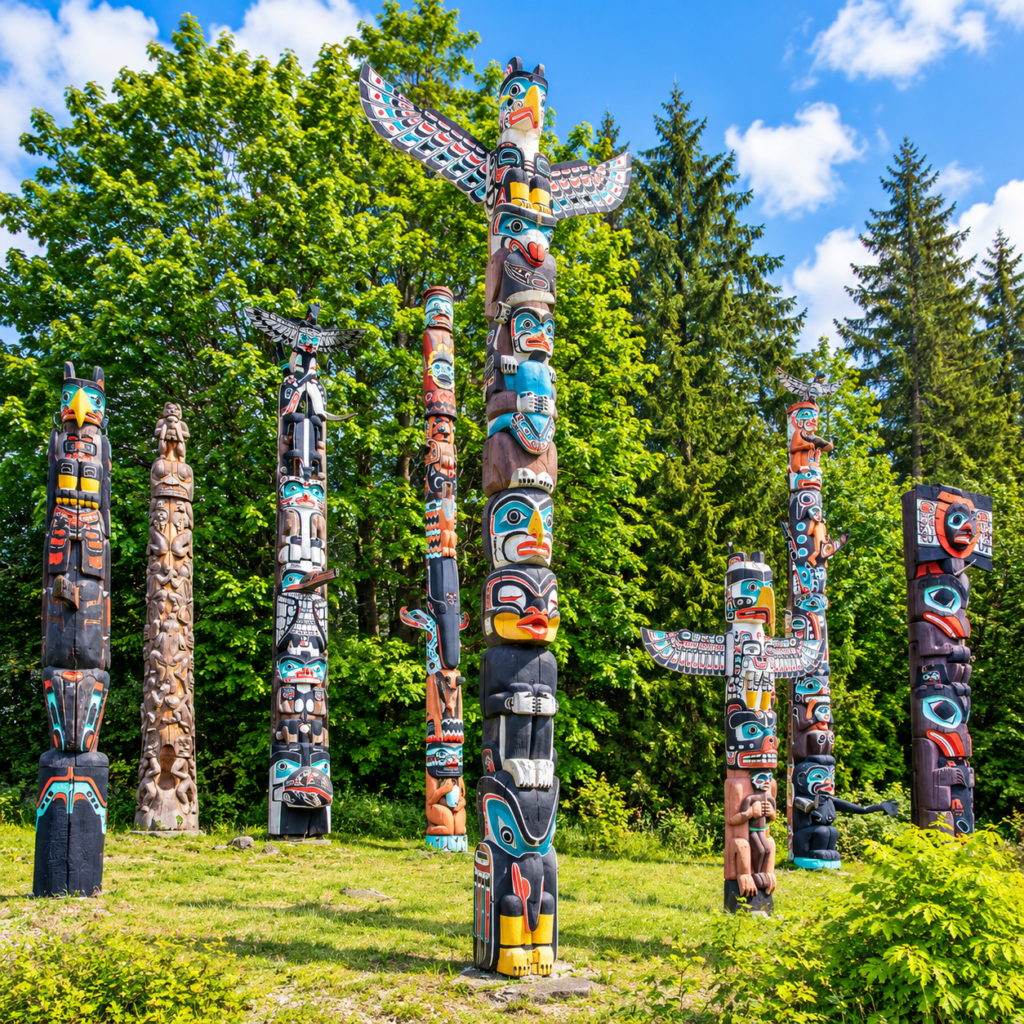
Canada is a highly diverse society. Cities such as Toronto, Vancouver, and Montreal have strong cultural influences from South Asian, Chinese, French, European, and other communities. Indigenous peoples also contribute their own traditions and arts. In 1971, Canada adopted multiculturalism as an official national policy.
Daily Life and Social Customs
Canada does not have one single national lifestyle. English and French are the official languages, with French influence particularly strong in Quebec and New Brunswick. Indigenous and immigrant communities maintain distinctive traditions while being part of Canadian society. Canada Day is celebrated on July 1.
Canadian Food Culture
Canadian food culture reflects the country’s diversity. Quebec is known for poutine and tourtière, while Canadian cities offer South Asian, Chinese, Italian, and many other cuisines. Quebec is also a major maple syrup producer.

Indigenous Culture
Indigenous peoples maintain distinctive traditions in stone and bone sculpture, basketmaking, carving, festivals, and ceremonies. Their cultural traditions have also gained greater social and political recognition.
Canadian Literature
Canadian literature developed in both English and French. Early writers included Marc Lescarbot and Thomas Haliburton. Later internationally recognized writers include Margaret Atwood, Alice Munro, Michael Ondaatje, Rohinton Mistry, and Robertson Davies. Canadian poetry and Indigenous literature have also developed significantly.
Canadian Theatre
Canadian theatre grew significantly during the 20th century. The Stratford Festival, founded in 1953, became famous for Shakespeare productions, while the Shaw Festival presents works by George Bernard Shaw and his contemporaries. Toronto also became known for improvisational comedy.
Canadian Visual Arts
Canadian visual arts include Indigenous art, painting, sculpture, crafts, and modern artistic forms. Artists increasingly focused on Canadian landscapes and life. The Group of Seven, including A.Y. Jackson and associated with Tom Thomson, played an important role in developing a distinctive Canadian landscape style.
Music in Canada
Canada has strong traditions in classical, opera, choral, jazz, rock, pop, and country music. Well-known Canadian or Canada-associated musicians include Glenn Gould, Oscar Peterson, Neil Young, Joni Mitchell, Leonard Cohen, Céline Dion, Bryan Adams, Shania Twain, Alanis Morissette, and Sarah McLachlan.
Ballet and Dance
Major Canadian professional ballet companies include the Royal Winnipeg Ballet, National Ballet of Canada, and Les Grands Ballets Canadiens. The National Ballet of Canada is one of the country’s major internationally travelling ballet companies.
Canadian Film Industry
Canadian actors, directors, and technicians have contributed to Canadian and international cinema. Notable names include Jim Carrey, Mike Myers, Norman Jewison, David Cronenberg, Atom Egoyan, and Denys Arcand. The National Film Board of Canada, established in 1939, helped promote Canadian filmmaking and documentary production.
Museums and Cultural Institutions
Canada has many museums, galleries, libraries, and cultural institutions. The National Gallery of Canada, Royal Ontario Museum, Canadian War Museum, Maritime Museum of the Atlantic, Point à Callière, and Museum of Anthropology preserve Canadian history, Indigenous heritage, art, and cultural artifacts.
Sports in Canada
Sports are an important part of Canadian society. Ice hockey is one of Canada’s most important sporting traditions. Other popular sports and outdoor activities include lacrosse, curling, Canadian football, baseball, basketball, skiing, fishing, hunting, skating, and canoeing. Wayne Gretzky and Gord Howe are among Canada’s most famous hockey players.
14. Olympics
Canada has participated in the Olympics since 1904, except for the 1980 Moscow Summer Olympics. Canada has hosted the 1976 Montreal Summer Olympics, 1988 Calgary Winter Olympics, and 2010 Vancouver Winter Olympics.
National Parks and Nature
Canada’s natural environment is an important part of its culture and recreation. Banff National Park, established in 1885, is one of the country’s best-known parks. Canada’s parks provide opportunities for hiking, camping, tourism, wildlife viewing, and outdoor recreation.
Newspapers and Publishing
Canada has a large newspaper and publishing industry. Major newspapers include The Globe and Mail, National Post, Toronto Star, Edmonton Journal, Vancouver Sun, Winnipeg Free Press, La Presse, and Le Devoir. The Canadian Press is an important news-gathering organization. Publishing is centred mainly in Toronto for English-language books and Montreal for French-language publishing.
Broadcasting and Television
Broadcasting helps connect Canada’s large and diverse population. The CBC provides English and French radio, television, news, documentaries, cultural programming, and northern services. Private broadcasters such as CTV also operate across Canada. Broadcasting is regulated by the CRTC, including requirements related to Canadian-origin content.
Final Verdict
Canada’s culture and society are shaped by diversity, history, and the interaction of many communities. Indigenous heritage forms an important part of Canada’s history and identity, while French and British influences, immigration, multiculturalism, and regional traditions have contributed to modern Canadian society. English and French remain the country’s official languages, while hundreds of other languages are spoken across Canadian communities.
Canadian culture can also be experienced through its food, literature, music, theatre, film, visual arts, sports, festivals, national parks, museums, and broadcasting. There is no single definition of what it means to be Canadian; instead, Canadian identity brings together different histories, languages, cultures, traditions, and experiences. This combination of diversity and shared national institutions continues to shape Canadian society today.
Table of Contents

Leave a Reply