Canada’s Political System 2026
Introduction
Canada’s political system combines federal, provincial, territorial and municipal governments, each with different responsibilities. Federal politics influences national economic policy, immigration, defence, international relations and federal taxation, while provinces and territories play major roles in healthcare, education and many public services. Municipal governments manage local matters such as zoning, public transit, roads and community planning, under powers granted by provincial legislation.
In October 2026, important political discussions include affordability, housing supply, trade tensions with the United States, national infrastructure, defence spending, Indigenous rights and debates about provincial autonomy. The federal government’s stated foreign-policy priorities also include strengthening economic resilience, diversifying trade and working with trusted international partners.
guide covers eight key areas of Canadian politics: federal politics, provincial politics, municipal government, elections and voting, Parliament, political parties, Indigenous affairs and foreign policy.
Federal Politics
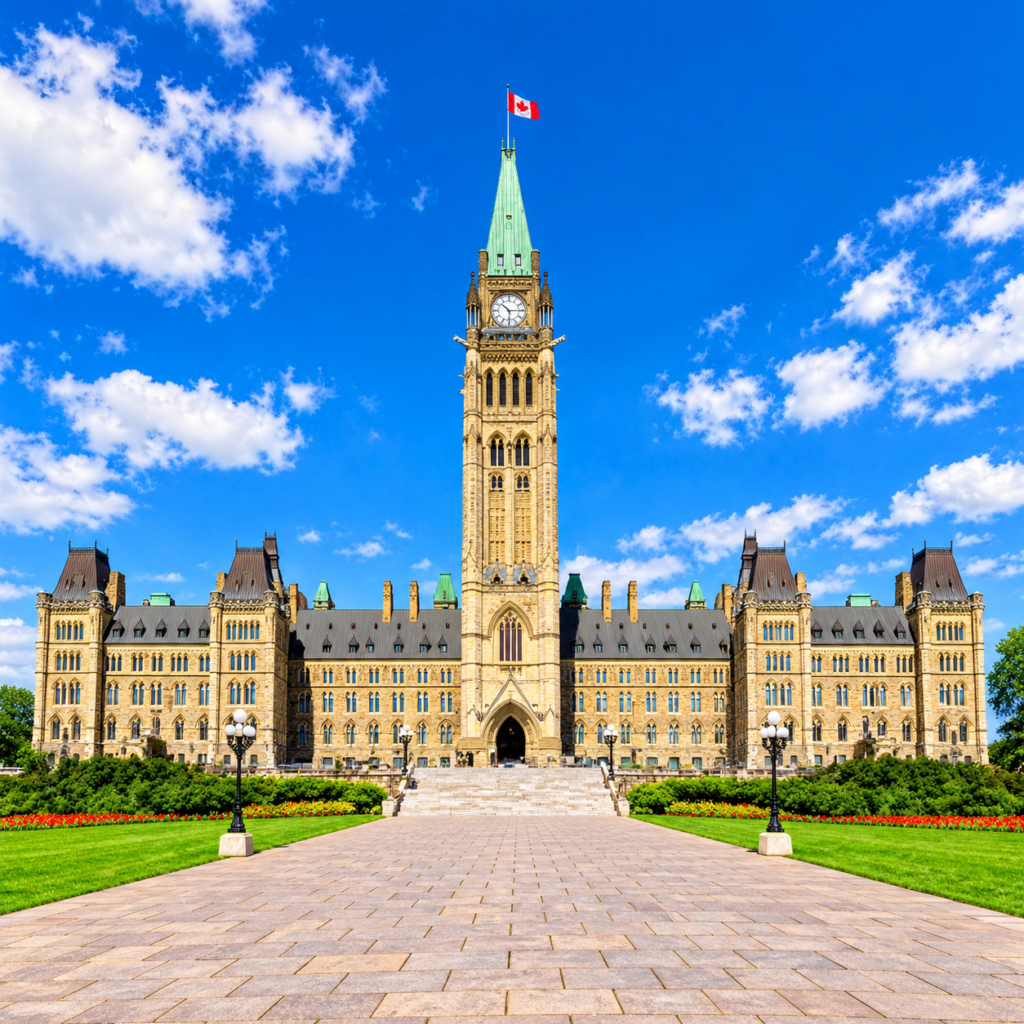
What are the main responsibilities of Canada’s federal government?
Canada’s federal government is responsible for national matters such as defence, citizenship and immigration, criminal law, federal taxation, international relations, border policy and trade between countries. It also shares responsibilities with provinces and territories in areas such as healthcare funding, environmental policy and infrastructure. The division of powers is established by Canada’s Constitution, although governments often need to cooperate to deliver services effectively.
What are the key political priorities of the Canadian federal government?
Major priorities include economic growth, affordability, housing supply, immigration management, national security, trade diversification and infrastructure development. The government has also emphasized strengthening Canada’s economic relationship with the United States while expanding trade with other partners. Political priorities can change as economic conditions, parliamentary debates and international events evolve.
How does the Prime Minister of Canada exercise executive power?
The Prime Minister leads the federal government, selects Cabinet ministers, sets broad policy direction and coordinates the work of government departments. In Canada’s parliamentary system, the Prime Minister normally remains in office while able to command the confidence of the House of Commons. Executive authority is exercised through constitutional conventions, legislation, Cabinet decisions and the Crown’s formal constitutional framework not through the Prime Minister acting alone.
How are federal policies affecting housing, healthcare and the cost of living?
Federal policy can affect housing through funding, tax measures, housing programs and cooperation with provinces and municipalities. Healthcare is mainly administered by provinces and territories, but federal funding and national agreements can influence access to services and priorities such as pharmacare. Cost-of-living policy may involve taxation, benefits, competition, infrastructure, energy and affordability measures; the actual effect depends on implementation and economic conditions.
What role does the federal Cabinet play in developing and implementing government policies?
Cabinet is made up of the Prime Minister and appointed ministers who lead federal departments and portfolios. Cabinet discusses major policy proposals, spending priorities and legislative plans, and ministers are collectively responsible for government decisions under the principle of Cabinet solidarity. Individual departments then develop programs, administer laws and implement approved policies, subject to parliamentary scrutiny and legal requirements.
How does the federal government manage Canada’s economy, immigration and national security?
The federal government uses fiscal policy, taxation, federal spending, trade negotiations and regulation to influence economic conditions. Immigration policy establishes many national eligibility and admission rules, while provinces and territories also play roles in selecting newcomers and delivering settlement services. National security involves federal agencies, border and law-enforcement bodies, intelligence work, defence policy and cooperation with domestic and international partners.
How do federal-provincial relations influence major policy decisions in Canada?
Federal-provincial relations matter because many policy areas require more than one level of government. The federal government may provide funding or establish national objectives, while provinces and territories administer services or determine how to implement programs within their jurisdiction. Disagreements can arise over funding, resource development, immigration, climate policy and constitutional powers, making negotiations and intergovernmental agreements important tools of Canadian governance.
What are the major political challenges facing Canada’s federal government?
Major challenges include housing affordability, pressure on public services, economic uncertainty, trade tensions, labour-market needs and balancing national priorities with provincial interests. The government must also respond to defence and Arctic security concerns, Indigenous rights and public expectations about accountability. Political divisions over taxation, energy, immigration and the size of government can make it harder to secure support for legislation and long-term plans.
Provincial Politics
How do provincial governments operate in Canada?
Each province has an elected legislature and a provincial government led by a premier. The premier is usually the leader of the party that can command the confidence of the legislature. Provincial governments introduce budgets and legislation, administer public services and make decisions within their constitutional responsibilities. The territories have their own governments as well, with powers established through federal legislation and devolution arrangements.
What powers do Canadian premiers have within their respective provinces?
Premiers lead provincial governments, appoint Cabinet ministers, set policy priorities and coordinate government departments. They influence budgets, provincial legislation, public-sector planning and negotiations with the federal government. Their authority is not unlimited: provincial laws must comply with the Constitution, and premiers remain accountable to their legislatures, courts, voters and other legal oversight mechanisms.
How do provincial governments influence healthcare, education and housing policies?
Provinces and territories have primary responsibility for organizing healthcare systems, public education and many housing-related regulations. They fund and administer hospitals, schools, professional licensing, landlord-tenant rules and building standards within their jurisdictions. Federal transfers and joint programs can support these services, but provincial decisions strongly influence how policies are delivered locally.
What are the major political issues affecting Canadian provinces?
Common issues include housing affordability, healthcare waiting times, education funding, energy development, infrastructure, taxation and the cost of living. Regional concerns differ: resource development and federal-provincial relations are especially prominent in Alberta, while housing and transportation pressures are major issues in British Columbia and Ontario. Quebec also has distinctive debates about language, identity, immigration and provincial autonomy.
How do provincial budgets affect public services, taxes and infrastructure?
Provincial budgets set spending and revenue plans for healthcare, education, social assistance, transportation, housing and other services. A budget can introduce tax changes, allocate money to construction projects, adjust benefits or change funding for public institutions. Deficits and debt-service costs can restrict future spending, while revenue growth and federal transfers can give governments more room to invest.
How do provincial governments work with the federal government on immigration and economic development?
Provinces collaborate with the federal government through Provincial Nominee Programs, labour-market initiatives, infrastructure agreements and economic development projects. Under PNP arrangements, provinces and territories can nominate eligible candidates according to their regional needs, while the federal government makes the final decision on permanent residence. Governments may also coordinate on skills training, business investment, transportation and regional development.
What role do provincial legislatures play in passing laws and holding governments accountable?
Provincial legislatures debate bills, examine budgets, question ministers and review government actions through committees. Most government bills must pass the required legislative stages and receive Royal Assent before becoming law. Opposition members can challenge government proposals, request information and draw attention to concerns, while question periods and committee hearings provide public accountability.
How do political priorities differ among Ontario, Alberta, British Columbia and Quebec?
Ontario’s debates often focus on housing, healthcare, transportation, manufacturing and the economy. Alberta’s political priorities frequently include oil and gas, energy policy, provincial autonomy and relations with Ottawa. British Columbia places significant attention on housing, public transit, healthcare, forestry and climate-related risks. Quebec has its own political landscape, with language policy, secularism, immigration, economic development and sovereignty debates playing distinctive roles.
In October 2026, Quebec politics has been reshaped by the Parti Québécois’ recent election victory, while Alberta faces a scheduled October 19 vote related to whether to pursue a separation referendum. These developments reflect ongoing debates about provincial identity and the federation, but neither event by itself changes Canada’s constitutional structure.
Municipal & Local Politics
What responsibilities do municipal governments have in Canada?
Municipal governments manage local services such as roads, water and wastewater systems, garbage collection, parks, recreation facilities, local planning and many public transit systems. Their responsibilities vary according to provincial legislation and local arrangements. Municipalities generally do not have the same constitutional status as the federal and provincial governments; their powers are granted and regulated by their provinces or territories.
How do Canadian mayors and city councils make local policy decisions?
Mayors and councillors consider local concerns, propose policy changes, review staff recommendations and vote on budgets, bylaws and development decisions. The precise division of authority between a mayor and council varies by province and municipality. Many decisions involve public meetings, consultation with residents, technical reports and recommendations from municipal staff.
What powers do municipalities have over zoning, housing development and building permits?
Municipalities commonly use official plans, zoning bylaws, development approvals and building permits to regulate how land can be used and what can be built. These rules affect housing density, building height, parking, commercial areas and neighbourhood design. Provincial governments can change planning legislation, set housing targets or override certain local rules, so municipal powers differ across Canada.
How are local governments addressing homelessness and affordable housing?
Municipal responses may include supportive housing, emergency shelters, outreach services, affordable housing projects and partnerships with nonprofit organizations. Some cities also revise zoning rules or speed up approvals to support additional housing construction. Long-term results depend on available funding, housing supply, mental-health and addiction services, and cooperation among municipal, provincial and federal governments.
How do municipal taxes and property taxes fund local services?
Property taxes are a major source of municipal revenue and help pay for services such as local roads, fire protection, parks, libraries and community facilities. Municipalities may also receive provincial transfers, user fees, development charges and other revenues permitted by law. The amount a property owner pays depends on local tax rates, the assessed property value and the municipality’s budget requirements.
What role do city councils play in public transit, road maintenance and community infrastructure?
City councils approve budgets and major plans for transit, road repairs, cycling infrastructure, sidewalks, water systems and public spaces. Councillors weigh project costs, service needs, traffic patterns, accessibility, environmental impacts and long-term maintenance. Major transportation projects may require cooperation and funding from provincial or federal governments.
How can residents participate in municipal meetings and influence local decisions?
Residents can attend council meetings, speak at public hearings, submit written comments, contact elected representatives and participate in consultations. Many municipalities publish agendas, staff reports, proposed bylaws and meeting recordings online. Residents can also vote in municipal elections, join neighbourhood associations and provide feedback during official planning processes.
How do provincial laws and funding affect the powers of Canadian municipalities?
Provincial legislation establishes municipal powers, election rules, planning frameworks and many financial authorities. Provinces can require municipalities to meet particular standards, change their boundaries or governance structures, and determine how certain services are funded. Federal and provincial grants may help pay for transit, housing and infrastructure, but the conditions attached to that funding can shape local priorities.
Elections & Voting
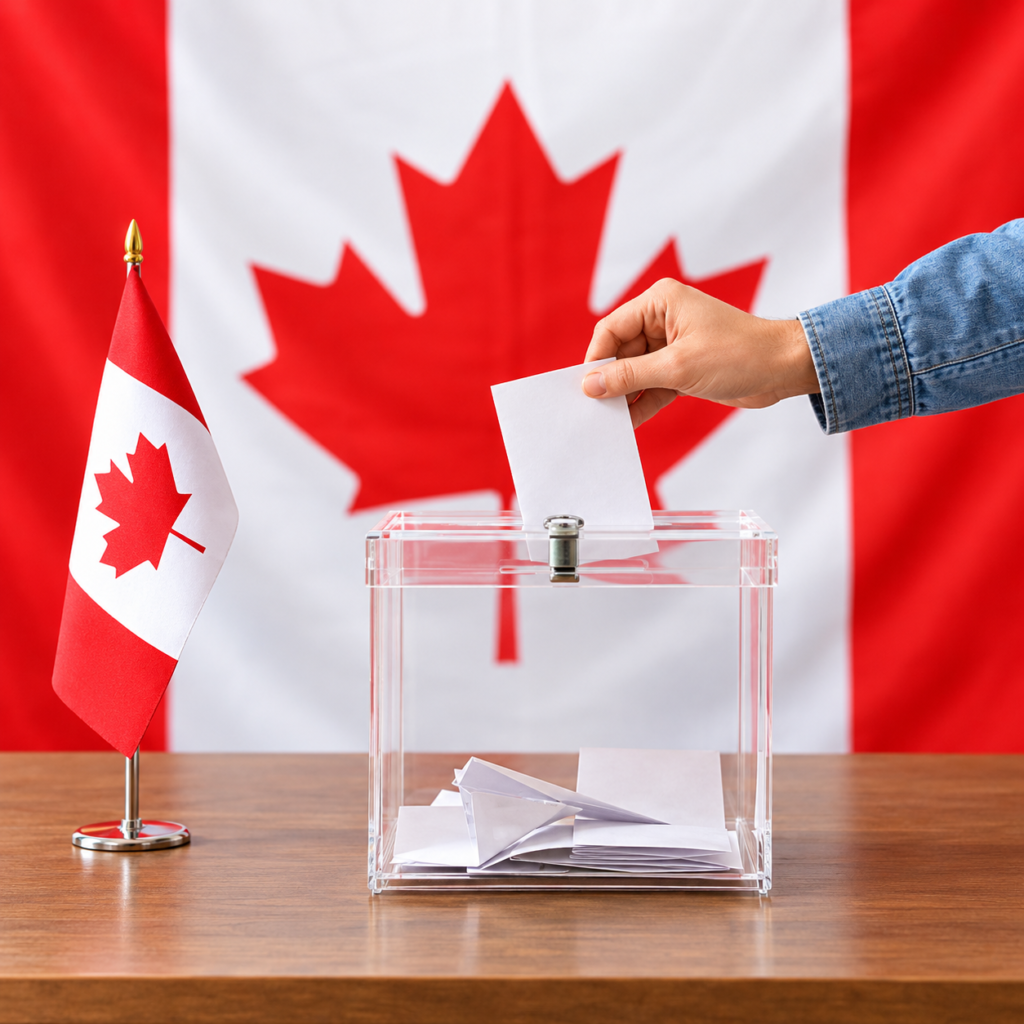
How does Canada’s federal election system work?
Canada uses a parliamentary system in which voters elect Members of Parliament to represent individual electoral districts, known as ridings. The party or group able to command the confidence of the House of Commons forms the government, usually under a party leader who becomes Prime Minister. A party does not need to win more than half of all votes nationwide to win a majority of seats.
Who is eligible to vote in Canadian federal, provincial and municipal elections?
For federal elections, a voter generally must be a Canadian citizen and at least 18 years old on election day. Provincial, territorial and municipal elections have their own eligibility and residency rules, though citizenship and age requirements are common. Permanent residents and temporary residents cannot vote in federal elections, and local voting eligibility should be confirmed with the relevant election authority.
How does Canada’s first-past-the-post voting system determine election winners?
In federal elections, the candidate who receives the most votes in a riding wins that seat, even if they receive less than 50% of the vote. This is called the first-past-the-post system. The total number of seats each party wins determines its strength in the House of Commons, which can differ significantly from each party’s share of the national popular vote.
What is the role of Elections Canada in organizing federal elections?
Elections Canada is an independent, non-partisan agency responsible for administering federal elections and referendums. It maintains the National Register of Electors, organizes polling operations, provides voter information, enforces federal election rules and reports official results. It also provides information about accessibility, voting options and registration.
How can Canadians register to vote and find their assigned polling station?
Eligible voters can check their registration and use Elections Canada’s official website to find information about where and how to vote. A voter information card usually provides the assigned polling location and election details, but voters should verify information through official channels if they have not received one or their address has changed. Registration and identification requirements depend on the voting method being used.
What are the main differences between federal, provincial and municipal elections?
Federal elections choose Members of Parliament for the House of Commons, while provincial elections choose representatives for provincial legislatures. Municipal elections select mayors, councillors and, in some jurisdictions, school board trustees. The issues, candidates, election calendars and administrative rules differ, and voting in one election does not automatically determine who wins at another level.
How are political parties, campaign financing and election advertising regulated in Canada?
Federal political financing and election advertising are governed by the Canada Elections Act and administered by Elections Canada. The rules address contributions, spending limits, reporting, third-party advertising and disclosure requirements. Provinces and territories have their own election laws for provincial and municipal contests. Exact limits and reporting obligations can change, so parties, candidates and advertisers should consult the relevant election authority.
What measures are in place to protect election integrity and public confidence in Canadian elections?
Safeguards include voter registration, identification rules, controlled ballot handling, counting procedures, election observers and legal oversight. Elections Canada provides non-partisan information and investigates potential violations under its authority. Public confidence also depends on accessible voting, transparent results, media literacy and the public’s ability to verify election information through reliable sources.
Parliament Updates
What are the latest developments in the Parliament of Canada?
Canada’s 45th Parliament, 1st session, continues to consider legislation covering economic development, housing, public safety, immigration and other national issues. As of October 2026, the government’s Building Canada Strong Act (Bill C-39) is at second reading in the House of Commons, while the Lawful Access Act (Bill C-22) is at second reading in the Senate. Parliament’s official LEGISinfo website provides the latest bill stages and activity.
How does a bill become law in the Canadian Parliament?
A bill is introduced in the House of Commons or Senate and proceeds through readings, debate and committee examination. The committee may study the proposal, hear witnesses and recommend amendments. Both chambers generally must approve the same text before Royal Assent is granted, at which point the bill becomes law, either immediately or on a date specified in the legislation.
What roles do the House of Commons and the Senate play in passing legislation?
The House of Commons is the elected chamber, where Members of Parliament debate legislation, represent constituents and hold the government accountable. The Senate reviews bills, proposes amendments and provides an additional stage of legislative scrutiny. Most federal bills must pass both chambers in the same form before receiving Royal Assent, although constitutional rules differ for certain financial measures.
How do parliamentary debates and question period hold the government accountable?
During debates, MPs can challenge proposed legislation, present arguments and raise concerns affecting their constituents. Question period gives opposition MPs and other members an opportunity to question ministers about government decisions, public spending and emerging issues. These proceedings are recorded and publicly available, allowing journalists and citizens to examine government explanations and political disagreements.
What are parliamentary committees, and how do they examine government policies?
Parliamentary committees are groups of MPs or senators assigned to examine legislation, departmental spending and specific policy issues. They may invite experts, officials, stakeholders and members of the public to provide evidence. Committees can recommend amendments and publish reports, helping parliamentarians investigate issues in greater detail than is usually possible during full-chamber debates.
How can Canadians track proposed legislation, bills and parliamentary votes?
Canadians can use Parliament of Canada’s LEGISinfo to search bills, review their status and follow major legislative stages. The Parliament website also provides House and Senate proceedings, committee meetings, voting records and published reports. Checking the bill’s current status is important because a proposal may be amended, delayed, defeated or passed after its introduction.
What happens when the federal government loses the confidence of the House of Commons?
If the government loses a confidence vote, it generally must resign or seek dissolution of Parliament and an election, subject to constitutional conventions and the Governor General’s role. Confidence can be tested through an explicit motion or certain votes, including key budgetary matters. A government that lacks confidence cannot normally continue governing indefinitely as if it retained the support of the elected chamber.
How do parliamentary decisions affect immigration, housing, healthcare, taxation and the Canadian economy?
Parliament passes federal laws, approves government spending and scrutinizes policies that affect these areas. Immigration legislation and funding can influence entry programs and settlement support; housing legislation can authorize funding or establish national initiatives; and tax and budget bills can change household and business finances. Healthcare delivery is largely provincial, but federal legislation, transfers and agreements can influence national health priorities.
Political Parties
What are the major political parties in Canada, and what are their general policy positions?
Major federal parties include the Liberal Party of Canada, Conservative Party of Canada, New Democratic Party (NDP), Bloc Québécois and Green Party of Canada. Their platforms differ on taxation, public spending, climate policy, social programs, energy, immigration and federal-provincial relations. Party positions can evolve, so voters should review current platforms and parliamentary records instead of relying solely on broad labels.
How do the Liberal Party and Conservative Party differ on major federal policy issues?
The Liberal Party has generally supported a more active federal role in social programs, climate policy and targeted economic support. The Conservative Party has generally emphasized lower taxes, fiscal restraint, private-sector growth, public safety and reducing regulatory burdens. These are broad tendencies, not complete descriptions of every policy; the parties’ current proposals and voting records are the best way to compare their approaches.
What are the New Democratic Party’s main policy priorities?
The NDP has traditionally emphasized public healthcare, workers’ rights, affordable housing, social assistance, stronger public services and reducing economic inequality. It often advocates measures intended to improve affordability for lower- and middle-income households. Its precise commitments depend on its current platform, leadership and parliamentary strategy.
What role does the Bloc Québécois play in Canadian federal politics?
The Bloc Québécois represents Quebec-focused interests in the federal Parliament and supports Quebec sovereignty. It can influence legislation and government decisions when its seats are important to parliamentary votes. Its MPs often focus on provincial jurisdiction, Quebec’s language and cultural priorities, fiscal arrangements and federal policies that affect Quebec.
What are the Green Party of Canada’s key policy priorities?
The Green Party generally prioritizes climate action, environmental protection, renewable energy, biodiversity and sustainable economic development. It has also promoted social justice, democratic reform and stronger environmental standards. Its specific commitments should be assessed through the party’s current policy statements and election platform.
How do political parties select their leaders and nominate election candidates?
Federal parties use their own constitutions and internal rules to select leaders, often through a leadership contest involving members or registered supporters. Local party associations generally participate in nominating candidates for individual ridings, subject to party rules and applicable election law. Elections Canada administers federal election requirements, but it does not choose a party’s leader or decide its internal political platform.
How do party platforms influence government policy after an election?
A party platform sets out the policies and commitments it intends to pursue if elected. A governing party may use its platform to guide budgets, legislation and departmental priorities, but implementation depends on available funding, legal requirements, negotiations and parliamentary support. In a minority Parliament, the government may need to amend proposals or negotiate with opposition parties to pass legislation.
How do opposition parties scrutinize government decisions and propose alternative policies?
Opposition parties question ministers, debate bills, examine spending and participate in parliamentary committees. They can propose amendments, introduce private members’ bills and present alternative policy plans. Their scrutiny can reveal weaknesses in government proposals and give voters a clearer choice between competing approaches.
Indigenous Affairs
What are the major Indigenous affairs issues in Canadian politics?
Major issues include treaty rights, land claims, self-government, access to clean drinking water, housing, education, healthcare and economic development. Governments also face ongoing demands for accountability regarding residential schools, missing and murdered Indigenous women and girls, and the implementation of reconciliation commitments. Priorities differ among First Nations, Inuit and Métis communities, which have distinct histories, rights and governance arrangements.
What is the relationship between First Nations, Inuit and Métis peoples and the Canadian government?
First Nations, Inuit and Métis peoples are distinct Indigenous peoples with different histories, cultures, political organizations and legal relationships with Canada. Section 35 of the Constitution Act, 1982 recognizes and affirms existing Aboriginal and treaty rights. The federal government has particular responsibilities in Indigenous affairs, while provinces and territories also influence services, land use, resource development and other matters.
How do treaties and modern land agreements shape Indigenous rights in Canada?
Historic treaties and modern agreements can establish rights and obligations involving land, resources, governance, harvesting and financial arrangements. Modern treaties may also define self-government powers and the responsibilities of Indigenous governments, Canada and provincial or territorial governments. The terms vary considerably, so the rights involved must be assessed using the specific agreement and applicable law.
What is the significance of the Truth and Reconciliation Commission’s Calls to Action?
The Truth and Reconciliation Commission published 94 Calls to Action in 2015 to address the legacy of residential schools and advance reconciliation. The recommendations cover child welfare, education, language and culture, health, justice, professional training and other areas. Governments, institutions and organizations have taken steps in response, but progress remains uneven and many calls require sustained implementation and public accountability.
How are federal and provincial governments addressing Indigenous housing, healthcare and education needs?
Governments use funding programs, community infrastructure projects, health services, education agreements and housing initiatives to address needs. The federal government provides support through Indigenous Services Canada, Crown-Indigenous Relations and Northern Affairs Canada and other departments, while provinces and territories also deliver many public services. Persistent gaps in housing quality, water infrastructure, healthcare access and educational outcomes remain significant policy challenges.
What role do Indigenous governments and leadership organizations play in political decision-making?
Indigenous governments, elected leaders, hereditary leadership structures and representative organizations participate in negotiations, consultations and policy development, depending on the community and issue. They may advocate for treaty rights, self-government, funding, resource agreements and community priorities. Their authority and representative roles vary; governments should engage the appropriate rights holders and organizations rather than assume one organization speaks for all Indigenous peoples.
How do natural resource projects affect Indigenous land rights and consultation processes?
Mining, pipelines, forestry, hydroelectricity and other projects can affect Indigenous lands, waters, harvesting activities and cultural sites. Governments have a legal duty to consult Indigenous peoples when contemplated Crown conduct may adversely affect asserted or established Aboriginal or treaty rights; the depth of consultation depends on the circumstances. Consultation is not automatically the same as consent, but specific treaties, laws and international standards may impose additional obligations. Project decisions can also involve negotiations, impact assessments and court proceedings.
What progress and challenges remain in advancing reconciliation between Indigenous peoples and Canadian governments?
Progress includes formal apologies, settlement agreements, community-led initiatives, greater public awareness and measures intended to support Indigenous languages, governance and services. Challenges include persistent socioeconomic gaps, disputes over land and resources, implementation delays and the long-term effects of colonial policies. Reconciliation requires more than symbolic recognition: it involves sustained action, respect for rights, transparent reporting and meaningful participation by Indigenous communities.
Foreign Policy
What are the main priorities of Canada’s foreign policy?
Canada’s foreign-policy priorities include protecting national security, strengthening economic resilience, diversifying trade, supporting trusted allies and contributing to international peace and stability. The government’s 2026–2027 departmental plan emphasizes a renewed economic and security relationship with the United States, stronger engagement with Europe and the Indo-Pacific, Arctic security and support for Ukraine. It also identifies humanitarian assistance and efforts toward a two-state solution to the Israeli-Palestinian conflict as priorities.
How do Canada-US relations influence trade, border security and economic cooperation?
The United States is Canada’s most important trading partner, and the two countries are closely connected through supply chains, manufacturing, energy, agriculture and cross-border communities. Trade disputes and tariffs can affect Canadian exporters, workers and consumers, while border and security cooperation influences travel and the movement of goods. Canada’s current policy aims to manage the relationship while diversifying trade and preparing for the review of the Canada–United States–Mexico Agreement.
How is Canada managing diplomatic and trade relations with China and other Indo-Pacific countries?
Canada seeks to balance trade opportunities with concerns about security, foreign interference, human rights and economic dependence. Its Indo-Pacific approach includes strengthening ties with partners, expanding market access and supporting regional security and stability. The government’s stated trade-diversification agenda aims to double Canada’s non-U.S. exports within a decade, with greater engagement in the Indo-Pacific forming part of that strategy.
What role does Canada play in NATO and international security cooperation?
Canada is a founding NATO member and contributes to collective defence, military readiness, training and allied security operations. The federal government has said it is increasing defence investment and working toward NATO’s commitment to raise defence and security-related spending to 5% of GDP by 2035, under the alliance’s agreed framework. Canada also cooperates with allies on Arctic security, Ukraine support and emerging threats.
How does Canada approach its diplomatic, humanitarian and economic relationships with Middle Eastern countries?
Canada engages Middle Eastern countries through diplomacy, trade, security cooperation and humanitarian assistance. Its approach varies by country and issue, reflecting economic relationships, regional stability, human rights concerns and security risks. The government has also stated its support for a two-state solution to the Israeli-Palestinian conflict and for humanitarian, stabilization and reconstruction efforts related to Gaza.
How do international conflicts and geopolitical tensions affect Canada’s security and economy?
International conflicts can disrupt energy markets, shipping routes, supply chains and trade, potentially raising costs for Canadian businesses and households. They can also create cybersecurity threats, risks of foreign interference and pressure for increased defence spending. Canada responds through diplomacy, sanctions where applicable, intelligence cooperation, military partnerships and efforts to diversify trade and supply chains.
What role does Canada play in the United Nations and other international organizations?
Canada participates in the United Nations, NATO, the G7, the G20, the World Trade Organization and other international bodies. Through these organizations, it works on issues such as security, trade, development, public health, climate change and international law. Membership gives Canada opportunities to negotiate common rules and cooperate with other states, although international outcomes depend on the decisions and interests of many participants.
How does Canada balance international trade, human rights, national security and climate commitments in its foreign policy?
Canada often has to balance economic opportunities against security concerns, human rights obligations and environmental commitments. For example, trade with a major market may support jobs while raising questions about strategic dependence or labour standards. The government uses diplomacy, trade rules, sanctions, investment reviews and climate policies to manage these competing objectives, but decisions can involve difficult trade-offs and public disagreement.
Final Verdict
Canada’s political system distributes authority across several levels of government, which means major issues such as housing, healthcare, immigration, affordability and infrastructure often require coordination rather than a single decision-maker. Federal politics shapes national policy and international relations, provincial governments administer many essential services, and municipalities influence the daily experience of residents through planning and local infrastructure.
In October 2026, debates over trade, economic resilience, national unity, Indigenous rights, defence and provincial autonomy remain important to understanding Canadian politics. Citizens can follow these issues through official parliamentary records, election authorities, government announcements and credible reporting.
For accurate political coverage, distinguish between a proposed policy, a bill under debate, a law that has received Royal Assent and a program that is already in effect. These are different stages, and reporting them correctly helps readers understand what has actually changed.
Table of Contents

Leave a Reply