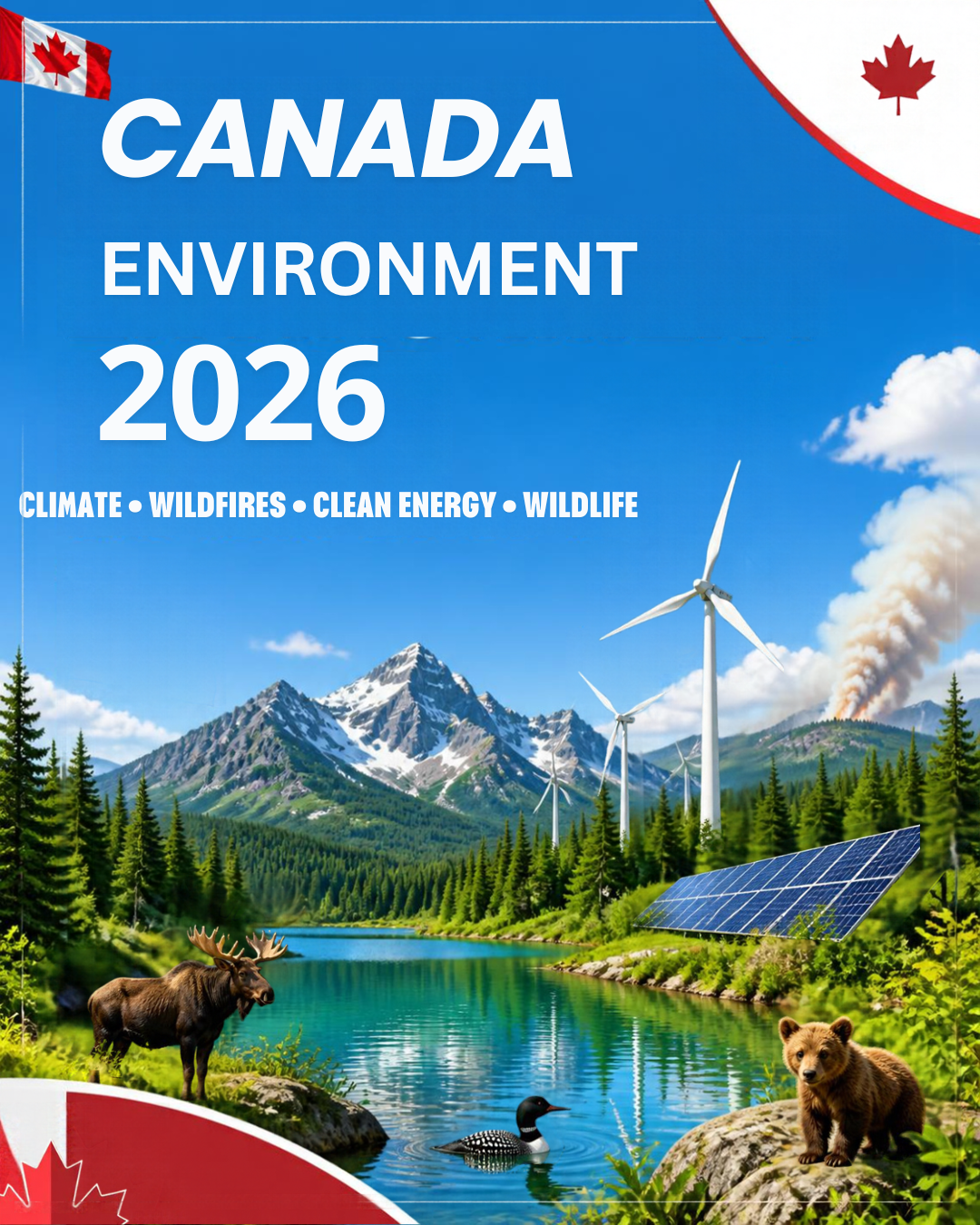
Canada Environment 2026
Introduction:
Canada’s environment in 2026 faces major challenges and promising opportunities, from rising wildfire risks and Arctic warming to pollution, wildlife conservation and the transition to clean energy. Changes in climate policy, industrial carbon pricing and renewable electricity are shaping the country’s environmental future. This guide explores Canada’s key environmental issues, including emissions reduction, natural disasters, freshwater protection, biodiversity and Indigenous-led conservation, highlighting the progress achieved, the challenges that remain and the actions needed to build a cleaner, safer and more sustainable future.
Carbon Tax & Policy
What is the current status of Canada’s carbon-pricing policy?
Canada’s carbon pricing system has changed significantly. The federal consumer fuel charge was set to zero effective April 1, 2025, while industrial carbon pricing remains an important part of federal and provincial climate policy. Industrial systems apply to emissions from large facilities and are intended to encourage pollution reductions while maintaining economic competitiveness.
How has Canada’s approach to consumer carbon pricing changed?
The federal government removed the consumer fuel charge in April 2025, ending the direct federal charge on fuels such as gasoline and natural gas used by households. The federal government also eliminated the associated Canada Carbon Rebate for individuals. Climate policy now places greater emphasis on industrial emissions pricing, clean-energy investment and other measures to reduce greenhouse gas emissions.
How does industrial carbon pricing work in Canada?
Industrial carbon pricing generally applies to large facilities that produce substantial greenhouse gas emissions. Facilities may face a cost when emissions exceed an established limit, while eligible facilities that reduce emissions can benefit from improved compliance positions or tradable credits, depending on the system. The federal benchmark requires provincial and territorial systems to meet minimum standards. The federal headline price trajectory is C 95 pertonnein 2026 and isscheduled to reach C115 per tonne in 2030.
How do climate policies differ across Canadian provinces?
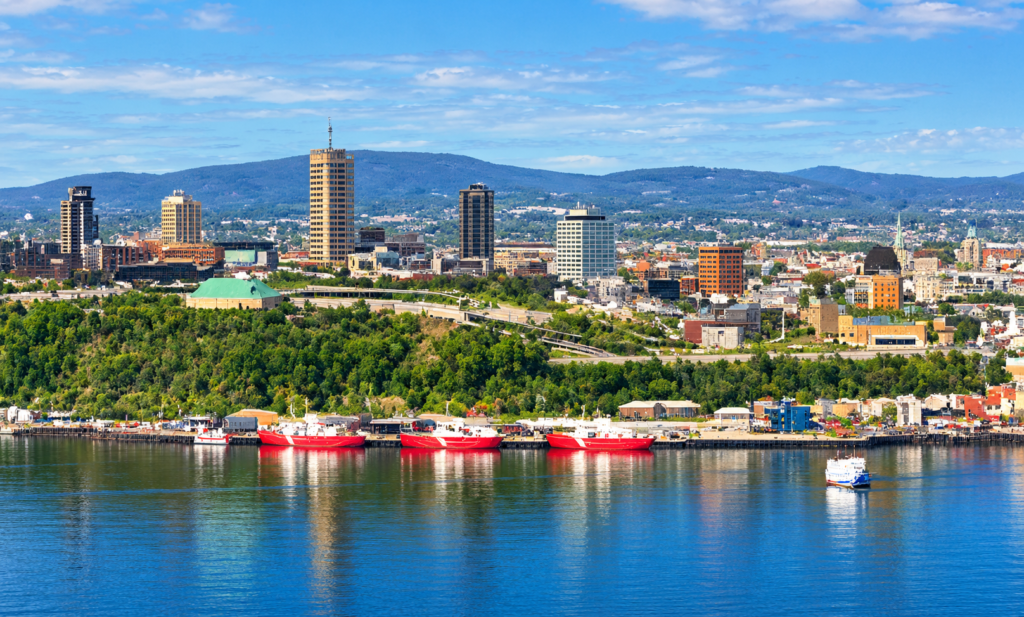
Climate policies vary because provinces have different energy resources, industries and political priorities. Quebec operates a cap and trade system linked to California, while British Columbia has its own industrial carbon-pricing framework. Alberta uses an industrial emissions system, and other provinces apply their own approaches within federal requirements. Differences also exist in renewable energy development, electric-vehicle policies and energy efficiency programmes.
What are Canada’s current climate targets for emissions reduction?
Canada’s stated national targets are to reduce greenhouse gas emissions by 40 45% below 2005 levels by 2030, by 45 50% by 2035, and to achieve net-zero emissions by 2050. These targets guide federal climate planning and are intended to support Canada’s commitments under the Paris Agreement.
How are federal climate policies affecting Canadian businesses?
Climate policies can encourage businesses to improve energy efficiency, adopt cleaner equipment and invest in low emission technologies. Industrial carbon pricing can influence operating costs and investment decisions, particularly in emissions intensive sectors. Businesses may also benefit from opportunities in renewable energy, clean technology and environmental services. The overall effect depends on each company’s emissions, access to technology, available incentives and exposure to international competition.
How are climate policies affecting Canadian households and consumers?
Households are affected through energy efficiency programmes, building standards, transportation policies and changes in the availability of cleaner technologies. The removal of the federal consumer fuel charge ended that direct federal fuel-pricing mechanism, but households can still experience energy costs associated with provincial policies and wider market conditions. Home insulation, efficient heating and reduced energy consumption can help families manage costs and lower emissions.
How much progress is Canada making toward its emissions-reduction targets?
Canada has reduced emissions compared with 2005 levels, but the latest federal projections indicate that further reductions are needed. The 2025 progress report estimated emissions at 14% below 2005 levels in 2023. Under the report’s modelling, emissions were projected to be 21% below 2005 levels by 2030 under existing measures, or 28% below with additional modelled measures short of the 40–45% target. These are projections, not final future results.
Wildfires & Natural Disasters
What is the current state of Canada’s wildfire situation?
Wildfires remain a major environmental and emergency-management challenge in Canada. In its August 18, 2026 update, the federal government reported 4,793 fires and approximately 4.1 million hectares burned during the season to that date. Conditions can change quickly, so those figures should be treated as a dated snapshot rather than a live count for October.
What are the main causes of wildfires in Canada?
Wildfires can start through lightning strikes or human activities such as unattended campfires, equipment use and accidental ignition. Dry vegetation, high temperatures, low humidity and strong winds can help fires spread. Climate change is increasing the likelihood of extreme fire weather in many regions by contributing to hotter and, in some places, drier conditions. However, individual fires have different causes, and not every wildfire is directly attributable to climate change.
How is wildfire smoke affecting air quality across Canada?
Wildfire smoke contains fine particulate matter and other pollutants that can travel long distances from the original fire. It can reduce visibility and worsen breathing problems, particularly for people with asthma, heart or lung conditions, older adults and children. Smoke may affect communities far from the flames. Canadians should check local air quality advisories, reduce strenuous outdoor activity during severe smoke events and use cleaner indoor air when possible.
Which Canadian regions face the highest wildfire risks?
British Columbia, Alberta, Saskatchewan, Manitoba, Ontario, Quebec and the northern territories can all experience significant wildfire activity. Risk varies from year to year according to rainfall, vegetation dryness, temperature, wind and lightning. Communities near forests and grasslands may face additional risks where homes, roads and utilities are close to burnable vegetation. Local fire maps and provincial emergency alerts provide the most useful information about immediate threats.
What are the major flood and extreme-weather risks in Canada?
Canada faces river and urban flooding, coastal flooding, heatwaves, severe storms, droughts, ice storms and heavy snowfall. Flooding can occur when snow melts rapidly, intense rainfall overwhelms drainage systems or rivers rise beyond their banks. Coastal communities also face risks from storm surges and rising sea levels. Infrastructure planning, drainage improvements, updated flood maps and early-warning systems help reduce damage.
How is Canada improving wildfire detection and emergency response?
Canadian agencies use satellites, aircraft, weather monitoring, remote cameras and ground based observations to identify fires and assess their movement. Provincial and territorial fire services coordinate suppression operations, evacuations and public warnings. The federal government can provide additional support when requested, including specialised resources and coordination. Better forecasting, trained personnel, communications systems and cooperation with Indigenous communities are important to improving response times.
How are Canadian communities preparing for natural disasters?
Communities develop emergency plans, evacuation routes, warning systems and arrangements for temporary shelters. Some areas are improving stormwater drainage, reinforcing infrastructure and managing vegetation around homes to reduce wildfire risks. Residents can prepare by assembling emergency kits, keeping important documents accessible and knowing local evacuation procedures. Following official alerts is essential because conditions can change faster than planned schedules.
How is climate change affecting the frequency and severity of natural disasters in Canada?
Climate change is increasing the likelihood or intensity of several types of extreme weather, including heatwaves, heavy precipitation and conditions conducive to severe wildfires. Warmer temperatures also affect snowmelt, drought patterns, coastal hazards and ecosystem health. The effects differ by region and hazard, and natural variability remains important. Reducing greenhouse gas emissions and improving adaptation planning are both necessary to limit future risks.
Arctic & Northern Canada
What are the biggest environmental challenges facing Canada’s Arctic?
Canada’s Arctic faces declining sea ice, warming permafrost, changing wildlife habitats, coastal erosion and pressure from increased shipping and resource activity. These changes affect ecosystems and communities that depend on the land, ice and sea for travel, food and cultural practices. Pollution from distant sources can also accumulate in northern environments. Monitoring, conservation and Indigenous leadership are essential to protecting this region.
How is climate change affecting Northern Canadian communities?
Warming temperatures are changing seasonal travel conditions, increasing erosion in some locations and damaging infrastructure built on frozen ground. Roads, buildings, airstrips and water systems may require costly repairs as permafrost thaws. Changes in wildlife distribution and ice conditions can also affect hunting, fishing and food security. Northern communities need locally appropriate adaptation plans supported by infrastructure investment and community knowledge.
How are changes in Arctic sea ice affecting Canada?
Sea ice in Canadian Arctic and Hudson Bay waters has declined over recent decades, with less persistent multi-year ice in many areas. Reduced ice can change wildlife habitat and create new seasonal shipping opportunities, but it can also produce more difficult and unpredictable navigation conditions. Sea ice remains important for travel, hunting and cultural activities in northern communities.
What impact is permafrost thawing having on Northern Canada?
Permafrost is ground that remains at or below 0°C for at least two consecutive years. Warming and thawing can destabilise buildings, roads, pipelines and other infrastructure, while changing drainage patterns and landscapes. Federal climate assessments report that monitored permafrost locations in northern Canada have warmed and thawed since the 1980s. The scale of future impacts will depend on local ground conditions and continued warming.
How is climate change affecting Inuit communities?
Inuit communities rely on sea ice, wildlife and local environmental knowledge for travel, food gathering and cultural practices. Changing ice conditions can make travel more dangerous and affect access to traditional harvesting areas. Coastal erosion, thawing ground and unpredictable weather can also threaten homes and community infrastructure. Inuit-led monitoring and adaptation strategies are important because residents possess detailed knowledge of local conditions and priorities.
How is climate change affecting Arctic wildlife?
Declining sea ice affects polar bears and other species that depend on ice for hunting, movement or breeding. Changes in snow cover, vegetation, ocean conditions and seasonal timing also affect caribou, migratory birds, fish and marine mammals. Species may shift their ranges as habitats change, creating new competition and ecological pressures. Conservation efforts must consider both climate impacts and other threats, such as pollution and habitat disturbance.
What is Canada doing to monitor and protect the Arctic environment?
Canada uses satellites, scientific field studies, weather stations, sea-ice monitoring and wildlife surveys to understand environmental change. Federal departments work with territorial governments, universities and Indigenous organisations to collect information and support conservation. Protected areas, species-management plans and environmental assessments can help reduce harm from development. Indigenous knowledge is an important complement to scientific monitoring and long-term environmental planning.
How are Arctic sovereignty and environmental protection connected?
Canada’s Arctic sovereignty involves governance, security, navigation, infrastructure and responsibility for its northern territories and waters. As sea ice changes, shipping and economic activity may increase, raising the importance of emergency response, environmental monitoring and safe navigation. Protecting ecosystems also supports the livelihoods and rights of northern communities. Sovereignty and conservation are closely connected because effective stewardship requires reliable infrastructure, scientific knowledge and cooperation with Indigenous peoples.
Green Energy
What is the current state of Canada’s clean-energy sector?
Canada has a substantial clean-electricity base, particularly through hydroelectricity and nuclear power, and is expanding wind and solar generation. The federal Energy Fact Book reports that 78% of Canada’s electricity in 2024 came from non greenhouse gas emitting sources, including hydro, nuclear, wind and solar. Clean energy development is important for meeting climate goals and supplying electricity to growing cities and industries.
Which renewable energy sources are most important in Canada?
Hydroelectricity is Canada’s largest renewable electricity source, supported by major generating facilities in Quebec, British Columbia, Manitoba, Newfoundland and Labrador, and other provinces. Wind power is growing in several regions, while solar energy is expanding as technology costs and project development change. Biomass and other renewable sources also contribute in some areas. The most suitable mix depends on local resources, grid connections and electricity demand.
How quickly are solar and wind energy expanding across Canada?
Wind and solar are among Canada’s fastest growing electricity sources, although growth differs across provinces. The federal Energy Fact Book identifies both as the fastest-growing sources of electricity generation. New projects depend on permitting, transmission capacity, financing, equipment supply and local conditions. Continued growth will require grid upgrades and ways to balance variable output with demand.
What role does hydroelectric power play in Canada’s energy system?
Hydroelectricity supplies a large share of Canada’s electricity and provides relatively low emission power. Reservoirs can offer flexible generation, helping electricity systems respond to changes in demand and the availability of wind and solar power. Hydroelectric projects can also affect rivers, fish habitats and nearby communities, so environmental assessment and consultation are important. Canada is one of the world’s largest hydroelectricity producers.
What role could nuclear power and small modular reactors play in Canada?
Nuclear power provides reliable, low emission electricity and already contributes significantly to generation, particularly in Ontario and New Brunswick. Small modular reactors (SMRs) are being explored as a potential option for future electricity supply, industrial energy and some remote applications. Their wider use will depend on safety reviews, licensing, financing, construction performance, waste management and public acceptance. They are a possible part of the energy mix, not a replacement for all other technologies.
How is Canada preparing its electricity grid for growing energy demand?
Electricity demand is expected to rise as transport, buildings and some industrial processes shift towards electrification. Canada will need additional generation, expanded transmission lines, modernised distribution networks and better storage and demand-management systems. Federal energy modelling projects substantial electricity generation growth by 2050, with wind providing a major share of additional generation across scenarios. Hydro, nuclear and other reliable sources can help balance variable renewable output.
What potential does clean hydrogen have in Canada?
Clean hydrogen could help reduce emissions in sectors that are difficult to electrify, including some industrial processes, heavy transport and chemical production. Canada has potential to produce hydrogen using different technologies, including electricity based methods and production paired with emissions management. Its commercial future depends on production costs, reliable clean energy, transport infrastructure and customers willing to pay for lower-emission fuels. Hydrogen is likely to be most useful in selected applications rather than every energy use.
How are Indigenous communities participating in Canadian clean-energy projects?
Indigenous communities participate through ownership partnerships, project development, consultation, employment and environmental monitoring. Some communities invest in wind, solar, hydroelectricity and transmission projects, creating potential revenue and local economic opportunities. Meaningful participation requires respect for Indigenous rights, land interests and community decision-making. Project outcomes are strongest when communities are involved early and share in both the benefits and the decisions.
Wildlife & Conservation
What are Canada’s major wildlife conservation priorities?
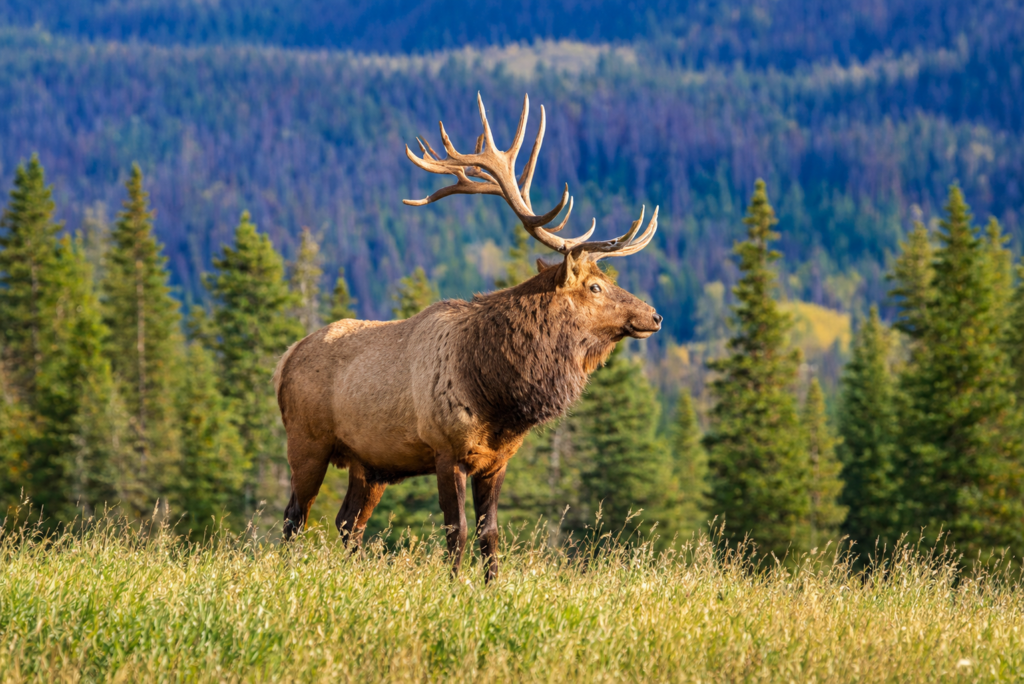
Canada’s conservation priorities include protecting species at risk, restoring habitats, preserving biodiversity and reducing threats such as pollution, invasive species and habitat fragmentation. Federal, provincial and territorial governments work with conservation organisations, researchers and Indigenous partners. Canada’s 2030 Nature Strategy emphasises coordinated action across priority places, species and threats, rather than focusing only on individual animals.
Which Canadian species are currently at risk?
Species at risk include various populations of caribou, certain whales, migratory birds, freshwater fish, plants and other wildlife. The specific legal status depends on the species or population and the applicable federal, provincial or territorial legislation. The federal Species at Risk Public Registry provides official listing information and recovery documents. Because statuses can change, current listings should be checked directly rather than relying on a static list.
How do Canada’s national and provincial parks protect biodiversity?
Protected areas preserve habitats, provide refuge for wildlife and help maintain ecosystems such as forests, wetlands, grasslands and coastlines. Park authorities may restrict development, manage visitors, restore damaged habitats and monitor species. Provincial and territorial parks complement federal national parks by protecting additional landscapes and regional biodiversity. Conservation outcomes depend on effective management, connectivity between habitats and cooperation with nearby communities.
How is habitat loss affecting Canadian wildlife?
Urban expansion, roads, industrial development, agriculture and some resource activities can reduce or fragment wildlife habitats. Fragmentation makes it harder for animals to move between feeding, breeding and seasonal ranges. Pollution and changes to water systems can further reduce the quality of remaining habitat. Wildlife corridors, land-use planning, restoration and careful environmental assessments can help limit these effects.
What conservation challenges are facing polar bears, caribou and whales?
Polar bears face major pressure from declining sea ice, which affects their ability to hunt seals. Caribou populations can be affected by habitat disturbance, industrial development, predation patterns and changing environmental conditions. Whales face different threats depending on the species, including underwater noise, vessel strikes, fishing-gear entanglement and pollution. Effective conservation requires species-specific research, habitat protection and cooperation across jurisdictions.
Why are Canada’s forests, wetlands and freshwater ecosystems important?
Forests store carbon, support wildlife and provide resources for communities and industries. Wetlands filter water, store carbon and help reduce flooding by holding excess water. Lakes and rivers supply drinking water, support fisheries and provide habitat for many species. Protecting these ecosystems helps maintain biodiversity, strengthen climate resilience and sustain the environmental resources on which Canadians depend.
How are Indigenous-led conservation programmes protecting Canadian ecosystems?
Indigenous led conservation combines community priorities, traditional knowledge and scientific research to manage land and water. Initiatives may protect culturally important species, restore habitats, monitor wildlife and support sustainable harvesting. The federal Indigenous Partnerships for Species at Risk programme supports eligible Indigenous organisations and communities working to conserve species and habitats. The government reports that more than C$60 million has supported over 1,000 Indigenous-led projects since 2004.
How is climate change affecting wildlife populations across Canada?
Climate change alters habitats, food availability, migration patterns, breeding seasons and the timing of seasonal events. Some species may move northward or into higher elevations, while others struggle when suitable habitats disappear or change too quickly. Warmer waters and changing ocean conditions also affect marine species and freshwater ecosystems. Conservation planning increasingly needs to account for future climate conditions, not only present-day habitat boundaries.
Pollution & Water
What are the biggest pollution concerns in Canada?
Major concerns include air pollution, industrial emissions, contaminated sites, plastic waste, agricultural runoff and pollution affecting lakes, rivers and coastal waters. The scale and type of pollution vary by region and industry. Some pollution affects public health directly, while other forms damage ecosystems over long periods. Monitoring, enforcement, cleaner production and proper waste management are important to reducing these risks.
What are the main sources of air pollution in Canadian cities?
Urban air pollution can come from road traffic, industrial facilities, building heating, construction dust and other combustion sources. Pollutants include fine particulate matter, nitrogen oxides, sulphur oxides, volatile organic compounds and ground-level ozone. Weather can trap pollution close to the ground, while wildfire smoke can worsen air quality even in cities far from the fires. Exposure can increase respiratory and cardiovascular health risks.
How is wildfire smoke affecting air quality across Canada?
Wildfire smoke can travel hundreds or thousands of kilometres, causing elevated fine particle pollution in communities far from a fire. Smoke exposure may irritate the eyes and throat, worsen asthma and aggravate existing heart or lung conditions. Canadians can check the Air Quality Health Index, follow local public health advice and reduce strenuous outdoor activity when air quality is poor. Cleaner indoor air and properly fitted respirators can help reduce exposure during significant smoke events.
What are the biggest drinking-water challenges in Canada?
Challenges include ageing water infrastructure, contamination risks, treatment capacity, drought and seasonal water quality changes. Remote communities can face additional costs and technical barriers when building and maintaining water systems. Agricultural runoff, industrial pollution and harmful algal blooms can also affect water quality in some areas. Protecting drinking water requires monitoring, infrastructure investment, watershed management and reliable operation and maintenance.
How is Canada addressing plastic and waste pollution?
Canada uses waste-reduction policies, recycling initiatives, producer-responsibility programmes and restrictions on certain plastic products to address pollution. Municipalities manage much of the collection and processing of household waste, while provincial and federal policies influence packaging, product design and environmental standards. Challenges include inconsistent recycling systems, hard-to-process materials and plastic leakage into waterways. Reducing unnecessary packaging and improving reuse and recovery systems can help.
How are Canadian lakes, rivers and freshwater resources being protected?
Freshwater protection involves water quality monitoring, wastewater treatment, pollution controls, watershed restoration and cooperation between federal, provincial, territorial and Indigenous governments. Conservation programmes may restore wetlands, protect shoreline vegetation and reduce agricultural runoff. Water-management plans also help communities respond to droughts, floods and competing demands. Long-term protection depends on reliable monitoring, enforcement and investment in infrastructure.
How does industrial pollution affect Canadian communities and ecosystems?
Industrial pollution can contaminate air, soil and water, affect wildlife and create health risks for nearby residents. The impacts depend on the pollutants involved, exposure levels, environmental conditions and the effectiveness of pollution controls. Communities located near certain industrial sites may face cumulative environmental burdens, making transparent monitoring and meaningful consultation important. Strong standards, inspections, remediation and public reporting help reduce risks.
What is Canada doing to improve access to clean drinking water in Indigenous communities?
The federal government funds water infrastructure, repairs, operator training and related support for First Nations communities under its jurisdiction. Progress has been made, but long-term drinking water advisories remain in some communities. As of September 10, 2026, Indigenous Services Canada reported 38 active long-term advisories affecting 5,457 homes and 334 community buildings. Addressing the remaining advisories requires reliable infrastructure, trained local operators, ongoing maintenance and community-led planning.
final Verdict
Canada faces significant environmental challenges, including wildfires, changing Arctic conditions, biodiversity loss, pollution and the need to reduce greenhouse gas emissions. The removal of the consumer fuel charge changed federal carbon-pricing policy, but industrial emissions pricing and broader climate measures remain important. Meanwhile, clean electricity, renewable energy, conservation programmes and Indigenous led initiatives offer opportunities to protect ecosystems and support long-term resilience.
Progress will depend on effective implementation, accurate monitoring, investment in infrastructure and cooperation among governments, businesses, Indigenous peoples and local communities. Canada has made progress in some areas, but its latest emissions projections show that meeting its 2030 climate target will require substantially greater reductions.
Table of Contents

Leave a Reply