Canada Climate & Environment 2026
Introduction
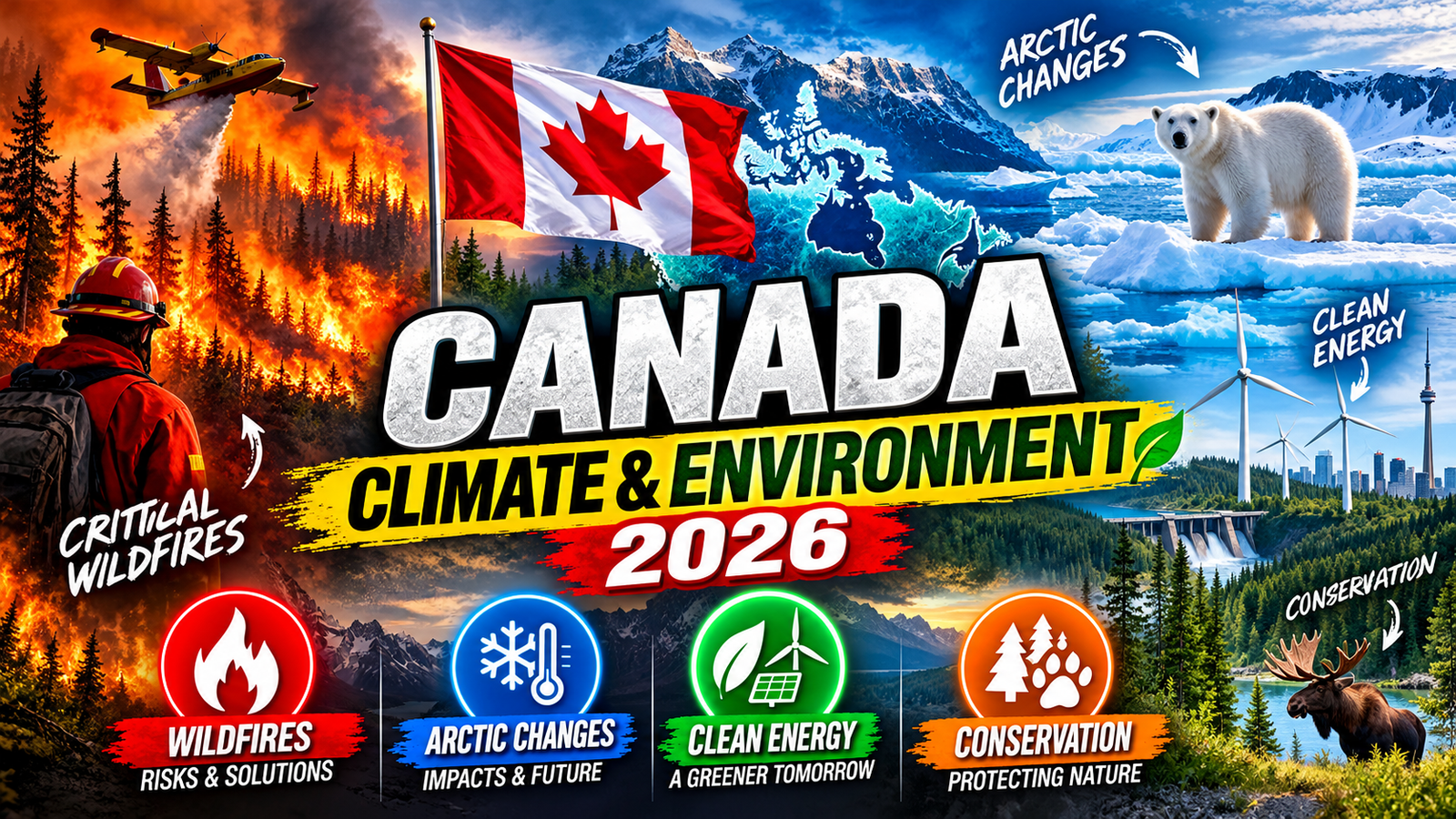
Canada’s Climate & Environment in 2026 is shaped by major issues including carbon policy, wildfires, extreme weather, Arctic change, clean energy, wildlife conservation, pollution and water protection. Canada continues to work toward reducing greenhouse-gas emissions while expanding cleaner energy and strengthening climate resilience. At the same time, wildfire risks, changing Arctic conditions, habitat loss and water-quality concerns remain important environmental challenges. This guide explores the key climate and environmental issues affecting Canada and the policies, technologies and conservation efforts being used to address them.
Carbon Tax & Policy
What is the current status of Canada’s carbon pricing policy?
Canada’s approach to carbon pricing has changed significantly, particularly for consumers. The federal consumer fuel charge was removed in 2025, while carbon pricing for large industrial emitters remains an important part of Canada’s emissions-reduction strategy. Provinces and territories can operate their own systems if they meet federal requirements.
How has Canada’s approach to consumer carbon pricing changed?
The federal consumer fuel charge was eliminated, changing how carbon pricing affects households at the point of fuel purchase. The government has increasingly emphasized other climate measures, including industrial emissions pricing, clean-energy investment and regulations. Provincial policies can still differ depending on the jurisdiction.
How does industrial carbon pricing work in Canada?
Industrial carbon pricing places a cost on greenhouse-gas emissions from large facilities. Canada’s federal system uses an output-based approach designed to reduce emissions while limiting the risk of production moving to jurisdictions with weaker climate rules. Facilities that perform better than their emissions benchmarks can avoid some costs or generate compliance credits.
How do climate policies differ between Canadian provinces?
Provinces use different combinations of carbon pricing, clean-energy programs, emissions regulations and electricity policies. Some operate their own industrial systems, while others rely more heavily on federal frameworks. Differences are particularly noticeable in energy production, electricity generation and transportation policies.
What are Canada’s current climate targets for 2030 and 2050?
Canada has committed to reducing greenhouse ,gas emissions by 40 ,45% below 2005 levels by 2030 and reaching net,zero emissions by 2050. Achieving these targets requires major changes across transportation, buildings, industry, electricity and energy production. Progress is measured through national emissions reporting and sector-specific policies.
How are federal climate policies affecting Canadian businesses?
Climate policies can increase compliance requirements for emissions,intensive industries while creating opportunities in clean technology, renewable energy and energy efficiency. Large companies may need to invest in lower-emission technologies and improve emissions reporting. The effect varies significantly by industry.
How are Canada’s climate policies affecting households and consumers?
Households are increasingly affected through energy,efficiency programs, vehicle standards, electricity policies and incentives for cleaner technologies. The removal of the federal consumer fuel charge reduced one direct climate-policy cost at the fuel pump. However, provincial energy policies and other climate measures can still affect household expenses.
How much progress is Canada making toward its emissions-reduction targets?
Canada has made progress in several areas, including cleaner electricity and growth in renewable-energy investment, but reaching the 2030 target remains challenging. Emissions from transportation, buildings and some industrial activities remain significant. Continued policy implementation and investment will be required to achieve deeper reductions.
Wildfires & Natural Disasters
What is the current state of Canada’s wildfire situation?
Wildfires remain one of Canada’s most significant environmental and public-safety challenges. The risk varies by region and season, with forests becoming particularly vulnerable during periods of hot and dry weather. Large fires can threaten communities, infrastructure, wildlife and air quality across extensive areas.
What are the main causes of wildfires in Canada?
Wildfires can start naturally through lightning or through human activity. Dry vegetation, high temperatures, low humidity and strong winds can help fires spread rapidly. Climate,related changes in temperature and moisture can increase the conditions under which severe fires develop.
How is wildfire smoke affecting air quality across Canada?
Smoke from Canadian wildfires can travel hundreds or even thousands of kilometres, affecting communities far from the original fire. Fine particulate matter in wildfire smoke can reduce air quality and create health concerns, particularly for vulnerable people. Smoke can also affect visibility and outdoor activities.
Which Canadian regions face the greatest wildfire risks?
Wildfire risk can be particularly high in parts of British Columbia, Alberta, Saskatchewan, Manitoba, Ontario and northern Canada. Risk changes from year to year depending on weather and fuel conditions. Communities near forested areas can face especially serious risks during prolonged dry periods.
What are the major flood and extreme-weather risks facing Canada?
Canada faces risks from floods, wildfires, heat waves, severe storms, droughts, winter storms and coastal hazards. Flooding remains one of the country’s most frequent and costly natural disasters. Extreme weather can damage homes, roads, utilities, agricultural land and critical infrastructure.
How is Canada improving wildfire detection and emergency response?
Canada and provincial authorities use satellite monitoring, aircraft, ground crews, weather information and fire,risk modelling to identify and respond to fires. Emergency agencies also coordinate evacuations and firefighting resources. Improved forecasting and real-time information are becoming increasingly important.
How are Canadian communities preparing for natural disasters?
Communities are improving emergency plans, evacuation routes, warning systems and infrastructure resilience. Residents are also encouraged to prepare emergency kits and understand local evacuation procedures. Governments are investing in measures intended to reduce the impact of floods, wildfires and other hazards.
How is climate change affecting the frequency and severity of extreme weather in Canada?
Climate change is contributing to warmer temperatures and changing precipitation patterns, which can increase the conditions associated with some extreme-weather events. Hotter and drier conditions can increase wildfire risk, while intense rainfall can contribute to flooding. The exact effects vary by region and type of event.
Arctic & Northern Canada
What are the biggest environmental challenges facing Canada’s Arctic?
The Arctic is experiencing rapid environmental changes involving warming temperatures, declining sea ice, permafrost thaw and ecosystem disruption. These changes affect wildlife, infrastructure, transportation and northern communities. Environmental changes also have important implications for Canada’s Arctic sovereignty and security.
How is climate change affecting Canada’s northern communities?
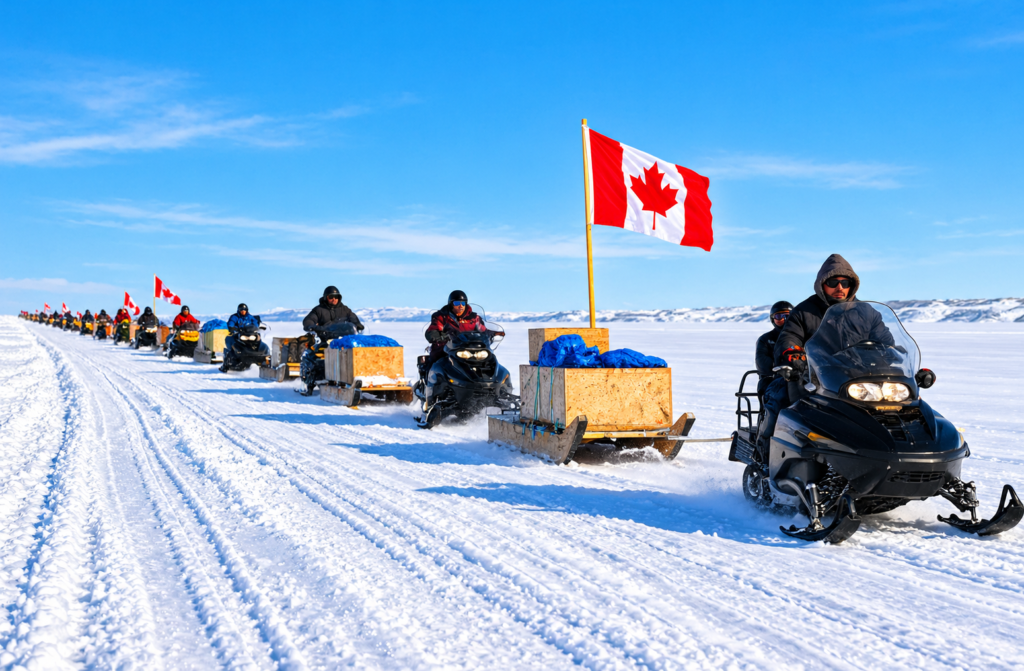
Northern communities are experiencing changes in weather, sea ice, wildlife patterns and ground conditions. These changes can affect transportation, food security, housing and traditional activities. Remote communities may face additional challenges because infrastructure and services can be difficult and expensive to maintain.
How are changes in Arctic sea ice affecting Canada?
Declining and changing sea ice affects marine ecosystems, wildlife habitats and travel routes. It can also create new navigation and economic opportunities while increasing environmental and security concerns. Canada needs stronger monitoring and infrastructure as Arctic conditions change.
What impact is permafrost thawing having on Northern Canada?
Thawing permafrost can destabilize buildings, roads, runways and other infrastructure. It can also change landscapes and affect ecosystems. Communities in northern regions may face rising maintenance and adaptation costs as permanently frozen ground becomes less stable.
How are Inuit communities being affected by environmental changes?
Environmental changes can affect hunting, fishing, travel and access to traditional foods. Changes in sea ice and wildlife patterns can make traditional activities more difficult or dangerous. Inuit knowledge and leadership are therefore increasingly important in Arctic environmental monitoring and adaptation.
How is climate change affecting Arctic wildlife?
Changes in sea ice, vegetation, temperature and marine ecosystems are affecting many Arctic species. Polar bears, seals, whales, caribou and migratory birds can be affected by changes to habitat and food availability. The scale of the impact varies among species and regions.
What is Canada doing to monitor and protect its Arctic environment?
Canada uses scientific monitoring, satellite technology, Indigenous knowledge and environmental research to understand changes in the North. Conservation areas and protected regions also help preserve important ecosystems. Federal, territorial and Indigenous governments increasingly work together on environmental protection.
How are Arctic sovereignty and environmental protection connected?
Environmental monitoring helps Canada understand and manage its northern territory and waters. Strong infrastructure, research capacity and Indigenous partnerships support both environmental stewardship and Canada’s presence in the Arctic. Climate change is making these issues increasingly interconnected.
Green Energy
What is the current state of Canada’s clean-energy sector?
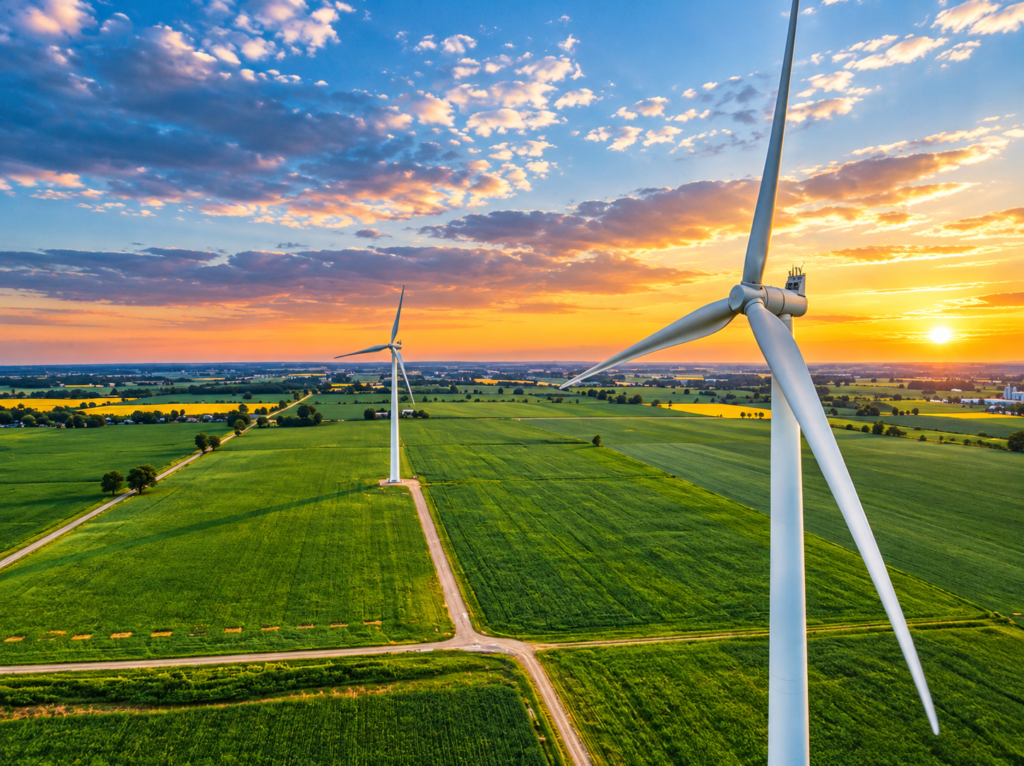
Canada has a significant clean-energy sector supported by hydroelectricity, nuclear power, wind, solar and emerging technologies. The country is investing in cleaner electricity and technologies to meet rising energy demand while reducing emissions. Clean energy is also becoming increasingly important to industrial development and investment.
Which renewable energy sources are most important to Canada?
Hydroelectricity is Canada’s largest renewable electricity source and plays a major role in provinces such as Quebec, British Columbia and Manitoba. Wind and solar are expanding rapidly in several provinces. Biomass and other renewable sources also contribute to Canada’s energy mix.
How rapidly are solar and wind energy expanding across Canada?
Wind and solar capacity has been growing as provinces and businesses seek additional low-emission electricity. Falling technology costs and increasing electricity demand are supporting new projects. Expansion varies by province depending on resources, grid capacity, regulations and investment.
What role does hydroelectric power play in Canada’s energy system?
Hydroelectricity provides a large share of Canada’s electricity and offers reliable low-emission generation. It also helps balance electricity systems alongside variable sources such as wind and solar. Canada’s extensive water resources give the country a major advantage in hydroelectric generation.
What role could nuclear energy and small modular reactors play in Canada?
Nuclear power can provide reliable, low-carbon electricity and already plays an important role in Ontario’s electricity system. Small modular reactors could potentially provide additional low-emission power for electricity generation and industrial applications. Their development depends on regulatory approval, investment, technology and public acceptance.
How is Canada preparing its electricity grid for growing energy demand?
Canada is investing in generation, transmission, storage and grid modernization. Electricity demand is expected to increase as transportation, buildings and industry become more electrified. Expanding grid capacity will be essential for connecting new clean-energy projects and maintaining reliable electricity.
What potential does clean hydrogen have in Canada?
Clean hydrogen could have applications in heavy industry, transportation, energy storage and export markets. Canada’s renewable electricity and natural-resource industries provide potential advantages for different hydrogen-production pathways. However, costs, infrastructure and international demand remain important challenges.
How are Indigenous communities participating in Canada’s clean-energy projects?
Indigenous communities are increasingly participating through ownership, partnerships, consultation and economic-development agreements. Indigenous participation can provide communities with long-term revenues and employment while supporting energy development. Meaningful partnership and respect for Indigenous rights are important considerations for major projects.
Wildlife & Conservation
What are Canada’s major wildlife conservation priorities?
Canada’s conservation priorities include protecting species at risk, preserving habitats, maintaining biodiversity and restoring damaged ecosystems. Governments, Indigenous communities, conservation organizations and researchers work together on these objectives. Protecting forests, wetlands, oceans and grasslands is essential for maintaining wildlife populations.
Which Canadian species are currently at risk?
Canada has numerous species classified as at risk, including certain populations of caribou, whales, birds, amphibians and other wildlife. The level of risk varies between species and regions. Habitat loss, climate change, pollution, disease and human activity can contribute to population declines.
How do national parks help protect Canada’s biodiversity?
National parks protect large areas of forests, mountains, wetlands, coastlines and other ecosystems. They provide habitats where wildlife can live with reduced pressure from development. Parks also support scientific research, conservation programs and public education.
How is habitat loss affecting Canadian wildlife?
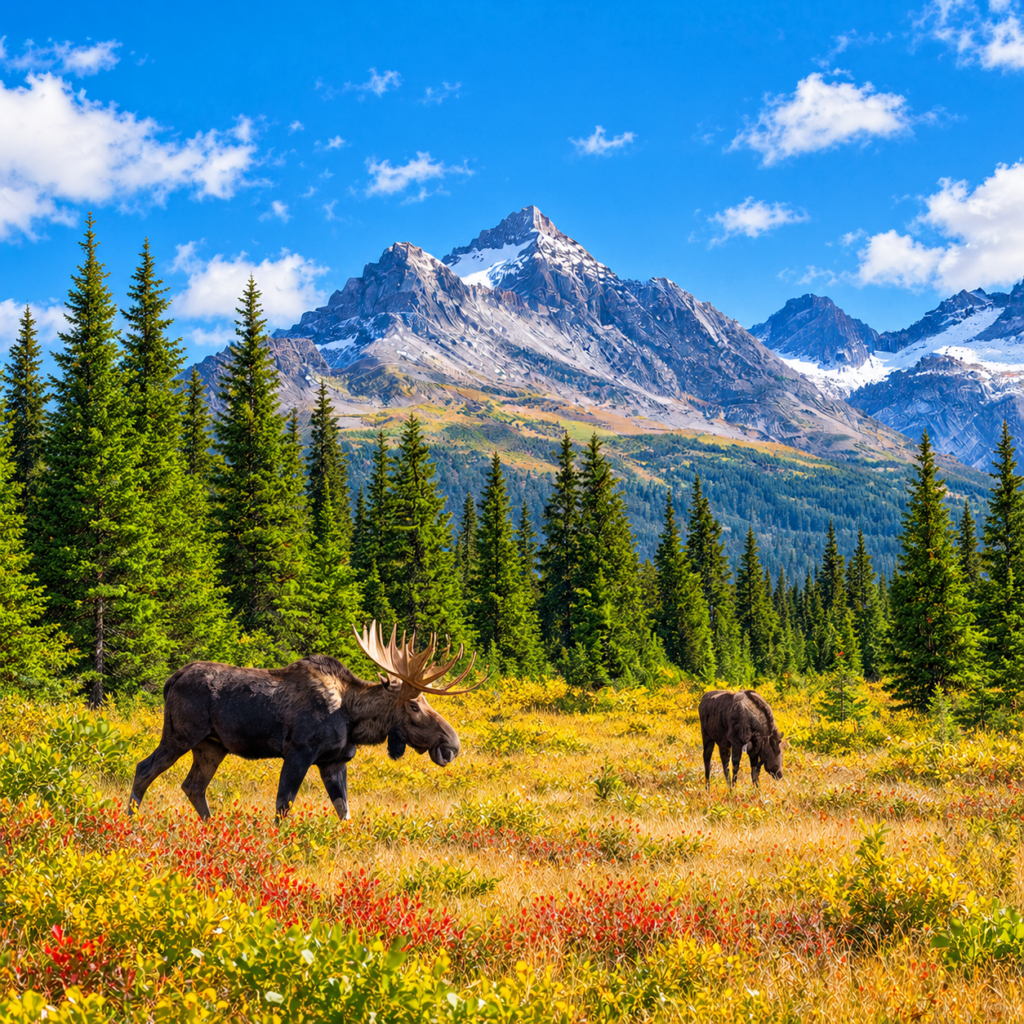
Habitat loss can reduce the areas available for feeding, breeding and migration. Urban development, agriculture, roads, resource extraction and other land-use changes can fragment ecosystems. Protecting connected habitats can help species maintain healthy populations.
What are the major conservation challenges facing polar bears, caribou and whales?
Polar bears face changing Arctic sea-ice conditions, while some caribou populations are affected by habitat changes and disturbances. Whales can face threats from pollution, vessel traffic, fishing interactions and changing marine conditions. Conservation strategies need to address the specific threats affecting each species.
Why are Canada’s forests and wetlands important for conservation?
Forests provide habitat for countless species and store significant amounts of carbon. Wetlands support birds, fish, amphibians and other wildlife while also helping regulate water and reduce flood impacts. Protecting these ecosystems therefore benefits both biodiversity and climate resilience.
How are Indigenous-led conservation programs protecting Canadian ecosystems?
Indigenous-led conservation programs combine traditional knowledge with scientific research and community stewardship. Indigenous guardians and conservation initiatives can monitor wildlife, protect habitats and identify environmental changes. These programs are increasingly recognized as an important part of Canadian conservation.
How is climate change affecting wildlife populations across Canada?
Changing temperatures, precipitation, sea ice and seasonal patterns can alter wildlife habitats and food availability. Some species may move northward or to higher elevations, while others may struggle to adapt quickly. Climate change can also interact with habitat loss and other existing threats.
Pollution & Water
What are the major pollution concerns facing Canada?
Major concerns include air pollution, industrial emissions, plastic waste, contaminated water and pollution from transportation and resource development. Pollution levels vary considerably between regions and communities. Government regulations and monitoring programs aim to reduce environmental and health risks.
What are the main sources of air pollution in Canadian communities?
Transportation, industrial activity, residential heating, construction, agriculture and wildfire smoke can contribute to air pollution. The relative importance of each source varies by location. Urban areas can experience additional pollution from traffic and industrial activity.
How is wildfire smoke affecting air quality in Canadian cities?
Wildfire smoke can cause significant temporary deterioration in air quality, even in cities located far from active fires. Fine particles can enter the lungs and create health concerns. During smoke events, authorities may issue air-quality alerts and recommend reducing strenuous outdoor activity.
What are the biggest challenges facing Canada’s drinking-water systems?
Challenges include aging infrastructure, contamination risks, climate-related disruptions and the high cost of maintaining water systems in remote communities. Some smaller and northern communities face particularly difficult infrastructure conditions. Ensuring reliable access to safe drinking water remains an important national priority.
How is Canada addressing plastic and waste pollution?
Canada is using waste-reduction policies, recycling initiatives, product regulations and measures targeting certain single-use plastics. Governments are also encouraging circular-economy approaches that keep materials in use for longer. Reducing plastic waste requires cooperation among governments, businesses and consumers.
How are Canadian lakes and rivers being protected from pollution?
Protection measures include wastewater regulations, pollution controls, watershed monitoring and habitat conservation. Federal, provincial, territorial and Indigenous authorities can work together to monitor water quality. Local action is particularly important because pollution sources and environmental conditions differ between watersheds.
How does industrial pollution affect Canadian communities and ecosystems?
Industrial pollution can affect air, water, soil and wildlife when emissions or contaminants are not properly controlled. Communities located near industrial facilities may face greater exposure to certain environmental risks. Regulations, monitoring and enforcement are therefore important for reducing impacts.
What is Canada doing to improve access to clean drinking water in Indigenous communities?
Canada has invested in water and wastewater infrastructure, operations and long-term improvements in Indigenous communities. Efforts also include supporting local capacity and addressing infrastructure challenges. Continued investment and community-led approaches are important for ensuring reliable and sustainable access to safe drinking water.
Final Verdict
Canada’s climate and environmental landscape in 2026 presents major challenges but also significant opportunities. Progress in clean energy, conservation, emissions reduction and environmental monitoring can support a more sustainable future, but wildfire preparedness, Arctic protection, biodiversity loss, pollution and water infrastructure require continued attention. Strong cooperation between federal and provincial governments, Indigenous communities, businesses and the public will be essential. Overall, Canada’s environmental future will depend on combining climate action with practical investments in clean energy, resilient communities, wildlife protection and healthy ecosystems.
Table of Contents

Leave a Reply